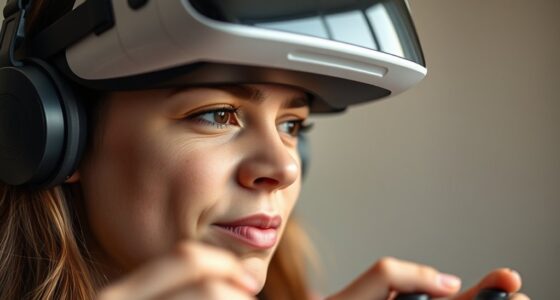
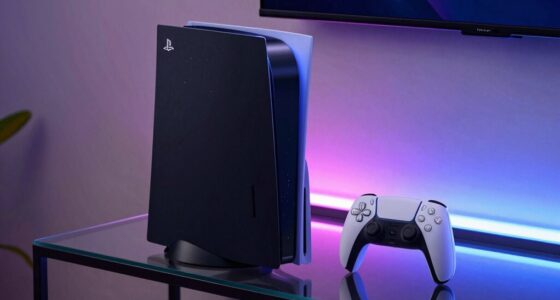
VR creates fully immersive virtual worlds that isolate you from reality, while AR overlays digital images onto your real environment using smartphones or glasses. MR blends physical and virtual spaces, allowing interaction with digital objects within the real world. Each uses different sensors, hardware, and software to deliver unique experiences. Want to understand how these technologies shape gaming and beyond? Keep exploring to discover how they’re transforming the way we interact with digital content.
Key Takeaways
- VR creates fully virtual environments, immersing users away from the physical world; AR overlays digital elements onto real surroundings.
- MR blends physical and digital spaces, allowing interaction with virtual objects within real environments seamlessly.
- Hardware differences include sensors, headsets, and controllers tailored for each technology’s interaction style and immersion level.
- Applications span gaming, healthcare, retail, and education, utilizing each technology’s unique capabilities for enhanced user experiences.
- Future trends focus on improved realism, accessibility, and smarter AI integration, while addressing safety and ethical challenges.
VR gaming headset with haptic feedback
As an affiliate, we earn on qualifying purchases.
As an affiliate, we earn on qualifying purchases.
What Is Virtual Reality (VR)?
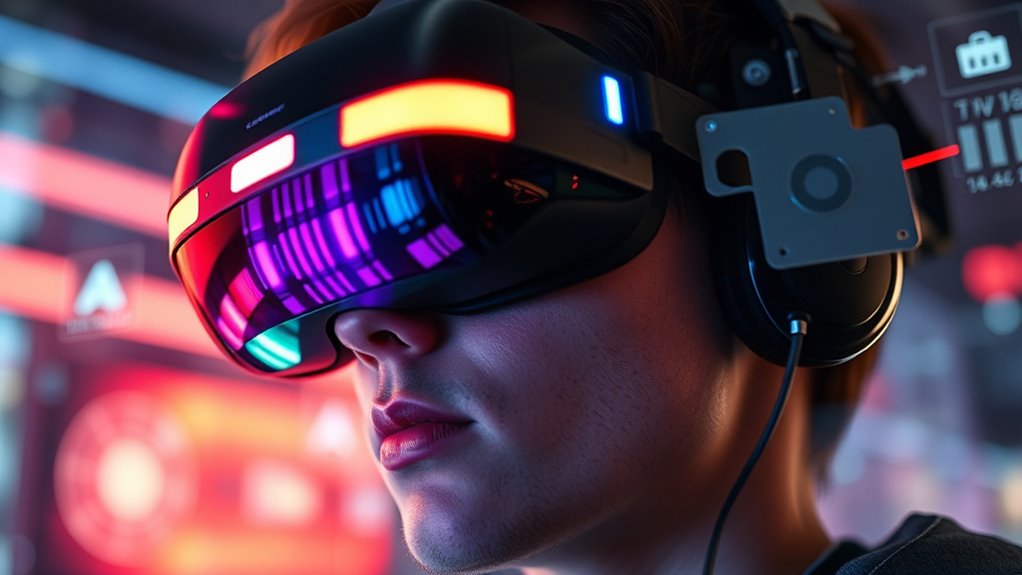
Have you ever wondered what virtual reality (VR) actually is? VR immerses you in a computer-generated environment, making you feel like you’re part of a different world. It uses a headset with screens close to your eyes and sensors that track your head movements. Haptic feedback enhances your experience by providing tactile sensations, so you can feel textures or impacts within the virtual space. Good user ergonomics is essential, ensuring the headset and controllers fit comfortably, allowing you to stay engaged longer without discomfort. This focus on comfort and tactile interaction makes VR more realistic and immersive. The hardware design of VR devices plays a crucial role in their usability and overall experience. As you explore these environments, the combination of visual, tactile, and ergonomic elements works together to create a compelling digital experience. Incorporating ergonomic considerations can significantly improve user comfort during extended gaming sessions. Creating a calmer, more functional home environment can help you relax and enjoy your gaming sessions more comfortably, much like integrating smart home technology can enhance overall comfort and efficiency in the living space. Additionally, understanding the importance of visual fidelity can further enhance the immersive quality of VR experiences.
AR glasses for augmented reality
As an affiliate, we earn on qualifying purchases.
As an affiliate, we earn on qualifying purchases.
Exploring Augmented Reality (AR) and Its Uses
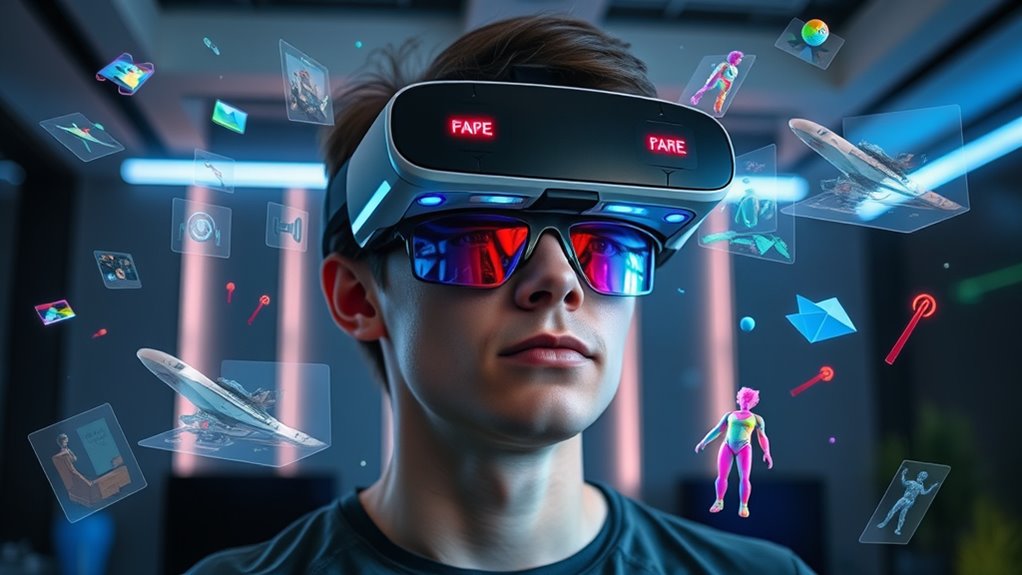
Augmented Reality (AR) enhances your real-world environment by overlaying digital information onto physical spaces through devices like smartphones, tablets, or AR glasses. This technology creates immersive experiences, making virtual objects appear as if they exist in your actual surroundings. You might see holographic interfaces that let you interact with digital content naturally, as if it were part of the physical world. Spatial audio further enriches AR by providing 3D sound cues that align with virtual objects, increasing immersion. AR is used in various fields, from gaming and education to retail and industrial training. It allows you to visualize complex data, navigate environments, or try on virtual clothes, all while staying connected to your real environment.
mixed reality headset for immersive experiences
As an affiliate, we earn on qualifying purchases.
As an affiliate, we earn on qualifying purchases.
Mixed Reality (MR): The Blurring of Digital and Physical Worlds
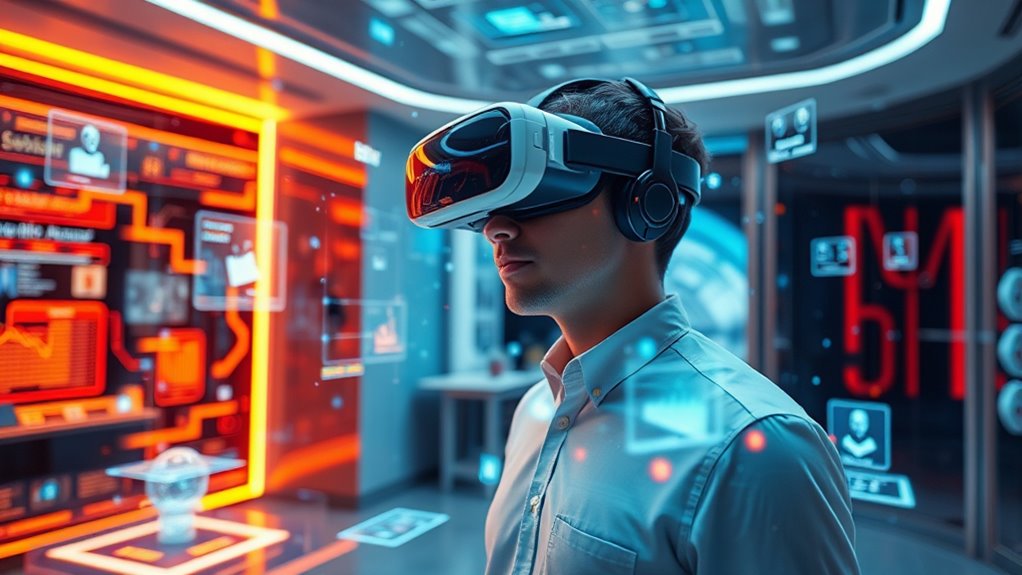
Mixed reality combines digital content with the physical world in ways that feel natural and seamless. This merging opens up new opportunities for interaction, making virtual elements feel like they’re part of your real environment. As a result, you can collaborate, learn, or play in ways that were never possible before. Additionally, Free Floating environments exemplify how digital objects can exist independently within physical spaces, enhancing the immersive experience.
Merging Realities Seamlessly
As technologies advance, the line between digital and physical worlds continues to blur through mixed reality. You experience this seamlessly when digital objects interact naturally with your environment, thanks to precise spatial audio and haptic feedback that make virtual elements feel real. This integration creates an immersive experience where virtual and physical merge effortlessly.
| Digital Element | Physical Interaction |
|---|---|
| Haptic Feedback | Feels like touching virtual objects |
| Spatial Audio | Sounds originate from specific locations |
| Real-World Data | Responds to your physical surroundings |
This fusion enhances realism, making virtual interactions feel intuitive. As a result, MR environments adapt dynamically, creating a sense of presence that keeps you engaged in a genuinely blended world.
Enhanced Interaction Possibilities
The seamless integration of digital and physical environments opens up a world of enhanced interaction possibilities. With mixed reality, you can feel more connected through haptic feedback, which simulates touch sensations, making virtual objects feel tangible. Gesture recognition allows you to interact naturally, using your hands to manipulate virtual items or navigate menus without controllers. This creates a more intuitive experience, bridging the gap between physical actions and digital responses. As your gestures are recognized in real-time, your interactions become fluid and immersive. These advancements enable you to engage more deeply with digital content, whether in gaming, training, or design. Additionally, immersive technology enhances sensory engagement, further blurring the lines between virtual and real experiences. Moreover, the development of advanced sensors continues to improve the accuracy and responsiveness of mixed reality systems, making interactions even more seamless. Continuous innovations in sensor technology are crucial for achieving more natural and precise interactions in MR environments, ensuring users can experience a truly realistic sensation that closely mimics real-world interactions. Incorporating adaptive feedback can further tailor experiences to individual users, enhancing immersion and comfort.
virtual reality controllers for gaming
As an affiliate, we earn on qualifying purchases.
As an affiliate, we earn on qualifying purchases.
The Technology Behind VR, AR, and MR Devices
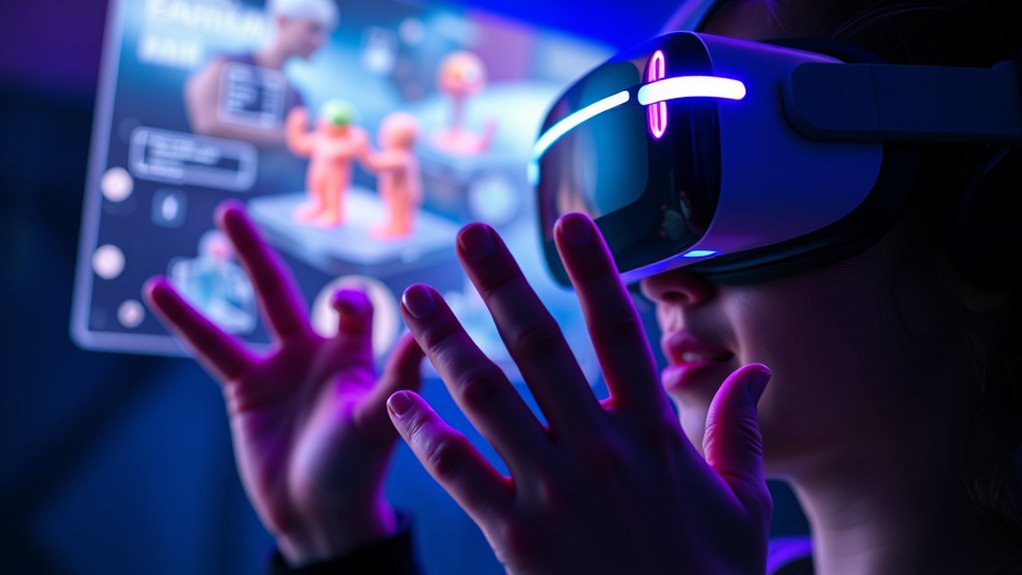
To understand how VR, AR, and MR devices work, you need to look at their components and sensors, which track your movements and environment. Software and content integration bring these devices to life, delivering immersive experiences. Together, these elements create seamless interactions between you and digital worlds. Additionally, understanding dark psychology tactics can help users recognize potential manipulative features within some immersive content.
Device Components and Sensors
Device components and sensors form the core of immersive gaming technology, enabling VR, AR, and MR devices to track your movements, interpret your environment, and deliver realistic experiences. Sensor accuracy is vital for precise motion detection, ensuring smooth and responsive interactions. Device ergonomics also play a significant role, making sure sensors fit comfortably and don’t hinder your gameplay. Key components include:
- Accelerometers and gyroscopes for motion tracking
- Infrared sensors for positional accuracy
- Cameras for environmental mapping and user detection
- Proximity sensors to detect device or user movements
These elements work together to create seamless experiences. High sensor accuracy minimizes lag and errors, while ergonomic design enhances comfort during extended use, making your immersive experience more natural and engaging. Additionally, advancements in sensor technology continue to improve overall performance and immersion levels. New sensor calibration techniques further enhance the precision and reliability of these systems, contributing to more realistic and immersive virtual environments. Furthermore, ongoing research into sensor integration aims to optimize how different sensors work together for even more accurate tracking and environmental understanding.
Software and Content Integration
Software and content integration serve as the backbone of immersive gaming experiences, seamlessly blending visuals, interactions, and environments. You rely on well-designed user interfaces to navigate complex menus and controls effortlessly, enhancing immersion. Content licensing plays a vital role, guaranteeing you have access to a diverse library of games and applications without legal issues. Developers integrate software platforms that support VR, AR, and MR devices, optimizing performance and compatibility. This integration guarantees smooth updates, downloadable content, and cross-platform functionality, enriching your experience. By combining robust software frameworks with licensed content, creators deliver engaging, realistic environments that respond intuitively to your actions. Ultimately, this synergy between software and content keeps your immersive experiences compelling, fluid, and legally compliant.
Key Devices and Hardware for Immersive Experiences
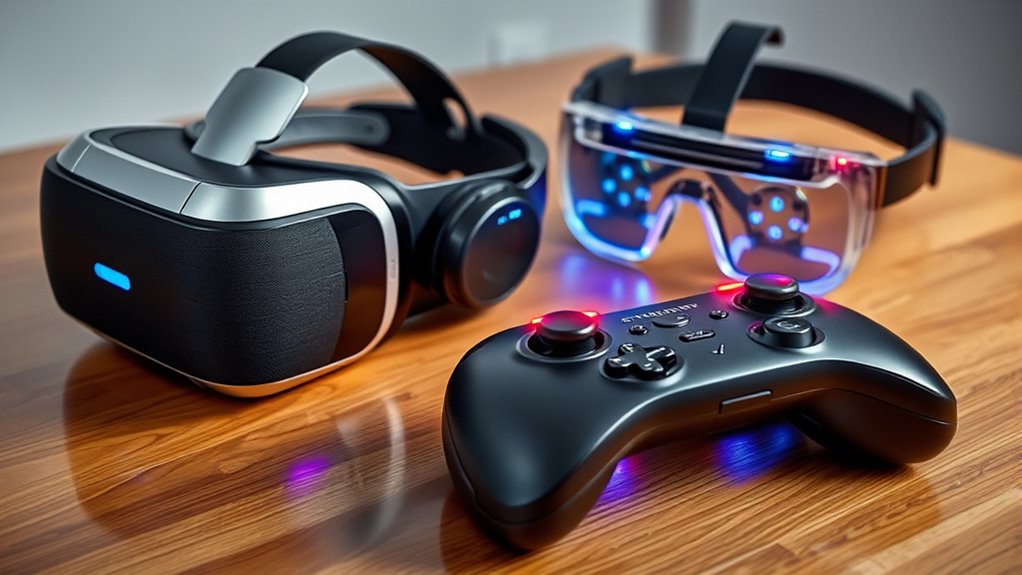
Immersive gaming experiences rely on a range of key devices and hardware that transport you into virtual worlds. These tools enhance realism through features like haptic feedback and spatial audio. First, VR headsets are essential, providing visual immersion and head-tracking. Second, motion controllers let you interact naturally, adding tactile feedback. Third, haptic suits or gloves deliver tactile sensations, heightening immersion. Fourth, spatial audio systems create 3D soundscapes that match your environment, making sounds originate from specific directions. These devices work together to deepen your sense of presence, making virtual worlds feel tangible and real. By combining visual, tactile, and auditory cues, you experience a seamless, immersive environment that pulls you further into the game.
Differences Between VR, AR, and MR in Practice
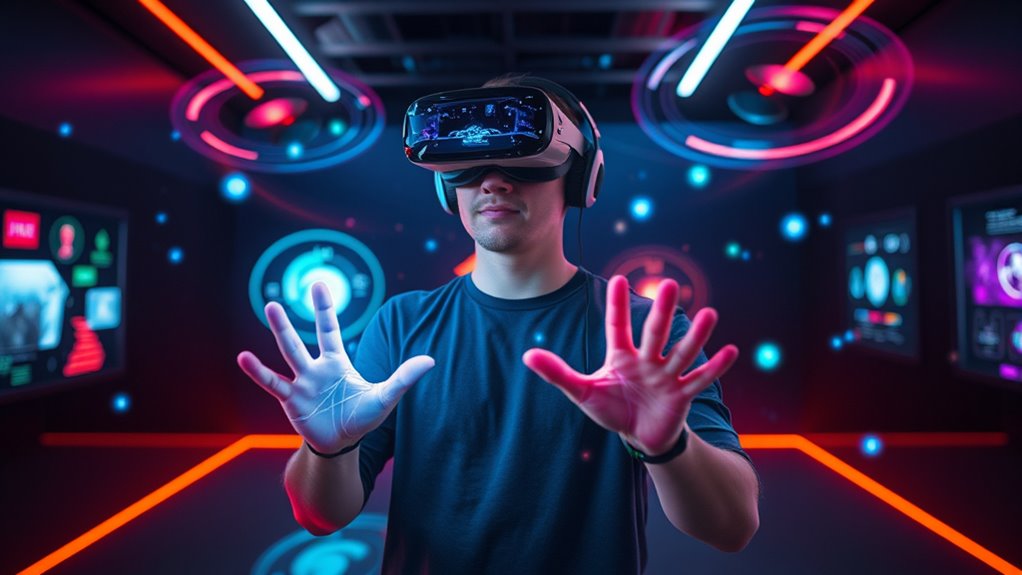
While VR, AR, and MR all create immersive experiences, they do so in fundamentally different ways that affect how you interact with digital content. With VR, your user interface is entirely digital, often controlled through controllers or motion tracking, providing a fully virtual environment that isolates you from the physical world. AR overlays digital elements onto your real-world view, maintaining a seamless user experience that allows you to interact with both worlds simultaneously through smartphones or smart glasses. MR blends digital and physical spaces, enabling you to see and manipulate virtual objects as if they’re part of your environment, with a user interface that adapts to real-world interactions. These distinctions shape how intuitive and engaging your experience feels across each technology.
Real-World Applications of Each Technology

VR, AR, and MR each find practical uses across a variety of industries, transforming how people work, learn, and entertain themselves. Healthcare applications include surgical simulations, physical therapy, and diagnostics, allowing practitioners to practice skills safely. Additionally, the development and integration of reconditioned batteries support sustainable and cost-effective energy solutions across these industries. Consider these examples: 1. VR enables realistic surgical training without risk to patients. 2. AR provides real-time data overlays during complex procedures. 3. MR combines physical and digital elements for hands-on learning. 4. Educational apps use AR to bring history and science to life in classrooms. Moreover, the advancement of immersive technology is driving these innovations further, making processes more efficient, accessible, and engaging. The integration of imaging‑scale concepts from deep-sky imaging demonstrates how detailed visualization techniques can enhance understanding and precision in these immersive environments, highlighting the importance of visualization techniques in advancing immersive experiences. Additionally, ongoing research into user experience design continues to improve how users interact with these technologies, increasing their effectiveness and adoption.
The Future of Immersive Gaming and Interactive Experiences
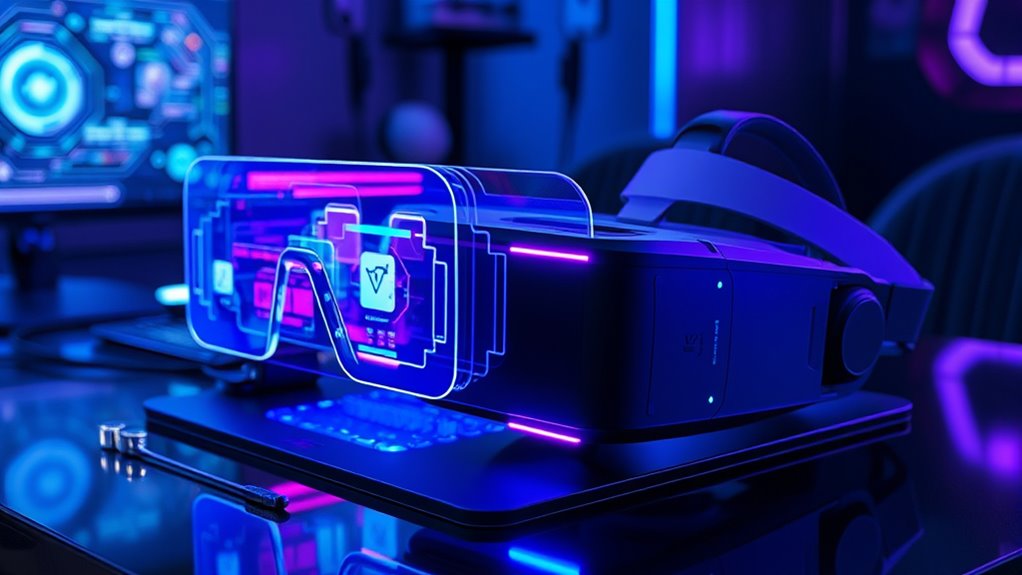
As technology continues to evolve, the future of immersive gaming and interactive experiences promises to be more engaging, personalized, and seamless than ever before. The historical evolution of VR, AR, and MR has driven rapid innovation, making these experiences more accessible and realistic. Consumer adoption is accelerating as devices become more affordable and user-friendly, fostering wider acceptance. Expect immersive gaming to blend physical and digital worlds even more, with smarter AI and adaptive content tailoring experiences to your preferences. Advances in hardware and software will enable deeper immersion, making virtual worlds feel more lifelike and responsive. Ultimately, you’ll find yourself steering increasingly sophisticated environments that enhance entertainment, education, and social interactions, transforming how you play, learn, and connect in the digital age.
Challenges and Considerations in Developing Immersive Tech
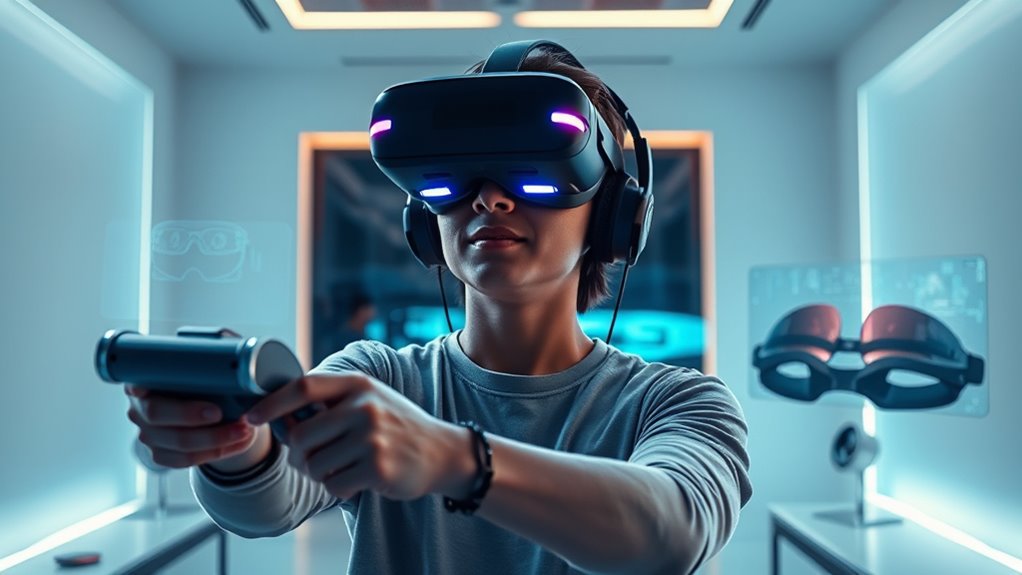
Developing immersive gaming technology presents a range of challenges, from technical limitations to user experience concerns. Making sure user safety is paramount, especially when designing hardware and experiences that users spend extended periods with. Ethical considerations also arise, such as data privacy and content moderation. To address these, you need to think about:
- Hardware comfort and ergonomics to prevent strain or injury
- Real-time feedback systems that protect users from discomfort or disorientation
- Data security measures to safeguard user information
- Content guidelines that promote responsible and inclusive experiences
Ensuring your truck bed’s versatility can support immersive tech setups is also important for maximizing safety and usability in various environments.
Balancing innovation with safety and ethics pushes developers to create immersive tech that’s engaging yet responsible. Addressing these challenges ensures your technology benefits users without compromising their well-being or privacy.
Frequently Asked Questions
How Affordable ARe VR, AR, and MR Devices for Average Consumers?
VR, AR, and MR devices are becoming more affordable thanks to cost reduction efforts and increased competition. You can find entry-level headsets and glasses at lower prices, often under $300, making them accessible for most consumers. As technology advances, device affordability continues to improve, allowing you to enjoy immersive experiences without breaking the bank. Keep an eye out for sales and bundles to get the best value for your money.
What Are the Health and Safety Considerations for Extended Immersive Tech Use?
You should be aware that extended use of immersive tech can cause eye strain and motion sickness. To stay safe, take regular breaks, limit session lengths, and make sure your device is properly calibrated. Pay attention to discomfort signals, and adjust settings or stop if you feel dizzy or experience headaches. Maintaining good posture and using the device in a well-lit environment also helps reduce health risks.
Can Immersive Gaming Technologies Be Integrated With Existing Gaming Consoles?
Yes, immersive gaming technologies can be integrated with existing gaming consoles. You’ll need to check console compatibility to guarantee the hardware supports the new tech. Hardware integration involves connecting headsets, sensors, or controllers to your console, often via USB or Bluetooth. Many developers design these devices to work seamlessly with popular consoles, so you can enjoy immersive experiences without needing entirely new systems. Just verify compatibility before setup.
How Do VR, AR, and MR Impact Social Interaction and Communication?
You find that VR, AR, and MR transform social interaction by enabling virtual collaboration, where you can work with others in immersive environments. They also enhance emotional expression, allowing you to convey feelings more vividly through gestures and avatars. These technologies break geographical barriers, making communication more engaging and personal, which deepens connections and fosters a sense of presence, even when you’re physically apart.
What Are the Potential Ethical Concerns Surrounding Immersive Gaming Technologies?
Imagine it’s the 1920s again, and you’re stepping into a new world. With immersive gaming tech, you face ethical concerns like privacy issues and user consent. You must stay vigilant about how your data is collected and used, ensuring you’re fully aware of what you agree to. Developers should prioritize transparency, so you’re not unknowingly exposed to risks or manipulations in these increasingly realistic environments.
Conclusion
Exploring the world of VR, AR, and MR might feel like charting a new universe, but understanding their differences opens endless possibilities. As these technologies evolve, they’ll become as natural as breathing, transforming how you play, learn, and connect. Embrace this immersive journey—it’s like stepping through a portal to the future where digital and physical worlds dance together, creating experiences more vivid and exciting than ever imagined.