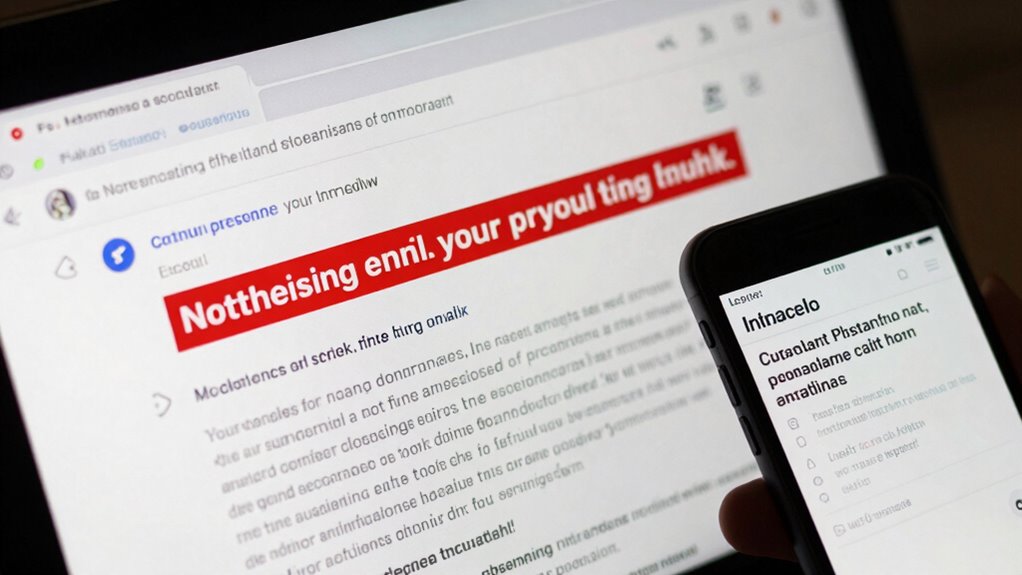

To spot phishing emails and texts, always examine the sender’s address carefully for signs of impersonation, such as misspellings or unusual domains. Watch out for urgent or threatening language that creates pressure to act quickly, and hover over links to verify their true destination before clicking. Avoid opening unexpected attachments and never share personal info without confirming with official sources. If you’re cautious and stay alert, you’ll strengthen your defenses—keep going for more tips to stay protected.
Key Takeaways
- Verify sender details through official contact methods and look for signs of spoofing or suspicious domains.
- Watch for urgent language or emotional manipulation that pressures quick action.
- Hover over links to check for misspelled or suspicious URLs before clicking.
- Avoid opening unexpected attachments from unknown sources to prevent malware.
- Use security tools and browser warnings to detect and block malicious websites and phishing attempts.
Top picks for "scamm spot phish"
Open Amazon search results for this keyword.
As an affiliate, we earn on qualifying purchases.
Recognizing Suspicious Sender Addresses
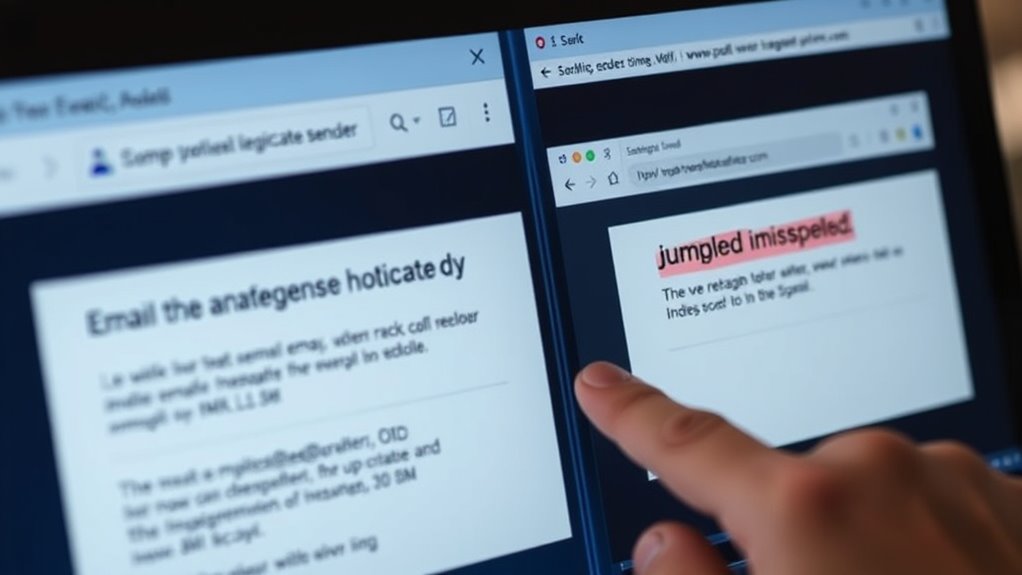
To identify phishing emails and texts, start by examining the sender’s address carefully. Scammers often use email spoofing to make their messages look legitimate, so pay close attention to the sender’s details. Look for signs of domain impersonation, such as misspelled domain names or unusual extensions that mimic official sites. Even if the sender appears familiar, verify the email address against previous contacts or official sources. Be cautious of addresses that seem slightly off or contain extra characters. Phishing attempts rely on convincing sender addresses to trick you into opening malicious links or sharing sensitive information. Recognizing these subtle clues can help you avoid falling victim to scams that rely on impersonated domains or fake sender identities. Additionally, understanding the electric bike market can help you be more cautious when dealing with investment-related communications. Being aware of common scam tactics used in phishing emails further enhances your ability to spot suspicious messages before any harm occurs. Paying attention to the best fake fireplace options can also help you stay vigilant against counterfeit products that might be promoted through deceptive messages. Staying informed about emerging cybersecurity threats is crucial for maintaining your online safety.
Examining the Language and Tone of Messages
Pay attention to messages that create a sense of urgency or pressure you to act quickly. Notice if the language shifts between formal and informal tones, as phishing emails often use inconsistent styles. Recognizing these clues helps you identify potential scams before responding. Additionally, be aware of European cloud security standards that emphasize trustworthy communication and data protection practices. Be cautious of messages that mimic legitimate sources but contain ear wax odor clues, such as inconsistent branding or unusual language patterns, which can be telltale signs of phishing. Moreover, understanding the contrast ratio used in legitimate communications can help you identify visual cues that are often manipulated in phishing attempts. Paying attention to filtration and pump protection terminology, which emphasizes security and maintenance, can also help distinguish authentic messages from scams.
Urgency and Pressure Tactics
Phishing messages often create a sense of urgency or pressure to prompt quick action, making it easier for scammers to manipulate you. They use emotional manipulation to trigger fear or anxiety, convincing you that immediate action is necessary. Look out for false deadlines, like “Your account will be suspended in 24 hours,” designed to push you into rushing without thinking. Scammers craft these messages with urgent language to override your usual caution, hoping you’ll overlook warning signs. Be skeptical of any message insisting you act now, especially if it pressures you to share personal information or click links quickly. Recognizing this tactic helps you resist the emotional pull and avoid falling for scams that prey on your sense of urgency.
Formal vs. Informal Language
Scammers often choose their language carefully to make their messages seem more convincing. They may use a formal tone, mimicking official communication, or opt for informal language that seems familiar. A legitimate organization typically maintains professionalism with proper grammar, respectful tone, and clear language. In contrast, phishing messages often contain slang, typos, or overly casual phrases designed to lower your guard. Pay attention to the tone: if a message feels too informal or oddly formal, it’s a red flag. Scammers exploit these language cues to appear trustworthy or urgent. By recognizing whether the message uses a formal tone or informal language, you can better identify potential scams and avoid falling victim to their tricks. Additionally, understanding the support breakfast options offered by reputable establishments can help you stay alert to genuine communication from trusted sources. Being familiar with common slang and colloquialisms used by scammers can further improve your ability to spot suspicious messages early. Recognizing language and tone inconsistencies is crucial in protecting yourself from phishing attempts and ensuring you respond only to legitimate communications. Furthermore, paying attention to inconsistencies in style and formatting can provide additional clues that a message is not authentic. Developing an awareness of digital communication patterns can also enhance your ability to detect scam messages more effectively.
Spotting Unusual Links and Attachments
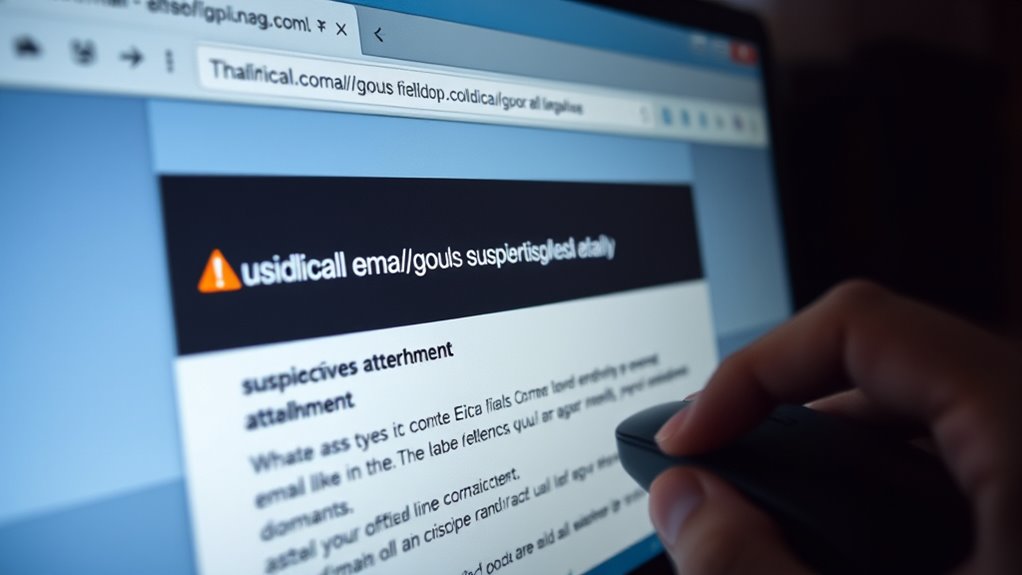
Unusual links and attachments are common signs of a phishing attempt, so it’s essential to examine them carefully before clicking. Phishers often use link disguise to hide malicious URLs, making it seem legitimate. Attachments can also carry risks, sometimes containing malware or viruses. To spot these dangers, look for:
- Suspicious or misspelled URLs that don’t match known websites
- Unexpected attachments from unknown senders
- Links that prompt you to enter sensitive info or seem out of context
Always hover over links to see the true URL before clicking, and avoid opening attachments from unfamiliar sources. Recognizing these signs helps you prevent falling victim to scams that exploit link disguise and attachment risks. Being aware of public appearances and endorsements can also alert you to potential scams involving fake endorsements or impersonation.
Verifying the Authenticity of Requests for Personal Information
Always check the sender’s details carefully to guarantee the message is legitimate. Verify official contact methods through trusted sources before sharing any personal information. Be cautious of urgent requests that pressure you to act quickly, as scammers often use this tactic to bypass your hesitation. Additionally, understanding the importance of affiliate disclosure can help you recognize scams that mimic legitimate promotional messages. Remember that legitimate organizations typically do not ask for sensitive information via unsolicited messages, so always verify through official channels and be aware of privacy policies that outline how your data is handled. Recognizing signs of thermal behavior in emails and texts can also help identify suspicious activity that deviates from normal communication patterns. Being aware of anime culture and storytelling can also help you distinguish genuine messages from scams that attempt to imitate official communications. Paying attention to nanotechnology advancements can further inform you about credible sources and reduce the risk of deception.
Check Sender Details Carefully
Carefully checking the sender details is essential to verify if a request for personal information is genuine. Start with email header analysis to examine the origin of the message. Look for inconsistencies or suspicious domains that don’t match official company addresses. Conduct a sender reputation check by researching the sender’s email or phone number to see if it’s associated with scams or known malicious activity. Be cautious of slight misspellings or unusual sender names that may mimic legitimate contacts.
- Examine the email header for suspicious routing information
- Verify the sender’s domain matches official sources
- Research the sender’s reputation online to flag potential threats
Verify Official Contact Methods
To verify if a request for personal information is legitimate, you should confirm that the contact method matches official channels. Official contact verification involves checking whether the message comes through trusted communication channels, such as official email addresses, phone numbers, or website links. Avoid responding to unsolicited messages that ask for sensitive details unless you’ve confirmed their authenticity. Always visit the company’s official website directly instead of clicking on links in the message. Be wary of slight misspellings or unusual domain names, which can indicate scams. If in doubt, contact the organization using contact details from their official website or previous legitimate correspondence. This guarantees you’re engaging through trusted communication channels and reduces the risk of falling for phishing scams.
Beware of Urgent Requests
Have you ever received a message demanding immediate action to share personal details? Phishers often use urgent requests to pressure you into making quick decisions. These pressure tactics create a sense of panic, making you less likely to scrutinize the message. Always pause and verify before responding. Look out for signs like unfamiliar sender addresses or vague language. Remember, legitimate organizations rarely ask for sensitive info through urgent messages. To protect yourself:
- Don’t click links or download attachments in urgent requests
- Contact the organization directly using official contact info
- Question the legitimacy if the message creates unnecessary panic
Identifying Urgent or Threatening Language
Phishing emails and texts often use urgent or threatening language to trigger immediate reactions. This approach relies on emotional manipulation and false urgency to make you act without thinking. You might see phrases like “Your account will be suspended,” or “Immediate action required,” designed to panic you into clicking links or sharing sensitive info. These messages create a sense of crisis, making you feel you have no choice but to respond quickly. Recognizing this tactic is key to avoiding scams. Always take a moment to pause and assess the message critically. Remember, legitimate organizations rarely demand instant action or use aggressive language. Spotting these emotional triggers helps you stay calm and verify the message’s authenticity before reacting. Additionally, understanding common scam techniques can further improve your ability to identify and avoid phishing attempts. Being aware of emotional manipulation tactics can help you remain vigilant and resist pressure to act impulsively. Developing critical thinking skills around suspicious messages can also significantly reduce your chances of falling victim to scams. Recognizing the signs of manipulation can further empower you to respond appropriately and protect yourself from fraud. Moreover, familiarizing yourself with free floating tactics can help you better understand how scammers target emotional vulnerabilities to deceive victims.
Checking for Spelling and Grammar Errors
One clear sign of a scam is poor spelling and grammar errors scattered throughout the message. Phishing emails often contain these common spelling, grammar errors, and language mistakes that stand out. These errors can include misspelled words, awkward sentence structures, or inconsistent punctuation. Recognizing these signs can help you identify fraudulent messages quickly.
- Look for misspelled words or unusual phrasing that doesn’t match the sender’s usual language style
- Notice inconsistent grammar or odd sentence constructions that seem out of place
- Be wary of messages with abrupt language mistakes or awkward shift
Confirming the Source Through Official Channels
To verify a message’s authenticity, always confirm the sender’s identity through official channels before taking any action. Source verification is key to avoiding scams. Instead of clicking links or replying directly, visit the company’s website or contact their customer service directly using trusted contact information. This official communication method guarantees you’re speaking with a legitimate source, not a scammer impersonating someone you trust. Remember, scammers often use fake email addresses or phone numbers that look real but aren’t. By double-checking through official channels, you reduce the risk of falling for phishing attempts. Always be cautious and prioritize direct verification, especially when sensitive information or urgent requests are involved. Incorporating security best practices such as enabling two-factor authentication can further protect your accounts. AI discoveries and advancements can sometimes be exploited in phishing schemes, so staying informed is crucial. Confirming the source through official communication is your best defense against scams.
Understanding Common Phishing Tactics and Techniques
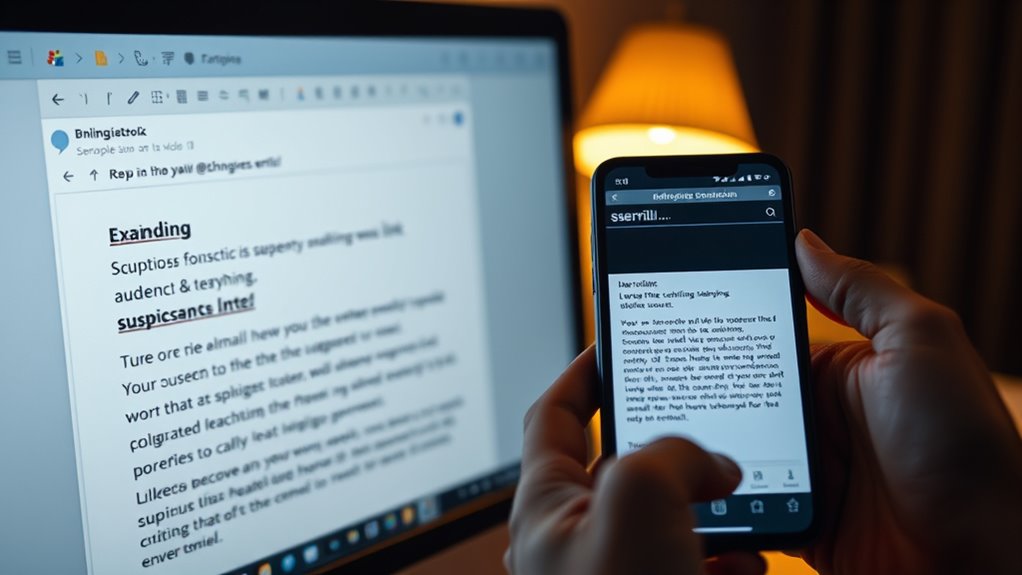
Scammers continually refine their methods to trick even cautious individuals. Understanding common scam themes helps you stay alert as phishing evolves. They often use urgent language, pretending to be banks or government agencies, to create pressure. Phishing tactics now include fake websites that look legitimate or messages with malicious links. Recognizing these techniques is vital to avoid falling for scams.
Key tactics include:
- Impersonation of trusted entities: pretending to be your bank, employer, or official services.
- Urgent or threatening language: creating a sense of panic to prompt quick action.
- Fake websites and links: mimicking real sites to steal credentials or install malware.
Knowing these common scam themes and the phishing evolution helps you spot scams before they succeed.
Using Security Tools and Browser Features to Detect Scams
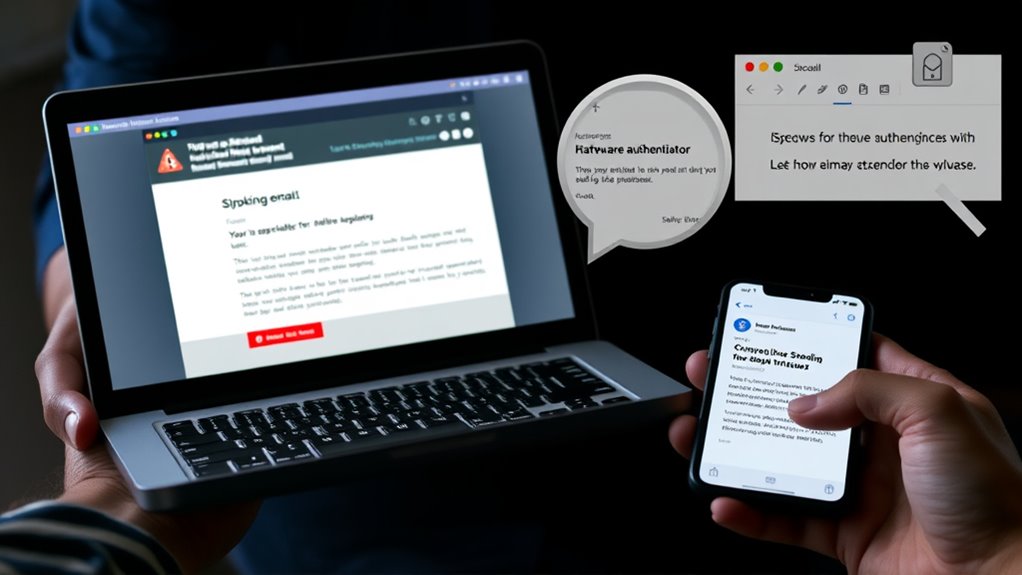
You can protect yourself by enabling browser warnings that alert you to suspicious sites. Security extensions add an extra layer of defense, helping you spot scams before clicking. Using these tools makes it easier to identify and avoid phishing attempts quickly.
Enable Browser Warnings
Enabling browser warnings is an effective way to catch potential scams before they reach your inbox. Modern browsers offer security alerts that flag suspicious websites, helping you identify phishing examples and prevent scams. When you visit a site, these warnings can alert you if the site’s security certificate is invalid or if it’s known for malicious activity. This proactive approach enhances scam prevention, saving you from clicking on harmful links. To get the most out of these features, guarantee your browser’s security settings are turned on and up to date. Regularly check for updates to keep warnings current. By staying vigilant and leveraging these built-in tools, you reduce the risk of falling victim to phishing attacks.
- Enable automatic security alerts in your browser
- Update your browser regularly for the latest scam prevention features
- Pay attention to warning messages before proceeding on suspicious sites
Use Security Extensions
Security extensions and browser features can substantially enhance your ability to detect phishing scams before they cause harm. Installing security extensions, like those with built-in phishing filters, adds an extra layer of protection while browsing. These tools automatically scan websites and links for suspicious activity, alerting you if a site is potentially malicious. Many security extensions also block harmful scripts, identify fake websites, and warn you about compromised links. Using these browser features helps you stay vigilant and reduces the chance of falling for a scam. Keep your extensions up-to-date, and choose reputable ones from trusted sources. By leveraging security tools and phishing filters, you can browse more confidently and avoid scam attempts that might otherwise slip through.
Best Practices for Responding Safely to Suspicious Messages
When you encounter a suspicious message, the most important step is to remain calm and avoid rushing into any response. Staying composed helps you think clearly and avoid falling for scams. Remember, phishing awareness is key to scam prevention. Do not click links or download attachments until you verify the sender’s identity. Instead, follow these best practices:
- Contact the sender directly through official channels to confirm legitimacy.
- Do not share personal or financial information in response.
- Report the message to your IT department or service provider for further investigation.
Frequently Asked Questions
How Can I Report a Suspicious Phishing Email or Text?
You should report a suspicious phishing email or text by using your email provider’s or messaging app’s scam reporting tools, which often include a “Report” button. Additionally, you can forward the message to official scam reporting procedures, like FTC’s complaint assistant or your company’s security team. Prompt reporting helps protect others and stops scammers. Always keep any suspicious messages intact when reporting, so authorities can investigate effectively.
Are There Specific Signs That Indicate a Scammer Is Targeting Me Personally?
Think of targeted phishing like a sniper aiming directly at you; scammers look for signs you’re personalized scams. If you notice emails or texts that use your name, mention recent activity, or seem oddly urgent, they’re likely targeting you specifically. Be cautious of messages asking for sensitive info or prompting quick action. Recognizing these clues helps you stay safe and avoid falling for targeted phishing schemes.
What Should I Do if I Accidentally Click on a Malicious Link?
If you accidentally click on a malicious link, act quickly. First, immediately close the page and run a virus scan. Then, visit your email provider for email recovery options and change your passwords, especially if you entered any personal info. If prompted for a password reset, do so through official channels. Stay vigilant, monitor your accounts for suspicious activity, and consider enabling two-factor authentication for added security.
How Often Should I Update My Security Software to Stay Protected?
You should update your security software regularly, ideally as soon as updates are available. Software updates improve threat detection, patch vulnerabilities, and enhance overall protection. By keeping your security software current, you stay ahead of new scams and malicious threats. Make it a habit to check for updates weekly or turn on automatic updates, ensuring your defenses are always up-to-date and providing the best possible protection against cyber threats.
Can Using a VPN Help Prevent Phishing Attacks on My Device?
Using a VPN can help prevent phishing attacks on your device by providing encryption advantages that protect your data from hackers. VPN benefits include masking your IP address and securing your online activity, making it harder for scammers to target you. While a VPN isn’t foolproof against phishing emails or texts, it adds an extra layer of security, reducing your risk of falling victim to cyber threats.
Conclusion
Stay vigilant like a lighthouse guiding ships through stormy seas. By recognizing shady sender addresses, examining message tones, and verifying links, you’ll navigate the digital waters safely. Trust your instincts when messages scream urgency or threaten harm—these are the sirens of scams. Use security tools as your trusty compass, and always confirm sources. With these skills, you’ll steer clear of scams, keeping your digital journey smooth and secure like a well-charted voyage.