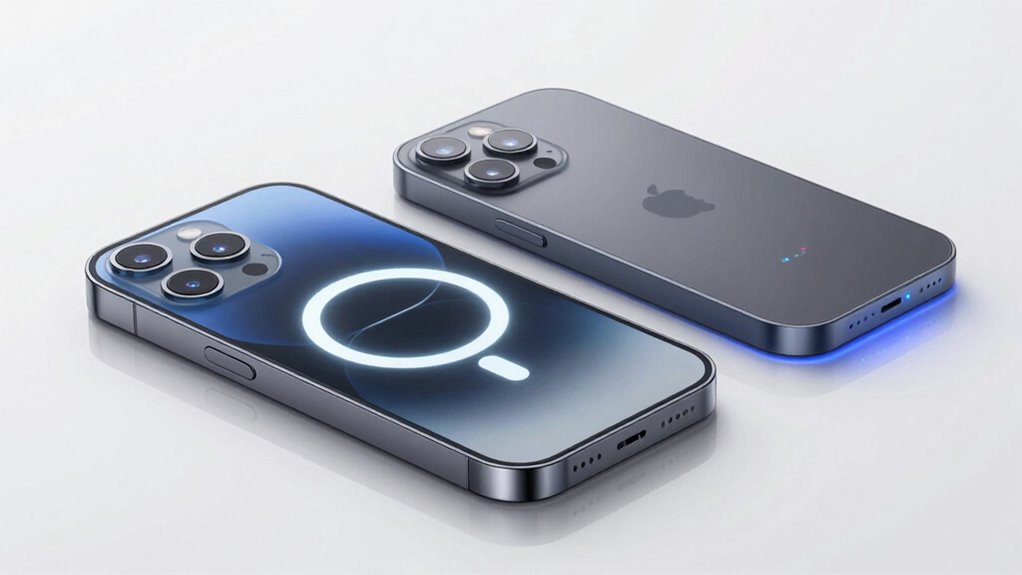

MagSafe is built specifically for newer iPhones, offering faster charging up to 15W with magnetic alignment for easy, precise placement. Qi wireless chargers work with a wider range of devices but typically charge slower at 5-10W with less magnetic support. MagSafe provides a seamless, secure experience for compatible iPhones, while Qi offers more versatility and affordability across brands. If you’re curious about compatibility, safety, and cost differences, you’ll find useful insights ahead.
Key Takeaways
- MagSafe offers faster charging up to 15W with magnetic alignment, while Qi provides slower, 5-10W charging with less precise contact.
- MagSafe is exclusive to certain iPhone models with built-in magnets, whereas Qi is compatible with a wider range of devices.
- Magnetic safety features in MagSafe ensure proper alignment and reduce overheating risks, unlike Qi chargers.
- MagSafe accessories tend to be more expensive and premium, while Qi accessories are more affordable and varied.
- Qi supports broader device compatibility, making it more versatile across different brands and older devices.
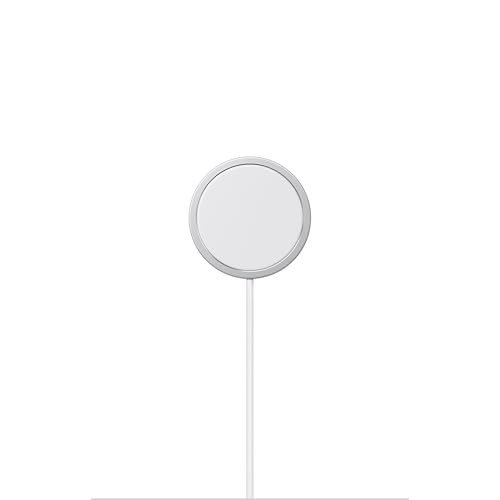
Apple MagSafe Charger (2 m): Wireless Charger with Fast-Charging Capability
The MagSafe Charger makes wireless charging a snap. The perfectly aligned magnets attach to compatible iPhone models. The…
As an affiliate, we earn on qualifying purchases.
As an affiliate, we earn on qualifying purchases.
Compatibility and Device Requirements
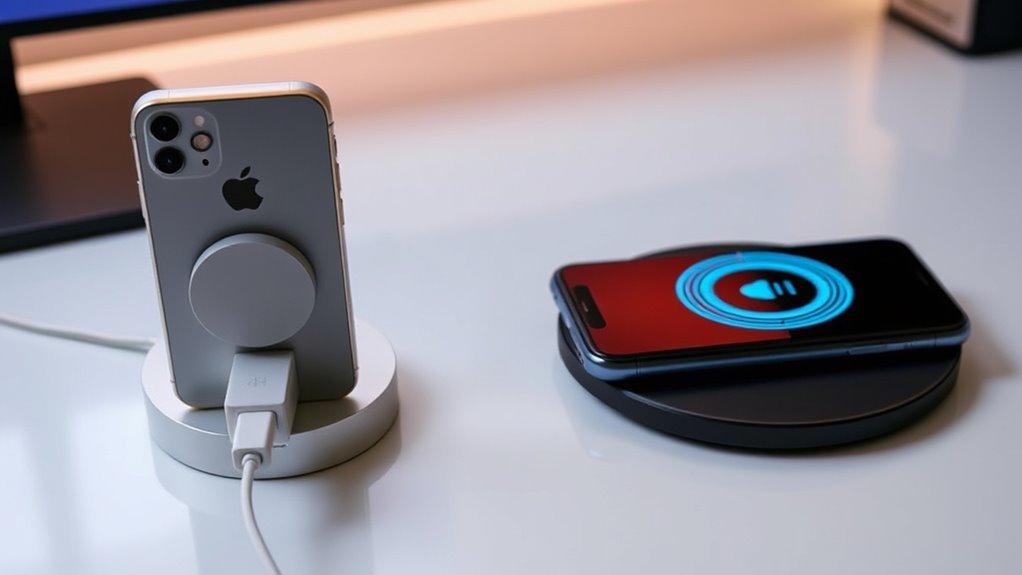
When choosing between MagSafe and Qi wireless charging, it’s important to understand their compatibility and device requirements. Charging pad compatibility varies, so verify your device supports the specific technology. MagSafe chargers are designed exclusively for certain iPhone models starting from iPhone 12, requiring a compatible device with built-in MagSafe magnets. In contrast, Qi chargers work with a wider range of devices, including many Android phones and older iPhones, but you must confirm that your device supports Qi wireless charging. Device type requirements also matter; some devices need specific cases or adapters to enable wireless charging. Check your device specifications before purchasing a charging pad to avoid compatibility issues. Understanding these requirements helps you select a charger that seamlessly works with your device, especially considering the compatibility standards and other display features that may influence overall device performance. Additionally, reviewing device compatibility ensures the chosen charger aligns with your device’s specific needs and avoids potential charging problems. Furthermore, understanding ear wax odor and other environmental factors can help you maintain your device and accessories in optimal condition, ensuring consistent charging performance. Also, being aware of piercing care and hygiene practices can help prevent damage to your device or accessories from dirt or moisture buildup, supporting optimal operation.
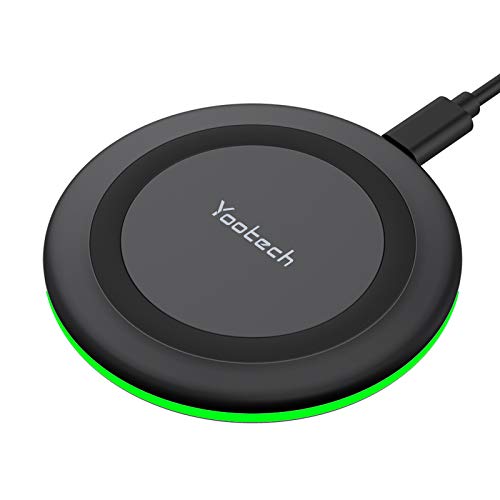
Yootech Wireless Charger,10W Max Wireless Charging Pad Compatible with iPhone 17/17 Pro/17 Pro Max/Air/16/15/14/13/SE 2022/12/11,Samsung Galaxy S25/S24/S23,for AirPods Pro 3(No AC Adapter)
【3 Charging modes Available for Different Phones】7.5W charging mode is for iPhone 17/17 Pro/17 Pro Max/Air/16/15/14/14 Plus/14 Pro/14…
As an affiliate, we earn on qualifying purchases.
As an affiliate, we earn on qualifying purchases.
Charging Speed and Power Output
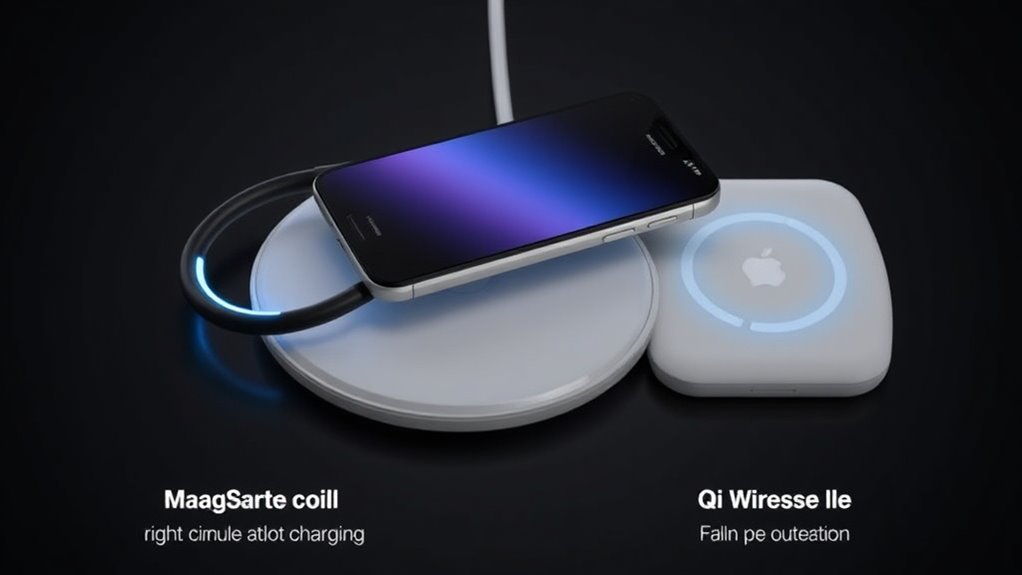
Charging speed and power output are key factors to contemplate when choosing between MagSafe and Qi wireless charging, as they directly impact how quickly your device recharges. MagSafe offers faster charging speeds, typically up to 15W, which can reduce charging time but may generate more heat. Qi chargers generally provide lower power output, around 5-10W, resulting in slower charging but better heat dissipation. This balance influences battery longevity, as excessive heat can degrade your battery over time. To optimize performance, consider these points:
MagSafe charges faster (up to 15W) but may generate more heat, while Qi offers slower, cooler charging for better battery health.
- Higher power output speeds up charging but may increase heat buildup
- Slower charging preserves battery health and longevity
- Effective heat dissipation reduces thermal stress
- Consistent charging speeds help maintain battery capacity over time
- Understanding thermal management is essential to prevent overheating and prolong device lifespan
Additionally, the way heat is managed during charging can significantly affect the overall battery lifespan, making proper thermal regulation crucial for long-term device health. Proper thermal regulation helps prevent overheating and maintains battery efficiency over time. Incorporating thermal management techniques into design can further enhance device longevity and safety.

SUPFINE Magnetic for iPhone 14 Case & iPhone 13 Case (Compatible with MagSafe)(Military Grade Drop Protection) Translucent Matte Shockproof Phone Cover,Black
Super Magnetic Attraction: Powerful built-in magnets, easier place-and-go wireless charging and compatible with MagSafe
As an affiliate, we earn on qualifying purchases.
As an affiliate, we earn on qualifying purchases.
Magnetic Alignment and Convenience

Magnetic alignment considerably enhances the convenience of wireless charging by ensuring your device snaps into the correct position effortlessly. This is achieved through a strong magnetic field that guides your device into best contact, improving alignment accuracy. With proper magnetic alignment, you won’t struggle to position your device or worry about inefficient charging. The magnets act as a natural guide, making the process quick and seamless. To highlight the differences, here’s a quick comparison:
| Feature | Magsafe | Qi Wireless Charging |
|---|---|---|
| Magnetic field | Strong, precise | Minimal or none |
| Alignment accuracy | High, ensures perfect fit | Varies, less reliable |
| Convenience | Very high, effortless snap | Less intuitive, manual alignment |
| User experience | Seamless, quick setup | Occasionally frustrating |
This magnetic field makes charging more convenient and reliable.
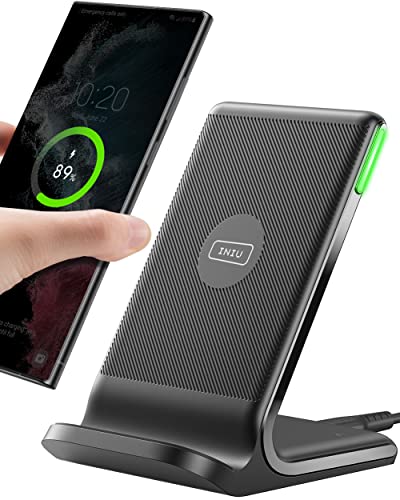
INIU Wireless Charger, 15W Fast Wireless Charging Station with Sleep-Friendly Adaptive Light Compatible with iPhone 17 16 15 14 13 12 Pro Max Samsung Galaxy S25 S24 S23 Note 20 Google etc
From INIU–the SAFE Fast Charge Pro: Experience the safest charging with over 38 million global users. At INIU,…
As an affiliate, we earn on qualifying purchases.
As an affiliate, we earn on qualifying purchases.
Compatibility With Other Devices and Accessories
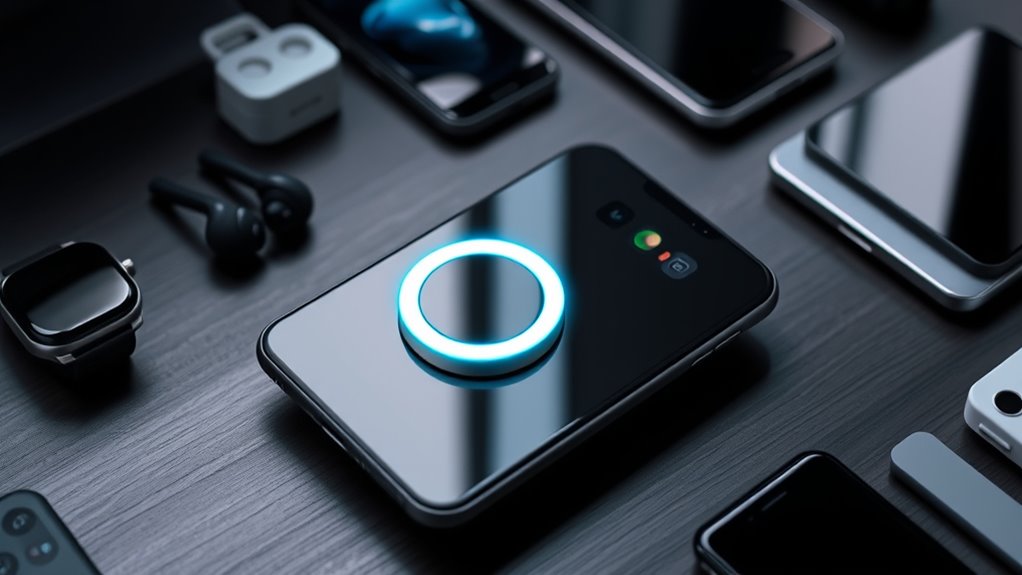
Magsafe’s built-in magnets and proprietary design guarantee broad compatibility with Apple’s ecosystem, including iPhone cases, mounts, and accessories. This assures seamless brand compatibility and makes it easier to find accessory options tailored for your device. However, the magnetic nature can limit compatibility with non-Apple accessories or third-party products that aren’t designed with Magsafe’s standards. Qi wireless chargers, on the other hand, offer greater accessory diversity and compatibility across various brands and device types, including Android phones. Additionally, wave and wind considerations are important for outdoor or exposed environments, where Qi chargers tend to be more adaptable due to their less restrictive design. The interoperability between different wireless charging standards also influences user flexibility and device compatibility in various scenarios. Furthermore, understanding standardization in wireless charging can help users select the most suitable charger for their needs. An awareness of power delivery capabilities is also crucial when choosing between Magsafe and Qi options to ensure optimal charging speed and efficiency. Moreover, considering environmental durability can impact the longevity and reliability of your charging setup, especially in diverse conditions.
Safety Features and Standards
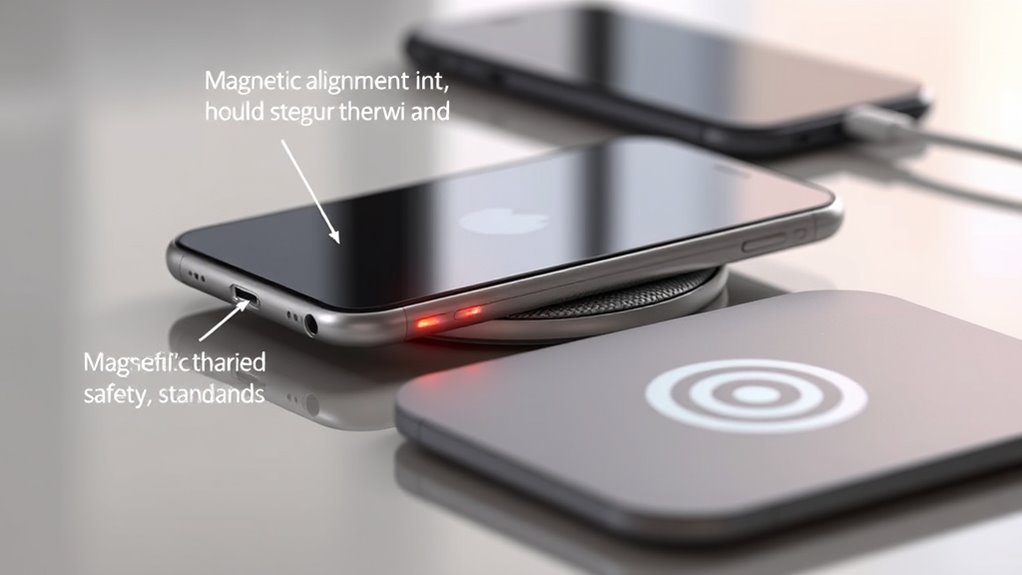
Safety is vital when choosing wireless charging options, so you should consider magnetic alignment safety features and how well the devices meet certification standards. Proper magnetic alignment helps prevent damage and guarantees reliable charging, while certification confirms adherence to safety regulations. Paying attention to these standards gives you peace of mind and protects your devices from potential hazards. Additionally, consulting safety checklists and load‑planning tools can help ensure your wireless charging setup is both safe and reliable. Looking into device compatibility can also prevent issues related to improper charging standards. Moreover, understanding certification standards can aid in selecting products that meet recognized safety benchmarks. Comparing mount, OTA, and camera options with safety features can further enhance your setup’s overall safety and effectiveness. To optimize safety, consider emergency shutdown features that can quickly disconnect power if needed.
Magnetic Alignment Safety
Because improper alignment can pose safety risks, wireless charging standards include strict safety features to guarantee user protection. Magnetic safety ensures devices stay correctly aligned, reducing the chance of overheating or damage. Alignment security is critical for safe power transfer and device longevity. These safety measures include:
- Built-in magnetic safety mechanisms to prevent misalignment
- Automatic shut-off if alignment is lost
- Insulation standards to prevent short circuits
- Temperature regulation controls during charging
- Magnetic safety features that prevent accidental disconnection or misalignment during use. Additionally, alignment security protocols are designed to detect and correct misalignments instantly, further enhancing safety during wireless charging. Incorporating safety standards helps ensure compliance with industry regulations and promotes user confidence. These features help maintain safe magnetic safety and ensure your device stays securely aligned throughout the charging process. Proper alignment security minimizes risks like overheating and damage, making wireless charging safer and more reliable for everyday use. By adhering to these standards, manufacturers protect users while delivering efficient power transfer.
Certification and Compliance
Certification and compliance standards guarantee that wireless charging devices meet essential safety requirements before reaching consumers. These standards ensure your device adheres to strict guidelines, minimizing risks like overheating, electrical faults, or fire hazards. Certification standards, such as those from the Wireless Power Consortium (WPC) for Qi chargers or Apple’s MFi program for MagSafe, verify that products meet industry safety benchmarks. Compliance requirements also include rigorous testing for electromagnetic interference and thermal safety. When choosing a wireless charger, look for certified products to ensure they’ve passed safety inspections and conform with relevant regulations. This not only protects you and your device but also guarantees compatibility and reliable performance. Prioritizing certified devices helps you avoid potential hazards and ensures a safe charging experience.
Cost and Availability of Accessories
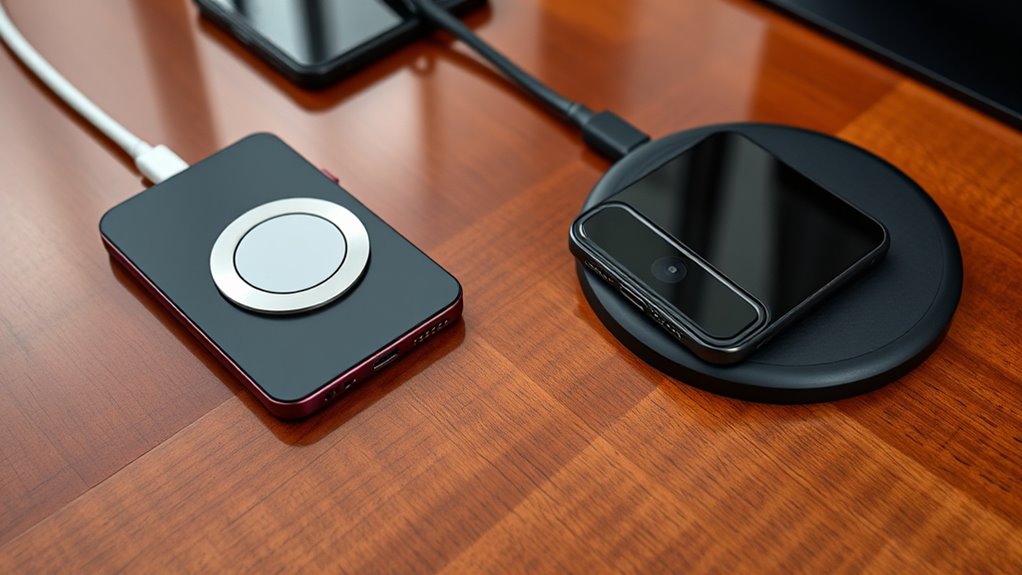
You’ll find that accessory prices vary widely, affecting your overall cost depending on the brand and features. Compatibility can also be be a concern, especially if your device isn’t designed for certain charging standards. Additionally, the availability of compatible accessories might be limited, making it harder to find the right fit for your needs. For example, understanding accessory compatibility can help you choose accessories that match your device’s performance capabilities. Being aware of charging standards can also help you make more informed purchasing decisions and avoid compatibility issues. Moreover, considering sustainability initiatives can be beneficial, especially as some manufacturers incorporate eco-friendly practices into their product lines, aligning with the growing trend of eco-friendly accommodations and sustainable travel practices.
Price Range Variations
Have you noticed how the price and availability of wireless charging accessories can vary widely between Magsafe and Qi systems? Magsafe accessories tend to be more expensive, reflecting a narrower affordability spectrum but often offering premium build quality and seamless integration. Meanwhile, Qi accessories come in a broad range of prices, making them accessible for most budgets.
Consider these key points:
- Magsafe chargers and cases often cost more upfront.
- Qi-compatible accessories are generally more affordable.
- Availability of third-party accessories is wider for Qi.
- Price variations may influence your overall choice based on budget.
Your decision depends on balancing cost with desired features, comfort, and convenience.
Compatibility of Devices
When it comes to device compatibility, understanding how different chargers work with your gadgets is key to making a smart choice. Magsafe requires specific iPhone models and accessories, which may limit compatibility but often guarantees better battery longevity due to optimized charging. Qi wireless chargers, on the other hand, are more widely compatible across various devices, including many Android phones, making them more versatile. However, using incompatible chargers can affect battery health over time, impacting longevity. Additionally, the environmental impact varies; affordable, universal Qi chargers reduce electronic waste by supporting multiple devices, whereas proprietary Magsafe accessories might lead to more waste if not reused. Consider your device ecosystem and long-term needs when evaluating these options.
Accessory Availability
Access to accessories varies considerably between Magsafe and Qi wireless charging options. Magsafe benefits from a dedicated accessory ecosystem, making it easier to find specialized cases, mounts, and wallets designed specifically for Apple’s standards. In contrast, Qi’s universal wireless standards mean a broader range of compatible accessories, but the quality and fit can vary.
- Magsafe accessories tend to be more integrated and sleek but often cost more.
- Qi chargers are widely available in numerous styles and price ranges.
- Compatibility with third-party accessories is more consistent with Qi due to its open standards.
- Availability of specialized accessories for Magsafe may be limited but generally offers better quality.
Frequently Asked Questions
Can I Switch Between Magsafe and Qi Chargers Easily?
Yes, you can switch between MagSafe and Qi chargers easily, thanks to charger compatibility and device flexibility. Most modern iPhones and compatible devices support both wireless charging standards, so switching is straightforward. Just align your device properly on the charger surface, and you’re good to go. Keep in mind that charging speeds might vary slightly, but overall, switching between these chargers offers convenient, seamless wireless charging options.
Do All Qi Chargers Support Fast Charging?
Not all Qi chargers support fast charging, so your device compatibility and charging speed vary. If you want quick power-ups, look for chargers labeled as fast-charging capable—these deliver higher wattage for faster results. Keep in mind, your device must also support fast charging to benefit. Don’t assume every Qi charger will boost your device quickly; verify specifications to ensure you’re getting the speed you desire.
Are There Any Compatibility Issues With Non-Apple Devices?
You might face compatibility issues with non-Apple devices because not all support the same charging standards. Some Qi wireless chargers are designed specifically for Apple devices, especially Magsafe, which uses proprietary technology. To guarantee proper device compatibility, check if your device supports Qi standards and look for chargers that specify compatibility with your device’s brand and model. This way, you’ll avoid slow charging or inability to charge altogether.
Can I Use a Magsafe Charger With Non-Metallic Cases?
Yes, you can use a MagSafe charger with non-metallic cases. MagSafe compatibility relies on magnetic alignment, which works best with non-metallic cases like silicone, plastic, or rubber. Metal cases can interfere with charging or prevent the magnets from aligning properly. So, if your case isn’t metallic, you’ll enjoy seamless wireless charging experience with MagSafe, ensuring your device stays securely in place and charges efficiently.
What Are the Environmental Impacts of Each Charging Technology?
You’ll find that both Magsafe and Qi wireless chargers impact the environment through recycling challenges and material sustainability. Magsafe’s magnetic components often involve metals that complicate recycling, while Qi chargers usually use plastics and electronics that can be tough to repurpose. By choosing eco-conscious options, you help reduce waste and promote sustainable material use, making your charging habits more friendly to the planet. Every eco-effort counts!
Conclusion
Understanding the differences between MagSafe and Qi wireless charging helps you choose the right option for your device. MagSafe offers faster charging with magnetic alignment, while Qi provides more universal compatibility. Did you know that Qi chargers account for over 80% of wireless charging devices worldwide? By considering compatibility, speed, and safety, you can optimize your charging experience and guarantee your device stays powered efficiently and securely.