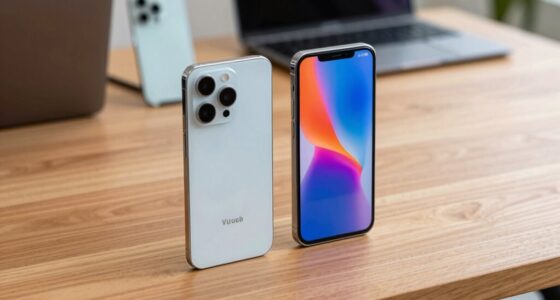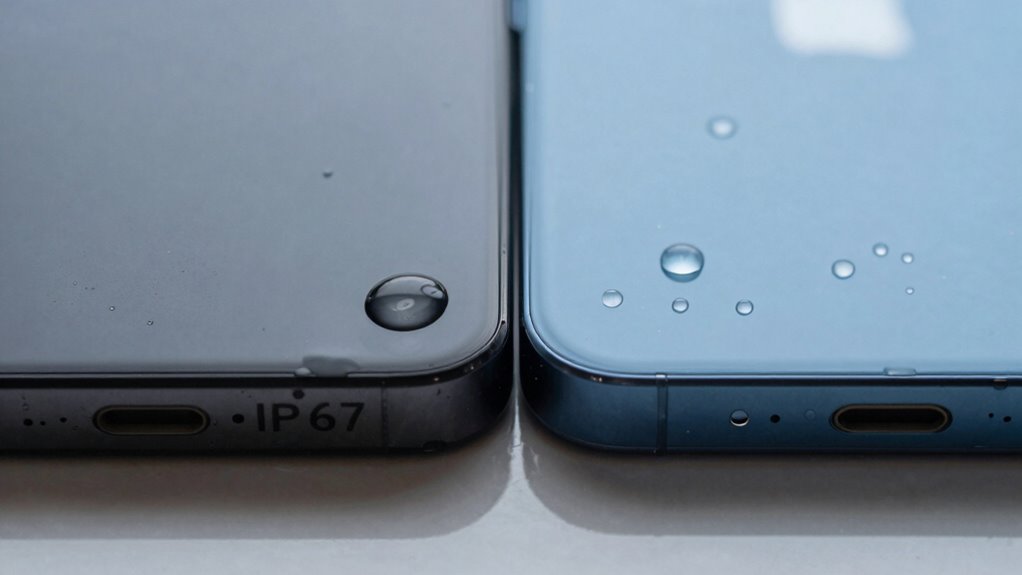

IP67 and IP68 ratings show how well your phone resists dust and water. IP67 means it can handle immersion in water up to 1 meter for 30 minutes, while IP68 offers better protection for deeper and longer dips, sometimes beyond 1 meter. These ratings are based on lab tests, but real-world conditions vary. To understand what this means for your phone’s durability, keep exploring the details below.
Key Takeaways
- IP67 indicates protection against dust and water immersion up to 1 meter for 30 minutes.
- IP68 offers superior dust protection and can withstand deeper, longer water submersions beyond 1 meter.
- Lab tests ensure standardized testing, but real-world conditions like saltwater or impacts can affect water resistance.
- Water resistance ratings do not guarantee protection during prolonged, high-pressure water exposure or physical damage.
- Proper maintenance and cautious use are essential to preserve water resistance over the device’s lifespan.

Hiearcool Waterproof Phone Pouch, IPX8 Waterproof Phone Case for iPhone 17/16/15/14 Pro Max, Cell Phone Dry Bag for Beach & Cruise Essentials, Touch Screen, Lanyard Included, 2 Pack (Fits Up to 8.9”)
Cruise-Ready IPX8 Waterproof Protection: Fully sealed IPX8 waterproof pouch protects your phone from splashes, rain, pool water and…
As an affiliate, we earn on qualifying purchases.
As an affiliate, we earn on qualifying purchases.
Understanding the IP Rating System
To understand water resistance ratings on phones, grasping the IP rating system is vital. The system measures how well your device guards against dust and water, which is essential for preventing issues like marine corrosion or damage during underwater photography. An IP rating consists of two digits: the first indicates protection against solids, like dust, while the second reflects water resistance. Higher numbers mean better protection. For example, an IP67 phone can survive immersion in water up to a meter for 30 minutes, making it suitable for activities like capturing underwater photos without worry. Knowing these ratings helps you choose a phone that meets your needs, whether you’re exploring marine environments or taking pictures underwater. Understanding the system guarantees you pick a device with the right level of water resistance. Additionally, water resistance ratings can vary significantly, so it’s important to consider the specific rating for your intended usage. Being aware of dust protection levels can also be crucial, especially if you work or adventure in dusty environments. Recognizing the energetic alignment of your device can also contribute to better performance and longevity in challenging conditions. Proper maintenance of your device’s seals and waterproofing features can further enhance its durability in demanding environments. Regularly checking and servicing these features ensures your device maintains its waterproof integrity over time.

Pelican 2 Pack Marine – IP68 Waterproof Phone Pouch (Regular Size) Floating Waterproof Phone Case – Beach Cruise Ship Travel Essentials – Works w/All Phones – Detachable Lanyard – Black/Hi-Vis Yellow
IP68 Certified Waterproof Protection: A 3.3 feet/1 meter IP68 certified professional floating waterproof phone pouch is perfect for…
As an affiliate, we earn on qualifying purchases.
As an affiliate, we earn on qualifying purchases.
What Does IP67 Mean?
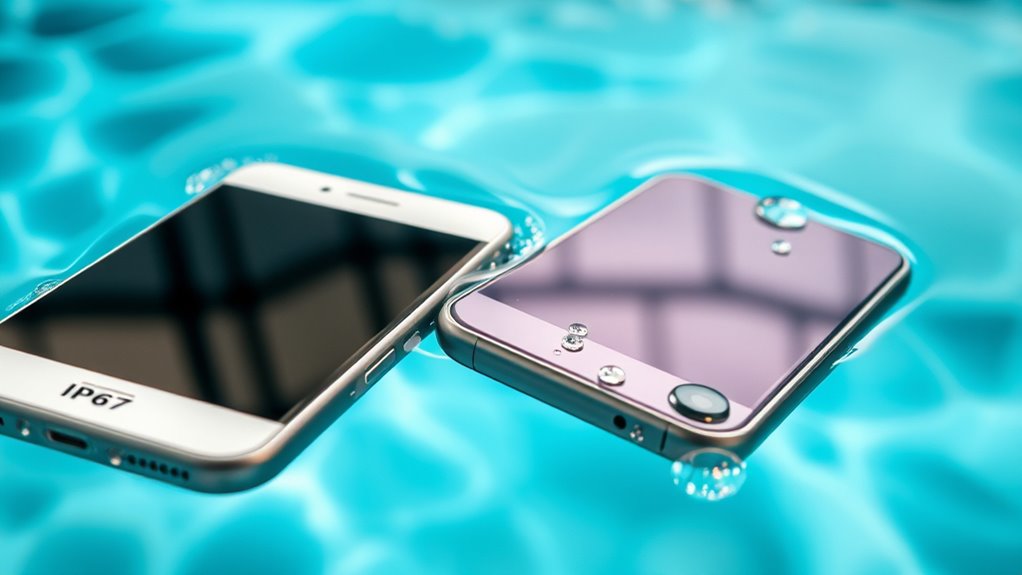
Wondering what IP67 actually means for your phone? IP67 is a water resistance rating indicating your device can handle immersion up to 1 meter deep for 30 minutes. This rating comes from rigorous marine testing, where phones are submerged in water to guarantee durability. The “6” signifies dust tightness, so your phone is protected against dust ingress. The “7” confirms it’s waterproof enough to withstand temporary submersion, thanks to waterproof coatings applied during manufacturing. These coatings form a barrier that prevents water from reaching internal components. Keep in mind, IP67 isn’t designed for continuous water exposure or high-pressure water jets. It’s perfect for everyday situations like accidental splashes, rain, or brief dips in water. Additionally, understanding the water resistance standards and water resistance testing procedures can help you better assess the durability of your device, especially considering waterproof coatings that ensure these ratings are reliable. Knowing how water resistance ratings are tested provides insight into the real-world performance of your phone’s waterproofing, and proper device maintenance can help sustain these protective features over time.
underwater phone camera
As an affiliate, we earn on qualifying purchases.
As an affiliate, we earn on qualifying purchases.
Decoding IP68: The Higher Standard
While IP67 offers solid protection against water, IP68 raises the bar by allowing your phone to withstand deeper and longer immersions. This higher standard substantially reduces the risk of water damage during accidental submersion, even in challenging environments. It also provides enhanced dust protection, minimizing dust intrusion that could harm internal components. Additionally, robust hardware standards emphasize the importance of durable design to ensure durability and security in data centers. With advancements in waterproof technology, some IP68-rated devices can endure immersion for extended periods under specific conditions. However, not all IP68 ratings are equal; some devices may tolerate deeper immersions for longer periods, but this isn’t guaranteed. To understand these nuances, consider this comparison: water resistance testing, which can vary significantly based on conditions and manufacturer standards.
| Feature | IP67 | IP68 |
|---|---|---|
| Water Depth | Up to 1 meter | Over 1 meter |
| Immersion Duration | 30 minutes | Varies, often longer |
| Dust Intrusion | Limited | Better protection |
| Water Damage Risk | Moderate | Lower |
Understanding the test conditions during certification can help you better assess how much water exposure your device can handle in real-world scenarios.
Hiearcool Waterproof Phone Pouch, IPX8 Waterproof Phone Case for iPhone 17/16/15/14 Pro Max, Cell Phone Dry Bag for Beach & Cruise Essentials, Touch Screen, Lanyard Included, 2 Pack (Fits Up to 8.9”)
Cruise-Ready IPX8 Waterproof Protection: Fully sealed IPX8 waterproof pouch protects your phone from splashes, rain, pool water and…
As an affiliate, we earn on qualifying purchases.
As an affiliate, we earn on qualifying purchases.
How Are Waterproof and Dustproof Ratings Tested?

You might wonder how waterproof and dustproof ratings are established, and it all starts with standard testing procedures. These tests are conducted in labs using controlled conditions to guarantee consistency, but they don’t always match real-world scenarios. Understanding testing standards helps you better interpret what those ratings really mean for everyday use. Smart home technology can influence how devices are tested and rated, as considerations like environmental factors and user interactions may vary outside the lab setting. Additionally, testing conditions often do not account for the diverse environments where devices are actually used, which is an important aspect to consider.
Standard Testing Procedures
Standard testing procedures for waterproof and dustproof ratings involve exposing devices to controlled environments that simulate real-world conditions. These tests guarantee your device withstands water, dust, and impact, just like in marine safety situations. During testing, your phone undergoes rigorous procedures to verify its electronic sealing and durability. Additionally, these tests often include Free Floating methods to assess device stability in various settings. You should feel confident knowing that:
- Devices are submerged under specific water depths and durations, mimicking everyday accidents
- Dust ingress is tested through fine particles, reflecting harsh environments
- Impact resistance is assessed to prevent damage from drops or pressure
- These standardized processes are designed to replicate real-life scenarios, ensuring your phone’s water resistance is reliable. They help manufacturers meet strict criteria, giving you peace of mind whether at sea or caught in a sudden downpour. Furthermore, testing procedures account for Environmental Conditions to ensure consistent performance across different climates and usage scenarios. Proper testing also involves Quality Assurance practices to maintain high standards and reliability in finished products.
Laboratory vs. Real-World Conditions
Laboratory tests provide controlled, repeatable conditions that measure a device’s water and dust resistance, but these scenarios don’t always reflect real-world use. In actual environments, factors like accidental drops, exposure to saltwater, or dust particles can challenge your phone’s corrosion resistance and impact durability. Tests often focus on static immersion or dust exposure, while real-world conditions involve dynamic stresses and unpredictable hazards. For example, a device may pass an IP68 test in the lab but suffer damage from a sharp object or prolonged exposure to harsh elements outside the lab. Additionally, environmental factors such as temperature fluctuations and chemical exposure can affect a device’s long-term durability. These external influences can accelerate wear and tear, making proper care and maintenance crucial for longevity. Understanding this gap helps you realize that even with high ratings, proper care is essential to maintain your phone’s durability against impacts and corrosion over time. Proper handling and user habits significantly influence the actual lifespan of water-resistant devices beyond lab ratings, especially when subjected to harsh conditions outside controlled environments. Regularly inspecting seals and avoiding unnecessary exposure to extreme elements can help preserve your device’s waterproof integrity over time.
Real-World Water Resistance Expectations
While water resistance ratings provide useful guidelines, they often don’t reflect how phones perform in everyday situations. In real life, your device might face splashes from rain or accidental drops into shallow water, but not the controlled conditions of submerged testing. Expectations can be misleading if you assume your phone is fully waterproof in all scenarios. You might:
- Be disappointed if a splash damages your phone during a sudden rain shower.
- Assume your phone can handle accidental drips without issue, even if it’s not rated for splash resistance.
- Overlook the importance of gentle handling, thinking submerged testing guarantees full protection.
- Remember that water resistance standards like IP67 and IP68 refer to specific testing conditions and may not cover all real-world situations.
Differences in Usage Scenarios
Different usage scenarios can considerably influence how well your phone’s water resistance holds up. Activities like swimming, diving, or even heavy rain introduce environmental factors that challenge your device’s rating. For example, submerging your phone in saltwater or exposing it to high-pressure water can weaken seals over time, regardless of its IP rating. Conversely, casual splashes or brief exposure to rain typically won’t cause issues, especially if your phone has an IP68 rating. It’s crucial to consider not just the water exposure but also how you use your device in different environments. Your usage scenarios, such as outdoor adventures or daily commuting, dictate how much environmental stress your phone’s water resistance must withstand. Understanding these factors helps you manage expectations and protect your device effectively.
Limitations of IP Ratings
IP ratings don’t always reflect real-world water exposure, so your phone might not be as protected as you think. Actual water contact varies, and tests often don’t account for everyday conditions or prolonged exposure. Over time, even phones with high ratings can lose their water resistance, so it’s important to stay cautious.
Actual Water Exposure Limits
Have you ever wondered how well a phone’s water resistance holds up in real-world situations? IP ratings set limits, but they don’t guarantee your device’s safety beyond specific conditions. Water ingress can occur if you expose your phone to high-pressure jets, deep submersion, or prolonged exposure, even if it’s rated IP67 or IP68. Dust penetration may also compromise its seals, increasing vulnerability.
Be cautious of these limits:
- Submerging your phone deeper or longer than rated
- Using your device in high-pressure water environments
- Relying on the rating for protection against dust and dirt during rough handling
Understanding these boundaries helps you avoid unexpected damage and protects your device from water ingress and dust penetration.
Real-World Testing Conditions
While IP ratings provide a standardized measure of water and dust resistance, they don’t account for the wide range of real-world conditions your phone may encounter. In marine environments, waves, splashes, and saltwater exposure can exceed tested limits, potentially compromising water resistance. During underwater photography, water pressure varies with depth, and sudden movements or turbulence can force water into seals. IP ratings assume static conditions and don’t consider factors like scratches, dirt, or debris that can weaken seals over time. Temperature fluctuations and prolonged exposure also impact durability. So, even if your phone claims an IP67 or IP68 rating, it’s best to avoid pushing it to its limits in unpredictable, challenging environments that go beyond controlled testing scenarios.
Durability Over Time
How well your phone resists water today doesn’t guarantee it will stay durable over months or years. Over time, factors like corrosion resistance and impact durability can diminish, risking damage even if it initially passed IP tests. Wear and tear from daily use, accidental drops, or exposure to harsh environments can weaken seals and protective coatings. This means your phone’s water resistance might decline, leaving it vulnerable to leaks and corrosion.
- You might think your phone is safe, but unseen cracks can invite moisture.
- Impact durability decreases with repeated drops, risking internal damage.
- Corrosion resistance can fade, compromising your device’s longevity and performance.
Choosing the Right Rating for Your Needs
Choosing the right water resistance rating depends on how you plan to use your phone daily. If you’re often around water or in dusty environments, a device with a higher rating, like IP68, offers better protection. It is crucial to understand the difference between waterproof vs. water resistant; waterproof means your phone can be submerged completely, while water resistant indicates it can handle splashes and brief immersions. Similarly, dustproof vs. water resistant highlights that dustproof devices prevent particles from entering, but water resistant models mainly guard against water exposure. Assess your activities—if you swim or work in dusty settings, prioritize higher ratings. Selecting the appropriate level ensures your phone stays protected without unnecessary over-specification.
Care and Maintenance for Water-Resistant Phones

Maintaining your water-resistant phone properly guarantees it continues to perform as expected over time. Regular care helps prevent water damage and prolongs your device’s longevity. Always check the seals and ports for dirt or debris, and avoid exposing your phone to extreme environments.
Remember these key tips:
- Test the water resistance periodically to ensure seals remain intact.
- Avoid pressing buttons underwater or in wet conditions, as moisture can seep in.
- Use a protective case for added safety from accidental drops or exposure to elements.
Future Trends in Water Resistance Technology
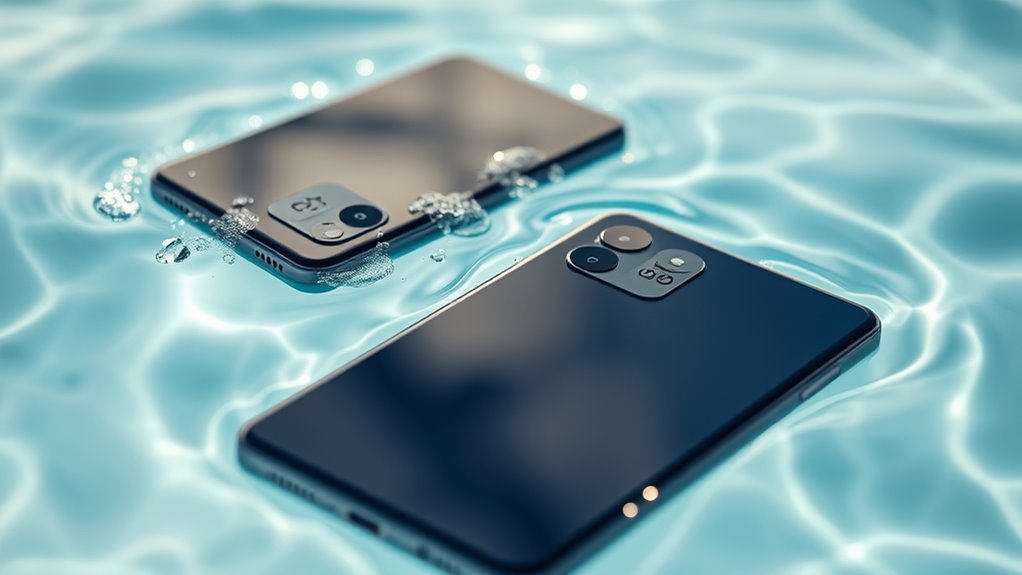
Advancements in water resistance technology are paving the way for more durable and reliable smartphones. Future innovations will likely enhance underwater photography capabilities, allowing you to capture clearer images at greater depths. Manufacturers are exploring advanced sealing techniques and materials that improve corrosion resistance, ensuring phones withstand prolonged exposure to water and salt. Expect to see better pressure resistance, enabling devices to endure higher water depths without compromising functionality. These developments will make water resistance more consistent across models, reducing the risk of damage during accidental submersion. As a result, your device will become more versatile, supporting activities like diving or swimming while maintaining performance. Overall, these trends aim to make water resistance seamless and more dependable, meeting the increasing demand for robust, water-ready smartphones.
Frequently Asked Questions
Can I Submerge My Phone Beyond Its Rated Depth Safely?
You shouldn’t submerge your phone beyond its rated depth, even with waterproof cases. These ratings aren’t guarantees for deep or prolonged water exposure. If you plan on taking your phone into water frequently, consider a waterproof case designed for higher depths, but avoid risking damage by exceeding the limits. Remember, daily water exposure like splashes or rain is usually safe, but deeper submersion can cause water to seep in.
Do IP Ratings Apply to All Phone Components Equally?
It might seem convenient, but IP ratings don’t apply equally to all phone components due to component variability and rating consistency. You could splash your phone’s screen without worry, but internal parts like microphones or charging ports might not be equally protected. So, while the rating covers the whole device, don’t assume every component’s equally resistant—treat your phone with care, especially around water.
How Do Environmental Factors Affect Water Resistance Ratings?
Environmental factors like temperature, humidity, and pressure can influence water resistance ratings by causing variability in testing conditions. You should know that environmental variability can lead to inconsistent test results, meaning your phone’s resistance might differ in real-world situations. Manufacturers try to standardize testing for accuracy, but extreme or fluctuating environments can affect performance. So, it’s wise to avoid exposing your device to harsh conditions, even if it’s rated water-resistant.
Are There Differences in Water Resistance Testing Standards Worldwide?
Sure, international testing for water resistance is a breeze—if you ignore regional standards. In reality, different countries have their own testing protocols, making it tricky to compare ratings globally. So, when your phone claims IP68, it might not meet the same standards elsewhere. You gotta watch out for these regional differences, because what’s waterproof in one place might not be in another. Always check the specific testing standards for peace of mind.
Can Water Damage Occur Even if a Phone Has a High IP Rating?
Water damage can happen even if your phone has a high IP rating. No rating guarantees complete protection against water ingress, especially if the device is exposed to extreme conditions or damage. You should remain cautious about durability concerns, as accidental drops, cracks, or improper sealing can compromise water resistance. Always avoid submerging your phone in deep or turbulent water, regardless of its IP rating, to prevent potential water ingress and damage.
Conclusion
So, now you know what those IP ratings really mean—spoiler: your phone isn’t invincible. Whether you choose IP67 or IP68, don’t get carried away diving into pools or washing dishes without a case. Remember, these ratings are more about peace of mind than superhero-level protection. Keep your expectations in check, and maybe, just maybe, stop treating your phone like a magic waterproof device. After all, even the toughest ratings have their limits!