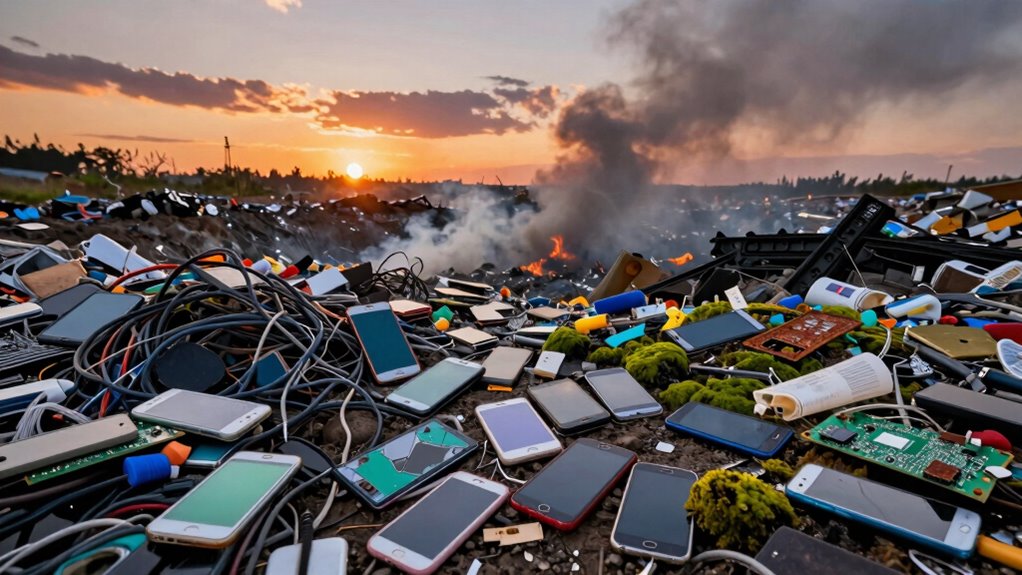

When you toss your smartphone, hazardous materials like lead and mercury can leak into soil and water, harming ecosystems and posing health risks. If improperly disposed of, the device’s metals and plastics often end up in landfills where toxic chemicals contaminate surroundings, waste resources, and threaten biodiversity. Recycling can recover valuable materials, but complex designs and hazardous components make it challenging. To learn how proper disposal benefits the environment, keep exploring this important topic.
Key Takeaways
- Improper disposal releases hazardous chemicals like lead and mercury into soil and water, harming ecosystems and human health.
- Landfilling smartphones causes toxic leachate, contaminating land and water, and wastes valuable materials like gold and rare earths.
- Recycling helps recover metals and reduces environmental hazards, but complex components and hazardous parts pose challenges.
- Illegal dumping and unregulated recycling increase pollution risks and environmental damage worldwide.
- Proper disposal through certified recycling programs minimizes pollution, recovers resources, and supports sustainability efforts.

EVEO Screen Cleaner Spray - Large Screen Cleaner Bottle - TV Screen Cleaner, Computer Screen Cleaner, for Laptop, Phone, Ipad - Computer Cleaning kit Electronic Cleaner (1 Pack)
Screen Cleaner is Your Screen’s New Bestfriend! - EVEO is proud to present a screen cleaner that’s perfectly...
As an affiliate, we earn on qualifying purchases.
The Lifecycle of a Smartphone: From Production to Disposal
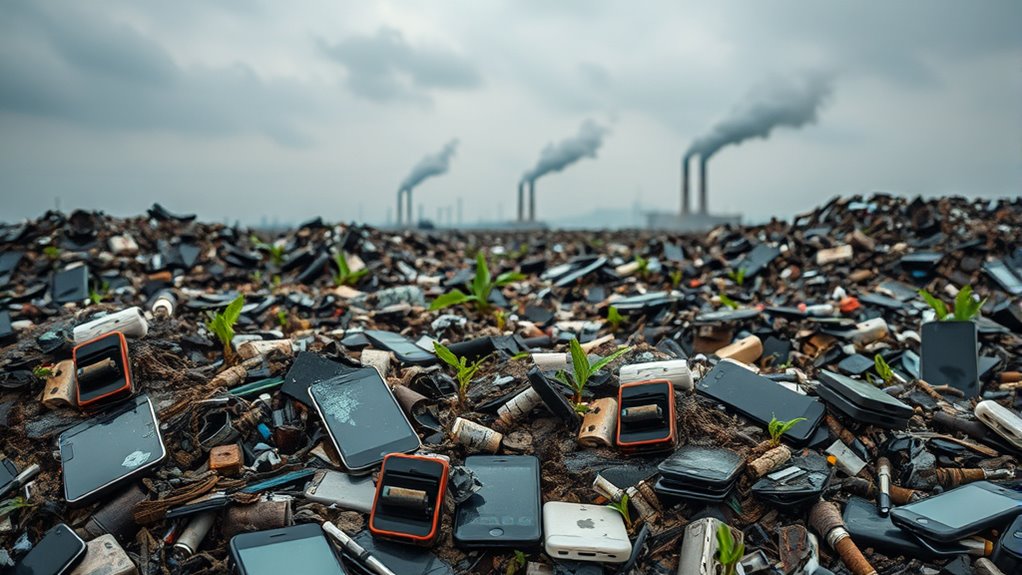
The lifecycle of a smartphone begins long before you turn it on for the first time. It starts with sourcing raw materials, often involving environmentally harmful mining practices. During manufacturing, design longevity is essential; a well-designed phone can last longer and withstand daily wear. Over time, battery degradation becomes inevitable, reducing your device’s performance and lifespan. Properly built smartphones may delay this process, but eventually, batteries lose capacity, forcing you to replace or upgrade. At the end of its life, many devices are discarded improperly, leading to environmental hazards. Recognizing how design choices and battery health influence your phone’s lifespan helps you make more sustainable decisions, reducing waste and environmental impact. A longer-lasting device minimizes the need for frequent replacements, supporting a more eco-friendly lifecycle. Implementing energy-efficient production practices can also significantly reduce the carbon footprint associated with smartphone manufacturing. Additionally, choosing repairable devices extends the lifespan and reduces electronic waste, contributing positively to environmental conservation. To further support sustainability, consumers can also participate in recycling programs that ensure proper disposal and reuse of valuable materials.

iO CLEAN Screen Cleaner Spray (16oz - 473ml) – Best Large Cleaning Kit
Screen cleaner spray and cloth. Screen cleaner spray and cloth are designed for high-end devices and work flawlessly...
As an affiliate, we earn on qualifying purchases.
Environmental Hazards of Improper Disposal

When smartphones are discarded improperly, hazardous materials like lead, mercury, and cadmium can leak into the environment, posing serious health risks. These hazardous chemicals can contaminate soil and water, affecting ecosystems and human health. When phones end up in landfills, the landfill impact worsens as toxic substances seep out over time. The table below highlights the common hazardous chemicals found in smartphones and their potential risks:
| Hazardous Chemical | Source in Smartphone | Environmental Impact |
|---|---|---|
| Lead | Solder, batteries | Water contamination |
| Mercury | Switches, displays | Air and water pollution |
| Cadmium | Batteries | Soil toxicity |
| Chromium | Coatings | Soil and water pollution |
| Arsenic | Semiconductors | Groundwater contamination |
Proper disposal prevents these hazards and protects the environment. Understanding hazardous chemicals] helps emphasize the importance of responsible disposal and reducing environmental impact.

Screen Mom Screen Cleaner Spray 16oz Bottle for TV, Car, Laptop & Computer
STREAK FREE FORMULA FOR CRYSTAL CLEAR SCREENS: Screen Mom tv cleaner spray and cloth advanced streak-free screen cleaner...
As an affiliate, we earn on qualifying purchases.
Recycling Processes and Their Challenges

Recycling smartphones involves various methods and techniques, but recovering valuable materials remains difficult. You’ll find that material recovery faces obstacles due to complex components and small parts. While regulations aim to improve e-waste management, challenges persist in ensuring effective and widespread recycling efforts.
Recycling Methods and Techniques
While recycling smartphones offers a way to recover valuable materials and reduce environmental harm, the processes involved are complex and face numerous challenges. Many smartphones contain hazardous components like batteries and toxic chemicals that require careful handling to prevent environmental contamination. Recycling methods include manual disassembly, shredding, and chemical treatments, but each step demands specialized equipment and expertise. Reuse initiatives aim to extend the device’s life, but often, phones are too damaged or outdated for reuse, complicating recycling efforts. Additionally, improper handling of hazardous components can pose health risks to workers and the environment. Developing efficient, safe, and scalable recycling techniques remains essential to minimize waste and maximize material recovery, ensuring that smartphones’ environmental footprint is reduced effectively. Effective recycling methods are crucial for overcoming these challenges and promoting sustainable electronic waste management. Moreover, advancements in recycling technologies can help address some of these technical and environmental hurdles, especially when considering the complex hardware components involved in modern smartphones. For instance, improving recycling processes can lead to better recovery rates and reduce the release of toxic substances.
Material Recovery Challenges
Recovering valuable materials from smartphones presents significant challenges due to the complex composition of these devices. Many contain rare earths essential for components like screens and magnets, but extracting them is difficult because they are tightly embedded within other materials. Additionally, the recycling process often involves hazardous chemicals, which pose health and environmental risks if not managed properly. These chemicals can leach into the environment or cause worker safety issues during dismantling and processing. The intricate design and miniaturization of smartphones make separation and recovery even more complicated, requiring advanced technologies and specialized expertise. As a result, efficiently reclaiming these materials remains a major obstacle, hindering efforts to reduce e-waste and promote sustainable resource use. Furthermore, technological limitations in current recycling methods restrict the effectiveness of material recovery efforts, making sustainable disposal increasingly challenging. The development of innovative recycling techniques could help overcome some of these barriers in the future, especially as material recovery processes continue to evolve. Additionally, investing in research to improve recycling technologies could significantly enhance the efficiency and safety of extracting valuable materials from smartphones. In particular, the use of advanced separation methods may facilitate more effective recovery of embedded materials in the future.
E-Waste Regulation Efforts
Efforts to regulate e-waste focus on establishing structured recycling processes, but these initiatives face significant challenges. International policies aim to manage hazardous waste responsibly, yet enforcement can be inconsistent across countries. Many regions lack proper infrastructure to handle e-waste safely, leading to illegal dumping and environmental damage. Recycling smartphones requires specialized techniques to recover valuable materials while preventing hazardous waste from contaminating ecosystems. However, the complexity of electronic components and variations in regulations hinder effective recycling. Additionally, informal recycling sectors often operate outside legal frameworks, risking worker safety and environmental health. Addressing these challenges demands stronger international cooperation, stricter enforcement, and investment in sustainable recycling technologies. Only through coordinated efforts can we improve the e-waste management landscape and reduce smartphone-related environmental impacts.
Earbudz 10 Pairs Medium Earbud Tips Silicone Replacement Ear Bud Tips – Black
10 Pairs of Medium Black Rubber Replacement Earbud Tips (20 pieces)
As an affiliate, we earn on qualifying purchases.
The Role of E-Waste in Pollution and Resource Loss
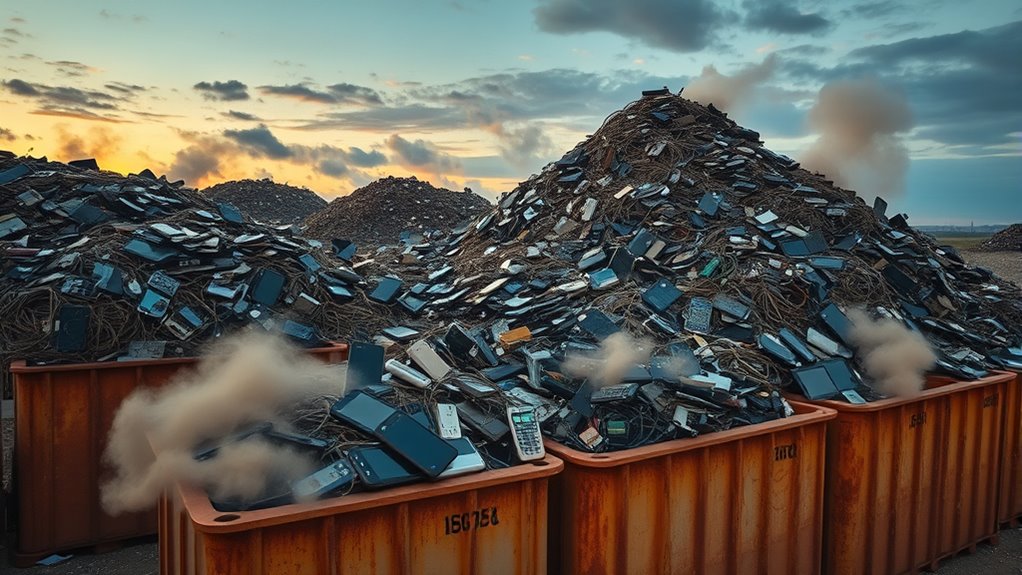
E-waste substantially contributes to environmental pollution and the depletion of valuable resources. When you discard your smartphone improperly, toxic chemicals like lead, mercury, and cadmium can leach into the soil and water through chemical leaching. This process contaminates habitats, harming plants, animals, and even humans who rely on clean water and healthy ecosystems. As e-waste accumulates, it accelerates habitat contamination, making land unusable and threatening biodiversity. The extraction of raw materials needed for new devices also declines as valuable metals are lost in landfills. Your disposal choices directly impact this cycle—improper e-waste management worsens pollution, wastes resources, and damages the environment you depend on. Proper recycling helps reduce chemical leaching and preserves natural habitats. Additionally, promoting recycling programs can significantly decrease the amount of e-waste ending up in landfills, further minimizing environmental harm. Implementing comprehensive e-waste management strategies is crucial for sustainable development and environmental conservation. Moreover, increasing awareness about the environmental impact of e-waste can motivate more responsible disposal practices among consumers and industries. Proper disposal methods reduce toxic waste and help protect ecosystems from long-term harm.
Sustainable Practices for Smartphone Disposal
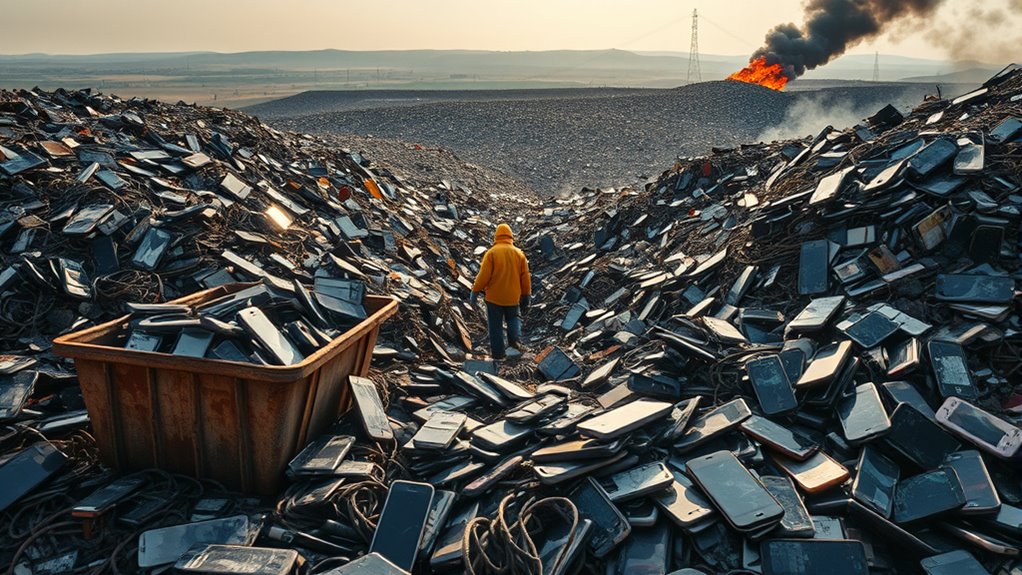
You can greatly reduce e-waste by taking advantage of recycling programs and options available in your community. Proper disposal techniques guarantee harmful materials don’t pollute the environment or harm wildlife. Making informed choices helps promote sustainable practices for smartphone disposal. Additionally, understanding safe disposal methods can further minimize environmental impact and ensure responsible handling of electronic waste. Regularly checking for certified e-waste recyclers ensures your device is processed in an environmentally friendly manner. Employing simple, effective sorting techniques can also aid in maximizing recycling efforts and reducing contamination of recyclable materials. Incorporating proper handling of hazardous materials into your disposal routine further enhances environmental protection. Educating yourself about environmentally responsible disposal can lead to better decision-making and reduced ecological footprint.
Recycling Programs and Options
Have you ever wondered what happens to your smartphone once you upgrade? Recycling programs provide a valuable way to give your device a second life. Many manufacturers and retailers offer take-back initiatives that guarantee your phone is properly recycled, preventing harmful materials from polluting the environment. You can also explore reuse strategies, such as refurbishing or donating your old device through donation programs. These programs allow others to benefit from your unused phone, extending its lifespan and reducing waste. By participating in certified recycling programs and supporting donation options, you help minimize the environmental footprint of discarded electronics. Properly recycling or donating your smartphone ensures that valuable materials are recovered and hazardous substances are safely managed, making your disposal both responsible and eco-friendly. Engaging with Recycling programs can also help raise awareness about the importance of responsible electronic waste management and promote sustainable practices. Additionally, choosing certified facilities ensures that hazardous substances are handled safely, further reducing environmental harm. Incorporating sustainable disposal practices can significantly reduce the negative impact of electronic waste on our planet. Implementing proper disposal methods ensures that your actions contribute to a healthier environment and support conservation efforts.
Proper Disposal Techniques
Proper disposal techniques are key to ensuring your old smartphones don’t harm the environment. When you dispose of your device, follow proper disposal guidelines to prevent hazardous waste from contaminating soil and water. Always seek certified e-waste recycling centers instead of trashing your phone. Avoid illegal dumping that can release toxic chemicals. Consider donating or trading in your device if it’s still functional. Be aware of local regulations regarding hazardous waste disposal to stay compliant. To maximize safety and sustainability, keep these practices in mind:
- Use certified e-waste recycling programs
- Never throw phones in regular trash
- Follow local disposal guidelines for hazardous waste
- Remove batteries before recycling if possible
- Support companies that prioritize eco-friendly disposal
How Consumers Can Reduce Their Environmental Footprint
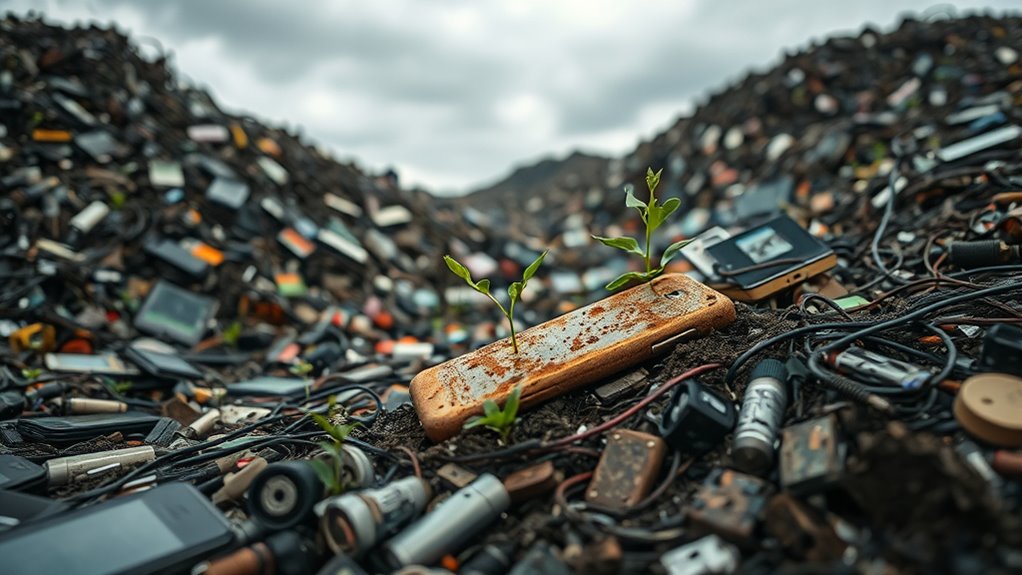
Consumers can substantially reduce their environmental footprint by making mindful choices when using and disposing of smartphones. Increasing your consumer awareness helps you understand the environmental impacts of your decisions, encouraging eco friendly choices. Opt for devices with sustainable features or longer lifespans, reducing the need for frequent replacements. When upgrading, consider recycling or donating your old phone to prevent e-waste. Proper maintenance, like using protective cases and avoiding unnecessary repairs, extends your phone’s life. Supporting brands committed to environmentally responsible manufacturing also makes a difference. By staying informed about the environmental impact of smartphones and choosing eco friendly options, you actively contribute to reducing pollution and conserving resources. Small, conscious actions add up and can appreciably lessen your overall environmental footprint.
Frequently Asked Questions
What Materials in Smartphones Are Most Harmful to the Environment?
You should know that hazardous chemicals like lead, mercury, and cadmium in smartphones are most harmful to the environment. These materials can leach into soil and water, causing pollution and health risks. Proper material recycling helps reduce these dangers by safely extracting and disposing of hazardous chemicals. So, when you recycle your phone, you’re helping to minimize environmental damage caused by these toxic materials.
How Long Does It Typically Take for a Smartphone to Decompose?
Think of your smartphone as a time capsule, taking about 100 to 1,000 years to fully decompose. Battery decomposition is slow, with toxic chemicals lingering, while plastic breakdown can stretch across centuries. During that time, your discarded device slowly releases pollutants into the environment, much like a fading memory. So, your old phone isn’t just junk; it’s a lasting imprint on the planet’s future, taking ages to fade away.
Are There Legal Regulations Regarding E-Waste Disposal?
Yes, there are legal regulations regarding e-waste disposal. You need to follow disposal laws that require proper recycling and handling of electronic waste. Legal compliance guarantees hazardous materials don’t harm the environment or public health. When you dispose of your smartphone, make sure to use authorized e-waste recycling centers or programs. Ignoring these laws can lead to fines and environmental damage, so always stay informed about local e-waste disposal regulations.
How Effective Are Current Recycling Programs Globally?
Current recycling programs vary widely in effectiveness worldwide. You might notice that global recycling rates are often low due to inconsistent e-waste management practices and limited infrastructure. While some countries have advanced programs, others struggle with proper disposal. Your participation in local recycling initiatives can make a difference, but overall, improvements are necessary to guarantee more smartphones are properly recycled, reducing environmental harm and promoting sustainable e-waste management practices globally.
Can Smartphone Disposal Impact Human Health Nearby?
Think of your discarded smartphone as a hidden villain lurking nearby. When you toss it, recycling challenges can leave hazardous materials like lead and mercury in the environment, posing health risks to those close by. If you’re unaware of these dangers, you might unintentionally expose your community to toxins. Raising health risk awareness emphasizes the importance of responsible disposal, helping protect both human health and the planet from smartphone-related dangers.
Conclusion
You might think your phone’s disposal doesn’t matter, but it does. Proper recycling helps recover valuable materials and prevents toxic waste from polluting our environment. Yes, it takes a little effort, but your small action can make a big difference in reducing e-waste and conserving resources. So next time you upgrade, choose responsible disposal. Your planet will thank you, and you’ll be part of the solution, not the problem.