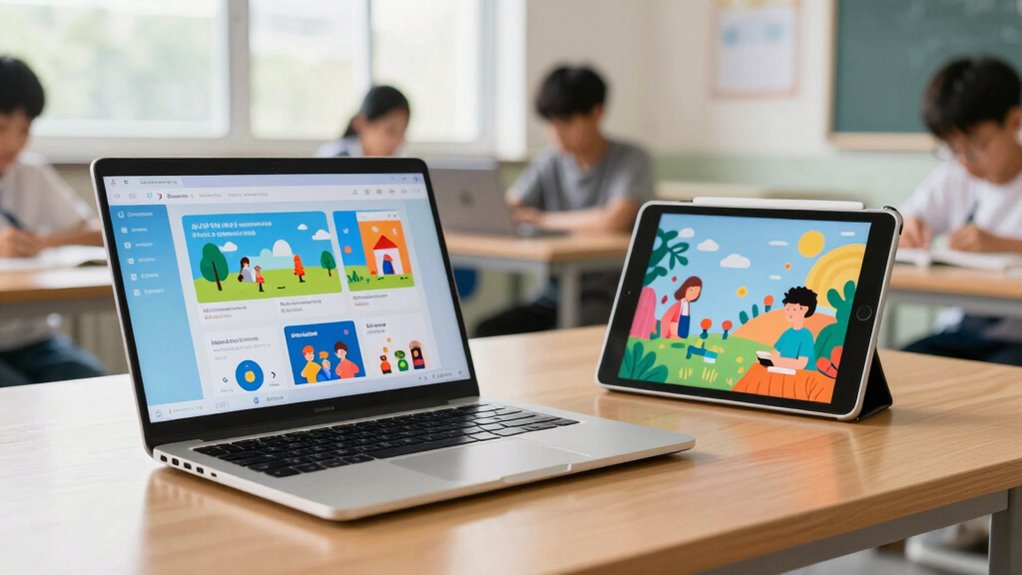

If you’re choosing between a Chromebook and an iPad for school, consider what matters most. Chromebooks offer better durability, longer battery life, and easy access to Google’s ecosystem, making them ideal for everyday tasks and cloud-based learning. iPads excel with a sleek design, a vast app selection, and great performance for creative or intensive apps. To find out which suit your needs best and get more details, keep exploring the differences.
Key Takeaways
- Chromebooks excel in multitasking and web-based workflows, ideal for students relying on cloud tools and Android apps.
- iPads offer a wider selection of educational and creative apps, enhancing learning through interactive content.
- Chromebooks tend to have longer battery life and more rugged designs, suitable for active school environments.
- iPads are more portable and lightweight, making them easier to carry during long school days.
- Security features and device durability vary, with Chromebooks emphasizing protection against spills and drops, while iPads focus on biometric security.
As an affiliate, we earn on qualifying purchases.
Design and Build Quality
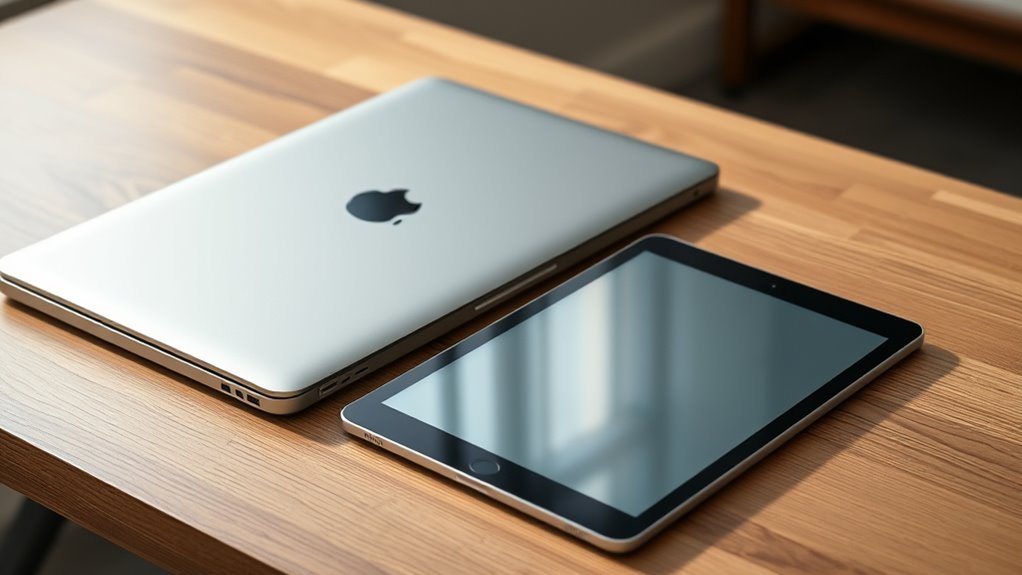
Have you ever wondered how the design and build quality of a Chromebook compares to that of an iPad? When it comes to stylish aesthetics, the iPad often takes the lead with its sleek, minimalist design and premium feel. Its smooth aluminum finish and slim profile make it look modern and sophisticated. Chromebooks, on the other hand, tend to prioritize durability and practicality, usually featuring plastic or metal casings that can withstand daily use. While they might not have the same polished look, many Chromebooks still offer good material quality, ensuring longevity. Overall, if you value refined aesthetics and high-end material quality, the iPad stands out. But if you prefer a device built for durability, a Chromebook’s design might better suit your needs. Additionally, some sound healing techniques and materials used in device construction can influence user experience and satisfaction. Furthermore, understanding design principles can help consumers make informed choices based on their preferences for style versus robustness. Considering material quality and construction methods can also impact the device’s ability to endure wear and tear over time. For instance, manufacturing processes play a crucial role in determining the overall durability of these devices.
As an affiliate, we earn on qualifying purchases.
Operating System and User Experience
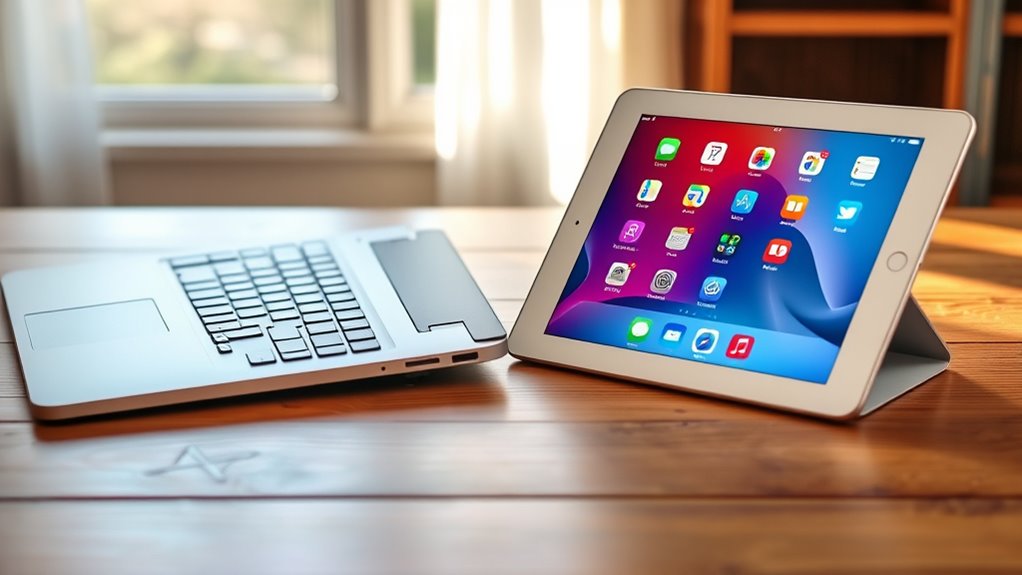
The operating systems of a Chromebook and an iPad offer distinctly different user experiences that cater to various needs. With Chrome OS, you get a simple, web-based user interface that emphasizes ease of use and quick access to cloud services. It’s ideal if you prefer a straightforward experience focused on browsing, document editing, and online collaboration. In contrast, iPad’s iOS offers a highly intuitive, polished user interface designed for touch interactions and app versatility. It provides a seamless, engaging user experience with a wide selection of educational apps and multimedia capabilities. While Chromebooks excel in simplicity and web-centric tasks, iPads deliver a more immersive, interactive experience suited for creative and multimedia activities. Your choice depends on whether you prioritize a straightforward interface or a feature-rich, versatile user experience. Additionally, understanding contrast ratio can help you choose devices better suited for multimedia and visual clarity. When considering device compatibility, it’s important to evaluate how well the device integrates with other tools used in an educational setting. Moreover, operating system updates play a crucial role in maintaining security and accessing new features, which can influence your decision.
student-friendly Chromebook accessories
As an affiliate, we earn on qualifying purchases.
As an affiliate, we earn on qualifying purchases.
Performance and Speed

When comparing performance and speed, you’ll notice differences in processing power and how quickly each device boots up and loads apps. The Chromebook often handles multitasking smoothly thanks to its hardware design, while the iPad’s performance depends on the model you choose. Understanding these distinctions helps you decide which device keeps up with your daily tasks more efficiently. Additionally, mammography guidelines highlight the importance of regular screening, which can be complemented by the quick access to educational resources available on tablets like the iPad. The efficiency of a device can also be influenced by software optimization, which plays a crucial role in overall speed and responsiveness. Furthermore, the integration of smart home technology in educational devices can enhance productivity and learning experiences, making them more adaptable to individual needs. Moreover, the availability of specialized tools like magnifying lamps and UV curing devices demonstrates how device performance can be tailored to specific professional or hobbyist needs. For students, the ability to run support breakfast apps efficiently can significantly improve their daily study routines and access to resources.
Processing Power Differences
While both Chromebooks and iPads are designed for efficiency, their processing power can differ markedly, impacting how smoothly they handle tasks. Chromebooks typically rely on hardware specifications geared toward web-based activities, often featuring Intel or ARM processors optimized for multitasking and productivity. In contrast, iPads use Apple’s custom-designed chips, such as the A-series or M-series, which deliver impressive processing power in a compact form. This difference means iPads can handle demanding apps and multitasking more seamlessly, especially with intensive tasks like video editing or gaming. Conversely, Chromebooks excel at running multiple browser tabs and simple applications efficiently. Ultimately, your choice depends on the processing power you need for your studies and the types of tasks you perform most often. Additionally, AI-driven discoveries in hardware design are pushing the boundaries of device performance and capabilities.
Boot and Load Times
Boot and load times considerably influence how quickly you can start working or accessing apps on your device. With a Chromebook, startup is often faster, thanks to streamlined hardware and reliance on cloud storage, which reduces local data processing. This means you spend less time waiting and more time being productive. On the other hand, iPads may take slightly longer to boot due to their more complex hardware and operating system, but they still load apps quickly once powered on. Over time, hardware longevity plays a role; Chromebooks tend to stay reliable longer with fewer updates, maintaining consistent load times. Meanwhile, iPads, with their robust build, also offer solid longevity but may slow slightly as they age. Overall, load times favor Chromebooks for quick access, especially when cloud storage is optimized. Proper filtration and pump protection can help maintain consistent performance over time, ensuring your device remains efficient and ready for use.
Multitasking Capabilities
Multitasking performance varies considerably between Chromebooks and iPads, impacting how smoothly you can switch between apps or run multiple tasks simultaneously. Chromebooks excel in split screen multitasking, allowing you to view and work in two apps side by side effortlessly. Their app switching speed is quick, so moving between tasks feels seamless and efficient. iPads also support split screen multitasking, but their app switching can sometimes be slower, especially with multiple apps open. Apple’s multitasking features are optimized for smooth transitions, but they may not handle multiple large apps as well as Chromebooks. If multitasking is a priority, your choice depends on whether you prefer the more versatile split screen experience and faster app switching of a Chromebook or the streamlined, efficient multitasking of an iPad.
educational iPad apps for students
As an affiliate, we earn on qualifying purchases.
As an affiliate, we earn on qualifying purchases.
Battery Life and Portability
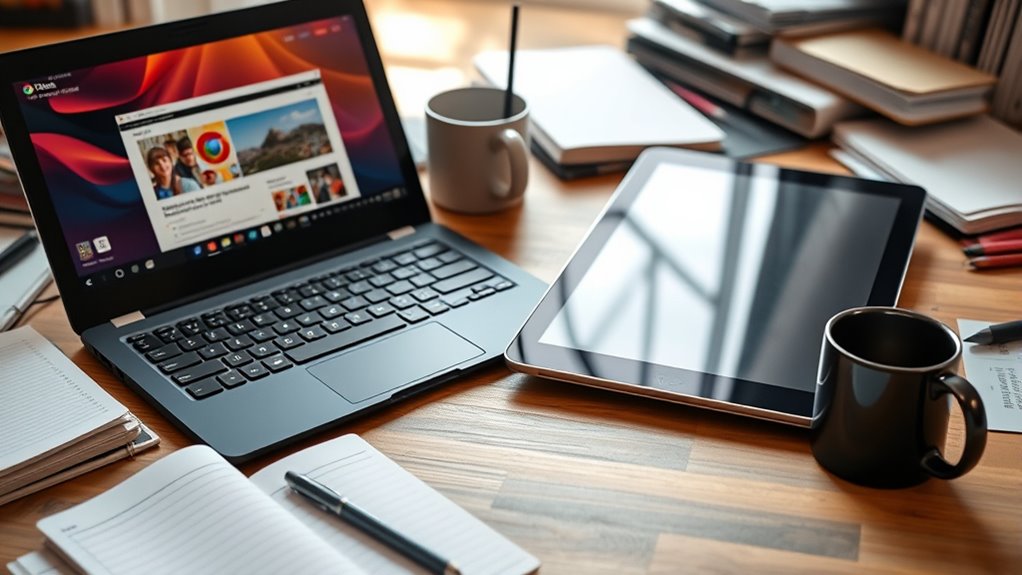
When comparing battery life and portability, you’ll notice that Chromebooks often last longer on a single charge, while iPads are more compact and lightweight. The device’s weight and size also affect how easy it is to carry around all day. Additionally, wellness tech safety considerations are important when choosing devices for extended use. An increase in device weight can sometimes lead to discomfort during prolonged use, emphasizing the importance of ergonomic design. Proper device ergonomics can help prevent strain and fatigue during extended periods of use. Moreover, selecting a device with portable design features can enhance comfort and reduce the risk of repetitive strain injuries. The user comfort aspect is crucial for maintaining productivity and avoiding physical discomfort during long study sessions. Ultimately, your choice depends on whether you prioritize longer use or easier portability.
Battery Duration Differences
Battery life plays a crucial role in choosing between a Chromebook and an iPad, especially if portability is a priority. You’ll want to evaluate their battery efficiency and how well they conserve power during use. Chromebooks typically offer longer battery durations because they are optimized for efficiency and have less demanding hardware. They often last around 8 to 12 hours on a single charge, making them suitable for all-day use. In contrast, iPads also excel in power conservation, providing about 10 hours of battery life, but their battery duration can vary based on activity. Additionally, renewable energy sources are sometimes utilized to help extend device battery life and promote sustainability. If extended usage without recharging is essential, a Chromebook might be the better choice due to its superior battery efficiency. Both devices support long-lasting use, but the battery management features and hardware design can influence your decision. Proper power conservation practices can further enhance battery longevity on both devices.
Device Weight and Size
Since battery life affects how portable and convenient a device is, its size and weight further influence your ability to carry it around comfortably. A device with a lightweight design and a portable size makes it easier to bring to class or study sessions. Here’s what to take into account:
- Lightweight Design: Devices with less weight reduce fatigue during extended use.
- Compact Size: Smaller dimensions fit easily into backpacks and bags.
- Ease of Handling: A balanced, lightweight device enhances your comfort during transport and use.
- Market Reputation: The overall Gold IRA markets reputation of a device brand can also reflect on its quality and reliability.
- Material Quality: The choice of construction materials impacts the durability and weight, influencing portability and longevity. Additionally, understanding repair fundamentals can help maintain the device’s performance over time.
Both the Chromebook and iPad offer benefits here, but the iPad generally has a more portable size due to its slim profile. Choosing a device with a lightweight design ensures you stay mobile without sacrificing functionality.
Ease of Carrying
The ease of carrying a device depends heavily on its battery life and overall portability. A lightweight design and compact form factor make it easier to take your device anywhere. The Chromebook is generally slim, with a sturdy yet lightweight build, perfect for long days on campus. The iPad’s sleek, compact form factor and minimal weight also make it highly portable. Here’s a quick comparison:
| Feature | Chromebook | iPad | Best For |
|---|---|---|---|
| Battery Life | Up to 10 hours | Up to 12 hours | Long study sessions |
| Weight | Around 2.5 pounds | About 1 pound | Easy to carry all day |
| Portability | Compact, lightweight | Ultra-light, slim | On-the-go students |
Both devices excel in portability, but your choice depends on your specific needs.
App Ecosystem and Software Availability

When comparing the app ecosystems, it’s clear that the availability and variety of software play a significant role in your device choice. The iPad benefits from the robust App Store, offering millions of apps optimized for touch and multimedia use. In contrast, Chromebooks rely on the Google Play Store and web-based applications, which may limit some software compatibility. Consider these points:
- The iPad’s App Store provides a seamless experience with exclusive educational and creative apps.
- Chromebooks support Android apps and web-based tools, but some software may not run as smoothly or be compatible.
- Your choice depends on whether you prioritize a broad app selection (iPad) or prefer flexibility with web and Android apps (Chromebook).
Ultimately, the app ecosystem influences how well your device supports your learning needs.
Price and Budget Considerations
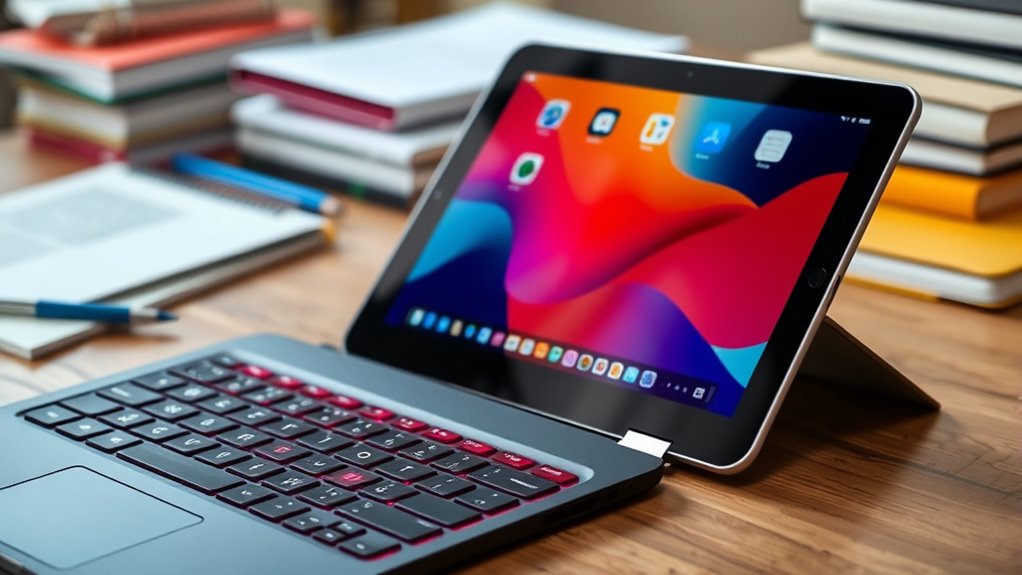
Are you trying to find a device that fits your budget? When comparing Chromebooks and iPads, consider your budget constraints carefully. Chromebooks tend to be more affordable upfront, making them a popular choice for students with limited funds. They often offer better value for budget-conscious buyers, especially since many models cost less than iPads. Conducting an affordability analysis helps you understand the long-term costs, including accessories and repairs. iPads, while more expensive initially, may provide added benefits that justify the higher price for some users. Ultimately, your decision should weigh the device’s cost against your financial limits and the features you need most. Choosing the right device depends on balancing quality and affordability within your budget.
Compatibility With Educational Tools and Resources

When choosing between a Chromebook and an iPad, you need to evaluate how well each device supports the educational tools and resources you rely on. You’ll want to look at app availability, platform support, and how easily you can access files and software across devices. Understanding these factors helps ensure your device fits seamlessly into your learning environment.
App Availability and Compatibility
App availability and compatibility play a crucial role in determining how well a device supports your educational needs. On a Chromebook, you access apps mainly through the Chrome Web Store and Android app store, offering a wide range of options. In contrast, iPads rely on the Apple App Store, known for its extensive selection of educational apps. Consider these points:
- App Store Access: Both devices have dedicated stores, but the iPad generally offers a broader selection of high-quality educational apps.
- Software Compatibility: Chromebooks excel with web-based tools and Android apps, while iPads are optimized for iOS-specific applications.
- Educational Resources: The iPad’s app ecosystem often provides better compatibility with popular educational tools, making it easier to access specialized content.
Both devices support essential educational apps, but your choice depends on which app ecosystem aligns better with your needs.
Educational Platform Support
Choosing a device often depends on how well it supports the educational tools and resources you rely on daily. Chromebooks excel with seamless access to cloud-based platforms like Google Classroom and Drive, making collaboration easy. They also support offline educational apps, so you can learn without internet interruptions. iPads, on the other hand, support a wide range of educational apps and can access cloud platforms via browsers or dedicated apps. Both devices cater to different needs: Chromebooks prioritize cloud connectivity, while iPads offer versatile app support. Here’s a quick comparison:
| Feature | Chromebook | iPad |
|---|---|---|
| Cloud platform support | Excellent, Google-centric | Good, supports multiple services |
| Offline educational apps | Wide selection, easy to use | Extensive app library, versatile |
| Compatibility with tools | Optimized for cloud-based tools | Supports various platforms |
Software and File Access
Both Chromebooks and iPads offer robust compatibility with a variety of educational tools, but they do so in different ways. Your ability to access files and software depends on their unique systems.
- Chromebooks seamlessly integrate with cloud storage services like Google Drive, making file access easy and real-time.
- iPads support a wide range of educational apps and tools available through the App Store, but files may require cloud syncing or direct app management.
- Software updates happen automatically on both devices, ensuring you always have the latest features and security patches.
While Chromebooks excel with cloud-based workflows, iPads focus on app-specific access. Your choice depends on whether your curriculum relies more on cloud services or app ecosystems.
Security and Privacy Features
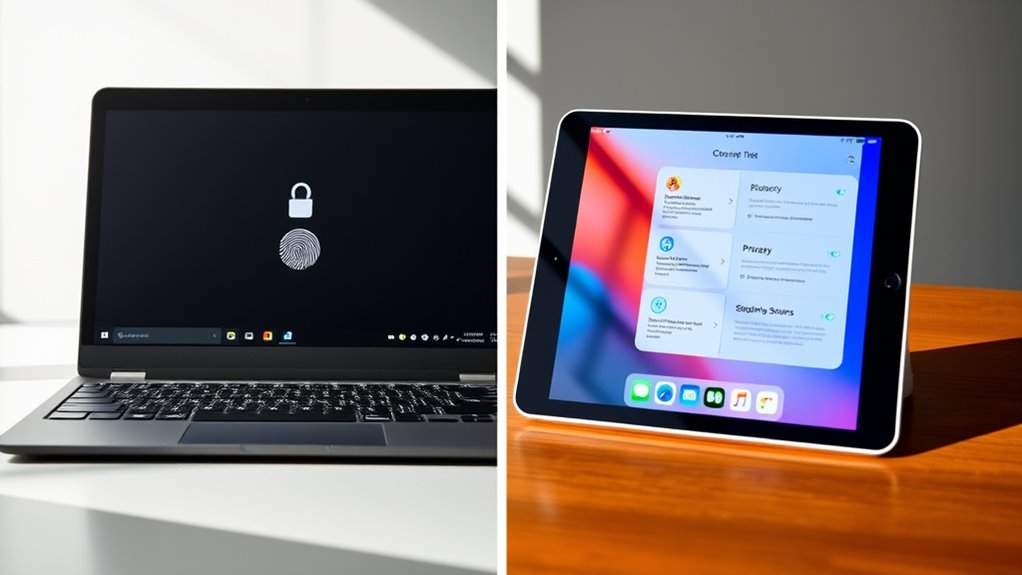
When it comes to security and privacy, Chromebooks and iPads each take different approaches to protect your data. Chromebooks emphasize robust security through password protection and data encryption, ensuring your information stays safe even if the device is lost or stolen. Automatic updates keep security measures current, and sandboxing isolates apps to prevent malware spread. On the other hand, iPads focus on biometric authentication, like Face ID or Touch ID, along with strong encryption for user data. Apple’s tight app review process minimizes malware risks, and privacy controls let you manage app permissions easily. Both devices prioritize your security, but Chromebooks lean on encryption and system-level protections, while iPads leverage biometric features and Apple’s privacy ecosystem to keep your data safe.
Durability and Suitability for School Environments
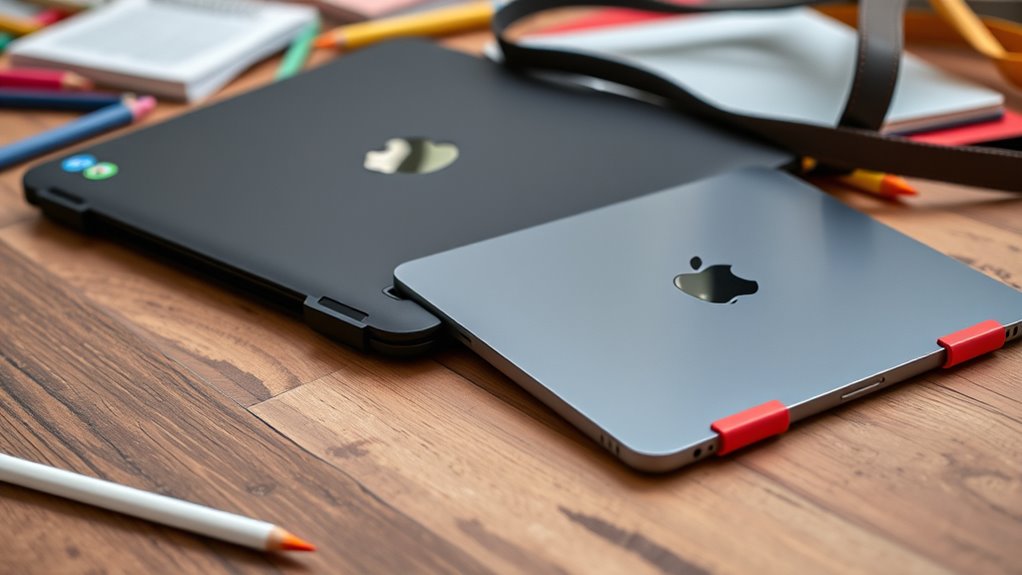
Durability is a key factor when considering devices for school environments, and each device has its strengths. Durability testing reveals how well a device withstands drops, spills, and daily wear. When evaluating school environment suitability, consider these aspects:
Durability matters; Chromebooks often withstand drops and spills better than fragile iPads.
- Build quality: Chromebooks often feature rugged designs with reinforced corners, making them more resistant to accidental drops.
- Screen durability: Ipads have glass screens that are vulnerable but often include scratch-resistant coatings, though they may crack more easily.
- Portability and protection: Chromebooks tend to be bulkier but more durable, while Ipads are lightweight but require extra cases for protection.
Both devices can be suitable, but Chromebooks generally excel in durability testing, making them a more resilient choice for active school settings.
Additional Features and Accessories
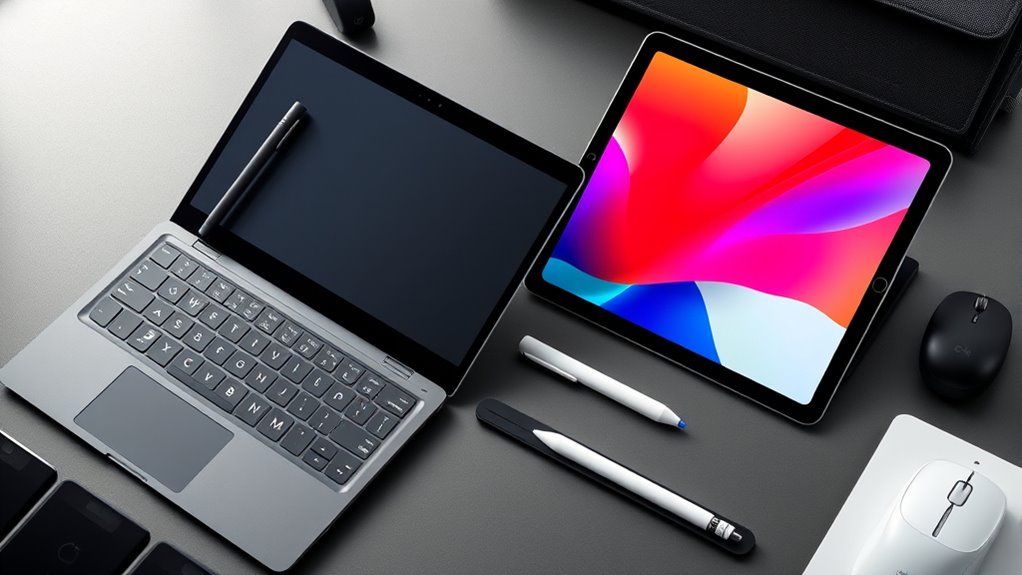
Additional features and accessories can considerably enhance the functionality and user experience of your device. For instance, stylus compatibility on the iPad allows you to take notes, sketch, or highlight documents with precision, making it ideal for creative and academic tasks. The Apple Pencil or compatible stylus can transform your iPad into a versatile tool. On the other hand, Chromebook users benefit from various keyboard accessories that improve typing comfort and productivity, especially with detachable or foldable keyboards. These accessories can turn your device into a portable workstation, perfect for extended study sessions. Both devices support a range of additional features, but your choice depends on whether you prefer stylus-driven creativity or keyboard-based productivity. Carefully consider which accessories align best with your learning style.
Frequently Asked Questions
Which Device Offers Better Multitasking Capabilities for Students?
You’ll find that Chromebooks offer better multitasking efficiency for students. They excel at app switching, allowing you to open multiple tabs and windows simultaneously without slowing down. The Chrome OS interface is designed for easy multitasking, so you can work on assignments while researching or chatting. In contrast, iPads are more limited in multitasking, making Chromebooks the better choice if you need to juggle several tasks at once.
How Do Chromebook and Ipad Handle Offline Learning and Resource Access?
When it comes to offline access and resource availability, Chromebooks and iPads both pack a punch. Chromebooks excel with extensive offline capabilities for Google Drive files, documents, and apps, making studying seamless even offline. iPads shine with vast app stores and downloaded resources, allowing you to access e-books, videos, and apps without Wi-Fi. Both devices prioritize portability and practicality, ensuring you stay connected to your coursework whenever you need it.
Are There Any Specific Accessories That Enhance Classroom Usability?
You can enhance classroom usability with specific accessories like stylus accessories, which improve note-taking and drawing precision, and protective cases that safeguard your device during daily use. For iPads, a high-quality stylus like the Apple Pencil boosts productivity, while a durable case prevents damage. Chromebooks can also benefit from stylus accessories if compatible, and a sturdy case helps protect against accidental drops, ensuring your device stays functional and ready for learning.
Which Device Integrates More Seamlessly With Existing School Management Systems?
You’ll find that Chromebooks tend to integrate more seamlessly with existing school management systems because of their device compatibility and software integration capabilities. They support popular educational platforms and management tools like Google Workspace for Education, making it easier to assign tasks, monitor progress, and manage devices centrally. iPads may require additional apps or workarounds, but Chromebooks generally streamline the tech integration process for schools.
How Do Parental Controls and Student Safety Features Compare?
Imagine a school implementing parental monitoring and safety features, like restricted app access and real-time activity reports. Both Chromebooks and iPads offer robust safety features, including content filtering and device restrictions. Chromebooks often integrate with Google Family Link for parental control, while iPads provide Screen Time settings. Overall, both devices prioritize student safety, but your choice depends on the preferred ecosystem and specific safety needs.
Conclusion
Choosing between a Chromebook and an iPad is like selecting the right key to unseal your learning potential. Each device symbolizes a different path—one offering versatility and simplicity, the other elegance and power. Your best choice depends on what doors you want to open in your education journey. Whichever you pick, remember it’s not just a device but a trusted key that can turn your dreams into reality. The right tool will always help you find your way.