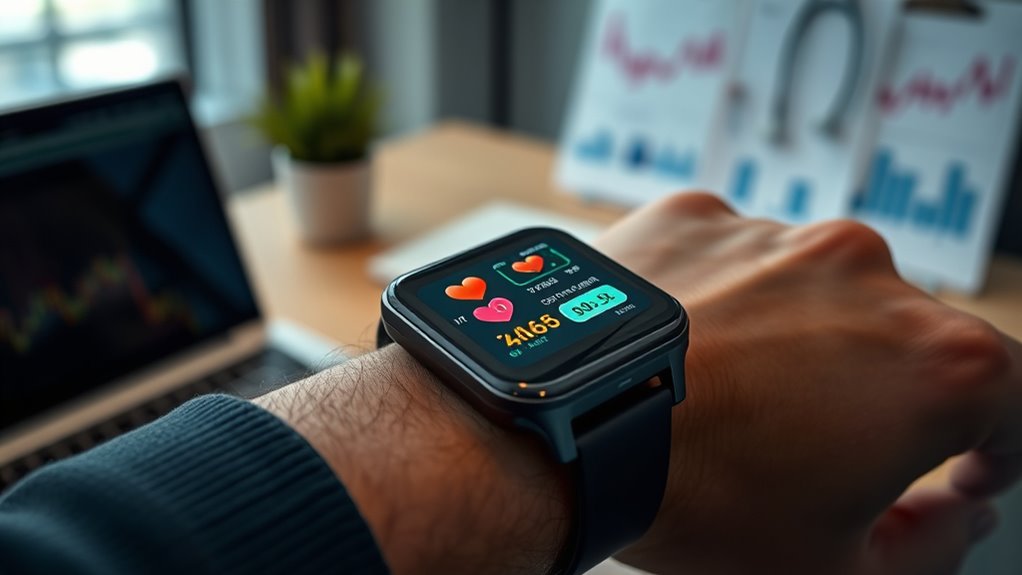

Smartwatches can help detect signs of illness by monitoring your heart rate, rhythm, sleep patterns, and oxygen levels. They provide real-time data, alert you to irregularities, and support early symptom recognition, which might point to infection or stress. However, they’re not diagnostic tools and can’t identify specific health conditions. Their accuracy varies, and they’re best used alongside professional medical advice. To discover how these devices can support your health, see what more they can do.

Get the latest gadgets delivered free with Prime
- Fast, free delivery on millions of items
- Prime Video, Amazon Music and more included
- Member-only deals all year
Key Takeaways
- Smartwatches can monitor heart rate, rhythm, sleep patterns, and oxygen levels, aiding in early illness detection.
- They can identify irregular heartbeats and abnormal vital signs but cannot diagnose specific illnesses.
- Data accuracy depends on sensor quality, calibration, and environmental factors, so results should be considered supplementary.
- Alerts based on sensor data can warn users of potential health issues, prompting medical consultation.
- They are tools for symptom detection and early warning, not substitutes for comprehensive medical diagnosis.
How Smartwatches Monitor Heart Rate and Rhythm

Smartwatches use advanced sensors to continuously track your heart rate and rhythm, providing real-time data that can help you stay aware of your cardiovascular health. These devices often include features like blood pressure monitoring, giving you quick insights without needing a cuff. They also support hydration tracking by analyzing your heart rate variability and skin conductance, helping you stay properly hydrated. Additionally, some models are capable of detecting signs of Free Floating arrhythmias, which can be crucial for early diagnosis and treatment. This real-time feedback enables you to spot irregularities early, such as abnormal heart rhythms or changes in blood pressure, which could signal health issues. By consistently monitoring these essential signs, your smartwatch becomes a valuable tool for maintaining overall wellness and preventing potential problems before they escalate. Incorporating health monitoring features directly into your daily routine allows for continuous and unobtrusive assessment of your well-being. Staying aware of your body’s signals is easier with these integrated health features at your wrist.
Tracking Sleep and Oxygen Levels: What the Data Tells Us
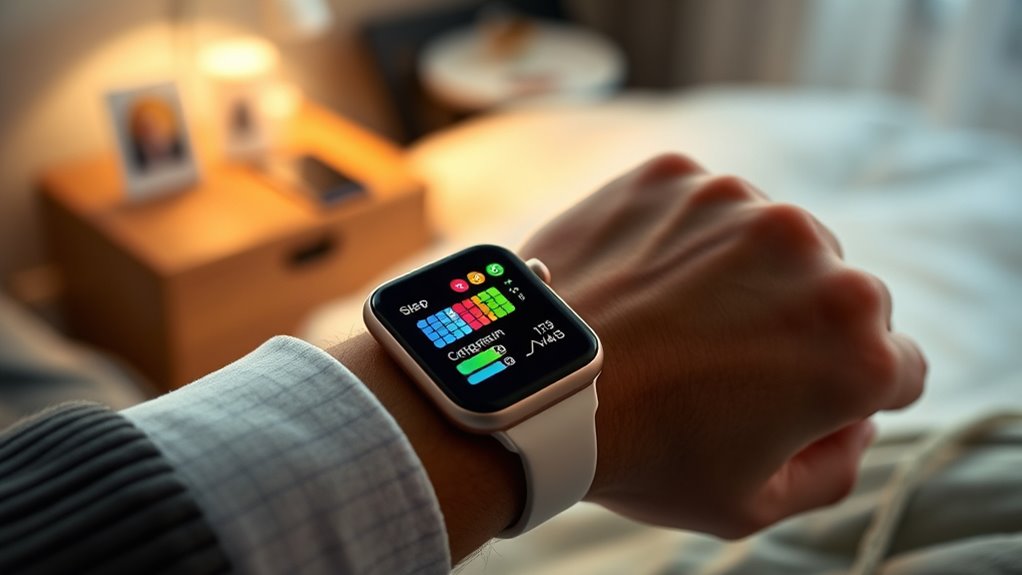
Tracking your sleep and oxygen levels with a smartwatch provides valuable insights into your overall health. Sleep analysis reveals patterns like sleep duration, quality, and interruptions, helping you understand your rest quality. Monitoring oxygen saturation offers data on how well your body is oxygenating during sleep, which can indicate breathing issues or sleep apnea. Incorporating herbal remedies can further support respiratory health and improve sleep quality. Consider these key points: – Sleep analysis tracks your sleep cycles and disturbances – Oxygen saturation levels fluctuate throughout the night – Low oxygen levels may signal respiratory concerns – Consistent data can identify sleep disorders early – Combining sleep and oxygen data enhances health awareness and can assist in early detection of health issues. Additionally, understanding respiratory health through these metrics can motivate lifestyle adjustments for better overall well-being. Recognizing nutritional factors that influence sleep quality, such as diet and hydration, can also be beneficial in managing sleep health.
Recognizing Symptoms of Illness Through Wearable Data
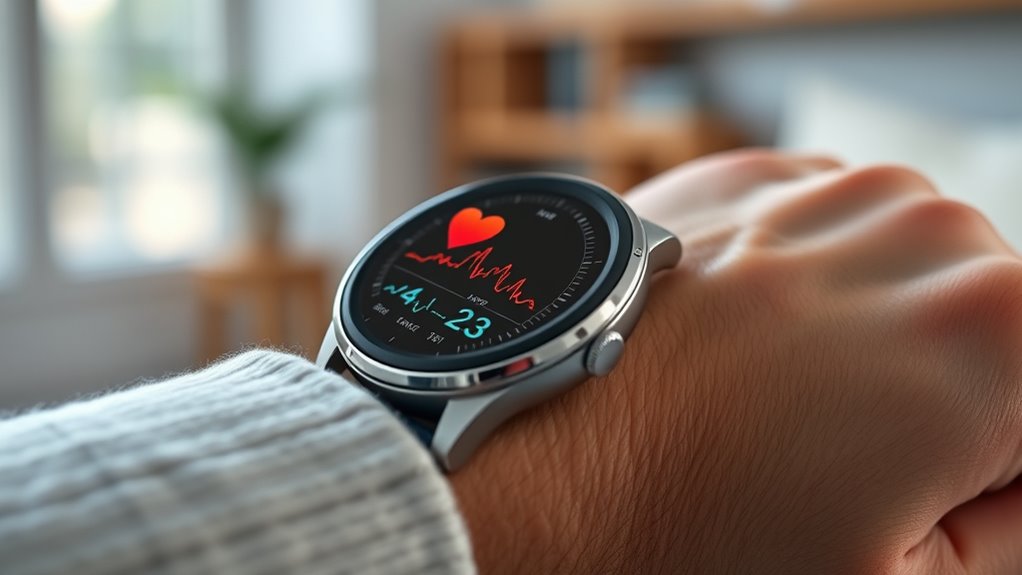
Monitoring your sleep and oxygen levels can reveal early signs of illness before symptoms become obvious. Wearable sensors continuously track essential signs like heart rate, temperature, and activity patterns, aiding in symptom recognition. Sudden changes in these metrics may indicate your body is fighting an infection or experiencing stress. For instance, an elevated resting heart rate or reduced sleep quality can signal underlying health issues. Additionally, wearable sensors can detect subtle physiological changes that might not be noticeable otherwise. By analyzing this data, your smartwatch helps you identify potential symptoms early, prompting you to seek medical advice if needed. These wearable sensors work in real-time, providing ongoing insights that might otherwise go unnoticed. Recognizing emerging symptoms through these devices empowers you to take proactive steps toward health management before more serious symptoms develop. Real-time health monitoring enhances early detection and timely intervention, especially when combined with understanding baseline health data for personalized insights. Moreover, continuous physiological tracking allows for more comprehensive health assessments over time, further improving early warning capabilities. Advancements in AI-powered health analysis enable these devices to interpret complex data patterns more accurately, increasing their reliability in health monitoring.
Limitations of Smartwatch Health Monitoring Systems
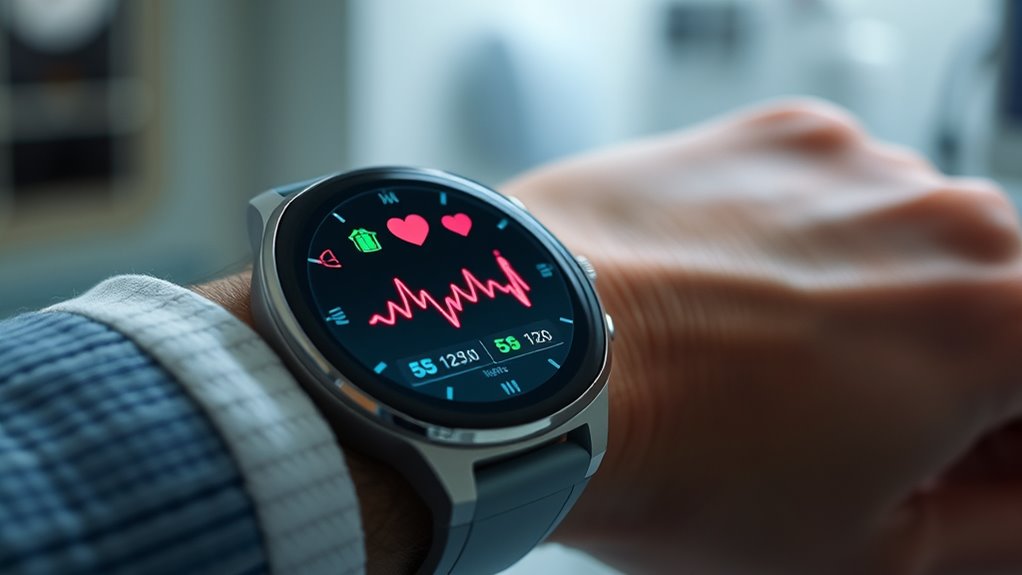
Smartwatches can provide useful health data, but their accuracy isn’t perfect and can sometimes be misleading. You shouldn’t rely on them for a definitive diagnosis, as they lack the ability to identify complex health conditions. Recognizing these limitations helps you use your device more effectively and avoid unnecessary concerns. Being aware of passive voice detection can further improve your writing clarity and precision. Additionally, understanding the European cloud infrastructure behind these devices can shed light on data security and privacy considerations. It’s also important to consider that some health monitoring features may produce red flags or false alerts, which can lead to unnecessary anxiety or medical visits if not interpreted carefully. Moreover, awareness of vetted information ensures that users rely on credible sources for health-related data. Furthermore, the integration of clinical validation in device features can enhance their reliability, though it doesn’t replace professional medical advice.
Accuracy Challenges in Data
While smartwatches offer convenient health insights, their data often faces accuracy challenges that can undermine reliability. Variability in sensor calibration can lead to inconsistent readings, making it hard to trust the data. Data standardization across different devices remains a concern, as inconsistencies can affect comparisons and interpretations. Factors like skin type, motion artifacts, and environmental conditions can also distort measurements. Additionally, the quality of sensors varies between brands, impacting accuracy. To improve reliability, manufacturers are working on better calibration protocols and standardizing data collection methods. sensor calibration plays a crucial role in enhancing measurement accuracy. Moreover, ongoing research into Data standardization aims to make health metrics more consistent across various smartwatches. Recognizing sensor limitations, developers are exploring advanced algorithms to compensate for measurement errors. Nonetheless, these issues highlight that smartwatch health metrics should be viewed as supplementary rather than definitive, especially when precise health decisions are involved. Continuous refinements are necessary to bridge the gap between convenience and accuracy.
Limited Diagnostic Capabilities
Despite their convenience, smartwatches have significant limitations when it comes to diagnosing health conditions. They possess diagnostic limitations that prevent them from providing comprehensive assessments. While they can detect certain symptoms like irregular heartbeats or abnormal oxygen levels, these devices aren’t equipped to identify underlying causes or complex health issues. Smartwatches excel at symptom detection but fall short of offering a definitive diagnosis. They lack the capability to analyze multiple health parameters simultaneously or interpret results in the context of your overall health. This means you shouldn’t rely solely on your smartwatch for diagnosing illnesses. Instead, view these devices as helpful tools for monitoring trends and alerting you to potential concerns, but always consult a healthcare professional for accurate diagnosis and treatment. Connected fitness technology can enhance health monitoring but cannot replace professional medical advice. Recognizing their diagnostic limitations helps ensure you use these devices appropriately and avoid unnecessary worry. It’s important to understand that medical evaluation involves comprehensive testing and expertise that smartwatches cannot provide. Additionally, these devices do not possess the capacity for comprehensive health assessment, which is vital for accurate diagnosis.
The Role of Algorithms and Alerts in Early Detection
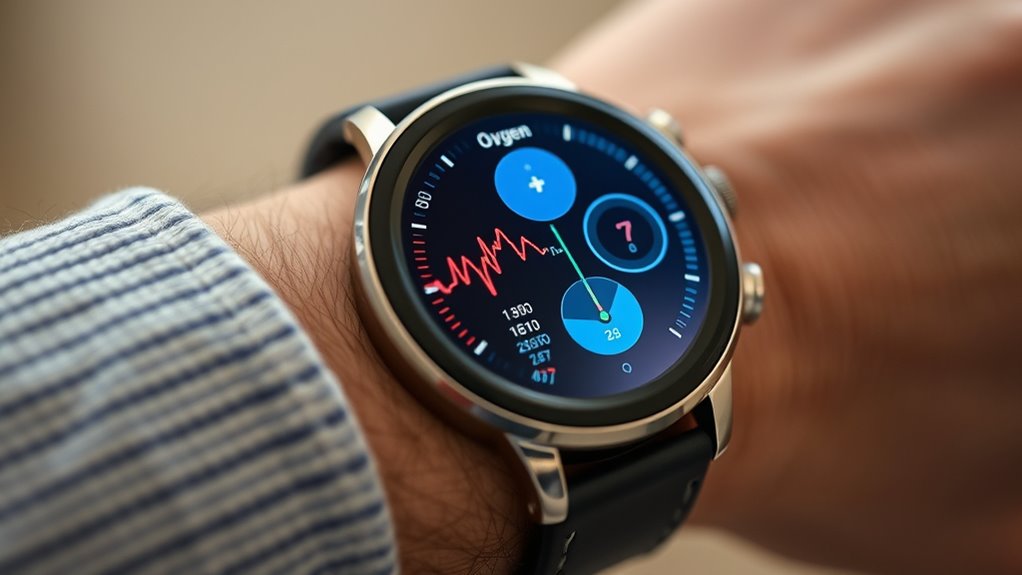
Algorithms and alerts are vital for detecting health issues early on your smartwatch. If these systems are accurate and reliable, they can prompt timely action and potentially save lives. However, you should also consider how data privacy is maintained alongside the effectiveness of these alerts. Ensuring the accuracy of health monitoring features depends on device calibration methods and ongoing validation studies.
Algorithm Accuracy and Reliability
The accuracy and reliability of algorithms in smartwatches play a crucial role in early health detection. Proper algorithm validation guarantees that data interpretations are precise, reducing false alarms or missed signals. Reliability assessment helps confirm that the device consistently performs well over time and across various conditions. When algorithms are well-validated, you can trust alerts indicating potential health issues. Factors influencing accuracy include sensor quality, data processing, and model algorithms. Regular calibration and updates improve performance. Key aspects to take into account are:
- Robust algorithm validation processes
- Continuous reliability assessment
- Sensitivity and specificity balancing
- Handling data noise and artifacts
- Adaptability to individual health patterns
This ensures your smartwatch provides dependable early warnings, supporting proactive health management.
Alert System Effectiveness
Effective alert systems are essential for early health detection in smartwatches, as they transform complex data into actionable warnings. Your device uses algorithms to monitor vital signs and trigger emergency alerts when abnormal patterns emerge. Accurate alerts can prompt you to seek timely medical attention, potentially saving lives. However, false positives can occur when the system mistakenly identifies normal fluctuations as health issues, leading to unnecessary anxiety or alerts. Balancing sensitivity and specificity is critical to reduce false positives while ensuring real emergencies aren’t missed. Advanced algorithms continuously improve, making alerts more reliable. Ultimately, a well-designed alert system enhances your smartwatch’s ability to serve as a proactive health partner, providing early warnings that can make a real difference in managing your health.
Data Privacy Considerations
Since smartwatches rely on sensitive health data to generate early alerts, protecting your privacy becomes essential. Ensuring your data remains secure involves robust data encryption, which shields your information during transmission and storage. You should also be aware of how your device obtains user consent before collecting or sharing data, giving you control over your information. Additionally, it’s important to understand the privacy policies of your smartwatch provider. Be cautious about third-party app access, and regularly review permissions. Remember, transparency about data usage helps you make informed decisions. Ultimately, safeguarding your health data involves a combination of encryption, informed consent, and ongoing privacy oversight to prevent misuse or breaches.
Future Developments in Wearable Health Technology

As wearable health technology continues to evolve, future developments are set to revolutionize how you monitor and manage your well-being. Expect biometric authentication to become more advanced, ensuring your health data remains secure while allowing seamless access to personalized insights. Wearables will likely incorporate more sophisticated sensors to detect early signs of illness or stress, offering real-time alerts. Additionally, fashion integration will take center stage, enabling devices to blend seamlessly with your style through customizable designs and materials. This means your smartwatch won’t just be a health tool but also a fashion statement. These innovations will make health monitoring more accurate, discreet, and stylish, empowering you to take control of your health effortlessly and confidently in everyday life.
Frequently Asked Questions
Can Smartwatches Diagnose Specific Illnesses or Just Indicate Potential Issues?
Smartwatches can’t diagnose specific illnesses but can indicate potential issues through features like blood sugar monitoring and sleep pattern analysis. You might notice irregular sleep or unusual blood sugar levels, which could suggest health concerns. These devices serve as helpful tools for tracking your health, prompting you to seek professional advice when needed. Remember, smartwatches provide insights but don’t replace medical diagnosis or treatment.
How Accurate Are Smartwatch Health Features Compared to Medical-Grade Devices?
Smartwatch health features like heart rate monitoring and sleep tracking are useful but not as accurate as medical-grade devices. You can rely on them for general insights, but they may miss subtle issues or give false readings. Always consult a healthcare professional for a precise diagnosis. Keep in mind, while your smartwatch offers helpful data, it shouldn’t replace professional medical assessments.
Do All Smartwatches Support Health Monitoring and Illness Detection Functions?
Not all smartwatches support health monitoring and illness detection functions. About 70% of newer models include features like fitness tracking and sleep analysis, but advanced health monitoring is usually limited to premium devices. If you’re interested in tracking health trends or detecting early signs of illness, you’ll want to check if your smartwatch supports these specific functions. Not every smartwatch offers extensive health monitoring, so choose carefully based on your needs.
What Privacy Concerns Are Associated With Health Data Collected by Smartwatches?
You should be aware that privacy concerns with smartwatch health data include potential breaches if data isn’t properly secured. Data encryption is essential to protect your information from unauthorized access. Always give user consent before your health data is shared or stored, and review privacy settings regularly. Staying informed about how your smartwatch handles data helps you maintain control over your sensitive health information and reduces privacy risks.
How Does User Activity Level Affect the Reliability of Smartwatch Health Readings?
Your activity level greatly impacts smartwatch health readings; studies show that inconsistent activity can diminish accuracy by up to 30%. When you engage in regular fitness tracking and sleep analysis, the device better calibrates its sensors, delivering more reliable data. High activity levels, like workouts, can temporarily skew heart rate metrics, but overall, maintaining consistent activity helps ensure your smartwatch provides more precise health insights.
Conclusion
While smartwatches offer impressive health insights, they’re not a silver bullet for illness detection. You can catch early warning signs and stay proactive, but don’t put all your eggs in one basket. Remember, even the best tools have their limits—it’s wise to listen to your body and consult healthcare professionals when needed. Stay vigilant and don’t let technology do all the heavy lifting; your health’s worth it.
Halloween Picks
halloween
As an affiliate, we earn on qualifying purchases.