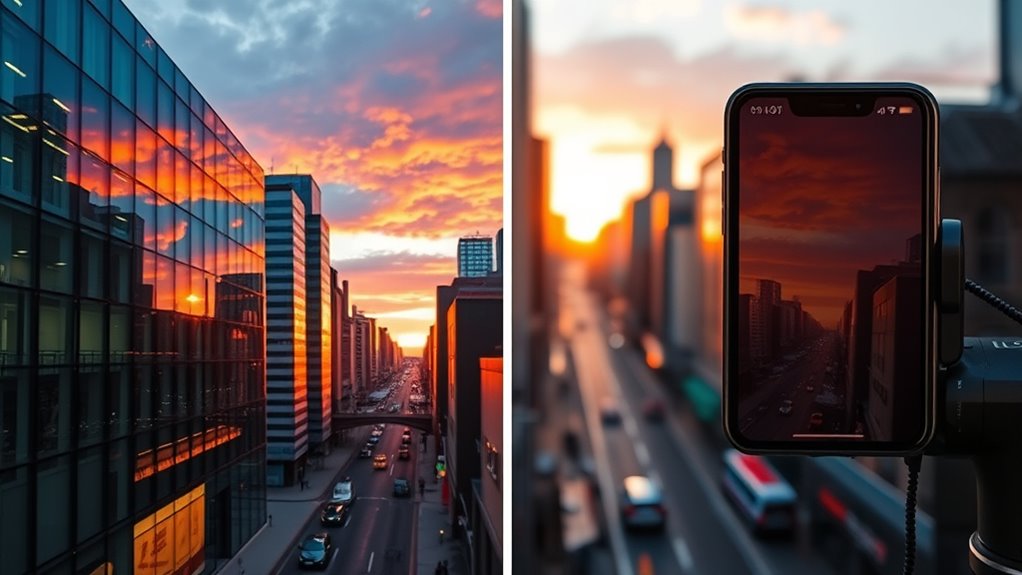

Smartphones have advanced cameras with impressive features like AI processing, multiple lenses, and great software, making them perfect for quick, casual shots. However, DSLRs still lead in image quality, manual controls, lens versatility, and low-light performance. They’re better for creative flexibility and professional results, especially in challenging conditions. If you want to understand which device suits your style and needs, stay tuned for more insights.
Key Takeaways
- DSLRs feature larger sensors and better lenses, delivering superior image quality, detail, and low-light performance compared to smartphones.
- Manual controls and interchangeable lenses in DSLRs provide greater creative flexibility than most smartphones.
- Smartphones excel in portability, instant sharing, and quick responsiveness, making them ideal for spontaneous photography.
- DSLRs outperform smartphones in challenging conditions with weather resistance, longer battery life, and advanced autofocus for moving subjects.
- Overall, DSLRs offer higher image quality and versatility, but modern smartphones are rapidly closing the gap with technological advancements.

Kodak PIXPRO Astro Zoom AZ528-BK 16 MP Digital Camera with 52x Optical Zoom 24mm Wide Angle Lens 6 fps Burst Shooting 1080P Full HD Video Wi-Fi Connectivity and a 3" LCD Screen (Black)
Fifty-Two Times Optical Zoom for Extraordinary Reach Beyond Any Other Camera in Its Class: Reach subjects that most...
As an affiliate, we earn on qualifying purchases.
Image Quality and Resolution
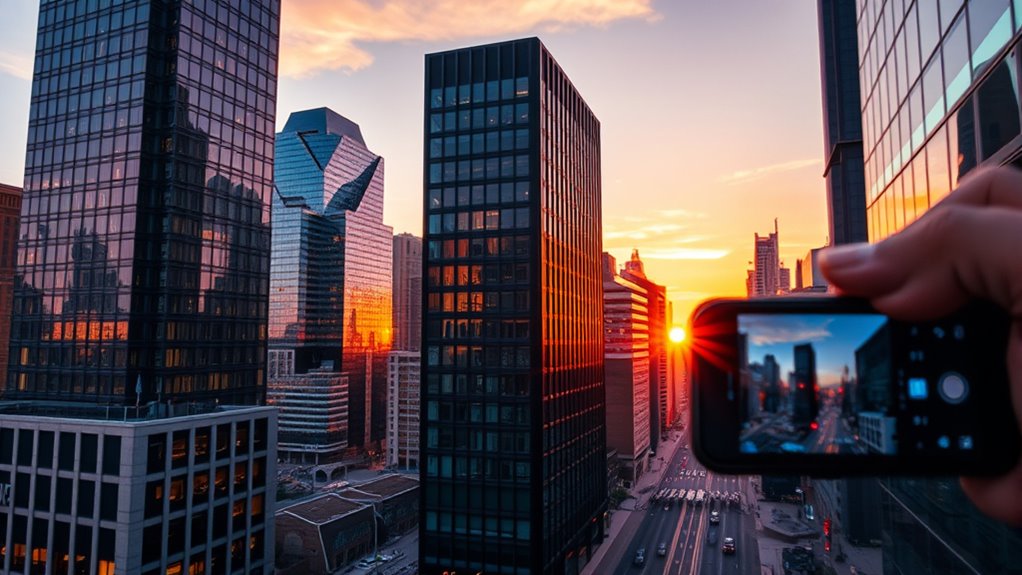
When comparing image quality and resolution, DSLRs generally deliver superior results due to their larger sensors and higher-quality lenses. The bigger sensor size allows more light to reach the camera’s image sensor, resulting in better detail, dynamic range, and low-light performance. Additionally, higher pixel density on a DSLR sensor means more pixels are packed into the same space, capturing finer details and producing sharper images. Smartphones, although improving rapidly, still rely on smaller sensors, which limit their ability to match the depth and clarity of DSLR images. This difference becomes especially noticeable when enlarging photos or shooting in challenging lighting conditions. Overall, a DSLR’s larger sensor size and increased pixel density give you a significant advantage in image quality and resolution. Understanding sensor size helps explain why DSLRs can produce such high-quality images compared to smartphones. Moreover, advancements in sensor technology are narrowing this gap, but the fundamental differences in sensor size still play a crucial role. For example, sensor size differences impact not only resolution but also the camera’s ability to handle various lighting situations, which is an area where DSLRs continue to excel. A deeper understanding of image processing can also shed light on how post-capture enhancements influence final image quality. Additionally, noise reduction techniques play a vital role in maintaining image clarity, especially in low-light scenarios.
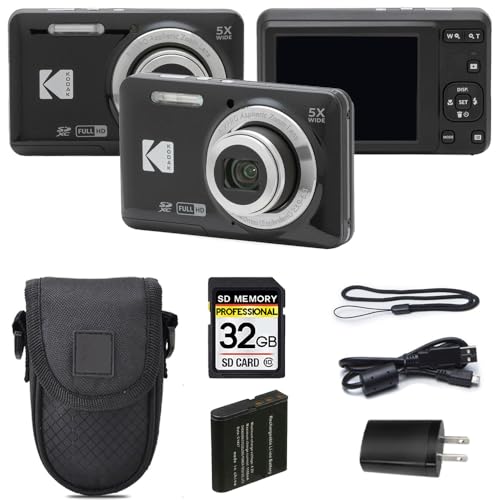
Kodak PIXPRO FZ55 Digital Camera, 16MP Compact Point & Shoot, 5X Optical Zoom, 28mm Wide Angle Lens, 1080P Full HD Video, Black + Camera Case & 32GB SD Card
Compact & Easy-to-Use Point-and-Shoot Camera – Lightweight and pocket-friendly design makes this camera ideal for everyday snapshots, travel,...
As an affiliate, we earn on qualifying purchases.
Manual Controls and Creative Flexibility
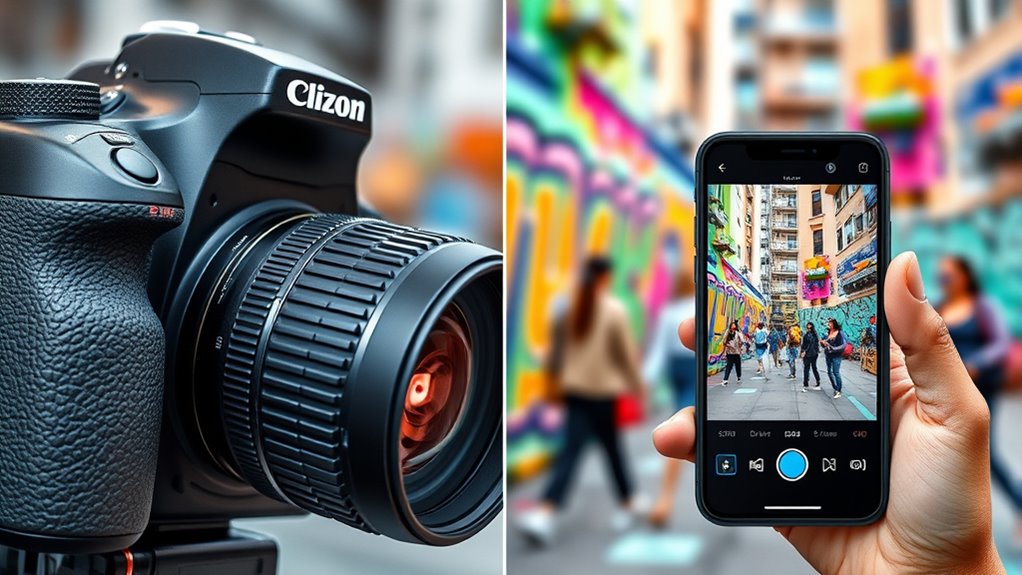
While image quality sets the foundation, having manual controls on your camera opens a whole new level of creative flexibility. With manual controls, you can adjust settings like shutter speed, ISO, and aperture to craft your perfect shot. This freedom lets you experiment with motion blur, low-light situations, or depth of field, giving your images a unique touch. Smartphone cameras are increasingly adding manual controls, but they often still lack the precision and range of a DSLR. By mastering manual controls, you can fine-tune your exposure and focus, ensuring your photos match your artistic vision. This creative flexibility empowers you to go beyond automatic modes and truly express yourself through your photography, whether you’re capturing fast-moving subjects or subtle lighting nuances.

Canon EOS Rebel T7 DSLR Camera EF-S 18-55mm f/3.5-5.6 is II Lens Kit, 24.1 Megapixel CMOS (APS-C) Sensor, Full HD Videos, Built-in Wi-Fi, Beginner Photographers, Digital Camera, Black
24.1 Megapixel CMOS (APS-C) sensor with is 100–6400 (H: 12800)
As an affiliate, we earn on qualifying purchases.
Lens Options and Versatility

Your choice of camera impacts the lens options available to you. DSLRs offer a wide range of lens selections and compatibility with various accessories, giving you more creative freedom. Smartphones, on the other hand, are limited but increasingly support external lenses to expand versatility. Additionally, high-heat outdoor cooking gadgets like IR thermometers and connected workflows demonstrate how specialized tools can enhance precision, much like specialized lenses expand photographic capabilities. The ability to precisely control focus and aperture in DSLRs further enhances creative possibilities, especially when combined with advanced sensor technology that improves image quality in different lighting conditions. Moreover, the development of multi-lens smartphone systems has begun to bridge the gap by offering multiple focal lengths within a single device, enhancing versatility. As technology advances, sensor innovation continues to narrow the quality gap between smartphone and DSLR photography, making smartphones more capable than ever. Furthermore, incorporating image stabilization techniques significantly improves photo clarity, which is especially beneficial in handheld shooting scenarios.
Lens Selection Flexibility
Lens selection flexibility is one of the key advantages that dedicated DSLR cameras offer over smartphones. With a DSLR, you have access to a wide lens variety designed for different scenarios, whether it’s a wide-angle lens for landscapes or a telephoto for distant subjects. This variety allows you to choose the perfect focal length for your shot, giving you greater creative control and precision. Unlike smartphones, which typically rely on digital zoom and built-in lenses, a DSLR’s interchangeable lenses let you adapt quickly to changing environments. This versatility means you can switch from macro to portrait to landscape lenses seamlessly, making your photography more flexible and tailored to your vision. Overall, lens options and focal length choices profoundly expand your creative possibilities with a DSLR.
Accessory Compatibility
Accessory compatibility considerably enhances the versatility of DSLR cameras by offering a wide range of compatible attachments and tools. With various lens accessories, you can easily switch between wide-angle, telephoto, or macro lenses to suit different scenes. This flexibility allows you to capture diverse shots without limitations. Tripod compatibility is also a key feature, ensuring stability for long exposures and precise framing. Unlike smartphones, which have limited accessory options, DSLRs support a broad ecosystem of mounts and adapters, making it easier to customize your setup. This extensive accessory compatibility means you can expand your creative possibilities and adapt your camera to almost any shooting situation, giving you more control over your images and videos. Additionally, supporting expandability is crucial in future-proofing your investment, allowing you to incorporate new tools as your photography skills grow. The availability of third-party accessories further broadens the potential for customization and specialization in your camera system. Moreover, the mounting options offered by DSLRs facilitate the use of innovative and specialized equipment, pushing the boundaries of your photography.

Canon PowerShot G7 X Mark III Digital Camera (Black)
NB-13L Lithium-Ion Battery Pack (3.6V, 1250mAh)
As an affiliate, we earn on qualifying purchases.
Size, Portability, and Convenience
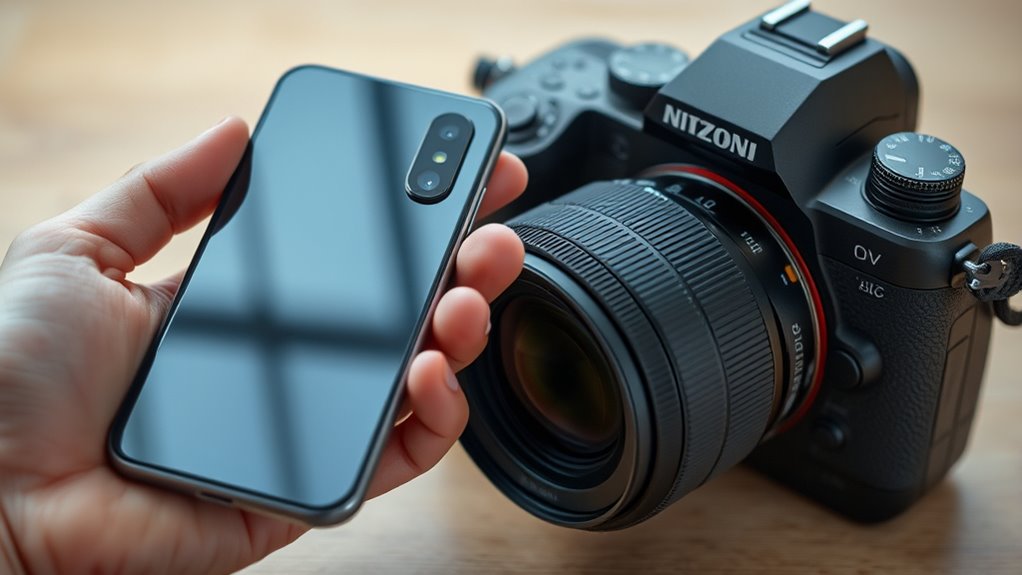
You’ll find that smartphones are compact and lightweight, making them easy to carry everywhere. This portability means you can capture moments on the go without extra gear. In contrast, DSLRs tend to be bulkier, which can be less convenient for casual use. Additionally, some smartphones now incorporate advanced camera features that rival traditional cameras in certain scenarios, enhancing their versatility. Moreover, the integration of AI-powered image processing in smartphones allows for real-time improvements in photo quality, further closing the gap with professional cameras. Thanks to ongoing advancements in camera sensor technology, smartphones continue to improve their image capture capabilities, bridging the quality gap. As these technological improvements evolve, smartphones are increasingly suitable for more demanding photography needs.
Compact and Lightweight Design
When comparing DSLR cameras and smartphones, the size and weight play a crucial role in their convenience and everyday usability. A smartphone’s compact, lightweight design offers superior ergonomics comfort, allowing you to hold and operate it effortlessly for extended periods. Its slim profile fits comfortably in your pocket or bag, making it easy to carry anywhere without added bulk. The aesthetic appeal of a sleek, minimalistic phone enhances your overall experience, blending seamlessly into your daily routine. In contrast, DSLRs tend to be larger and heavier, which can cause fatigue and reduce ease of use during casual shooting. If portability and comfort matter to you, a smartphone’s lightweight design makes it the more practical choice for spontaneous, on-the-go photography.
Easy to Carry Anywhere
Because of their compact design, smartphones are incredibly easy to carry everywhere, making them ideal for spontaneous photography. You can slip one into your pocket or bag without hassle, ready to capture moments anytime. Modern smartphones, powered by Snapdragon processors, handle quick shots and multitasking seamlessly. Wireless connectivity means you can instantly share your photos without needing extra equipment. Imagine:
- Slim, lightweight devices that fit comfortably in your hand
- No bulky lenses or cases, just grab and go
- Always accessible, whether you’re out for a walk or at an event
- Instant access to social media and cloud storage for quick sharing
- Mobile convenience with other smart home devices allows seamless control of your environment while capturing moments
This convenience makes smartphones your perfect travel companion, ensuring you never miss a shot because of bulky gear or setup time. Their size, combined with smart features, keeps photography effortless and spontaneous.
Low-Light Performance and Noise Levels
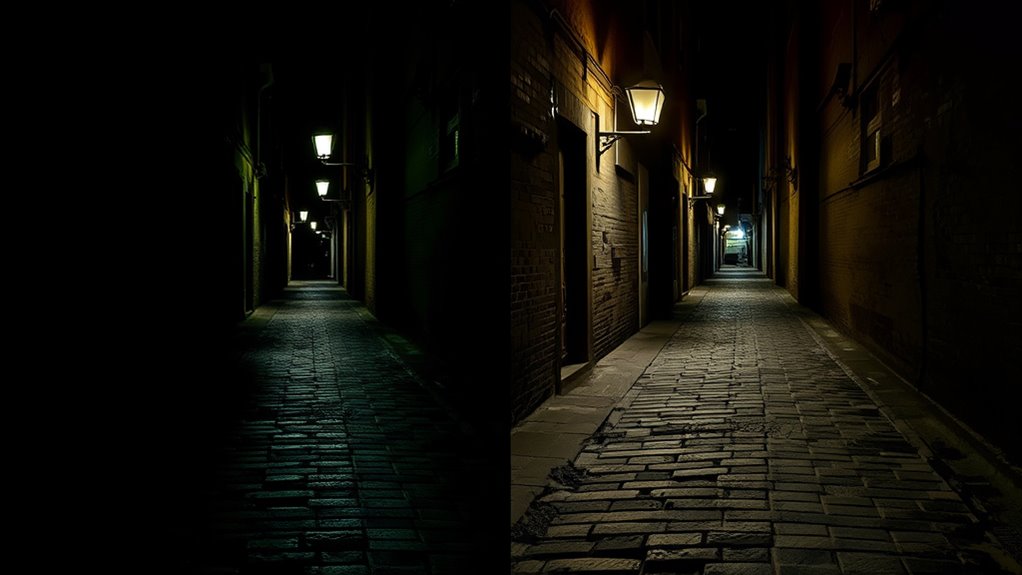
In low-light conditions, DSLR cameras typically outperform smartphones by capturing brighter images with less noise. This advantage comes from their larger sensors, which offer higher sensor sensitivity and better light collection. As a result, you get clearer shots with minimal grain, even in dim environments. Modern smartphones have improved with advanced noise reduction algorithms, but they still struggle to match the depth and detail a DSLR provides in challenging lighting. DSLRs can adjust ISO settings more effectively, balancing brightness and noise. This sensor size allows for better light gathering and contributes significantly to image quality in low-light situations. Additionally, the sensor sensitivity of DSLRs enables them to perform better in dim environments, reducing the need for excessive post-processing. The larger sensors also help preserve image quality when working in suboptimal lighting conditions. Moreover, the dynamic range of DSLRs is typically greater, enabling them to capture more details in shadows and highlights simultaneously. If you often shoot in low-light settings, a DSLR’s superior sensor sensitivity and noise reduction capabilities give you a noticeable edge over your smartphone.
Autofocus Speed and Precision
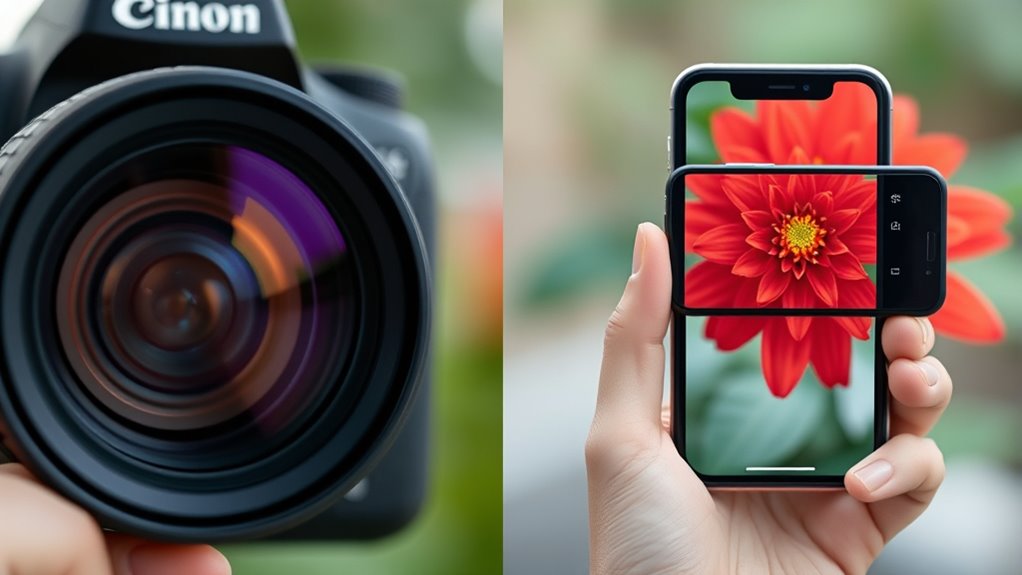
Autofocus speed and accuracy are key factors that can make or break your photography experience, especially when capturing fast-moving subjects or fleeting moments. Your camera’s ability to quickly lock focus depends on its autofocus modes and how well its autofocus algorithms work together. Modern smartphones often use contrast-detection or phase-detection autofocus modes, but may struggle with precision in low-light conditions. DSLR cameras, on the other hand, typically have dedicated autofocus sensors that provide faster, more reliable focus. Visualize:
- Rapidly tracking a moving subject across the frame
- Switching focus between close and distant objects seamlessly
- Maintaining sharp focus in unpredictable lighting
- Achieving pinpoint accuracy with minimal hunting
This highlights how autofocus speed and precision directly influence your photo quality and shooting confidence.
Video Capabilities and Features
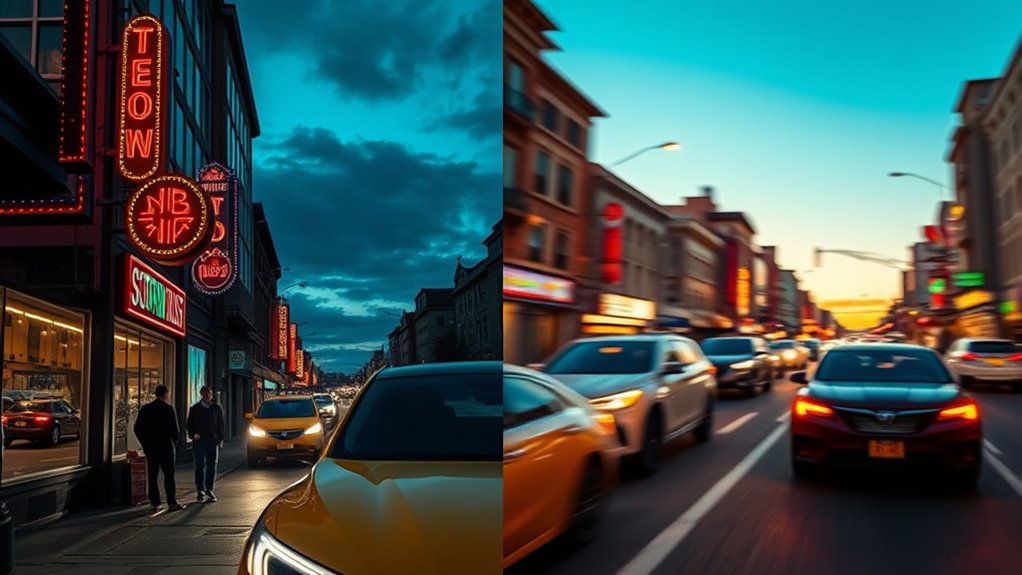
When it comes to capturing high-quality videos, the capabilities and features of your camera play a crucial role. For smartphones, advanced video stabilization helps smooth out shaky footage, making handheld shots look more professional. Many phones now offer features like optical or electronic stabilization, which can considerably improve your video quality. Autofocus accuracy is equally important; a phone with quick, reliable autofocus ensures your subject remains sharp, even during fast movements. DSLR cameras typically excel here, providing superior stabilization options like gimbal compatibility and more precise autofocus systems. While smartphones are catching up with impressive stabilization and autofocus features, DSLRs still hold an edge for professional-grade video, especially in dynamic shooting conditions. Your choice depends on your specific needs and the level of control you desire.
Editing and Post-Processing Potential

Smartphones have made significant strides in editing and post-processing, offering a variety of user-friendly apps that let you enhance your videos quickly and easily. With powerful editing software at your fingertips, you can apply post processing techniques such as color correction, noise reduction, and sharpening—all within seconds. Imagine:
- Adjusting brightness and contrast to make your photos pop
- Applying filters that transform your shot into art
- Cropping and straightening to perfect your composition
- Removing unwanted elements with simple tools
These features enable you to refine images directly on your device, making smartphones surprisingly capable of professional-looking results. While DSLRs also support advanced editing, the convenience and accessibility of smartphone apps give you a compelling edge for quick and effective post-processing.
Cost and Investment Value
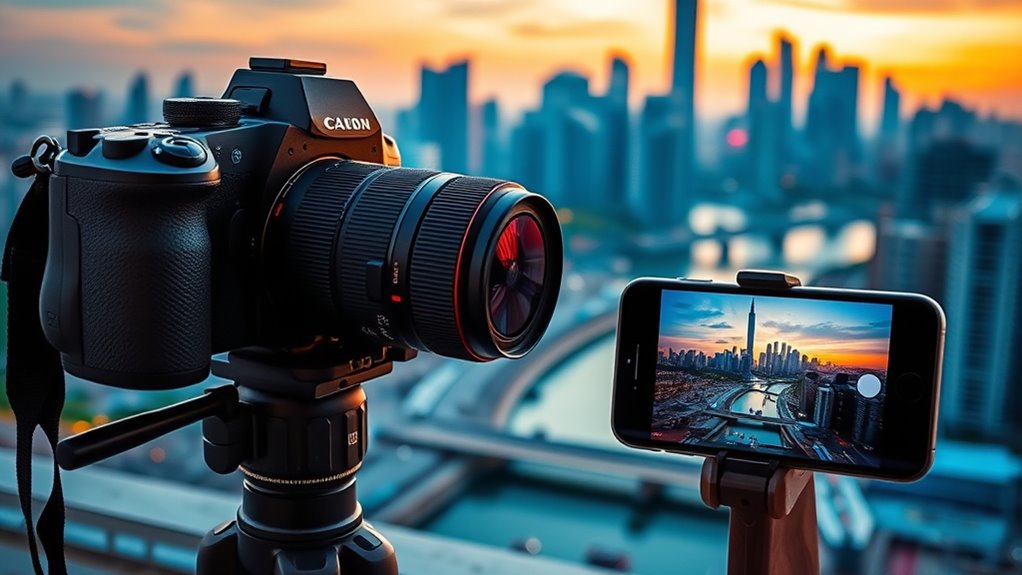
Investing in a DSLR typically requires a significant upfront cost, but it can offer long-term value through durability and high-quality results. If you’re on a budget constraint, a smartphone might seem more appealing, but consider the long-term investment. A DSLR’s initial expense covers superior optics, better sensors, and versatile accessories, which can save you money over time by avoiding frequent upgrades. While smartphones are cheaper upfront, their limited sensor size and lens quality can lead to costly add-ons or replacements if you want professional-grade photos. Ultimately, a DSLR can be a smarter investment if you’re serious about photography and willing to spend more initially. Over time, its durability and advanced capabilities can make it a more cost-effective choice, especially for those committed to honing their skills.
Which Device Suits Your Photography Style
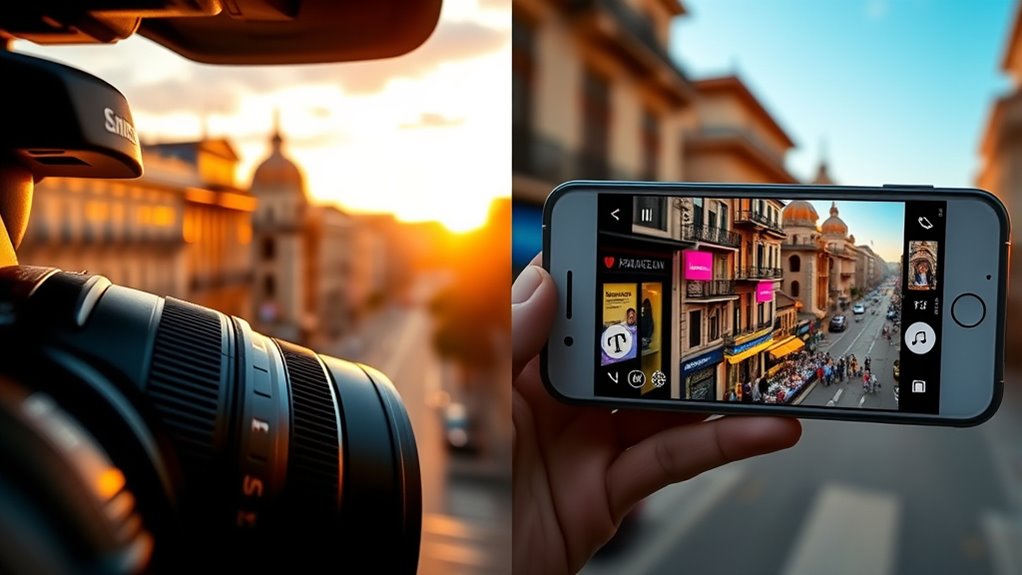
Think about how often and where you’ll shoot—do you need flexibility in different environments? Consider how much creative control you want over settings and effects. Also, reflect on whether portability and convenience are more important than advanced features for your photography style.
Shooting Environment Flexibility
When it comes to shooting in different environments, the flexibility of your device can make all the difference. A smartphone offers portability, making it easy to capture spontaneous moments in unpredictable weather. It’s lightweight and quick to deploy, even in tight spots. A DSLR, however, provides superior tripod stability, ensuring sharp shots in low light or long exposures. Its weather resistance means you can shoot in rain or snow without worry. Imagine:
- Setting up a stable shot on uneven terrain with a DSLR
- Quickly capturing a fleeting scene with your smartphone
- Managing weather conditions without fear of damage
- Carrying minimal gear for urban or nature adventures
Choosing the right device depends on your environment—whether you prioritize quick response or stability and weatherproofing.
Creative Control Levels
Your choice of device directly influences how much creative control you have over your shots. With a DSLR, you benefit from advanced sensor technology that captures more detail and dynamic range, giving you greater flexibility in post-processing. You also gain manual control over settings like aperture, shutter speed, and ISO, allowing you to craft your image exactly as you envision it. In contrast, smartphones have improved autofocus accuracy, making it easier to capture sharp images quickly, but they often limit your ability to tweak settings creatively. While smartphones excel in convenience, they typically don’t offer the same level of control over focus points or exposure adjustments. If creative control is a priority, a DSLR clearly provides more options to realize your artistic vision.
Portability and Convenience
Choosing between a DSLR and a smartphone camera often comes down to how much portability and convenience matter to your photography style. If you prefer spontaneous shots and ease of carrying, a smartphone is lightweight and always accessible. It fits comfortably in your pocket or purse, ready to capture moments anytime. Consider the following:
- Compact design makes it easy to carry everywhere
- Long battery life on some models keeps you shooting longer
- Weather resistance allows use in rain or snow without worry
- Quick startup times enable instant shooting when moments happen
A DSLR, while bulkier, offers superior weather sealing and longer battery life for extended outings. But if portability and convenience are your priorities, your smartphone provides an effortless, always-ready solution for capturing life’s fleeting moments.
Frequently Asked Questions
How Does Battery Life Compare Between DSLRS and Smartphones?
Your smartphone typically has better battery efficiency and lower power consumption than a DSLR, allowing it to last longer during everyday use. DSLRs, with their larger sensors and extensive features, consume more power, often requiring frequent recharging after intensive shooting sessions. If you’re looking for a camera that can stay powered longer, your smartphone’s battery life generally outperforms the more power-hungry DSLR, especially with modern energy-saving technologies.
Can Smartphones Replace DSLRS for Professional Photography?
Smartphones can’t fully replace DSLRs for professional photography because of their smaller sensor size, which limits image quality and depth. While advanced image processing can enhance photos, it can’t match the control and versatility a DSLR offers, like interchangeable lenses and manual settings. If you’re aiming for professional results, a DSLR still provides the superior image quality and creative flexibility that smartphones can’t entirely replicate.
What Are the Durability Differences Between the Two Devices?
Think of your smartphone as a modern Swiss Army knife—compact but surprisingly durable. It usually has better build quality and weather resistance, making it more resilient against drops and rain. DSLRs, on the other hand, often feature delicate parts and less weatherproofing. So, if you’re outdoors or rough on devices, your phone’s durability might give it an edge, especially with rugged, weather-resistant designs.
How Do Accessories and External Gear Impact Performance?
Accessories like lens attachments and external flashes can greatly boost your phone’s photography performance. Lens attachments expand your options for wider or macro shots, while external flashes provide better lighting in low-light conditions. Using these external gear pieces, you can enhance image quality and versatility, making your smartphone more competitive with dedicated cameras. Just make sure you choose compatible accessories to maximize their benefits and improve your overall photography experience.
Are Smartphone Cameras Suitable for Large-Format Prints?
Smartphone cameras aren’t ideal for large-format prints because their image quality and print resolution often fall short of professional standards. You might get decent results for small prints or casual displays, but for big, high-quality prints, a DSLR or specialized camera provides the better image quality and higher resolution needed. Rely on a dedicated camera if you want sharp, detailed large-format prints that truly impress.
Conclusion
While smartphones offer convenience and instant sharing, a DSLR provides unmatched image quality and creative control. Imagine capturing stunning low-light scenes with professional-grade noise reduction, or swapping lenses for diverse shots—something your phone can’t easily do. Yet, if portability and quick snaps matter most, your phone’s always ready. Ultimately, choose the device that fits your style: the sleek, always-on smartphone or the versatile, high-performance DSLR. Your perfect shot awaits—just pick your gear.