Public Wi-Fi hotspots often lack proper security, making your data vulnerable to hackers, eavesdropping, and fake networks. To stay safe, avoid sensitive transactions, use strong passwords, and turn off sharing features. Enable encryption on your device, update software regularly, and consider using a trusted VPN for added protection. Recognizing secure networks and staying cautious can markedly reduce risks. If you stick around, you’ll learn more ways to protect yourself online.
Key Takeaways
- Use VPNs to encrypt your internet connection and protect data from hackers on public Wi-Fi.
- Verify Wi-Fi network names with staff to avoid connecting to fake hotspots.
- Avoid entering sensitive information or conducting transactions on unsecured or open networks.
- Enable device security features like firewalls, encryption, and automatic updates to prevent vulnerabilities.
- Disable file sharing, Wi-Fi auto-connect, and use strong, unique passwords for added safety.

Candy Bila Kids Headphones, Wired Headphones for Kids Over Ear with Microphone, 85/94dB Volume Limiter Headphones for Girls Boys with Sharing Jack, Foldable Headphones for Online Study
Wired Headphones for Kids Over Ear with Microphone, 85/94dB Volume Limiter Headphones for Girls Boys with Sharing Jack,...
As an affiliate, we earn on qualifying purchases.
Understanding the Risks of Public Wi-Fi Networks

Public Wi-Fi networks might seem convenient, but they come with significant security risks you need to be aware of. Many networks lack robust encryption protocols, making it easier for hackers to intercept your data. Without proper encryption, sensitive information like passwords or personal details can be exposed. Additionally, some networks don’t implement network segmentation, which isolates devices and limits access within the network. Without segmentation, attackers can move laterally across connected devices once inside, increasing your vulnerability. Recognizing these risks helps you understand why public Wi-Fi isn’t always safe. Always verify the network’s security features before connecting, and avoid transmitting confidential data unless you’re using strong encryption methods or a trusted virtual private network (VPN). European cloud innovation emphasizes the importance of secure infrastructure, even in public connectivity environments.
Amazon Product B0CQB1KX7F
As an affiliate, we earn on qualifying purchases.
How Hackers Exploit Open Hotspots

Hackers target open hotspots by intercepting your data through man-in-the-middle attacks, making it easy to steal your sensitive information. They can also eavesdrop on your unencrypted connections, capturing passwords and personal details without your knowledge. Sometimes, they set up fake hotspots to trick you into connecting, giving them instant access to your device. Additionally, navigation and mapping technologies used by some hotspots can be exploited to track your location and activities. Recognizing public Wi-Fi security risks can help you take proper precautions when connecting to free networks.
Man-in-the-Middle Attacks
Have you ever connected to an open Wi-Fi hotspot without considering the risks? Man-in-the-middle (MITM) attacks occur when hackers intercept your data between your device and the network. They can insert themselves in the communication, capturing sensitive info like passwords or personal details. To stay safe, guarantee your connection uses encrypted communication, which makes data unreadable to outsiders. Also, verify certificate validation; if a website’s security certificate isn’t valid or is missing, don’t proceed. Here’s a quick comparison: a security vulnerability can compromise your data if you’re not cautious. Being aware of contrast ratio and other image quality factors can help you recognize suspicious activity or interference in digital environments.
Eavesdropping on Data
Ever wonder how your data can be quietly stolen when you’re connected to an open Wi-Fi hotspot? Hackers often use network sniffing tools to monitor unencrypted data transmitted over public networks. If your connection lacks proper data encryption, sensitive information like passwords, emails, or credit card details can be easily intercepted. These malicious actors don’t need to break into your device; instead, they simply listen in on the data streams passing through the network. By capturing unencrypted data, they can analyze and extract valuable personal information without your knowledge. To stay safe, always ensure your connection uses strong data encryption, such as HTTPS or a trusted VPN. Without these safeguards, your private data remains vulnerable to eavesdropping by anyone on the same open hotspot.
Fake Hotspot Setup
Did you know that attackers can set up fake Wi-Fi hotspots that look identical to legitimate ones? This tactic, known as hotspot deception, tricks you into connecting to a fake access point. Once connected, hackers can intercept your data or launch other malicious activities. They often name their fake access points similarly to real hotspots, making it easy to fall for the deception. To avoid this, verify the hotspot name with staff or look for official signage. Here’s a quick comparison:
| Legitimate Hotspot | Fake Hotspot |
|---|---|
| Official network name | Slight misspelling or unusual name |
| Provided by trusted source | Unfamiliar or generic name |
| Secure connection | No security or open network |
Stay vigilant to prevent falling victim to fake access and hotspot deception.
Amazon Product B0F7H4SDYZ
As an affiliate, we earn on qualifying purchases.
Recognizing Secure Wi-Fi Connections
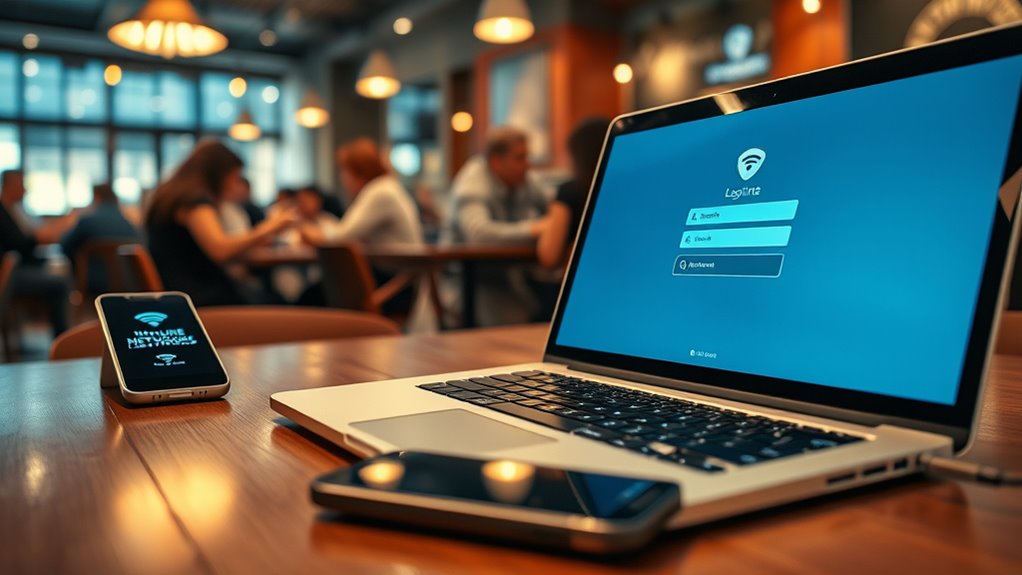
To guarantee your data stays safe when using public Wi-Fi, it’s crucial to recognize which connections are secure. Look for networks that use strong Wi-Fi encryption, such as WPA2 or WPA3, indicated by a padlock icon or security label. These encrypt your data, making it difficult for hackers to intercept your information. Additionally, check for networks that require network authentication, meaning you’ll need a password to connect. Secure networks often have names that match the venue or organization, rather than generic or suspicious titles. Avoid open networks without any security prompts, as they lack encryption and authentication. Recognizing secure Wi-Fi encryption helps you distinguish protected networks from potentially risky ones. Being aware of network security protocols can further aid in selecting safer options for your online activities.

Skullcandy Hesh ANC Wireless Over-Ear Bluetooth Headphones, Active Noise Cancelling, Up to 22 Hrs Battery, Foldable Lightweight Design, Microphone for iPhone Android
Extended Battery Life: Up to 22 Hours
As an affiliate, we earn on qualifying purchases.
The Importance of Using VPNs When Browsing Public Networks

Using a virtual private network (VPN) is essential when browsing public Wi-Fi networks because it creates a secure, encrypted tunnel for your data. This protection shields your information from potential hackers and eavesdroppers. The VPN benefits include enhanced privacy, preventing data theft, and maintaining anonymity online. To maximize protection, consider these key points:
- Choose VPNs with strong encryption protocols like AES-256 for maximum security.
- Ensure the VPN provider has a strict no-logs policy to protect your privacy.
- Use a VPN whenever connecting to unfamiliar or unsecured networks.
- Remember that a reliable VPN can help bypass geo-restrictions and censorship.
- Be aware that understanding smartphone settings can further improve your security when using public Wi-Fi. Additionally, staying informed about public Wi-Fi vulnerabilities can help you recognize potential threats before they become serious.
Protecting Your Devices With Up-To-Date Software

Keeping your devices up to date is one of the simplest yet most effective ways to protect yourself from security threats. Regularly installing software updates patches vulnerabilities that hackers might exploit. These updates often include vital security improvements that help keep your device safe on public Wi-Fi networks. Additionally, antivirus software is essential; it scans for malware and blocks malicious activities before they cause harm. Make it a habit to enable automatic updates for your operating system and apps, ensuring you’re always protected with the latest security measures. Outdated software can be a gateway for cybercriminals, so staying current minimizes that risk. Being aware of security best practices and maintaining updated software and antivirus protection, you strengthen your defenses and reduce the chances of falling victim to cyberattacks while using free hotspots. Regularly reviewing software update policies can further enhance your security posture. Incorporating connected devices into your security routine is vital, especially as many home fitness gadgets connect to your network, increasing potential vulnerabilities.
Best Practices for Safe Browsing on Public Wi-Fi
When browsing on public Wi-Fi, practicing safe habits is essential to protect your personal information. To stay secure, follow these best practices:
- Use strong, secure passwords for your accounts to prevent unauthorized access.
- Enable device encryption to safeguard your data if your device is lost or stolen.
- Avoid accessing sensitive sites or entering personal information while on public networks.
- Turn off file sharing and Wi-Fi when you’re not actively using the connection.
- Be aware of nanotechnology advances that could potentially influence cybersecurity measures and data protection. Staying informed about emerging cybersecurity innovations can also help you adapt your safety practices as technology evolves. Additionally, understanding the role of vetted wave and wind security measures can further enhance your online safety efforts. Keeping up with security protocol updates is crucial for maintaining robust defenses against evolving threats. Regularly updating your device software can also patch vulnerabilities and strengthen your defenses against cyber threats.
Avoiding Sensitive Transactions on Unsecured Networks
While following best practices for safe browsing helps protect your data, it’s equally important to avoid conducting sensitive transactions on unsecured networks. Public Wi-Fi is inherently risky, so skip activities like online banking or shopping. Instead, use encrypted messaging apps for communication, as they secure your messages even on open networks. Be cautious with password management; avoid entering passwords for important accounts while connected to free hotspots. If you must access sensitive information, consider using a trusted VPN to encrypt your entire connection, adding an extra layer of security. Remember, unsecured networks leave your data vulnerable to eavesdropping and hacking. Prioritize your privacy by delaying sensitive transactions until you’re on a secure, trusted network. Always be aware that public Wi-Fi networks often lack proper security measures and can be easily compromised.
Additional Tips for Maintaining Privacy and Security

To further protect your privacy and security on public Wi-Fi, remaining vigilant about your device settings and online habits is essential. Here are some additional tips:
Stay vigilant with device settings and habits to safeguard your privacy on public Wi-Fi networks.
- Use encrypted messaging apps to keep your conversations private from prying eyes.
- Create and regularly update strong passwords for your accounts, avoiding common or reused ones.
- Disable sharing features like file sharing and network discovery when connected to public hotspots.
- Enable two-factor authentication on your accounts for an extra layer of security.
- Be aware of privacy settings on your device and apps to prevent unnecessary data sharing.
Frequently Asked Questions
Can Public Wi-Fi Networks Track My Browsing History?
Yes, public Wi-Fi networks can track your browsing history through Wi-Fi monitoring. When you connect, the network administrator or malicious actors might log your activity, compromising your browsing privacy. To stay safe, avoid accessing sensitive info, use a VPN, and guarantee your connection is encrypted. This way, you protect your data from being monitored and maintain your privacy while using free hotspots.
Are Public Wi-Fi Hotspots Safe for Online Banking?
Public Wi-Fi hotspots are like open books, making online banking risky due to Public Wi-Fi Dangers. When you access your bank, your data can easily be intercepted by hackers. To protect your Online Security, avoid using public hotspots for banking or sensitive transactions. Instead, rely on a secure, private connection or a virtual private network (VPN) to keep your financial info safe from prying eyes.
How Can I Identify a Fake or Malicious Wi-Fi Network?
You can identify fake hotspots by carefully checking the SSID, as malicious actors often use SSID spoofing to mimic legitimate networks. Always verify the network name with staff or signage, and avoid connecting to unfamiliar or suspicious SSIDs. Be cautious of networks with misspelled names or extra characters, and use a VPN for added security. Trust your instincts—if something feels off, don’t connect.
Is It Necessary to Disable Sharing Settings on Public Networks?
Think of your device as a house in a neighborhood; if you leave the doors open, anyone can walk in. Disabling sharing settings on public networks keeps your device hidden, reducing the risk of unwanted visitors. By turning off network sharing and device visibility, you lock your information away, making it harder for malicious actors to access your data. It’s a simple step that considerably boosts your safety.
What Signs Indicate My Device Has Been Compromised on Wi-Fi?
If your device exhibits unusual behavior or shows signs of suspicious activity, it’s likely compromised. Look for unexpected pop-ups, slow performance, or unknown apps. You might also notice battery drain or strange network activity. These signs indicate your device could be infected or hacked. If you suspect this, disconnect from the Wi-Fi network immediately, run a security scan, and update your software to protect your personal information.
Conclusion
Remember, public Wi-Fi is like a bustling marketplace—full of opportunities but also lurking dangers. Stay vigilant, use a trusty VPN as your digital shield, and keep your software up-to-date like armor against hackers. By following these tips, you’ll navigate these open networks smoothly, like a savvy traveler steering clear of stormy seas. Stay safe out there, and let your online journey be a secure adventure rather than a risky gamble.