A Chromebook runs Chrome OS, a simple, cloud-focused system optimized for online tasks and browsing, while traditional laptops operate on Windows or macOS, offering more customization and offline application support. Chromebooks are usually lighter, more affordable, and ideal for basic activities like streaming, browsing, and schoolwork, especially for on-the-go use. If you’re curious about how their hardware, software, and usability compare in detail, there’s more to explore below.

Get the latest gadgets delivered free — and shop member deals
- Fast, free delivery on millions of items
- Access to Prime Big Deal Days deals on October 6–7
- Prime Video, Amazon Music and more included
Key Takeaways
- Chromebooks run Chrome OS, focusing on cloud-based tasks, while traditional laptops run Windows or macOS with broader software support.
- Hardware options and design vary, affecting durability, portability, and features like touchscreens or upgradeability.
- Chromebooks excel at online browsing and streaming, but have limited offline and specialized application compatibility compared to traditional laptops.
- Generally more affordable, Chromebooks offer good value for basic tasks, whereas traditional laptops provide higher performance for complex needs.
- Ideal for casual users, students, and travelers, while traditional laptops suit professionals requiring powerful, offline-capable software.
Operating Systems and User Interface
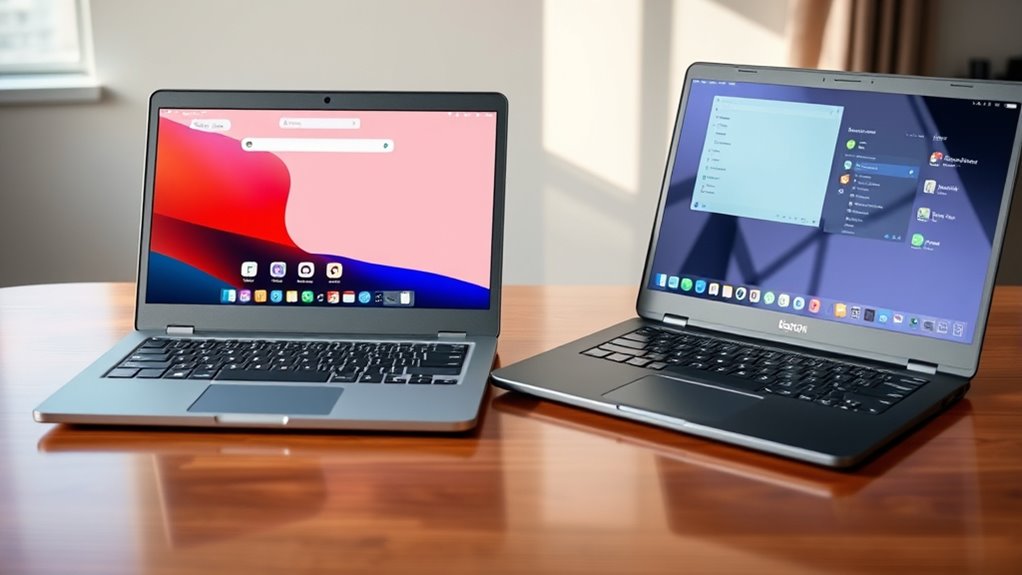
When comparing Chromebooks and traditional laptops, understanding their operating systems and user interfaces is essential. Chromebooks run Chrome OS, which is cloud-centric and streamlined, making it easy to access your files and apps via the internet. This focus on cloud integration allows for seamless collaboration and quick updates. The user interface is simple, with a familiar Chrome browser layout, and it’s designed for ease of use, even for beginners. Security features are built-in, with automatic updates, sandboxing, and verified boot, reducing vulnerabilities. In contrast, traditional laptops offer various operating systems like Windows or macOS, which provide more customization options but often require manual security management. Overall, Chromebooks prioritize simplicity, security, and cloud connectivity, shaping a user experience centered around online productivity. Additionally, the integration of European cloud innovation emphasizes sustainability and security in cloud solutions, further enhancing the security features that protect user data. This integration also highlights the importance of cloud security in safeguarding sensitive information from cyber threats. A focus on user interface design contributes to the accessibility of Chrome OS for users with varying levels of technical expertise.
Hardware and Design Variations
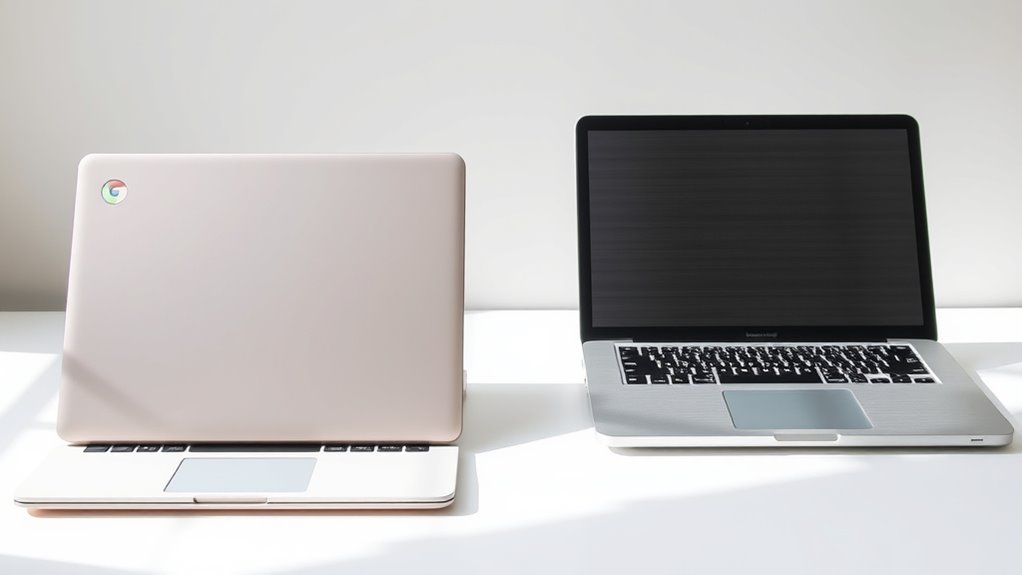
While Chromebooks excel in simplicity and portability, their hardware and design options vary widely to suit different needs. You’ll find models with different build material options, from plastic to metal, impacting durability and weight. Touchscreen capabilities also differ; some Chromebooks include touchscreens for versatile interaction, while others rely solely on keyboard and trackpad. This variation allows you to choose a device that balances portability, robustness, and functionality. Additionally, selecting high-quality body jewelry materials can influence the device’s longevity and user experience. Exploring hardware customization options can further tailor your device to specific preferences and requirements. Considering hardware upgrade possibilities can help extend the lifespan and performance of your Chromebook over time, especially as performance needs evolve.
Software Compatibility and Applications
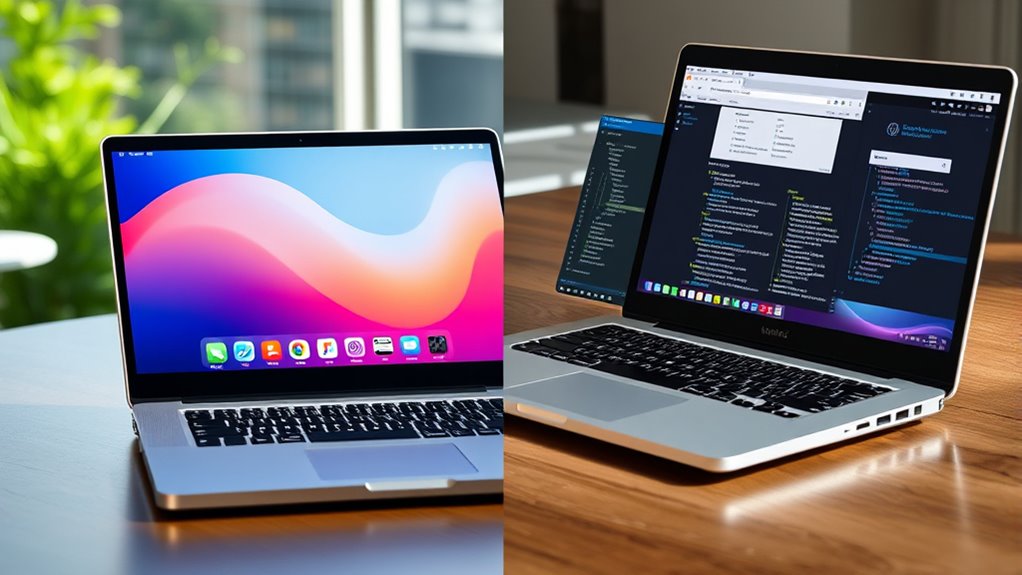
Chromebooks are optimized for cloud-based apps and rely heavily on web-based software, which means many popular programs available on Windows or macOS might not run natively. You’ll find that most tasks are handled through browser-based tools like Google Drive or web versions of Microsoft Office. While this setup works well with an internet connection, it can be limiting if you need offline software. However, Chromebooks do support some offline capabilities for certain cloud apps, allowing you to work without Wi-Fi temporarily. Keep in mind, though, that compatibility with traditional desktop applications is limited. If your work depends on specialized software or offline tools, a traditional laptop might serve you better, as it offers broader support for a wide range of applications.
Price Range and Value Proposition
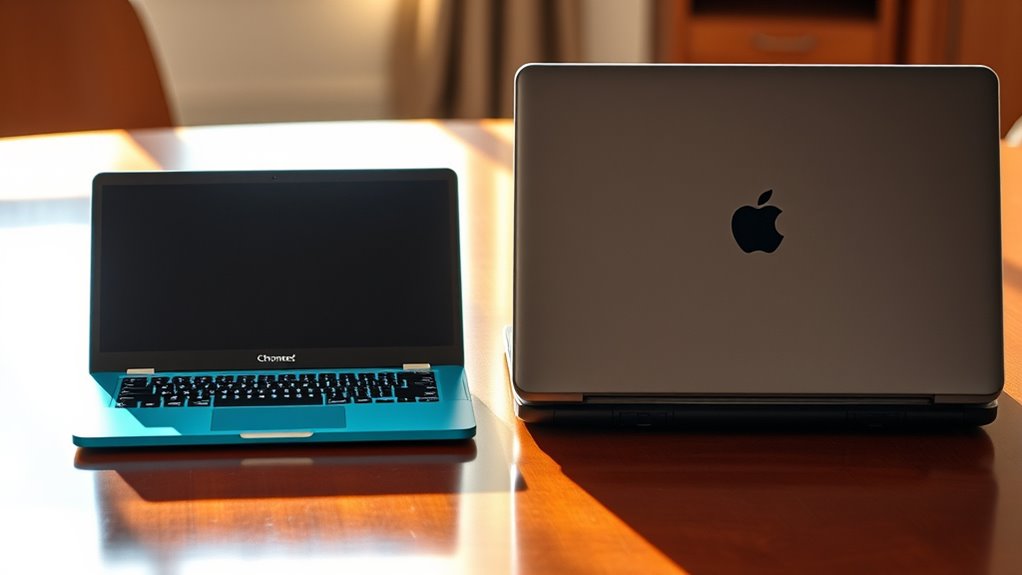
Compared to traditional laptops, Chromebooks generally come with a more affordable price tag, making them an attractive option for budget-conscious shoppers. Their lower cost doesn’t mean you sacrifice essential features; many include decent warranty coverage to protect your investment. Plus, Chromebooks heavily rely on cloud storage, reducing the need for expensive local storage upgrades. This focus on cloud services means you can access your files from anywhere, adding to their value. While traditional laptops often offer more powerful hardware options, Chromebooks deliver sufficient performance for everyday tasks at a fraction of the price. Overall, their combination of affordability, integrated cloud storage, and warranty coverage offers a compelling value proposition, especially if your needs are basic or centered around web-based activities.
Best Uses and User Suitability
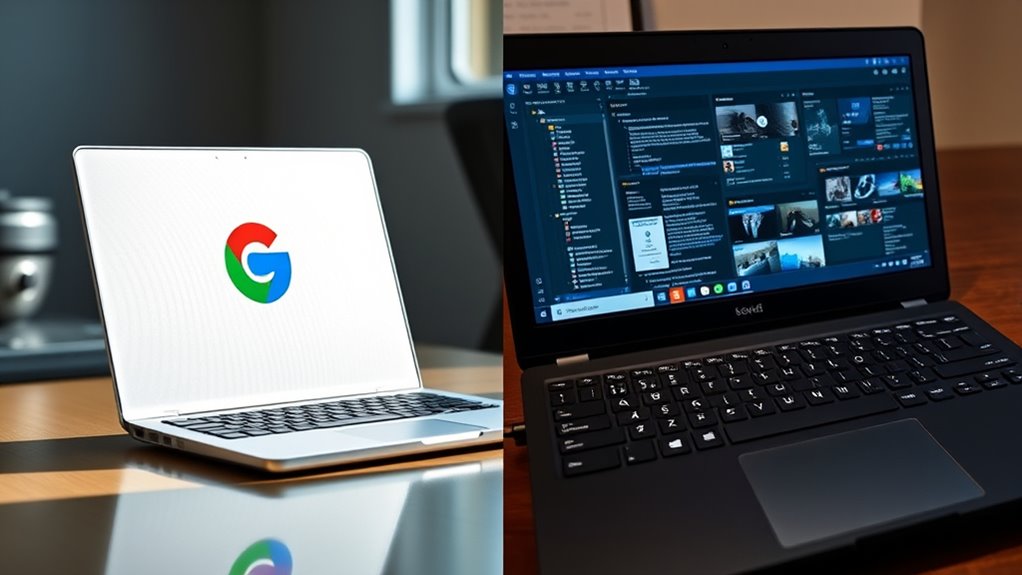
If your main activities involve browsing the web, streaming videos, or working with cloud-based applications, a Chromebook can be an excellent choice. It suits users who prioritize portability and simplicity. Consider these uses:
- Cloud gaming becomes easier with fast internet and integrated Chrome OS support.
- Digital art is possible through lightweight apps and web-based tools, ideal for beginners.
- Education benefits from easy access to Google Classroom and other learning platforms.
- Travel professionals appreciate its long battery life and quick startup for on-the-go productivity.
While Chromebooks excel in cloud-based tasks, they’re less suited for heavy software like advanced photo editing or gaming that requires high performance. Understanding your primary needs helps determine if a Chromebook aligns with your lifestyle.
Frequently Asked Questions
Can Chromebooks Run Windows or Macos Software?
No, Chromebooks can’t run Windows or macOS software directly. They primarily support Chrome OS apps and Android apps, with limited Windows compatibility through remote desktop tools or Android versions. Mac software support is also unavailable natively. If you need to run Windows or Mac applications, you’ll need a traditional laptop or use virtual machines, but these options aren’t compatible with Chromebooks.
How Long Do Chromebook Batteries Typically Last?
You’ll typically get about 8 to 12 hours of battery life on a Chromebook, depending on usage. The charging speed is usually quick, often regaining several hours of power in just 30 minutes. To maximize your battery life, avoid heavy multitasking and keep your device updated. With efficient power management, your Chromebook stays reliable throughout the day, making it a great choice for on-the-go use.
Are Chromebooks Secure Against Viruses and Malware?
Yes, Chromebooks are generally secure against viruses and malware because they have built-in antivirus protection and sandboxing features that isolate apps and processes. You don’t have to worry much about malware vulnerabilities, as Google regularly updates the OS to patch security issues. However, it’s still wise to practice safe browsing habits and avoid downloading files from untrusted sources to keep your device fully protected.
Do Chromebooks Support External Peripherals Like Printers and Scanners?
It’s a coincidence that many Chromebooks support external peripherals like printers and scanners, making device connectivity straightforward. You’ll find that most Chromebooks have USB ports, SD card slots, or even Bluetooth, allowing you to connect peripherals easily. While compatibility can vary with specific models, generally, you can rely on Chromebooks for peripheral compatibility, especially when using cloud-based or wired connections. This flexibility makes them suitable for everyday tasks requiring external device access.
Can Chromebooks Be Upgraded or Customized Easily?
You can’t easily upgrade or customize your Chromebook like a traditional laptop. Most models have limited upgradeability options, often locking in hardware components such as RAM and storage. If hardware customization is important to you, a traditional laptop might be a better choice. Chromebooks are designed for simplicity and cloud-based use, so they don’t typically support hardware upgrades. Instead, focus on selecting a model that meets your current needs.
Conclusion
Ultimately, whether you choose a Chromebook or a traditional laptop depends on your needs. Imagine yourself opening a sleek Chromebook in a cozy café, effortlessly browsing the web and streaming shows, or firing up a powerful laptop in a busy office, tackling work projects. Both options fit into your daily routine like missing puzzle pieces, seamlessly completing your digital life. The right choice feels natural—like finding that perfect spot where all your tech needs align effortlessly.
Fall Picks
fall essentials
As an affiliate, we earn on qualifying purchases.