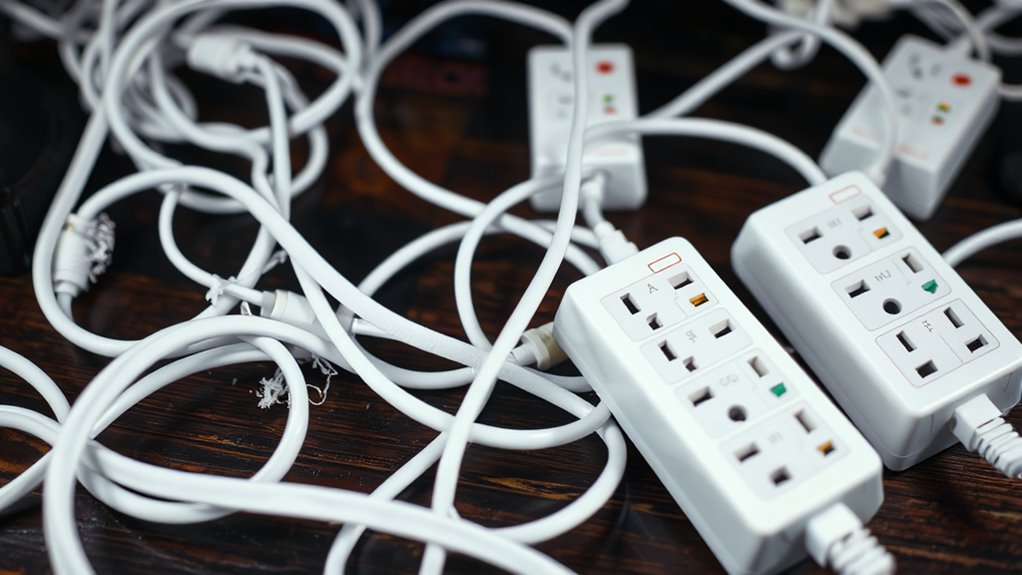

To stay safe, match your extension cords and power strips’ capacity to your devices, avoiding overloading and daisy-chaining multiple strips. Never run cords under rugs or furniture, and always check for fraying or damage before use. Use grounded and surge-protected strips for electronics, and unplug devices when not in use. Always follow safety guidelines to prevent overheating, fires, or electrical hazards. Keep these tips in mind to protect your home and loved ones—there’s more to learn if you keep going.

Get the latest gadgets delivered free — and shop member deals
- Fast, free delivery on millions of items
- Access to Prime Big Deal Days deals on October 6–7
- Prime Video, Amazon Music and more included
Key Takeaways
- Match cord and strip power ratings to connected devices and avoid overloading to prevent fire hazards.
- Never daisy-chain multiple power strips or connect high-wattage appliances to a single strip.
- Regularly inspect cords for fraying, damage, or heat buildup, and replace damaged cords immediately.
- Keep cords visible, not pinched or covered by rugs or furniture, to prevent overheating and damage.
- Use cords and strips with proper safety features like surge protection, grounding, and appropriate gauge wiring.
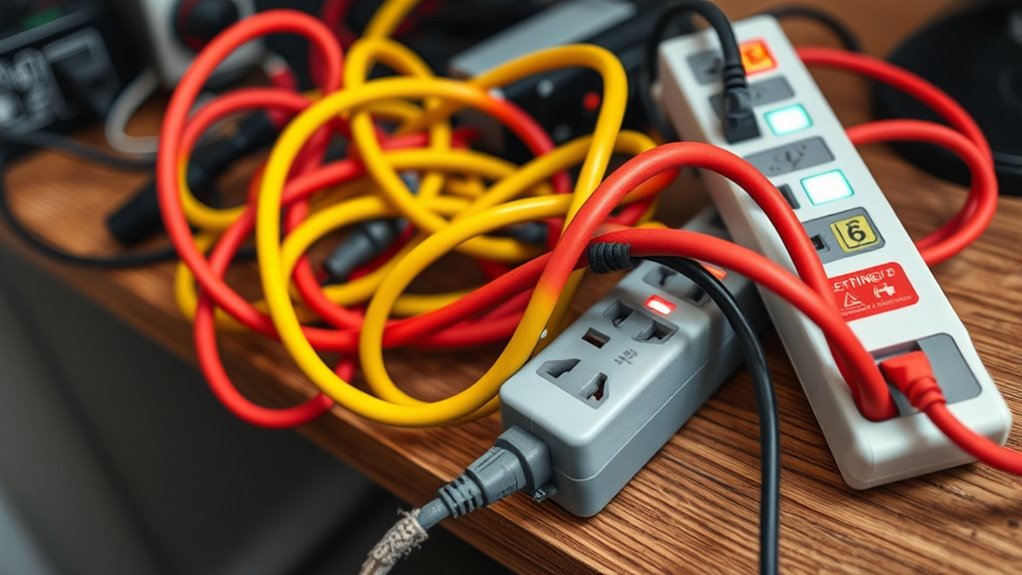
Extension cords and power strips are essential tools for expanding your electrical outlets and powering multiple devices, but using them safely is crucial. When it comes to indoor safety, improper use can turn a simple convenience into a serious hazard. Fire hazards are a real concern if you don’t follow basic safety guidelines. Understanding how to use extension cords and power strips correctly helps you protect your home and loved ones from potential dangers.
Proper use of extension cords and power strips keeps your home safe from fire hazards.
First, always choose the right product for your needs. Match the cord or strip’s power rating to the devices you plan to connect. Overloading a power strip or extension cord is one of the leading causes of indoor fires. For example, plugging in multiple high-wattage appliances—like space heaters, hairdryers, or kitchen appliances—on a single strip can cause overheating. Check the manufacturer’s specifications and avoid exceeding the maximum load. Remember, a power strip is designed to handle a certain amount of power; going beyond that risks overheating and igniting nearby materials.
Another important point is placement. Never run extension cords under rugs, carpets, or furniture, as this can cause the cord to overheat and become a fire hazard. Keep cords visible and accessible, avoiding pinched or crushed areas that can damage the insulation. When using extension cords indoors, opt for those with a grounded plug and a sufficient gauge wire, which indicates capacity and safety. Ensure cords are not frayed or damaged before plugging them in, as exposed wiring greatly increases the risk of shorts and fires. Additionally, being aware of the thermal behavior of cords and how heat buildup occurs helps prevent accidents.
Using power strips with surge protection adds an extra layer of safety. These devices guard your electronics against power surges but still need to be used within their rated capacity. Never daisy-chain power strips—plugging multiple strips into each other amplifies the risk of overload and fire hazards. Instead, plug multiple devices directly into wall outlets or use a single high-quality strip designed for multiple connections.
Finally, always unplug unused extension cords and power strips. Leaving them plugged in unnecessarily can create a continuous fire hazard, especially if they’re damaged or overloaded. Make it a habit to inspect cords regularly for signs of wear and tear, and replace any that show damage immediately. By adhering to indoor safety principles and understanding fire hazards, you guarantee that your use of extension cords and power strips remains a safe, reliable way to power your home without risking fire or injury.
surge protector power strip with grounding
As an affiliate, we earn on qualifying purchases.
As an affiliate, we earn on qualifying purchases.
Frequently Asked Questions
Can Extension Cords Be Used Outdoors Safely?
Yes, you can use extension cords outdoors safely if they have proper outdoor durability and weather resistance. Always choose cords labeled for outdoor use, as they’re designed to withstand moisture, temperature changes, and rough conditions. Make sure to keep cords off the ground, avoid overloading, and check for damage regularly. Using the right outdoor-rated extension cord guarantees safety and prevents electrical hazards during your outdoor activities.
How Many Devices Can I Connect to One Power Strip?
You should limit the number of devices connected to one power strip based on its capacity to prevent device overload. Check the power strip’s maximum wattage or amperage rating and avoid exceeding it. Typically, don’t plug in more devices than the power strip’s capacity allows, especially high-wattage appliances. Overloading a power strip risks overheating, tripping breakers, or causing a fire, so always stay within safe limits.
Are Surge-Protected Power Strips Worth the Extra Cost?
Surge-protected power strips are like a shield for your devices, and they’re worth the extra cost. They prevent damage from power surges, saving you money on repairs or replacements. While they might cost more upfront, their cost effectiveness becomes clear over time, especially if you have sensitive electronics. If you want peace of mind and device longevity, investing in surge protection is a smart choice.
What Is the Maximum Length for a Safe Extension Cord?
You should keep extension cord length limitations to 50 feet for safety. Longer cords can cause voltage drops, increasing fire and shock risks. Always follow safety guidelines, ensuring the cord’s gauge matches the load and length. If you need more reach, consider using multiple shorter cords or permanently installed wiring. Staying within these limits helps prevent overheating and maintains safe power delivery for your devices.
How Do I Identify a Faulty or Unsafe Extension Cord?
A faulty extension cord poses a fire hazard, often caused by damaged insulation or exposed wires. You can identify these dangers by inspecting for frayed or cracked insulation, burn marks, or loose connections. If the cord feels hot or shows signs of wear, don’t ignore it. Replace it immediately to prevent potential fires. Always unplug damaged cords and avoid using them until you’ve confirmed they’re safe or gotten a new one.
heavy-duty extension cords for indoor use
As an affiliate, we earn on qualifying purchases.
As an affiliate, we earn on qualifying purchases.
Conclusion
Remember, extension cords and power strips are like tools in your safety toolbox—they can help or harm if misused. Always choose the right one for the job, avoid overloading, and unplug devices when not in use. Think of them as bridges that connect power safely, not shortcuts that could lead to sparks or fires. By handling them responsibly, you keep your home safe and your connections strong, like a well-tended garden flourishing under careful care.
surge protected power strips for electronics
As an affiliate, we earn on qualifying purchases.
As an affiliate, we earn on qualifying purchases.
high gauge indoor extension cords
As an affiliate, we earn on qualifying purchases.
As an affiliate, we earn on qualifying purchases.
Fall Picks
fall essentials
As an affiliate, we earn on qualifying purchases.