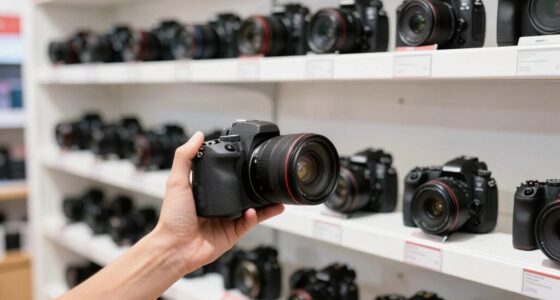
When comparing APS-C and full-frame sensors, you’ll notice that full-frame cameras offer better image quality, especially in low light, and easier control of background blur due to their larger size. APS-C cameras are more compact, lighter, and typically more budget-friendly, but they have a crop factor that affects your effective focal length. Ultimately, both can produce stunning results; exploring these differences further will help you choose the right gear for your style.
Key Takeaways
- Full-frame sensors are larger, capturing more light and offering better low-light performance compared to APS-C sensors.
- Depth of field control differs: full-frame allows shallower depth of field, while APS-C produces deeper focus at the same aperture.
- Both sensor types can produce high-quality images; sensor size mainly influences image quality, background blur, and size.
- APS-C cameras are more compact and affordable, whereas full-frame cameras are larger, heavier, and generally more expensive.
- Lens compatibility is broad for both, but crop factor on APS-C affects effective focal lengths, impacting wide-angle and telephoto work.
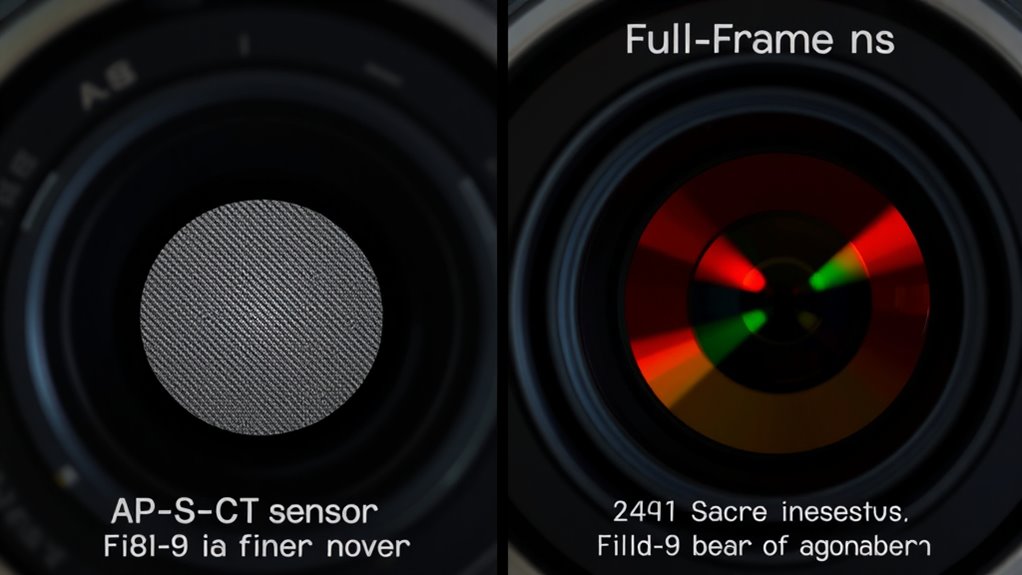
When choosing a camera sensor, understanding the differences between APS-C and full-frame sensors is essential, as it directly impacts your image quality, camera size, and budget. The most noticeable difference lies in sensor size. A full-frame sensor is larger, measuring roughly 36mm x 24mm, while an APS-C sensor is smaller, typically around 22mm x 15mm. This difference influences several aspects of your photography. A larger sensor generally captures more light, which can improve image quality, especially in low-light conditions. It also affects the depth of field, giving you more control over background blur and subject isolation. With a full-frame sensor, you can achieve a shallower depth of field more easily, helping your subject stand out against a softly blurred background. This is particularly advantageous for portraiture or artistic shots where background separation matters. Conversely, APS-C sensors tend to produce a deeper depth of field at the same aperture, making it easier to keep more of your scene in focus, which benefits landscape and macro photography.
Sensor size also impacts the overall camera size and weight. Full-frame cameras are generally larger and heavier, which might influence your portability and how comfortable you are during extended shoots. APS-C cameras are more compact and lightweight, making them ideal for travel or street photography when mobility matters. Budget-wise, APS-C cameras tend to be more affordable, with cheaper lenses and accessories, making them a popular choice for beginners or those looking to save money without sacrificing too much quality.
Despite these differences, some features stay consistent between the two sensor types. Both can produce stunning images with proper technique, and advancements in technology mean even smaller sensors can deliver impressive results. Additionally, both sensors are compatible with a wide range of lenses, though the field of view will vary due to crop factor differences—an APS-C sensor typically has a crop factor of about 1.5x or 1.6x, meaning your lens’s effective focal length increases, giving a narrower field of view. This crop factor can be beneficial for telephoto work but limiting for wide-angle shots. Understanding sensor technology can help you make more informed choices about your gear and shooting style.
Ultimately, your choice depends on your priorities. If you want maximum image quality and creative control over depth of field, a full-frame sensor might be the better option. However, if you prefer a lighter, more affordable system with decent low-light performance and easier handling, an APS-C sensor could serve you well. Recognizing these fundamental differences helps you select a camera that aligns with your photography style, needs, and budget.
full-frame DSLR camera
As an affiliate, we earn on qualifying purchases.
As an affiliate, we earn on qualifying purchases.
Frequently Asked Questions
How Does Sensor Size Affect Low-Light Performance?
Sensor size greatly affects your low-light performance. A larger sensor reduces sensor noise, allowing you to capture clearer images in dim settings. It also improves image clarity, as it gathers more light compared to smaller sensors. With a full-frame sensor, you’ll notice better detail and less grain in low-light conditions, making your photos sharper and more professional-looking. Smaller sensors may struggle, resulting in noisier images and reduced clarity.
Are Lenses More Affordable for APS-C or Full-Frame Cameras?
You’ll find that lenses for APS-C cameras are generally more affordable, making it easier to build your kit without breaking the bank. That’s because smaller sensors and simpler designs cut costs. Plus, APS-C cameras tend to be more durable and lightweight, perfect for travel or outdoor shoots. While full-frame lenses can be pricier, they often offer better optical quality and compatibility with professional gear, giving you versatile options for different shooting needs.
Can APS-C Cameras Produce Professional-Quality Images?
Yes, APS-C cameras can produce professional-quality images, especially with high sensor resolution. You’ll find they excel in shooting ergonomics, offering lightweight, compact designs that are easier to handle during long shoots. While they may have limitations in low-light conditions compared to full-frame sensors, with good technique and quality lenses, you can achieve stunning, professional results. Focus on composition, lighting, and sensor capabilities to maximize your images’ quality.
How Does Autofocus Performance Differ Between the Two Sensor Sizes?
You’ll notice that full-frame cameras generally offer faster autofocus speed and higher autofocus accuracy compared to APS-C models. This is because full-frame sensors have larger pixels and better light-gathering capabilities, which help the autofocus system perform more reliably in low light and complex scenes. While both formats can deliver sharp images, full-frame cameras provide more precise focus, making them ideal for professional photography where autofocus performance truly matters.
What Are the Maintenance Costs Associated With Each Sensor Type?
You’ll find that APS-C sensors generally have lower maintenance costs since they’re less prone to dust and often don’t require frequent sensor cleaning. Full-frame sensors, however, may need more careful sensor cleaning to prevent damage, and if the sensor gets heavily damaged, replacement costs can be higher. Overall, APS-C cameras tend to be cheaper to maintain, but both types benefit from regular cleaning to keep image quality sharp.
APS-C mirrorless camera
As an affiliate, we earn on qualifying purchases.
As an affiliate, we earn on qualifying purchases.
Conclusion
Understanding the differences between APS-C and full-frame sensors helps you choose the right camera for your needs. While full-frame offers better low-light performance and a shallower depth of field, APS-C cameras are more affordable and compact. Did you know that a full-frame sensor is about 1.6 times larger than APS-C? This size difference considerably impacts image quality and lens choices, so consider what matters most for your photography style.
camera lens for portrait photography
As an affiliate, we earn on qualifying purchases.
As an affiliate, we earn on qualifying purchases.
wide-angle lens for APS-C camera
As an affiliate, we earn on qualifying purchases.
As an affiliate, we earn on qualifying purchases.