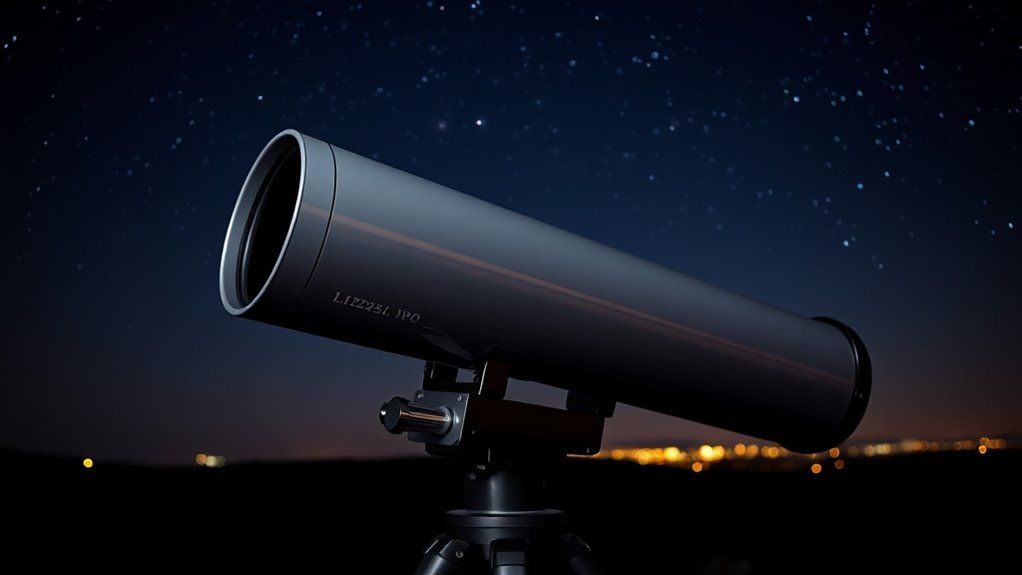

For astrophotographers seeking high-quality images, 130mm triplet apo refractors offer a compelling blend of aperture, color correction, and portability. The SVBONY SV550 Triplet APO stands out as the best overall choice, delivering excellent image clarity and build quality. The Explore Scientific FCD100 Series 80mm offers a more compact option for those who value portability without sacrificing optical performance. Meanwhile, the SVBONY SV555 APO Refractor provides a budget-friendly entry point with decent astrophotography capabilities. These options highlight the main tradeoffs: larger aperture versus portability, premium features versus value, and ease of use versus advanced control. Continue reading for a detailed breakdown of each product and what makes them suitable for different types of astrophotographers.

Get the latest gadgets delivered free with Prime
- Fast, free delivery on millions of items
- Prime Video, Amazon Music and more included
- Member-only deals all year
Complete the kit



Key Takeaways
- The best overall picks combine optical quality with reliable build and versatile accessories.
- Larger aperture models like the SV550 122mm excel in deep-sky imaging but tend to be bulkier and pricier.
- Compact options such as the SV555 54mm are better for portability and quick setup, ideal for beginners or field use.
- Premium models often include advanced accessories like field flattners and focal reducers, enhancing image quality but increasing cost.
- Tradeoffs between aperture size, weight, cost, and ease of use are central to selecting the best refractor for your astrophotography needs.


| 130mm triplet apo refractors for astrophotography | Aperture | Focal Length | Focal Ratio |
|---|---|---|---|
| SVBONY SV550 Triplet APO Refra | 122 mm | 854 mm | f/7 |
| SVBONY SV555 APO Telescope Ref | 54 mm | F/7 | — |
| SV555 54mm Petzval APO Refract | 54 mm | — | — |
| Explore Scientific FCD100 Seri | 80 mm | 480 mm | f/6 |
| SVBONY SV550 80mm Triplet Apoc | 80 mm | 480 mm | — |
| SV555 54mm f/4.5 APO Astrograp | f/4.5 | 54mm | — |
| SVBONY SV550 80 Triplet APO Te | 80mm | — | F6 |
| SVBONY SV550 80ED F/6 Triplet | 80mm | — | F/6 |
| SVBONY SV550 APO Telescope Bun | 122mm | 854mm | f/7 |
More Details on Our Top Picks
SVBONY SV550 Triplet APO Refractor Telescope, 122mm f/7 ED Glass
The SVBONY SV550 stands out as the most versatile option in this lineup, combining a generous 122mm aperture with a high-quality triplet FPL-51 ED glass design. Its large aperture allows for more light collection, making it ideal for revealing faint deep-sky objects, especially when paired with a sturdy mount. Compared to the smaller SV555 54mm, it offers significantly enhanced light-gathering power, though it weighs over 14 pounds, which might challenge portability for some users. The dual-speed 2.5-inch focuser ensures precise control, essential for astrophotography, but this added complexity means a steeper learning curve for beginners. While its size and weight are considerations, the overall image quality and flexibility make it a superior choice for serious astrophotographers who prioritize detail and depth. This pick makes the most sense for those willing to invest in a stable mount and comfortable with a bit of setup effort.
Pros:- Large 122mm aperture gathers more light for detailed deep-sky imaging
- Triplet FPL-51 ED glass reduces chromatic aberration for sharp images
- Dual-speed 2.5-inch focuser enables precise focusing for astrophotography
- Compact travel-friendly OTA with a long dovetail for balanced mounting
Cons:- Heavier weight may limit portability and require a sturdy mount
- Deep-sky astrophotography setup demands additional accessories and stabilization
Best for: Experienced astrophotographers seeking a versatile, deep-sky capable APO refractor with high-quality optics
Not ideal for: Beginners or casual skywatchers who prefer lightweight, portable setups or quick-starfield imaging
- Aperture:122 mm
- Focal Ratio:f/7
- Focal Length:854 mm
- Optical Design:Triplet apochromatic with FPL-51 ED glass
- Focuser:2.5-inch dual-speed toothed, 1:10 gear ratio
- Dovetail Length:300 mm
- OTA Weight:6.44 kg (14.18 lb)
- Intended Use:Astrophotography and observation
Our verdict“This model is best suited for dedicated astrophotographers seeking high-quality, versatile imaging capabilities with a manageable weight tradeoff.”
SVBONY SV555 APO Telescope Refractor 54mm with Universal Dovetail Base for Astrophotography
The SVBONY SV555 offers a compact, lightweight solution for astrophotographers who want a portable yet effective instrument, featuring a 54mm APO triplet lens that provides crisp, wide-field images. Its smaller size makes it ideal for quick setups and travel, contrasting with larger models like the SV550 122mm. The universal dovetail base ensures broad compatibility with various mounts and accessories, simplifying integration into existing systems. However, its modest aperture limits deep-sky performance compared to the SV550, making it better suited for bright objects and wide-field imaging rather than faint nebulae or galaxies. The absence of an automatic focusing accessory (EAF) means manual focus control is necessary, which may slow workflows for some users. Overall, this refractor offers excellent value for astrophotographers prioritizing portability and ease of use over maximum light-gathering.
Pros:- Provides clear, wide-field images with high-quality APO triplet optics
- Lightweight and portable for travel or quick observation sessions
- Universal dovetail base enhances compatibility with various mounts and accessories
Cons:- Lacks automatic focusing (EAF), requiring manual control
- Limited aperture reduces capability for faint deep-sky objects
Best for: Amateur astrophotographers looking for a portable, easy-to-use instrument for wide-field imaging and quick setups
Not ideal for: Advanced deep-sky imagers seeking high light-gathering power and detailed faint-object imaging
- Aperture:54 mm
- Lens Type:APO triplet
- Compatibility:SLR, mirrorless, deep-sky cameras, finders
- Accessories:Universal Dovetail Base
- Focal Length:F/7
- Weight:Lightweight
Our verdict“This telescope is perfect for beginners and casual users prioritizing portability and wide-field views over faint-object deep-sky imaging.”
SV555 54mm Petzval APO Refractor Telescope with Power Management Bundle
The SV555 Petzval APO excels at producing sharp, flat-field images suitable for detailed astrophotography, thanks to its high-quality triplet lens design. Its upgraded focus system allows fine control, critical for framing delicate celestial objects. The included SV241 Pro Power Management Box enhances operational stability, providing multiple outputs and safeguards—an advantage over simpler setups like the SV555 54mm APO alone. This focus on electronic stability makes it well-suited for extended sessions and complex imaging runs. However, the bundle’s electronic components require careful handling, and the system supports only astrophotography, not visual observation, limiting versatility. The absence of EAF accessories necessitates manual focusing, which can be less convenient during long exposures. Overall, this package suits dedicated astrophotographers seeking consistent, high-precision imaging with reliable power management.
Pros:- High-quality Petzval triplet lens yields sharp, flat-field images
- Enhanced focus system for accurate framing
- Includes power management box with multiple outputs and protections
- Ideal for deep-sky imaging and extended sessions
Cons:- No EAF or electronic focus accessory included, requiring manual focus
- Designed exclusively for astrophotography, not visual use
- Sensitive electronic components need careful handling
Best for: Advanced astrophotographers focused on high-precision imaging and power stability during long sessions
Not ideal for: Casual users or those who want an all-in-one visual and imaging instrument without added electronic accessories
- Lens Type:Petzval triplet
- Aperture:54 mm
- Compatibility:Full frame
- Focus System:Precision focus with upgraded travel
- Power Management:SV241 Pro, 5 DC outputs, USB, PWM
- Supports:Astrophotography, deep-sky
Our verdict“This model is best for dedicated astrophotographers needing stable power and precise focus for long-exposure deep-sky imaging.”
Explore Scientific FCD100 Series 80mm Air-Spaced Apochromatic Triplet Refractor Telescope for Astrophotography
The Explore Scientific FCD100 80mm triplet refractor offers a compelling combination of high contrast and portability, making it suitable for capturing detailed images of celestial objects. Its air-spaced triplet design with Hoya FCD100 ED glass minimizes chromatic aberration, providing sharp, color-accurate images across the frame. Compared to smaller models like the SV555 54mm, it delivers more light gathering capacity while maintaining a manageable size. Its 480mm focal length and f/6 ratio strike a good balance for astrophotography, though it may require a field flattener for optimal edge sharpness. The built-in dew shield and hybrid finder make setup easier, but the focus mechanism is a 2.5-inch rack and pinion, which still demands careful adjustment. Overall, this telescope suits those who want high-quality, detailed images without sacrificing portability, but it’s less ideal for casual terrestrial use.
Pros:- High-contrast, detailed views with minimal chromatic aberration
- Portability combined with high optical quality
- Air-spaced triplet design with FCD100 ED glass for sharp images
Cons:- May need additional accessories like a field flattener for edge correction
- Focus adjustment requires careful handling due to rack and pinion design
- Designed mainly for astrophotography, less suitable for casual terrestrial viewing
Best for: Intermediate to advanced astrophotographers seeking high-contrast, detailed images with portability
Not ideal for: Beginners or casual users who prefer simple, quick setups or primarily terrestrial observing
- Aperture:80 mm
- Focal Length:480 mm
- Focal Ratio:f/6
- Optical Glass:Hoya FCD100 ED
- Dew Shield:Integrated
- Finder Scope:2-in-1 hybrid
- Focuser:2.5-inch rack and pinion
Our verdict“This telescope offers a high level of detail for serious astrophotographers who prioritize image quality and portability over initial complexity.”
SVBONY SV550 80mm Triplet Apochromatic Refractor Telescope Kit
The SVBONY SV550 80mm triplet APO kit combines high-quality optics with practical accessories, making it a flexible choice for both planetary and deep-sky imaging. Its low-dispersion S-FPL51 ED glass effectively reduces chromatic aberration, providing crisp images across a range of targets, from planets to nebulae. Unlike the more specialized models like the SV555 Petzval, this kit includes a field flattener and camera angle adjuster, broadening its usability for astrophotographers wanting to fine-tune image quality. However, assembly and alignment are necessary, which may challenge beginners. Its relatively high price reflects its feature set, but it may be overkill for casual observers who don’t plan to do extensive astrophotography. Overall, this kit is best for those seeking a versatile, high-quality instrument for multiple celestial targets.
Pros:- High-quality triplet apochromatic optics with low chromatic aberration
- Includes accessories like a field flattener and camera angle adjuster
- Suitable for both planetary and deep-sky imaging
Cons:- Requires assembly and precise alignment, which can be time-consuming
- Higher cost for a kit that may be more than some casual users need
- Limited portability due to size and setup requirements
Best for: Intermediate astrophotographers wanting a multi-purpose, high-quality APO refractor with accessories
Not ideal for: Beginners or users seeking a simple, no-assembly setup primarily for visual use
- Aperture:80 mm
- Optics:Triplet apochromatic
- Focal Length:480 mm
- Glass Type:S-FPL51 ED
- Additional Accessories:Field flattener, camera angle adjuster
Our verdict“This kit is ideal for dedicated astrophotographers who want a versatile, high-performance refractor with added accessories for enhanced image quality.”
SV555 54mm f/4.5 APO Astrograph Set for Deep Sky Astrophotography with SV405CC Cooled Camera and Accessories
The SV555 astrograph set stands out for its lightweight, portable design, making it ideal for astrophotographers on the move. Its fast f/4.5 focal ratio allows for shorter exposure times, which is advantageous when capturing faint nebulae or galaxy details. Compared to larger refractors like the SVBONY SV550 80ED, this setup sacrifices some aperture size for ease of transport, but still offers impressive image quality thanks to its enhanced focus precision and multi-filter options. The cooling system helps reduce thermal noise, a benefit over less specialized cameras, though its limited detailed specs may challenge users seeking granular control. The compact size and included accessories make it a compelling choice for dedicated deep-sky photographers willing to manage a slightly more complex setup.
Pros:- Extremely lightweight and portable, ideal for travel
- Fast f/4.5 focal ratio reduces exposure times for deep-sky targets
- Enhanced focus precision ensures sharper images
- Includes advanced cooling system and filters for improved contrast
Cons:- Limited aperture size may restrict detail resolution compared to larger scopes
- Requires familiarity with astrophotography equipment and setup complexity
- Price not specified, potentially higher for complete astrograph kit
Best for: Travelers and astrophotographers focusing on deep-sky objects who prioritize portability and quick setup
Not ideal for: Photographers seeking high-resolution planetary imaging or those preferring larger apertures for detailed lunar observations
- Focal Length:54mm
- Aperture:f/4.5
- Focus Travel:2.67mm to 3.22mm
- Weight:approximately 90g less than previous model
- Filter Compatibility:1.25″ & 2″
- Cooling System:Two-stage TEC cooling to 30°C below ambient
- Power Outputs:6 DC outputs supporting up to 10A each
- USB Ports:2 USB 3.1, 1 USB 2.0, 1 Type-C
- Filter Drawer:Magnetic, CNC molded, anti-light leak design
Our verdict“This set is perfect for dedicated deep-sky astrophotographers who need a lightweight, portable solution with advanced filtering and cooling features.”
SVBONY SV550 80 Triplet APO Telescope Kit
The SVBONY SV550 80 Triplet APO kit is well-suited for users who want crisp, color-true images of celestial objects. Its triplet design with S-FPL51 ED glass ensures minimal chromatic aberration, comparable to the quality found in the SV550 80ED F/6, but with more integrated accessories for convenience. The included field flattener improves edge-to-edge sharpness, making it a prime choice for astrophotography demanding accurate star shapes across the frame. However, the inverted image when used with an eyepiece can be disorienting for visual observation, and it may require some adjustment during setup. This kit is best for those who value high optical quality and are willing to manage a slightly complex setup.
Pros:- High-quality triplet APO optics for sharp, color-correct images
- Includes a field flattener to improve edge performance
- Multilayer coatings reduce reflections and boost brightness
- Suitable for both visual and astrophotography applications
Cons:- Image appears inverted with eyepieces, requiring additional correction for visual use
- More complex setup might challenge beginners
- Designed mainly around the specific optical tube, limiting broader compatibility
Best for: Intermediate astrophotographers seeking sharp, color-accurate imaging and a complete package for visual and photographic use
Not ideal for: Beginners unfamiliar with telescope alignment and setup or users primarily interested in planetary imaging
- Optical Design:Triplet APO
- Aperture:80mm
- Focal Ratio:F6
- Glass Type:S-FPL51 ED
- Field Flattener:SV209
- Coatings:Multilayer
Our verdict“This kit suits serious amateurs who want high-quality astrophotos with excellent color fidelity and are prepared for a more involved setup process.”
SVBONY SV550 80ED F/6 Triplet Apochromatic Refractor Telescope with SV209 Field Flattener and 1.25-Inch UV/IR Filter
The SVBONY SV550 80ED F/6 offers a balance between optical clarity and versatility, making it ideal for users who want to both observe and photograph celestial objects like M42 and M45. Its triplet design with S-FPL51 ED glass effectively reduces chromatic aberration, comparable to the SV550 80 Triplet APO, but with added benefits from the included SV209 field flattener that ensures edge-to-edge sharpness without altering focal length. The integrated UV/IR filter improves digital image contrast, a feature that sets it apart from more basic refractors. However, this model is primarily optimized for use with the SV550 80F6 OTA, and the lower-grade ED glass may not match the color correction of higher-cost options. It’s a versatile choice for those who want solid imaging performance across multiple targets.
Pros:- Triplet APO design minimizes chromatic aberration
- Field flattener improves image quality across the frame
- UV/IR filter enhances contrast for digital imaging
- Suitable for observing and photographing a range of celestial objects
Cons:- Lower-grade ED glass may not correct all color fringing perfectly
- Designed mainly for the SV550 80F6 tube, limiting compatibility outside that system
- Edge correction might still show some aberrations without additional accessories
Best for: Amateurs who want a reliable, multi-purpose refractor for visual and digital astrophotography, especially of Messier objects
Not ideal for: Those seeking the highest possible color correction or planetary detail, or users outside of the specified OTA compatibility
- Aperture:80mm
- Focal Ratio:F/6
- Optical Design:Triplet APO
- Glass Type:S-FPL51 ED
- Field Flattener:SV209
- Filter Size:1.25 inches
Our verdict“This refractor provides a versatile, high-contrast platform for astrophotography and visual observing of Messier objects, with some limitations in color correction.”
SVBONY SV550 APO Telescope Bundle with SV209 Field Flattener, 122mm f/7 Triplet Apochromatic Refractor with 0.8X Focal Reducer
The SVBONY SV550 122mm f/7 bundle offers a substantial aperture for capturing detailed deep-sky images, making it a compelling choice for astrophotographers aiming for high-resolution results. Its triplet APO design with FPL-51 ED glass minimizes chromatic aberration across a wide 854mm focal length, comparable to smaller ED refractors but with greater light-gathering power. The included SV209 0.8X focal reducer effectively widens the field, helping to capture larger nebulae or galaxy groups without sacrificing image sharpness at the edges. While its weight of over 14 lb may challenge portability, this setup is well-suited for dedicated astrophotographers with stable mounts. The specific field flattener compatibility limits broader application, but overall, it delivers excellent image quality for serious deep-sky imaging.
Pros:- Large 122mm aperture for brighter, more detailed images
- Triplet APO design with ED glass minimizes chromatic aberration
- Includes 0.8X focal reducer for wider field of view
- Suitable for high-resolution deep-sky astrophotography
Cons:- Heavy OTA weight may limit portability and ease of setup
- Field flattener designed specifically for this model, reducing versatility
- Requires a sturdy mount and possibly more advanced setup skills
Best for: Advanced astrophotographers seeking a large aperture refractor with wide-field capabilities for detailed deep-sky imaging
Not ideal for: Travelers or those with limited mount capacity due to its weight, or beginners unfamiliar with handling larger telescopes
- Aperture:122mm
- Focal Ratio:f/7
- Focal Length:854mm
- Optical Design:Triplet APO
- Lens Type:FPL-51 ED
- Included Accessory:SV209 0.8X focal reducer
Our verdict“This refractor excels for astrophotographers who want a large aperture and wide field for deep-sky targets, accepting the tradeoff of increased weight and complexity.”

How We Picked
These products were selected based on a combination of optical performance, build quality, ease of use, and value for money. Priority was given to refractors with triplet apochromatic objectives that minimize chromatic aberration, crucial for sharp astrophotos. We also considered the availability of accessories, user reviews, and overall versatility. The products are ranked to reflect a balance between premium features and affordability, ensuring options for different skill levels and budgets. Our evaluation aimed to highlight refractors that deliver consistently good results across a variety of astrophotography scenarios.| 130mm triplet apo refractors for astrophotography | Focal Ratio |
|---|---|
| SVBONY SV550 Triplet APO Refra | f/7 |
| SVBONY SV555 APO Telescope Ref | — |
| SV555 54mm Petzval APO Refract | — |
| Explore Scientific FCD100 Seri | f/6 |
| SVBONY SV550 80mm Triplet Apoc | — |
| SV555 54mm f/4.5 APO Astrograp | — |
| SVBONY SV550 80 Triplet APO Te | F6 |
| SVBONY SV550 80ED F/6 Triplet | F/6 |
| SVBONY SV550 APO Telescope Bun | f/7 |
Factors to Consider When Choosing 130mm Triplet Apo Refractors For Astrophotography
Choosing the right 130mm triplet apo refractor involves understanding several key factors that influence your imaging experience. Beyond optical quality, considerations like portability, compatibility with accessories, and overall setup complexity matter. Being aware of these can help you avoid common pitfalls such as underestimating weight or overpaying for features you won’t use. This guide covers critical aspects to keep in mind when selecting your ideal refractor for astrophotography.Optical Quality and Chromatic Aberration
Optical performance is the foundation of astrophotography success. Triplet apochromatic designs excel here, providing superior color correction and sharpness. When evaluating options, look for objective specs like ED glass and high-quality lens elements. Cheaper models may introduce chromatic aberration, which can ruin star sharpness and detail. Investing in a well-designed triplet will save time in post-processing and produce cleaner images.
Portability and Weight
Size and weight significantly influence how often and where you can use your refractor. Larger models like 122mm apertures deliver more light but can be cumbersome for fieldwork or traveling. Conversely, compact 54mm or 80mm options are easier to transport and set up, making them attractive for beginners or those with limited space. The tradeoff often lies in image detail and deep-sky capability, which smaller models may struggle to resolve fully.
Compatibility and Accessories
Assess whether the refractor is compatible with your existing mount, especially in terms of weight capacity and balance. Additional accessories like field flatteners, focal reducers, and camera adapters can significantly improve image quality but also add to the cost. Buying a bundled package that includes these accessories might be better for newcomers, while seasoned users might prefer to select their gear separately for customization.
Ease of Use and Maintenance
Ease of setup and maintenance can impact your overall experience. Models with straightforward focusing mechanisms, clear instructions, and minimal collimation requirements tend to be more beginner-friendly. High-quality coatings and durable materials reduce the need for frequent cleaning or adjustments. Keep in mind that premium models often come with more complex features that may require a learning curve but offer higher precision once mastered.
Cost and Value
Price ranges can vary widely, reflecting differences in optical quality, accessories, and build. A higher cost doesn’t always guarantee better results for every user—consider your specific needs and how much you’re willing to invest. Budget models may suffice for entry-level astrophotography, but for serious deep-sky imaging, spending more on a premium refractor can pay off in image quality and durability. Balance your budget with the features that matter most to your goals.
Frequently Asked Questions
Is a 130mm triplet apo refractor suitable for deep-sky astrophotography?
Yes, a 130mm triplet apo refractor is well-suited for deep-sky imaging because of its ability to gather a significant amount of light and its excellent chromatic correction. The triplet design minimizes false color and produces sharp, detailed images of nebulae, galaxies, and star clusters. However, the effectiveness also depends on your camera and mount quality, so pairing this refractor with a stable mount and a sensitive camera will maximize your results.
Should I prioritize aperture size or portability when choosing a 130mm triplet refractor?
This depends on your primary use case. Larger apertures like the 122mm models capture more light, making them better suited for detailed deep-sky imaging and faint objects. However, they tend to be heavier and less portable. Smaller options, such as 54mm or 80mm refractors, are easier to carry and quicker to set up, ideal for fieldwork or travel. Consider where you’ll do most of your imaging and how much effort you’re willing to invest in setup and transport.
Do I need additional accessories with a 130mm triplet apo refractor?
Many high-quality triplet refractors benefit from accessories like focal reducers, field flatteners, and high-quality camera adapters, which can significantly improve image quality. These accessories help correct optical aberrations and optimize the imaging plane. While some bundles include these extras, buying them separately allows customization based on your specific camera and mount. Keep in mind that additional accessories add to the overall cost but can make a noticeable difference in your astrophotography results.
Can a beginner use a 130mm triplet apo refractor effectively?
Absolutely. While a 130mm triplet apo is a premium instrument, many models are designed with user-friendly features that help beginners get started. Features like simple focusing mechanisms, robust construction, and compatibility with common mounts make setup manageable. Starting with a quality refractor can accelerate learning and improve initial results, but be prepared for some initial learning curve around accessories and image processing. Patience and proper guidance will help you maximize your investment.
Is it worth investing in a premium 130mm triplet apo refractor?
Investing in a premium model often pays off if you are serious about astrophotography. Higher-end refractors typically feature superior optical components, better coatings, and more comprehensive accessory bundles, which translate into sharper, clearer images with less post-processing. They are also more durable and easier to maintain over time. However, for casual or beginner use, a mid-range model may suffice, and upgrading later can be a more cost-effective approach.
Conclusion
For those seeking the best overall performance and versatility, the SVBONY SV550 Triplet APO makes a compelling choice, especially for dedicated deep-sky imagers. Budget-conscious beginners will find the SVBONY SV555 APO Refractor offers solid performance at a lower price, while advanced users aiming for premium results will appreciate the features of higher-end models like the Explore Scientific FCD100. If portability is a priority, the smaller, lightweight options are ideal, whereas enthusiasts wanting maximum light-gathering should lean toward larger aperture refractors. Ultimately, your selection should align with your specific astrophotography goals, budget, and experience level.
Fall Picks
fall essentials
As an affiliate, we earn on qualifying purchases.