To fix slow Wi-Fi in one room without new gear, start by minimizing interference from devices like microwaves or cordless phones, and keep your router away from metal objects. Adjust your router’s placement to a central, elevated spot for better coverage. Change your Wi-Fi channel to a less congested one, and switch to the 5 GHz band for faster speed. Updating your router’s firmware and repositioning extenders can also boost performance—you’ll find simple solutions in what follows.
Key Takeaways
- Relocate your router to a central, elevated position away from interference sources like microwaves and cordless phones.
- Use Wi-Fi analyzers to identify dead zones and adjust the router’s placement for better coverage.
- Switch to less congested Wi-Fi channels within your current bands to reduce interference.
- Update your router’s firmware and reset settings to optimize performance without additional equipment.
- Minimize interference by turning off nearby electronic devices that emit signals in the same frequency range.
Top picks for "slow room without"
Open Amazon search results for this keyword.
As an affiliate, we earn on qualifying purchases.
Identify and Minimize Interference Sources
Interference from other electronic devices can substantially slow down your Wi-Fi signal in a single room. These interference sources create signal noise, which disrupts the communication between your router and devices. Common culprits include cordless phones, microwaves, Bluetooth gadgets, and baby monitors. When these devices operate nearby, they emit signals in the same frequency range as your Wi-Fi, causing congestion and reducing speeds. To minimize this, identify nearby interference sources and keep them away from your router and devices. Turning off or relocating these devices can markedly improve your Wi-Fi performance. Eliminating or reducing interference sources helps clear signal noise, resulting in a faster and more stable connection in that room. Additionally, understanding the frequency ranges used by different electronic devices can help you better identify potential sources of interference. Recognizing interference patterns can also assist in troubleshooting persistent issues more effectively. Being aware of electronic device interference can lead to more targeted solutions for persistent Wi-Fi problems. Furthermore, being aware of interference mitigation techniques can provide practical ways to enhance your network quality without additional equipment. For example, exploring AI-powered network optimization tools may help automatically detect and reduce interference sources.
Optimize Router Placement for Better Coverage

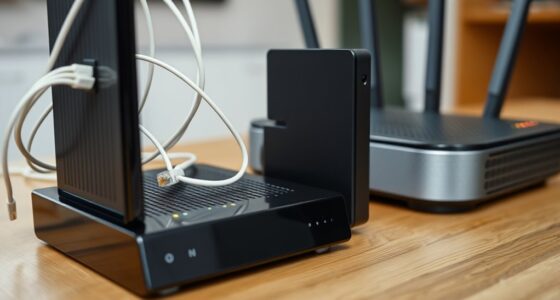
Proper router placement is crucial for achieving strong Wi-Fi coverage in a single room. Position your router centrally, ideally elevated and free from obstructions like thick walls or furniture. Avoid placing it near electronic devices that can cause interference. Using Wi-Fi analyzers helps identify dead zones and signal strength issues, guiding you to ideal spots. If your setup supports mesh networks, consider placing nodes strategically to extend coverage without additional gear. Keep the router away from metallic objects or appliances that can disrupt the signal. By adjusting your router’s placement, you maximize coverage and reduce dead spots, ensuring faster and more reliable Wi-Fi. Remember, even small shifts in position can greatly improve your connection quality within the room. Proper router placement is essential for creating a calm and organized home network. Additionally, understanding the best woods for farmhouse tables can inspire you to create a cozy, rustic environment that complements your tech setup. Incorporating knowledge about wireless signal optimization can further enhance your Wi-Fi performance.
Adjust Your Wi-Fi Channel and Frequency
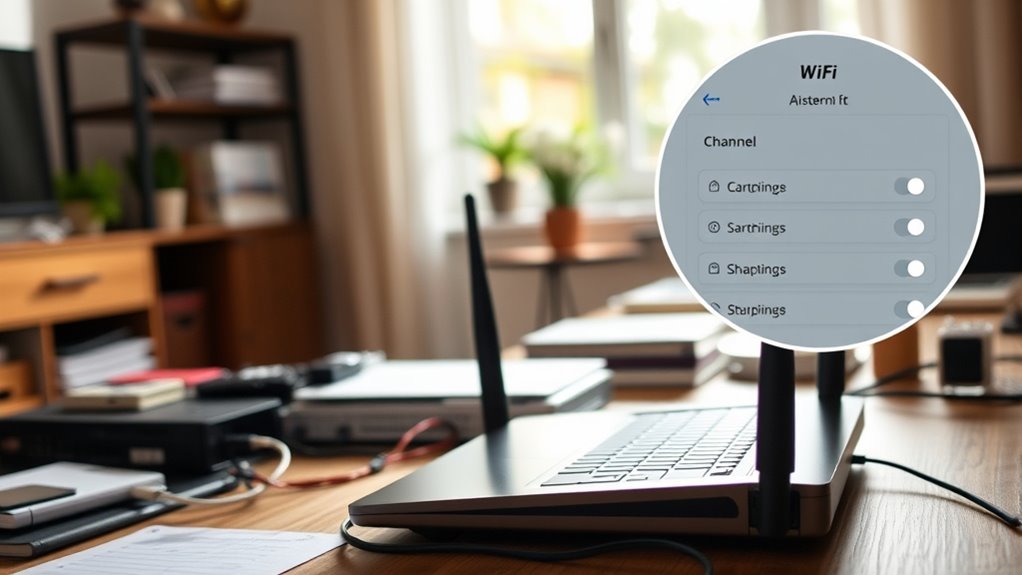
If you’re experiencing slow Wi-Fi in a single room, adjusting your router’s channel and frequency can make a noticeable difference. Start by performing channel scanning to identify less congested channels. Most routers have a web interface or app that shows nearby networks and their channels. Switching to a clearer channel reduces interference from neighboring Wi-Fi networks. Additionally, check your device’s connection to the appropriate frequency band—2.4 GHz or 5 GHz. The 2.4 GHz band offers wider coverage but is more prone to interference, while 5 GHz provides faster speeds with less congestion. Experiment with different channels within these bands to find the most effective setup. Understanding the role of contrast ratio and color accuracy can help optimize your Wi-Fi setup by reducing signal interference and improving overall stability. Being aware of Free Floating in your environment can also help identify sources of signal disruption. Recognizing interference sources and adjusting your setup accordingly can further enhance your Wi-Fi performance. Additionally, optimizing network placement by positioning your router in a central, open location can significantly boost signal strength. This simple adjustment can considerably improve your Wi-Fi speed and stability in that problematic room without needing new equipment.
Update Firmware and Network Settings
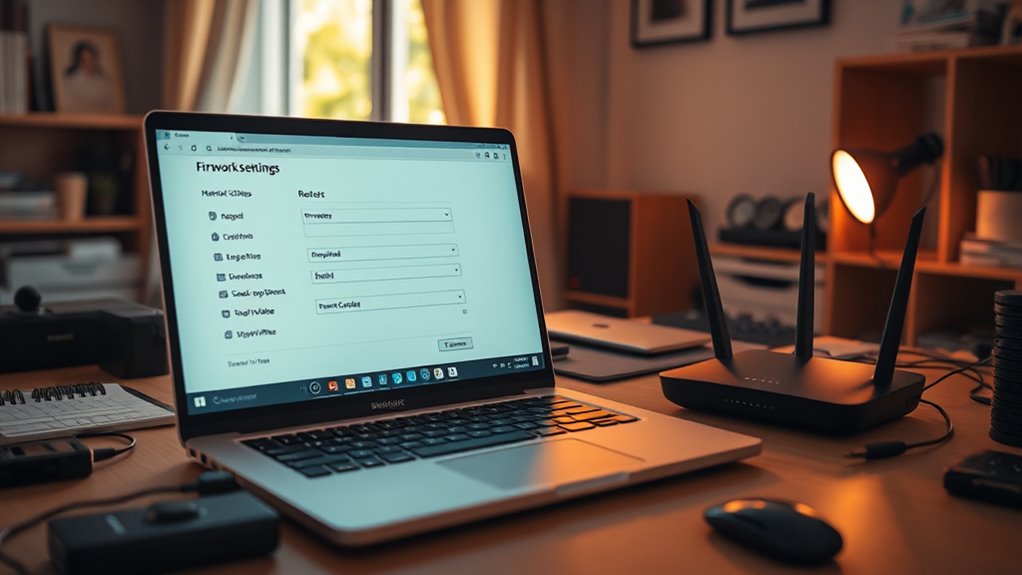
Have you checked whether your router’s firmware is up to date? Updating firmware improves router security and fixes bugs that may cause slow Wi-Fi. To do this, log into your router’s admin panel and look for firmware updates. While there, consider adjusting network settings for better performance:
Ensure your router’s firmware is up to date to boost security and fix Wi-Fi bugs.
- Enable device prioritization to ensure important devices get bandwidth.
- Update security protocols to prevent interference from malicious activity.
- Reset to default settings if recent changes caused issues.
- Schedule regular firmware checks to maintain peak performance.
- Review your network configuration to optimize Wi-Fi coverage and reduce interference. Additionally, keeping firmware current ensures your router runs smoothly and securely. Regularly monitor network performance to identify issues early and maintain optimal speeds. Understanding your wireless standards can also help you select the best settings for your environment. Adjusting network settings like device prioritization can make a noticeable difference in Wi-Fi speed, especially in the problematic room. This step helps optimize your existing setup without new gear. Proper configuration also involves assessing potential interference sources, which can significantly impact signal quality.
Use Signal Boosters or Extenders Effectively
Use Signal Boosters or Extenders Effectively. Once you’ve updated your firmware and enhanced your network settings, the next step is to improve your Wi-Fi coverage with signal boosters or extenders. To maximize their effectiveness, position them halfway between your router and the slow spot, avoiding areas crowded with smart home devices, which can cause interference. Keep in mind that neighboring networks may also compete on the same channels, so choose the least congested one. Use the extender’s app or interface to select an ideal channel and ensure a strong connection back to your router. Regularly check signal strength and adjust placement if needed. Understanding network interference can help you troubleshoot persistent issues effectively. Additionally, selecting the right Wi-Fi equipment tailored to your specific environment can significantly enhance overall performance. Knowing how interference sources impact signal quality can further improve your setup. For optimal results, consider evaluating your mesh network options to ensure seamless coverage throughout your home. Incorporating a signal analysis tool can also help identify hidden issues and optimize your Wi-Fi setup.
Frequently Asked Questions
Can Changing My Device’s Wi-Fi Settings Improve Speed in One Room?
Yes, changing your device’s Wi-Fi settings can improve speed in one room. You should optimize your device’s network settings by switching to the 5GHz band if available, which offers faster speeds and less interference. Additionally, you can enable interference mitigation features, like adjusting channel settings or turning off other devices that cause congestion. These device optimizations help reduce interference, boosting your Wi-Fi performance without needing new gear.
How Do I Identify Specific Interference Sources in My Home?
You can identify interference sources by checking for electromagnetic interference from devices like microwaves or cordless phones near your router. Use a Wi-Fi analyzer app to spot signal congestion in your home, revealing crowded channels or weak spots. Also, look for other electronics operating on the same frequency, which could disrupt your Wi-Fi. Moving or turning off these devices helps reduce interference, improving your connection speed in that room.
Will Switching to a Different Wi-Fi Band Help Only in One Room?
Think of your Wi-Fi as a busy highway; switching bands can be like changing lanes to avoid traffic jams. Yes, changing Wi-Fi band selection might help in one room if interference sources are causing congestion on the current band. Moving to a less crowded 5 GHz band, for example, can reduce interference sources and improve speed. Just remember, some interference might still linger, so experiment to find the best fit.
Are There Any Simple Hardware Tweaks to Improve Wi-Fi in a Single Area?
Yes, you can improve Wi-Fi in a single area with simple hardware tweaks. Try extending the range by repositioning your router to a central spot or adjusting the antennas for better signal direction. Ensuring there are minimal obstructions like thick walls or furniture also helps. These small adjustments can make a significant difference in boosting your Wi-Fi strength in that specific room without needing new gear.
How Can I Test if My Wi-Fi Speed Is Consistent Across All Rooms?
You can test if your Wi-Fi speed is consistent across all rooms by performing a speed test in each location. Use a device with a reliable internet connection and check the signal strength beforehand. Run a speed test in different rooms, noting any significant drops. Comparing these results helps identify areas with weaker signals, allowing you to optimize placement or signal boosters for better coverage throughout your home.
Conclusion
By following these tips, you can substantially improve your Wi-Fi speed in that troublesome room without buying new gear. For example, Sarah repositioned her router and changed the channel, which boosted her connection speed enough to stream seamlessly. Small tweaks like these make a big difference, saving you money and hassle. So, try these steps today—your faster, more reliable Wi-Fi is within reach, and you won’t need to invest in extra equipment.