
If you want smaller files with better quality and modern features like transparency, choose HEIC, especially on newer Apple devices. But if you need wide compatibility and easy editing, JPEG is the safer option. HEIC saves storage space and preserves more metadata, while JPEG works seamlessly across most platforms. To find out which fits your needs best and learn about compatibility tips, keep exploring the differences between these formats.
Key Takeaways
- HEIC offers better compression and smaller file sizes, saving storage space and transfer time.
- JPEG provides universal compatibility, making it ideal for sharing and editing across most devices and software.
- HEIC supports advanced features like transparency and higher dynamic range, suitable for modern device use.
- JPEG’s widespread support ensures easy access and editing without compatibility issues.
- Choose HEIC for storage efficiency and advanced features; opt for JPEG for maximum compatibility and simplicity.
Top picks for "photo heic jpeg"
Open Amazon search results for this keyword.
As an affiliate, we earn on qualifying purchases.
Understanding the Technical Differences Between HEIC and JPEG

Understanding the technical differences between HEIC and JPEG helps you see why these formats behave differently. HEIC supports advanced features like metadata preservation, which keeps more information embedded within the file, making it ideal for maintaining details during editing. Additionally, HEIC offers greater editing flexibility because it can handle higher-quality images with less compression loss. metadata preservation is crucial for professional workflows, ensuring that essential information remains intact across edits. JPEG, on the other hand, uses a simpler compression method that can degrade image quality over time, especially after multiple edits. While JPEG is widely compatible, it doesn’t preserve metadata as effectively as HEIC. Knowing these differences helps you choose the right format based on your needs for maintaining image details and flexibility during editing, ensuring your photos stay true to the original. For example, Youngster Choice highlights how choosing the right format can impact your overall image quality and editing capabilities. Moreover, understanding the contrast ratio of your images can help optimize visual clarity, especially in low-light conditions.
Evaluating Image Quality and Compression Efficiency
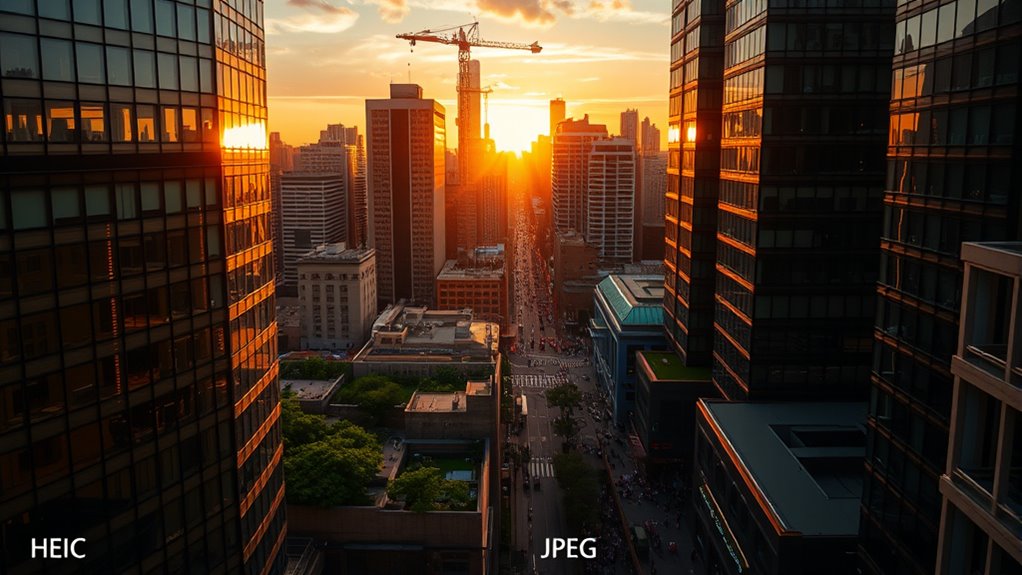
When comparing HEIC and JPEG, evaluating image quality and compression efficiency reveals how each format impacts your photos. HEIC generally offers better compression, producing smaller files without sacrificing image quality, which is ideal for saving storage space. JPEG’s compression can lead to noticeable quality loss at higher compression levels, especially in detailed or textured areas. HEIC also preserves more metadata, maintaining information like color profiles and editing history, which enhances editing flexibility later. This metadata preservation allows for more comprehensive edits without degrading the original image quality. Additionally, HEIC’s support for advanced features such as transparency and higher dynamic range enhances image versatility. While JPEG remains widely compatible, HEIC’s advanced compression and metadata preservation provide superior image quality and flexibility for editing. Ultimately, your choice depends on balancing storage needs, editing demands, and device compatibility.
Compatibility and Device Support for HEIC and JPEG

While HEIC offers advantages in compression and metadata preservation, its compatibility across devices and platforms varies more than JPEG’s. Many devices, especially older smartphones and computers, lack native support for HEIC, making it harder to open, edit, or share these images without converting them first. Software compatibility is also a concern, as popular programs like Windows and older versions of macOS or Android may not support HEIC without additional updates or plugins. In contrast, JPEG remains universally supported across nearly all devices and software, ensuring seamless viewing and sharing. If you’re looking for maximum compatibility, JPEG is the safer choice. However, if your workflow involves modern devices and software, HEIC’s benefits may outweigh these compatibility hurdles. Additionally, understanding the energetic alignment involved in digital formats can help optimize your workflow and ensure smoother sharing experiences. Being aware of the device support for these formats can also influence your decision, especially if you frequently share images across different platforms. Moreover, considering the file size differences can help you manage storage more efficiently on various devices. To further enhance your experience, exploring conversion tools can simplify managing these formats across different systems. Recognizing the platform limitations can also guide your choice in formats to avoid compatibility issues.
Storage Space and File Size Considerations

HEIC files typically take up less storage space than JPEGs because their advanced compression algorithms reduce file size without sacrificing image quality. This means you can store more photos on your device or in cloud storage without needing extra space. Smaller file sizes also make file transfer faster, whether you’re emailing images or uploading them online. To maximize storage efficiency, consider these points:
- HEIC saves space, reducing cloud storage costs
- Faster file uploads and downloads
- Easier organization with less clutter
- Ideal for limited device storage
- Better suited for high-volume photo backups
Advanced compression algorithms help optimize storage even further by maintaining quality at lower file sizes, which is especially beneficial when dealing with file size limitations. Additionally, the efficiency of image compression techniques plays a crucial role in managing storage and performance, allowing efficient data management to improve device functionality. Incorporating image format conversion can further streamline storage and sharing options across different platforms.
When to Choose HEIC Over JPEG and Vice Versa
Choosing the right image format depends on your specific needs and priorities. If color accuracy and editing flexibility are important, JPEG may be better since it’s widely supported and easier to edit without quality loss. However, if you want better compression, higher efficiency, and modern features like transparency, HEIC is a smart choice. Use HEIC when you’re saving space without sacrificing too much quality, especially on Apple devices. Conversely, choose JPEG if you need broader compatibility and plan to perform extensive edits, as JPEGs are more universally supported and easier to open in various editing software. Consider your workflow, device compatibility, and whether you prioritize minimal storage or maximum editing options to decide which format suits your needs best. Additionally, understanding the thermal behavior of image formats can help you make more informed decisions about storage and quality retention. It’s also helpful to consider compatibility with your preferred applications to ensure seamless editing and sharing. Being aware of the file size differences can further influence your choice, especially when managing large collections or limited storage. Recognizing the metadata management capabilities of each format can also impact your decision, particularly if you need to preserve or edit image information efficiently. Moreover, understanding the long-term preservation qualities of each format can help determine which is more suitable for archiving important images.
Frequently Asked Questions
Can I Convert HEIC Files to JPEG Without Losing Quality?
Yes, you can convert HEIC files to JPEG without quality loss by using reliable file conversion tools. Look for programs that support lossless conversion or maintain original quality during the process. When you choose the right software, it guarantees your images retain their clarity and detail, preventing quality loss. Always double-check your settings to make sure you’re performing a quality-preserving file conversion for the best results.
Do Photo Editing Apps Support HEIC Format Fully?
Most photo editing apps now support HEIC format, but you might face some app support limitations. Some popular apps fully support HEIC and allow you to edit, save, and export files seamlessly. However, older or less updated apps may struggle with HEIC compatibility, causing issues like limited editing options or the need for conversion. Check your app’s specifications to guarantee it offers thorough photo editing compatibility for HEIC files before starting your project.
How Does HEIC Handle Transparency or Alpha Channels?
Think of HEIC as a transparent glass window, allowing light and images to pass through with clarity. It handles transparency support and alpha channels smoothly, unlike JPEG, which is opaque and can’t support transparency. This means HEIC is perfect for images needing transparent backgrounds or layered compositions. If you require transparency, HEIC’s alpha channel feature gives you the flexibility to create seamless, professional visuals effortlessly.
Are There Privacy Concerns With HEIC File Metadata?
You should be aware that HEIC files can contain metadata that may include location, device info, and timestamps, raising concerns about metadata privacy. While the format itself offers good file security, it’s essential to manage metadata carefully, especially if sharing sensitive images. To protect your privacy, consider stripping metadata or using tools that help control metadata privacy, ensuring your personal information remains secure when sharing HEIC files.
Is HEIC Backward Compatible With Older Photo Viewers?
HEIC isn’t backward compatible with older photo viewers due to limited legacy support and software compatibility issues. You might struggle to open HEIC files on outdated devices or programs that don’t support the format. To guarantee easy access across various devices and software, you may prefer using JPEG, which offers broader compatibility and legacy support. If you need seamless viewing, converting HEIC images to JPEG could be a practical solution.
Conclusion
Choosing between HEIC and JPEG is like picking the right tool for a job—you’ll want the best fit for your needs. If you value quality and efficiency, HEIC is your modern ally, much like a sleek new gadget. But if broad compatibility matters more, JPEG remains your trusty classic. Ultimately, understanding their differences helps you make smarter choices, ensuring your photos always tell your story just as vividly as a well-placed brushstroke in a masterpiece.