
To use live voicemail and call screening effectively, set clear preferences based on who you want to reach you and when. Respect caller privacy by being transparent about your screening practices, and communicate professionally when leaving messages. Prioritize urgent messages and filter calls without missing valuable opportunities. Balance accessibility with control to stay organized and responsive. To master these tools and boost your productivity, explore the essential tips and strategies that follow.
Key Takeaways
- Set up call screening to filter calls based on caller identity and urgency, customizing rules for optimal control.
- Use live voicemail to quickly access urgent messages and respond promptly, maintaining professionalism and clarity.
- Communicate transparently with callers about screening practices to build trust and avoid misunderstandings.
- Regularly review and adjust your call screening settings to ensure important contacts and messages aren’t missed.
- Follow voicemail etiquette by speaking clearly, keeping messages concise, and providing contact info for effective communication.
Understanding the Basics of Live Voicemail and Call Screening
Live voicemail and call screening are powerful tools that help you manage incoming calls more efficiently. By understanding their basics, you can improve your communication flow and reduce disruptions. Voicemail etiquette is essential; it guarantees your messages are clear and professional, making it easier for callers to leave useful information. Call screening benefits include filtering unwanted calls and prioritizing important ones, saving you time and stress. When someone calls, call screening allows you to decide whether to answer, send to voicemail, or block the caller altogether. Live voicemail offers real-time message access, enabling quick responses. Mastering these tools helps you stay organized, maintain professionalism, and control your communication channels more effectively. Effective communication strategies are vital for building trust and ensuring your loved ones feel supported. Incorporating these features into your routine can also help you create a more calm and organized home, reducing unnecessary interruptions and enhancing your overall peace of mind. Additionally, understanding how to use call screening effectively ensures you don’t miss important calls while avoiding those that are less relevant. For example, being aware of how Voicemail etiquette can influence the clarity of your messages can lead to more productive conversations and better understanding.
Setting Up Your Call Screening Preferences
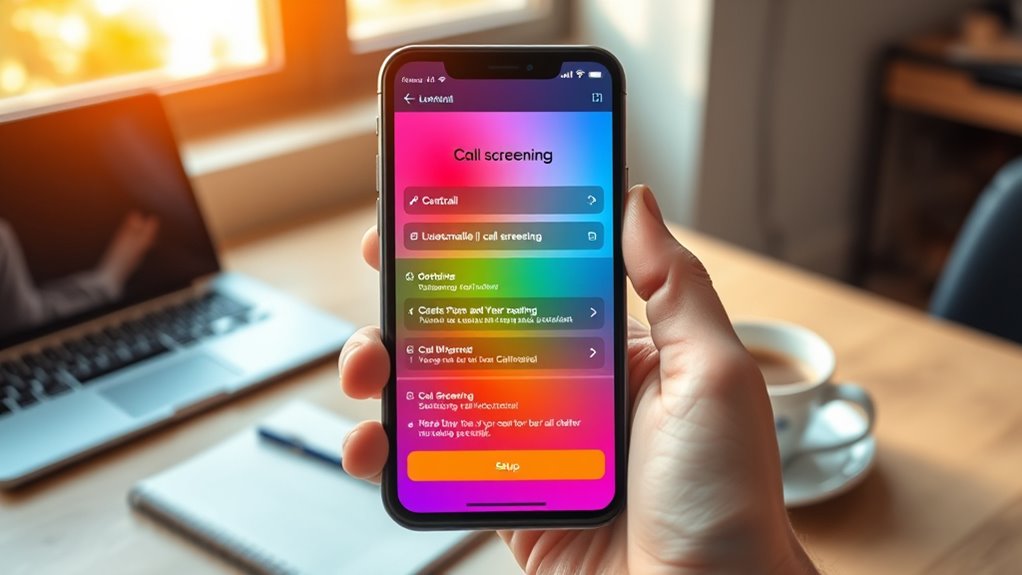
To effectively manage your incoming calls, setting up your call screening preferences is essential. By doing so, you control who gets through and when, respecting voicemail etiquette and ensuring smoother communication. Consider caller psychology—some callers may be hesitant or enthusiastic to speak with you directly, so customize your settings accordingly. Decide whether to screen all calls, only unknown numbers, or specific contacts. Use options like auto-reject for unrecognized callers or set priorities for certain contacts. Clear preferences help you avoid interruptions and maintain professionalism. Take time to review and adjust these settings periodically, ensuring they align with your current needs. Properly configured call screening enhances your control, reduces stress, and fosters better caller relationships when managed thoughtfully. Additionally, understanding how call management strategies impact your experience can help you create a more comfortable and effective communication environment. Being aware of family photoshoot fails can also remind you to be patient and flexible during important conversations or meetings, helping to keep your communication smooth and stress-free. Regularly updating your call screening preferences ensures they remain effective as your contacts and priorities change. For example, implementing back pain relief techniques can improve your overall well-being and reduce stress during busy days.
Ethical Considerations When Using Call Screening

While setting up your call screening preferences helps you manage who reaches you, it’s vital to contemplate the ethical implications of using these features. Respecting caller privacy is essential; avoid screening calls in a way that could unfairly block important or urgent messages. Consider consent considerations—if someone expects their call to be answered or left a voicemail, selectively screening might breach their trust. Be transparent when appropriate, letting callers know if you’re screening their calls or using live voicemail. This honesty maintains ethical communication practices and prevents misunderstandings. Remember, call screening is a tool to help you manage your time, not to unfairly ignore or dismiss others. Using it responsibly ensures you respect both your privacy and the rights of your callers. Incorporating smart appliances and connected technologies can enhance your ability to manage communications discreetly and ethically, especially with AI-driven communication tools that support transparency and consent. Additionally, being aware of privacy policies related to these technologies helps ensure you are compliant and respectful of user data. It’s also beneficial to regularly review your call screening settings to ensure they align with your privacy and ethical standards.
How to Use Live Voicemail to Manage Urgent Messages
When an urgent message comes through, using live voicemail allows you to handle it immediately without missing critical information. To do this effectively, follow proper voicemail etiquette by calmly listening and taking notes if needed. Keep your responses clear and concise to avoid confusion. Implement call screening strategies by quickly evaluating the caller’s tone and urgency level. If the message seems critical, prioritize calling back right away or requesting they resend details via text. Use live voicemail to confirm receipt of urgent messages, ensuring nothing gets overlooked. Staying professional and attentive during these moments helps you manage urgent communications efficiently, while maintaining good call screening practices. Additionally, understanding how navigation and mapping work in smart devices can help you better manage multiple messages and prioritize effectively. Mastering vehicle tech features can further improve your responsiveness and overall message management, making sure you stay in control of essential information without sacrificing professionalism. Being aware of smart device capabilities also allows you to adapt quickly and handle multiple urgent calls seamlessly. Moreover, leveraging wave and wind features in some devices can optimize your communication flow during outdoor or challenging environments, ensuring clarity when it matters most. Recognizing how smart home automation can integrate with your communication systems can streamline your response process and enhance your efficiency.
Tips for Filtering Calls Without Missing Important Opportunities

Filtering calls effectively requires a balance between screening out unwanted interruptions and recognizing opportunities that can benefit your work or relationships. To do this, understand caller psychology and practice good voicemail etiquette. When screening, prioritize known contacts or urgent matters, but remain open to new opportunities. Use call screening features to set expectations, like personalized greetings indicating when you’ll return calls. Additionally, knowing the resale value of items like electric bikes can help you make informed decisions about when to invest or sell in related areas. This method helps prevent missing essential opportunities while reducing distractions, ensuring your communication remains efficient and respectful. Being aware of market trends and insights can also help you identify the best times to follow up on promising leads or opportunities. Incorporating a mindful approach to call screening can also enhance your ability to manage digital distractions and maintain focus on important tasks. Moreover, understanding the psychology of callers allows you to better anticipate their needs and respond appropriately.
Integrating Call Screening With Your Communication Workflow

To effectively incorporate call screening into your communication workflow, you need to align your call management practices with your overall productivity system. Start by integrating call filtering practices that prioritize urgent or relevant calls, ensuring you don’t get distracted by less important ones. Use call screening features to identify priority contacts before answering, saving time and reducing interruptions. Voicemail management becomes easier when you set up personalized greetings and filters that direct calls to voicemail when necessary. This approach helps you maintain focus and organize your communication channels efficiently. By syncing call screening with your existing tools and routines, you create a seamless process that enhances responsiveness without sacrificing productivity. The key is to develop a system that balances accessibility with control.
Common Mistakes to Avoid When Using These Features
While integrating call screening into your workflow can boost efficiency, overlooking common pitfalls can undermine these benefits. One mistake is neglecting proper voicemail etiquette, which can frustrate callers and damage relationships. Another is misusing call screening ethics by ignoring transparency or respecting caller privacy, leading to mistrust. Additionally, rushing to screen calls without listening carefully may cause missed opportunities or misunderstandings. To avoid these issues, always be courteous and clear in your voicemail messages, respecting caller intentions. Use call screening responsibly by informing contacts when necessary and maintaining professionalism. Remember, successful call screening balances efficiency with respect, ensuring you don’t sacrifice good communication habits for convenience. Keeping these pitfalls in mind helps you use these features effectively and ethically.
Privacy Tips for Protecting Your Personal and Professional Information
To protect your personal and professional information, it’s essential to control who can access your voicemail. Managing voicemail access prevents unauthorized listening, keeping sensitive details secure. Additionally, screening unknown callers helps you avoid potential scams and keeps your conversations private.
Manage Voicemail Access
Managing who can access your voicemail is essential for protecting your personal and professional information. You want to control who leaves messages and guarantee your privacy. To do this effectively, consider these strategies:
- Set up strong voicemail passwords to prevent unauthorized access
- Use call blocking strategies to filter out unwanted callers
- Follow proper voicemail etiquette to avoid sharing sensitive information publicly
Screen Unknown Callers
Screening unknown callers is a key step in safeguarding your personal and professional information. When you use caller ID, you can quickly see who’s calling before answering, helping you decide whether to pick up or ignore the call. If the caller ID shows an unfamiliar number or suspicious name, it’s wise to be cautious. Take advantage of spam detection features offered by your phone or carrier, which automatically flag potential spam or scam calls. These tools help you avoid sharing sensitive information with unknown or unverified callers. By consistently screening unknown callers, you reduce the risk of falling victim to scams or phishing attempts. Staying vigilant with caller ID and spam detection keeps your personal and professional data safer from unwanted intrusion.
Best Practices for Communicating Clearly With Callers

To communicate effectively with callers, you need to speak clearly and calmly, ensuring your message is understood. Keep your responses concise so callers don’t get overwhelmed or confused. Personalizing your replies helps build trust and makes the conversation more engaging.
Speak Clearly and Calmly
When communicating with callers, speaking clearly and calmly makes a significant difference in how your message is received. Your tone consistency and voice modulation help convey professionalism and reassurance. To enhance clarity, focus on maintaining a steady, friendly tone, avoiding rushing or sounding tense. Here are some tips:
- Use a warm, even tone to build trust
- Modulate your voice to emphasize important points
- Keep your pace slow enough for clarity
Keep Messages Concise
Keeping your messages short and to the point is essential for clear communication with callers. Concise messages respect their time and demonstrate good voicemail etiquette. When leaving a message, focus on the key details: who you are, the purpose of your call, and a callback number. Avoid unnecessary information that might confuse or overwhelm the listener. Use the following table to remember effective message components:
| Be Clear | Stay Brief | Provide Contact Info |
|---|---|---|
| State your purpose quickly | Avoid long-winded explanations | Repeat your number for clarity |
| Use simple language | Keep messages under 30 seconds | Mention preferred callback times |
| Stay polite | Avoid rambling | Confirm understanding if needed |
Clear, brief messages promote effective call etiquette and ensure your communication is understood.
Personalize Your Responses
Personalizing your responses shows callers that you value their time and concerns, making your communication more effective. Voicemail personalization helps build trust and boosts caller engagement by showing you’re attentive. To enhance this, consider:
- Using their name to make interactions more personal
- Referencing previous conversations or specific details
- Offering tailored solutions or next steps based on their needs
These practices demonstrate genuine interest, making callers feel heard and appreciated. When you personalize your responses, you turn a simple message into a meaningful exchange. This not only improves the caller experience but also increases the chances of resolving issues efficiently. Remember, thoughtful communication fosters stronger relationships and encourages callers to reach out again when needed.
Frequently Asked Questions
Can Live Voicemail Be Integrated With Other Messaging Platforms?
Live voicemail can often be integrated with other messaging platforms, but it depends on the platform compatibility. You should check if your voicemail system supports messaging integration through APIs or third-party apps. If it does, you can seamlessly connect it to platforms like Slack, email, or SMS. This way, you stay updated across channels, ensuring you never miss important messages while maintaining efficient communication workflows.
How Does Call Screening Affect Emergency Call Accessibility?
Call screening can sometimes affect emergency call accessibility, as it may delay or block urgent calls if not set up properly. While protecting your privacy concerns is important, you need to guarantee that emergency numbers bypass screening features. Otherwise, accessibility challenges could prevent quick responses in critical situations. Always review your call screening settings to balance privacy with the need for immediate access during emergencies.
Are There Legal Restrictions on Recording or Screening Calls?
You might worry about legal restrictions when recording or screening calls, but it’s manageable. Generally, you need recording consent from all parties involved, depending on your location. Laws vary—some places require only one-party consent, while others need all-party agreement. To stay compliant, always inform callers before recording. By understanding these legal restrictions, you make sure your call screening practices are legal and respectful of privacy rights.
How to Handle Missed Important Calls Due to Screening?
If you miss an important call due to screening, try voicemail recovery by leaving a clear message requesting a callback. To bypass screening, consider calling from a different number or using a direct line if available. Stay proactive by monitoring your voicemail regularly and setting up notifications. These steps help make certain you don’t miss critical messages and can quickly respond when screening might have delayed your response.
Can Call Screening Be Customized for Different Contacts or Groups?
Yes, you can customize call screening for different contacts or groups. Use personalized filters to prioritize or block specific callers, and set group-specific settings to manage multiple contacts efficiently. This way, you guarantee important calls get through while unnecessary ones are screened. By tailoring these options, you improve your call management and avoid missing critical conversations. Adjust your filters regularly to keep your screening effective and aligned with your needs.
Conclusion
Think of live voicemail and call screening as your personal gatekeepers—they help you filter the noise and prioritize what truly matters. Like a skilled DJ remixing tracks, you can craft your communication flow to stay in tune with your needs without missing the beats of important conversations. When used wisely, these tools turn your phone into a well-orchestrated symphony—keeping the chaos out and clarity in.