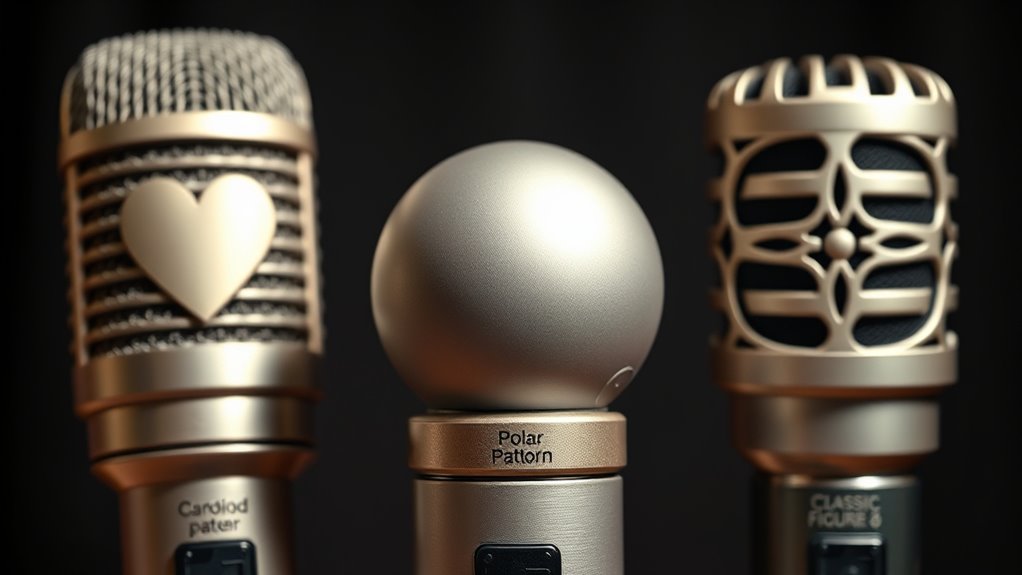

Understanding microphone polar patterns helps you choose the right mic for your needs. Cardioid picks up sound mainly from the front, minimizing noise from sides and back, ideal for vocals. Omnidirectional captures sound equally in all directions, great for ambient recordings but can pick up background noise. Figure-8 records from the front and rear, reducing side noise, perfect for duets or stereo setups. Exploring these patterns further reveals how each influences your audio quality and environment choices.
Key Takeaways
- Cardioid microphones pick up sound mainly from the front, minimizing noise from sides and rear.
- Omnidirectional microphones capture sound equally from all directions, ideal for ambient recordings.
- Figure-8 (bidirectional) patterns record from front and back, rejecting side noise, suitable for duets or stereo setups.
- Cardioid offers better isolation for vocals, while omnidirectional is better for environmental sound capture.
- Pattern choice affects interference rejection and overall audio clarity in different recording environments.
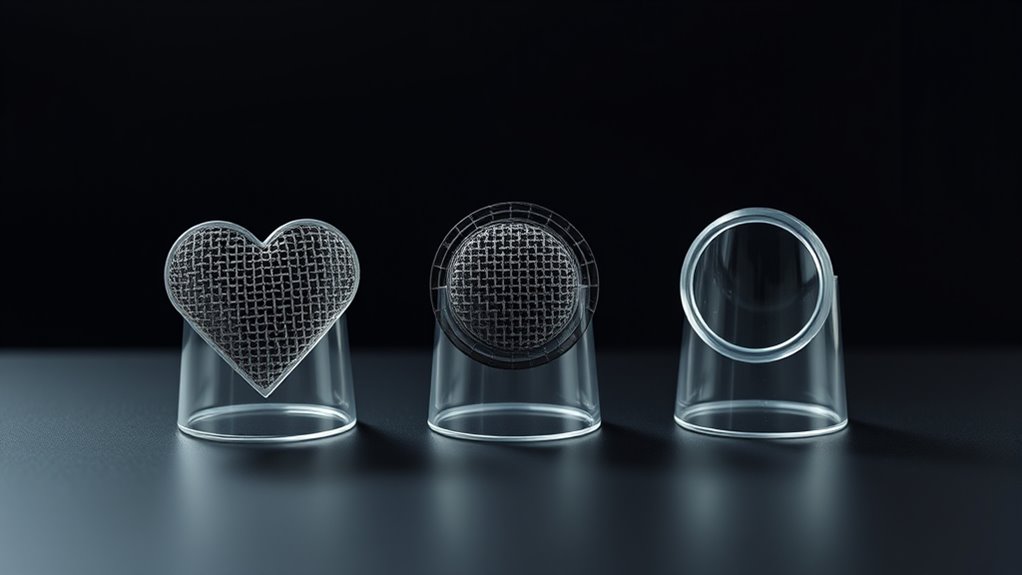
A microphone’s polar pattern determines how it picks up sound from different directions, shaping its sensitivity to various sources. This characteristic influences not only how well it captures audio but also how effectively it reduces unwanted noise or interference. For example, a cardioid pattern focuses on sound originating directly in front of the mic, minimizing noise from the sides and rear. This makes it ideal for situations where you want clear sound pickup from a single source, like vocals or speech, while reducing ambient noise or room echo. Its directional nature helps cut out background distractions, giving you cleaner recordings or live sound reinforcement.
In contrast, omnidirectional microphones capture sound equally from all directions. Their sound pickup pattern means they’re highly sensitive to the environment around them, making them suitable for capturing ambient sound or group recordings. However, this broad sensitivity also means they’re more prone to interference, picking up unwanted noise from multiple sources. If you’re recording in a noisy environment, an omnidirectional mic might pick up the hum of air conditioners or chatter from nearby, which can muddy your audio. So, while omnidirectional patterns excel at capturing natural, full-environment sound, they require careful placement to avoid interference.
Then there’s the figure-8, or bidirectional, pattern, which captures sound from the front and back of the microphone but rejects sound from the sides. This makes it particularly useful for recording two sources simultaneously—like a duet or a podcast interview—where you want both voices to be clear and distinct. The figure-8 pattern offers some interference reduction from the sides, but because it picks up from both directions, it can also capture more ambient noise from behind. Proper placement is key here to minimize unwanted interference, especially in noisy environments. It’s a versatile pattern for stereo recordings and situations where you want to focus on two sound sources without much spill or background noise.
Understanding these patterns helps you choose the right microphone for your situation. If you need sound pickup that isolates your voice and cuts interference from other sources, the cardioid pattern is your best bet. For capturing entire environments or group recordings where ambient noise is part of the scene, omnidirectional mics are suitable but require attention to interference. If you want to record two sources simultaneously or create stereo effects, the figure-8 pattern offers a balanced approach with some interference reduction from the sides. Additionally, polar pattern characteristics can influence the overall quality and usability of your microphone in different settings. Choosing the right polar pattern ultimately improves your audio quality by optimizing sound pickup and minimizing unwanted interference.
Top picks for "microphone polar pattern"
Open Amazon search results for this keyword.
As an affiliate, we earn on qualifying purchases.
Frequently Asked Questions
Can a Microphone Switch Between Polar Patterns?
Yes, many microphones offer polar pattern versatility, allowing you to switch microphone modes easily. You can typically do this with a dedicated switch on the microphone, enabling you to choose between cardioid, omni, or figure-8 patterns. This feature gives you greater control over your sound pickup, making it suitable for different recording scenarios. So, if you need to adapt to varying environments, switching microphone modes is a convenient and effective option.
How Does Polar Pattern Affect Feedback in Live Sound?
Your microphone’s polar pattern greatly impacts feedback risk during live performances. Cardioid mics focus on sound directly in front, reducing feedback and making stage monitoring easier. Omni patterns pick up sound from all directions, increasing feedback risk but providing natural sound. Figure-8 patterns capture sound from front and back, which can help control feedback if positioned carefully. Selecting the right pattern helps manage feedback and ensures clear sound during your performance.
Are Some Polar Patterns Better for Studio Recording?
Some polar patterns are better for studio recording because of their versatility. Cardioid microphones excel at isolating sound sources and reducing room noise, making them ideal for controlled studio environments. Omni patterns capture a more natural sound, which suits ambient recordings. Figure-8 microphones are great for capturing stereo images or multiple sources simultaneously. Choosing the right pattern depends on your recording needs, but all offer valuable versatility in a studio setting.
Do Polar Patterns Influence Microphone Durability?
Polar patterns don’t substantially influence microphone durability or wear. Instead, durability depends on build quality, materials, and proper handling. While some patterns, like figure-8, might be more sensitive to environmental factors, they don’t make the mic more prone to damage. You should focus on protecting your microphone from physical impacts and moisture, regardless of its polar pattern, to ensure long-term performance and prevent unnecessary wear.
How Do Polar Patterns Impact Noise Rejection?
Imagine your microphone as a vigilant guardian. Its polar pattern acts like a spotlight, focusing on your voice while ignoring ambient noise. Cardioid patterns excel at noise rejection by capturing sound mainly from the front, blocking unwanted side and back noises. Omni microphones pick up ambient noise equally, offering less noise rejection. Your choice of polar pattern directly influences how effectively your mic filters out background sounds.
Conclusion
Think of microphone polar patterns as different friends at a party—cardioid is like the attentive listener, catching sounds directly in front of it; omnidirectional is the friendly chatter, picking up everything around; and figure-8 is the balanced conversationalist, capturing both front and back voices. Selecting the right pattern is like picking the perfect friend for the situation. By understanding their personalities, you can guarantee your recordings are clear, focused, and just right for any setting.