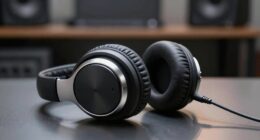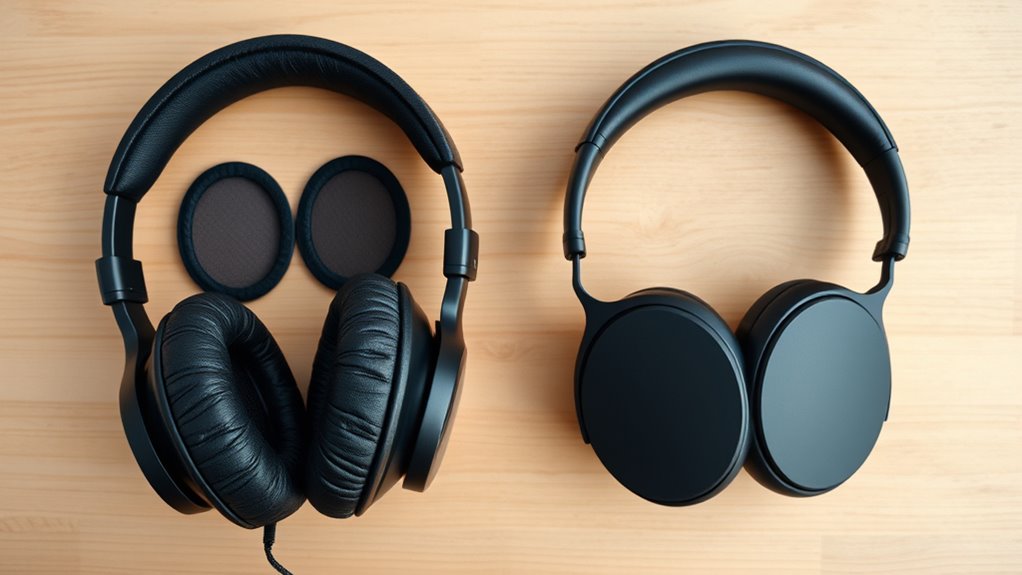

If you want natural, spacious sound and mostly stay at home or in quiet environments, open-back headphones could be your best pick. They deliver a more immersive experience but lack sound isolation, so others may hear your music. On the other hand, closed-back headphones block external noise and prevent sound leakage, making them ideal for commutes or shared spaces. To find the perfect fit for your needs and environment, explore the details ahead.
Key Takeaways
- Open-back headphones offer a natural, spacious sound ideal for critical listening at home or in studio settings.
- Closed-back headphones provide better sound isolation and privacy, suitable for commuting or noisy environments.
- Open-backs have more sound leakage, making them less suitable for shared or public spaces.
- Closed-backs block external noise and prevent audio leakage, enhancing privacy and environment control.
- Choose open-back for immersive, airy sound quality; opt for closed-back for noise isolation and versatility in different environments.

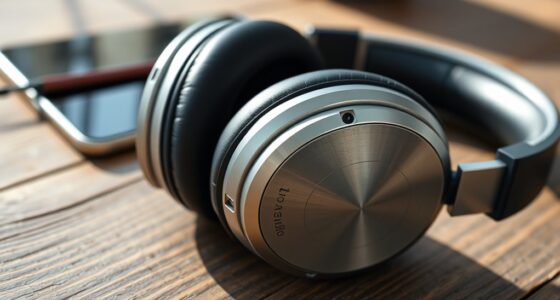
Choosing between open-back and closed-back headphones can considerably impact your listening experience. The decision largely depends on how you prioritize sound quality, sound isolation, and your environment. Open-back headphones are designed with ear cups that have perforations or grills, allowing air and sound to pass freely in and out. This design creates a more natural, spacious soundstage, making them ideal for critical listening or enjoying music at home. However, because sound easily escapes through the open back, they don’t provide much sound isolation. That means you’ll likely hear external noise, and others nearby can also hear what you’re listening to. If you’re in a quiet space or don’t mind background noise, open-backs can deliver a rich, immersive experience that many audiophiles prefer.
On the other hand, closed-back headphones feature sealed ear cups that block external sound from entering and prevent audio from leaking out. This design markedly enhances sound isolation, making them suitable for use in noisy environments or when you don’t want to disturb others. If you’re commuting, working in a shared space, or recording in a studio, closed-backs are often the better choice because they keep your audio private and minimize audio leakage. Audio leakage refers to sound escaping from your headphones, which can be distracting or disruptive to others nearby. With closed-backs, you’re less likely to bother others, and external noise is less likely to interfere with your listening session.
While open-back headphones excel in delivering a more natural, airy sound with better spatial cues, they’re less practical if you need privacy or soundproofing. They’re best suited for stationary use, like at home or in a studio where ambient noise isn’t an issue. Conversely, closed-backs excel in noisy settings and provide excellent sound isolation, but they can sometimes produce a less open, more confined sound. This can affect the sense of space and immersion, especially if the headphones are poorly designed. Additionally, technological differences such as DLP versus LCD technology can influence color fidelity in projectors, which is an example of how different components impact overall performance.
Ultimately, your choice depends on your environment and listening preferences. If you prioritize sound quality and a sense of space, and you’re in a quiet setting, open-back headphones can be rewarding. If you need privacy, less sound leakage, or active noise reduction, closed-back headphones are more practical. Consider where and how you’ll use your headphones most often, and weigh the importance of sound isolation versus sound quality to find the perfect fit for your listening needs.
Top picks for "back open clos"
Open Amazon search results for this keyword.
As an affiliate, we earn on qualifying purchases.
Frequently Asked Questions
Can Open-Back Headphones Be Used Outdoors Without Noise Leakage?
Open-back headphones aren’t ideal for outdoor use because noise leakage can disturb others around you, and they lack outdoor durability. The open design allows sound to escape, making it hard to enjoy private listening outside. Plus, they’re more vulnerable to dust, dirt, and weather conditions. If you want quality sound outdoors, closed-back headphones are better—they block noise leakage and are built for durability in various environments.
Are Closed-Back Headphones Better for Studio Recording?
Yes, closed-back headphones are better for studio recording because they provide superior noise isolation, preventing sound leakage and keeping external noise out. They also typically deliver a stronger bass response, which helps you hear low frequencies more clearly. This makes them ideal for accurate monitoring and editing in a controlled environment. If you need more focused sound, closed-backs are the way to go for professional studio work.
How Do Open-Back Headphones Affect Long Listening Sessions?
Open-back headphones can cause discomfort during long listening sessions because they offer less sound isolation, letting more ambient noise in. This can lead to listening fatigue and decreased music accuracy over time. If you want a more comfortable experience during extended use, closed-back headphones might be better, as they provide better sound isolation and maintain consistent sound quality, reducing fatigue and ensuring you enjoy clear, accurate music for longer periods.
Do Closed-Back Headphones Provide Sufficient Soundstage?
Picture a cozy cave shaping your sound. Closed-back headphones deliver sufficient soundstage clarity, creating an immersive experience that feels intimate and focused. While they may not rival open-back models for expansive sound, they still offer a rich, detailed audio scene. You’ll find that for most listening needs, closed-back headphones give you a satisfying, immersive experience without external noise interference, making them ideal for concentrated listening sessions.
Are Open-Back Headphones More Fragile Than Closed-Back Ones?
Open-back headphones are generally more fragile than closed-back ones due to their delicate design considerations. Their open grille exposes drivers and internal components, making them more susceptible to damage from impacts or dust. You should handle them with extra care and avoid rough use. If durability is a priority, closed-back headphones tend to be more robust, offering better headphone durability and protection against everyday wear and tear.
Conclusion
So, which will you choose—open-back or closed-back? The decision isn’t clear-cut, and that’s part of the journey. Imagine discovering the perfect sound that transforms your listening experience… but what if it’s not what you expected? The right pair could change everything, or leave you craving more. Whatever you pick, one thing’s for sure: your next favorite song might just be a headphone away. Are you ready to find out which one it is?