3D audio and spatial sound are transforming your music experiences by creating immersive, lifelike soundscapes that make you feel surrounded and connected to the music. As technology advances and more devices support this format, it’s becoming a real game-changer for artists and listeners alike. While challenges remain, the potential for richer, more emotional music experiences suggests this isn’t just hype—it’s the future. If you keep exploring, you’ll discover how this innovation may reshape your musical journey.
Key Takeaways
- 3D audio creates immersive, lifelike soundscapes that enhance emotional engagement beyond traditional stereo formats.
- Industry adoption faces challenges like limited streaming support, device compatibility, and content scarcity.
- Advances in technology and standards are paving the way for broader accessibility and integration across platforms.
- Artists and producers are experimenting with spatial placement, opening new creative possibilities in music production.
- As audiences become more familiar and equipment costs decrease, 3D audio is poised to become a mainstream musical experience.
Top picks for "audio spatial sound"
Open Amazon search results for this keyword.
As an affiliate, we earn on qualifying purchases.
What Is 3D Audio and Spatial Sound?
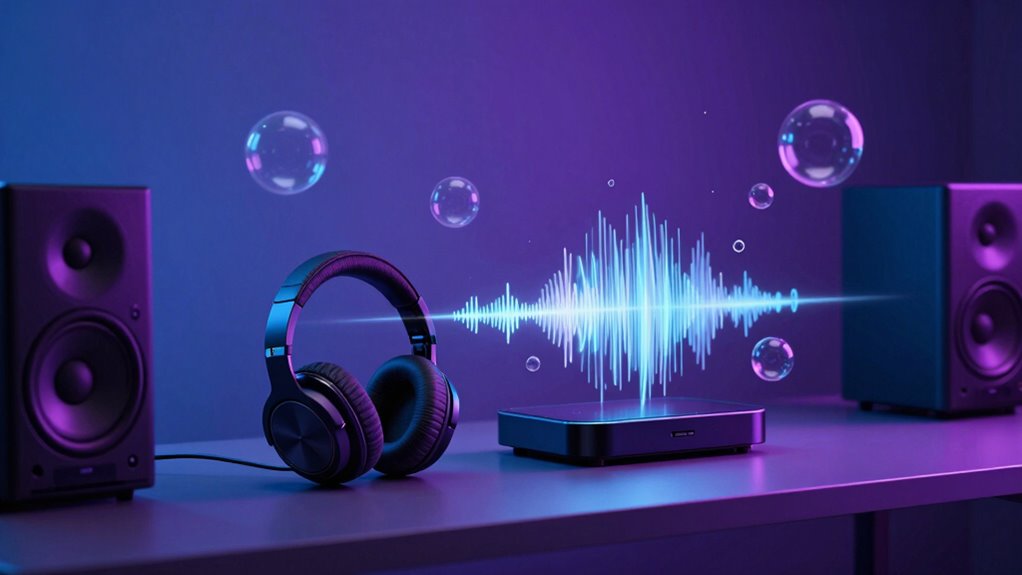
Have you ever wondered how some audio systems make sounds seem to come from all around you? That’s the magic of 3D audio and spatial sound, which enhance your spatial perception—your brain’s ability to locate sounds in space. These technologies create auditory illusions, tricking your ears into perceiving direction, distance, and movement of sounds as if they’re in your environment. By mimicking how we naturally hear, 3D audio makes it feel like sources are behind, above, or beside you. This immersive experience transforms simple stereo into a dynamic soundscape, heightening realism and emotional impact. Fundamentally, spatial sound taps into your brain’s perception, making you feel truly surrounded by the audio environment. The quality of the audio technology used greatly influences how convincing and immersive these effects can be. Additionally, advances in digital signal processing contribute to more precise and convincing spatial audio experiences.
The Technology Behind Immersive Soundscapes

The magic behind immersive soundscapes lies in advanced technologies that manipulate audio signals to create a convincing three-dimensional experience. Spatial rendering plays a key role by simulating how sound interacts with your environment, positioning audio sources accurately around you. Binaural processing enhances this effect by mimicking how your ears perceive sound from different directions, using specialized algorithms to produce a realistic sense of space. When you listen to content utilizing these techniques, it feels as though sounds are coming from specific points in your environment, not just from stereo speakers or headphones. These technologies work together to craft immersive environments that draw you into the music or soundscape, making the experience more engaging and lifelike.
Benefits of 3D Audio for Listeners and Artists
3D audio transforms the listening experience by immersing you in sound that feels real and spatially accurate, offering a depth that traditional stereo can’t match. This heightened realism boosts audience engagement, making you feel more connected to the music and the artist’s intent. For artists, 3D audio opens new avenues for artistic innovation, allowing them to craft immersive soundscapes that evoke emotion and tell stories more effectively. It encourages experimentation with spatial placement and movement, pushing creative boundaries. As a listener, you gain a richer, more dynamic experience, hearing details and nuances that might go unnoticed otherwise. For artists, embracing 3D audio means elevating their craft and forging deeper connections with their audience, transforming how music is experienced and appreciated. Discover Trusted Businesses and Services Near You
Current Devices and Platforms Supporting Spatial Sound

Many streaming services now support spatial sound, making it easier for you to experience immersive audio on popular platforms. Gaming and VR devices also incorporate advanced spatial sound features to enhance realism during gameplay. Additionally, a variety of hardware options are available, from headphones to dedicated soundbars, to deliver rich 3D audio experiences. As the technology continues to evolve, smart home integration is emerging as a way to seamlessly incorporate spatial sound into your overall connected living environment. This integration allows for a more personalized audio experience, tailoring soundscapes to individual preferences within your smart home setup. Moreover, spatial audio standards are being developed to ensure compatibility across different devices and platforms, further expanding the potential for immersive sound environments.
Streaming Service Compatibility
Are your favorite streaming platforms ready to deliver immersive spatial sound? Currently, support varies across services, with some like Apple Music and Tidal offering spatial audio options. However, widespread compatibility remains limited due to copyright concerns and licensing challenges. Content creators and rights holders often hesitate to license spatial sound formats, slowing adoption. Streaming platforms must navigate complex licensing agreements to incorporate spatial audio tracks legally. Additionally, device compatibility plays a role—some platforms deliver spatial sound only on specific hardware, like certain smart speakers or headphones. As a result, users may find access inconsistent. Despite these hurdles, the industry continues pushing for broader support, aiming to make spatial sound a standard feature in streaming, but full compatibility isn’t there yet. Ensuring device interoperability is crucial for seamless user experiences as the technology develops.
Gaming and VR Support
Gaming and VR platforms are rapidly integrating spatial sound to create more immersive experiences, with current devices supporting a range of audio technologies. These platforms enhance spatial perception, allowing you to pinpoint the origin of sounds with precise audio localization. Headsets like Oculus Quest 2, PlayStation VR, and Windows Mixed Reality devices utilize advanced spatial audio algorithms to simulate real-world sound environments. Many gaming engines now incorporate binaural and object-based audio, enabling accurate placement of sounds in 3D space. This technology heightens your sense of presence, making virtual environments feel more tangible. As a result, your ability to locate in-game sounds improves, boosting immersion and reaction times. These developments mark a significant step toward fully immersive gaming and VR experiences driven by sophisticated spatial sound support.
Hardware and Device Options
A variety of modern devices and platforms now support spatial sound to enhance your audio experience in gaming, VR, and multimedia. Many headphones offer compatibility with spatial audio formats like Dolby Atmos or Windows Sonic, providing immersive soundscapes through headphone compatibility. Speaker configurations also play a vital role; setups with surround sound speakers, such as 5.1 or 7.1 systems, deliver a more realistic spatial environment. Additionally, smart speakers like Amazon Echo or Apple HomePod support spatial audio features, creating room-filling sound. Gaming consoles like PlayStation and Xbox, along with PCs equipped with compatible sound cards, further expand your options. Whether you prefer headphones or speaker setups, these hardware options guarantee you can enjoy rich, multidimensional audio across various platforms.
Real-World Examples and Creative Uses in Music

In recent years, musicians and producers have harnessed 3D audio and spatial sound to create immersive listening experiences that transform how audiences engage with music. They’ve developed innovative collaborations, blending genres and technologies to push creative boundaries. Artists use spatial sound to craft experimental soundscapes, immersing listeners in multidimensional environments that evoke emotion and curiosity. For example, some electronic musicians design tracks where sounds move around you, creating a sense of physical presence. Virtual reality concerts and interactive albums also showcase how 3D audio enhances storytelling and emotional impact. These real-world examples demonstrate the potential of spatial sound to revolutionize music production, encouraging artists to experiment and audiences to experience music in fresh, engaging ways.
Challenges and Limitations of 3D Audio Adoption

Despite the exciting potential of 3D audio and spatial sound, several challenges hinder widespread adoption. Cost barriers remain significant, as high-quality equipment and specialized software can be expensive, limiting access for many creators and consumers. Additionally, content scarcity poses a problem; there’s a limited library of 3D audio tracks, making it difficult to find diverse and engaging material. Technical hurdles also exist, such as the need for compatible hardware and the complexity of creating immersive soundscapes.
- Limited availability of high-quality, ready-to-use content
- High costs of professional-grade equipment and software
- Technical complexity of production and playback systems
Is the Audience Ready for Fully Immersive Music Experiences?

As technology advances and 3D audio becomes more accessible, questions arise about whether audiences are truly ready to embrace fully immersive music experiences. You might wonder if listener expectations align with these innovations or if the market is prepared for such a shift. While immersive sound can elevate your music experience, many audiences still prefer familiar formats like stereo or surround sound. Market readiness varies, and some listeners may need time to adapt or develop the necessary equipment. Additionally, comfort levels with new technology and understanding of spatial sound influence acceptance. Ultimately, while the potential for immersive music is promising, your audience’s readiness depends on education, accessibility, and how well these experiences meet their expectations.
Comparing 3D Audio to Traditional Stereo and Surround Sound
While immersive 3D audio promises a more lifelike listening experience, it’s helpful to compare it directly with traditional formats like stereo and surround sound. 3D audio often uses binaural recording techniques to replicate how humans naturally perceive sound, creating a sense of depth and placement. Unlike stereo, which offers two channels, or surround sound with multiple speakers, 3D audio can deliver precise localization of sounds in three-dimensional space. Proper speaker calibration is critical to achieving accurate spatial effects, especially for home setups. You might notice that:
- Binaural recording captures authentic spatial cues, enhancing realism
- Speaker calibration ensures consistent sound positioning
- 3D audio provides a more immersive experience than traditional formats, but setup complexity varies
This comparison highlights how 3D audio advances beyond standard stereo and surround systems. Additionally, personalized in-home care emphasizes the importance of tailored environments, which can also enhance the listening experience by optimizing acoustics and comfort.
Future Trends and Potential Impact on the Music Industry
The integration of 3D audio and spatial sound technologies is poised to revolutionize the music industry by offering listeners a more immersive and personalized experience. As new audio formats emerge, you’ll see artists and producers experimenting with innovative ways to craft multidimensional soundscapes. This evolution will likely shift how music is consumed, emphasizing spatial positioning and depth to enhance the listener experience. Streaming platforms may adopt these advanced formats, making high-quality spatial audio more accessible. As a result, live performances and studio recordings could become more dynamic, creating a sense of presence and intimacy. For you, this means a future where music feels more real, engaging, and tailored to your environment, elevating your connection to the sound and transforming how you enjoy music daily.
Frequently Asked Questions
How Does 3D Audio Impact Music Production Workflows?
3D audio impacts your music production workflow by requiring you to master spatial mixing techniques and adapt your process to incorporate new tools. You’ll need to integrate specialized hardware and software into your workflow, which can initially slow you down. However, as you become more comfortable with spatial sound, it enhances your creative options, making your mixes more immersive and engaging for your audience.
Are There Any Health Concerns Related to Immersive Sound Experiences?
Immersive sound experiences are like a double-edged sword—you could enjoy rich, lifelike audio, but you might also face risks like ear fatigue or auditory hallucinations. Prolonged exposure can strain your ears, leading to discomfort or temporary hearing issues. Stay mindful of volume levels and listening duration to protect your hearing. If you notice persistent symptoms, it’s best to take breaks and consult an audiologist.
What Are the Costs Associated With Adopting 3D Audio Technology?
You’ll find that adopting 3D audio technology involves significant cost barriers due to equipment expenses and setup costs. High-quality speakers, specialized headphones, and powerful processing hardware can add up quickly. Additionally, you might need to invest in software licenses or calibration tools. While the immersive experience is impressive, the initial investment can be a hurdle, especially for smaller studios or individual artists aiming to incorporate this tech.
How Does 3D Audio Influence Listener Emotional Response?
You feel more emotionally engaged and immersed when listening to 3D audio because it surrounds you with sound, making the experience more realistic. This heightened listener immersion deepens your emotional response, allowing you to connect with music on a profound level. The spatial sound cues evoke feelings and memories, intensifying your overall experience and making the music more impactful and memorable.
Will Traditional Speakers Become Obsolete With 3D Audio Advancements?
Traditional speakers won’t become obsolete with 3D audio advancements. Instead, they’ll evolve alongside new technology, complementing traditional audio setups. You might still prefer classic speakers for their simplicity and quality, while 3D audio offers immersive experiences through compatible devices. So, speaker obsolescence isn’t imminent; it’s about integrating new 3D sound tech into your existing audio environment, enhancing your listening without replacing what works.
Conclusion
As you explore 3D audio, it’s clear this technology could reshape how you experience music. Imagine attending a live concert from your living room, feeling like you’re right there with the artist’s voice swirling around you. While challenges remain, the potential for immersive, personalized soundscapes is exciting. If artists embrace these innovations, you might soon find yourself in a concert hall of your own, where every note surrounds you entirely.