To get the best sound from your headphones, choose models that match your listening style and guarantee a snug fit for proper isolation. Use high-quality audio files and fine-tune your equalizer for balanced sound. Keep your headphones clean and well-maintained, and experiment with positioning and environment for clarity. For high-impedance or audiophile gear, invest in proper amplification and accessories. Keep exploring these tips to open up ultimate listening performance.
Key Takeaways
- Properly calibrate and match headphones with suitable amplifiers and high-quality cables for optimal sound clarity.
- Ensure a snug, comfortable fit and optimal placement to minimize external noise and enhance bass response.
- Optimize your listening environment with acoustic treatments and strategic furniture placement to reduce reflections.
- Choose high-bitrate, lossless audio files and fine-tune equalizer settings for personalized sound quality.
- Regularly clean and inspect headphones, experiment with placement, and utilize accessories to improve overall sound performance.
Choose the Right Headphones for Your Listening Style
Choosing the right headphones begins with understanding your listening style. Your favorite music genres and listening preferences shape what features matter most. If you love bass-heavy genres like hip-hop or EDM, look for headphones that emphasize low frequencies and have a powerful driver. For classical or acoustic music, clarity and detailed sound are key, so opt for headphones with balanced sound profiles. If you enjoy active workouts, wireless earbuds with secure fits and sweat resistance are ideal. On the other hand, if you prefer quiet, immersive listening, over-ear models with excellent noise isolation suit you best. Knowing whether you prioritize portability, sound quality, or comfort helps narrow your choices. Incorporating modern audio technology can further enhance your listening pleasure by delivering clearer sound and better noise cancellation. Additionally, understanding audio quality metrics can guide you in selecting headphones that meet your specific sound expectations. Considering smart home audio integration can also improve your overall listening experience by allowing seamless control across devices. Moreover, examining the sound profile of headphones ensures you select a model that complements your preferred listening style. Being aware of cryptid mysteries or haunted folklore can also add an intriguing dimension to your listening environment, creating a more immersive experience.
Optimize Your Fit and Seal for Better Sound Isolation

To get the most out of your headphones, focusing on how well they fit and seal your ears is essential, as this directly impacts sound isolation. Achieving a proper ear canal fit ensures that external noise is minimized and your audio stays clear. Try different ear tips or cushions to find the best seal enhancement; a snug fit creates a better barrier against ambient sounds. Pay attention to how comfortably they sit without causing discomfort or adjusting constantly. Properly sealed headphones also improve bass response and overall sound clarity. If you notice sound leakage or external noise sneaking in, re-evaluate your fit and experiment with different sizes or materials. Understanding Free Floating design principles can also help you select headphones that naturally conform to your ears for a more consistent fit. Additionally, a customized fit can significantly enhance your listening experience by ensuring maximum comfort and optimal sound isolation. The use of ergonomic design features in headphones can further improve comfort and fit, making your listening sessions more enjoyable. Ensuring your headphones have a secure ear seal not only enhances sound quality but also prevents fatigue during extended listening sessions. Incorporating adjustable headbands can help achieve a more personalized fit, further improving sound isolation and comfort. A precise ear canal fit enhances your listening experience and helps you enjoy your music to the fullest.
Use High-Quality Audio Files and Streaming Settings
Using high-quality audio files and optimizing your streaming settings can make a significant difference in your listening experience. Start by choosing files with higher bitrate quality, such as FLAC or WAV, to preserve detail and clarity. Compressed formats like MP3 or AAC can lose sound fidelity, so opt for the highest possible bitrate your device supports. Additionally, fine-tune your streaming settings—many platforms let you select the streaming quality. Set your quality to “high” or “lossless” if available, ensuring you’re not settling for lower-quality audio. These adjustments allow your headphones to deliver richer sound, with better instrument separation and more dynamic range. Prioritizing high-quality files and proper streaming settings transforms your listening, making every note sound clearer and more immersive. Proper audio setup is essential for achieving optimal sound quality with headphones, especially when you incorporate curiosity about audio technology, which can motivate you to explore advanced sound enhancement techniques. To maximize your listening experience, consider exploring digital audio processing tools that can further refine sound quality. Additionally, being aware of vetted wave and wind can help you select the best environments and equipment for high-fidelity listening. Developing an understanding of audio fidelity standards can also guide you in choosing the right gear and settings for superior sound.
Adjust Your Equalizer Settings to Enhance Sound Balance
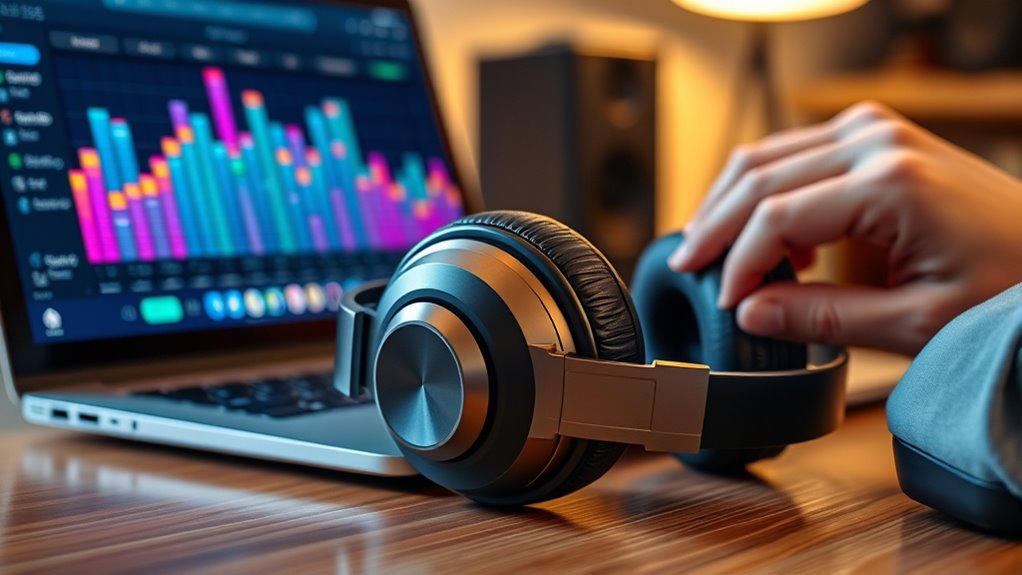
Adjusting your equalizer settings is one of the most effective ways to improve your headphone sound balance. By fine-tuning the frequency response, you can emphasize or reduce specific ranges, making your music sound more natural and balanced. For example, boosting midrange frequencies enhances vocals, while adjusting bass and treble can add depth and clarity. Proper equalizer settings also improve sound staging, giving you a clearer sense of instrument placement and spatial awareness. Experiment with small adjustments to avoid distortion and guarantee a smooth, balanced sound. Many headphones and apps offer preset equalizer options, but customizing settings based on your preferences often yields the best results. Regularly revisiting and tweaking your equalizer ensures your headphones deliver ideal, personalized sound quality.
Keep Your Headphones Clean and Well-Maintained

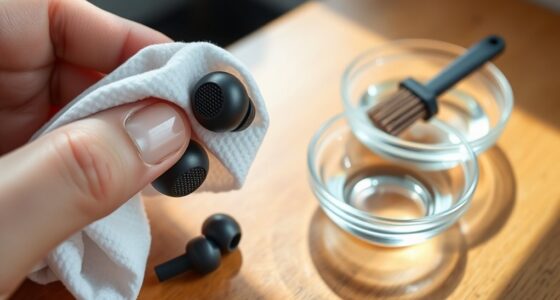
Keeping your headphones clean and well-maintained is essential for guaranteeing ideal sound quality and longevity. Earwax buildup can block sound channels and reduce audio clarity, so regular cleaning is crucial. Use a soft, damp cloth to wipe down the ear cups and headband, avoiding excessive moisture. For in-ear models, gently remove and clean ear tips with soap and water, ensuring they’re completely dry before reattaching. Maintaining good headphone hygiene prevents bacteria buildup and unpleasant odors, which can affect comfort and performance. Avoid sharing your headphones without cleaning them first. Periodic inspection for loose cables or damaged parts also helps prevent sound issues. proper cleaning techniques and regular maintenance can further enhance your listening experience and protect your investment. Regularly checking for damage or wear also ensures consistent sound quality and extends their lifespan. By keeping your headphones in top condition, you ensure optimal sound quality and prolong their usability.
Experiment With Positioning and Listening Environment
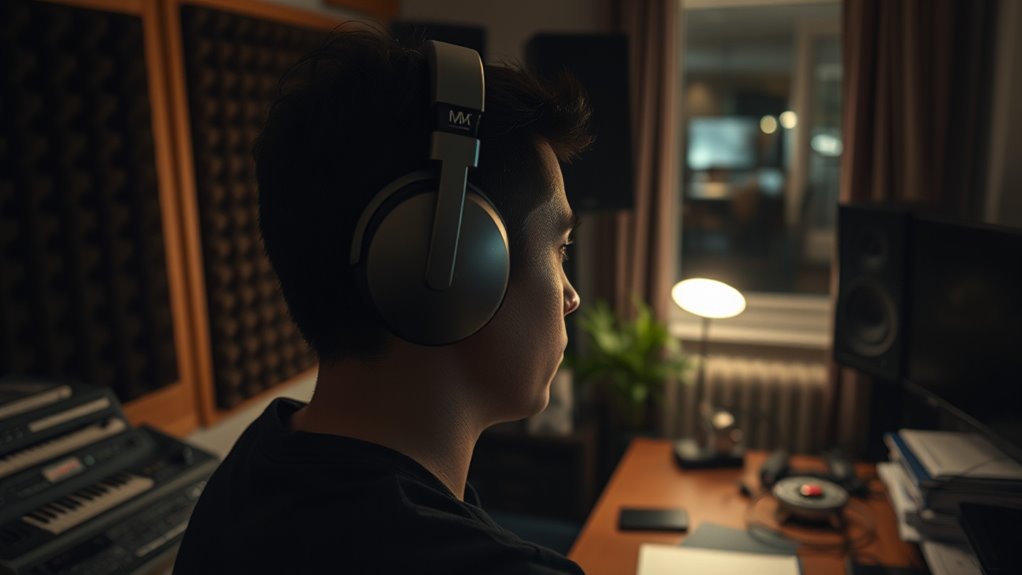
Try adjusting your headphone placement for the best fit and sound. Make sure you’re in a quiet space to minimize distractions and background noise. Also, consider tweaking your room’s acoustics to enhance clarity and depth in your listening experience. For optimal sound quality, selecting high-quality audio equipment can make a significant difference. Additionally, using properly calibrated headphones can help ensure your listening experience is as accurate and immersive as possible. Ensuring your listening environment is optimized can further improve your sound quality and enjoyment, especially when paying attention to acoustic treatments that reduce echo and improve sound fidelity. Incorporating room acoustics adjustments like diffusers or absorbers can further elevate your listening experience.
Optimal Headphone Placement
The way you position your headphones and set up your listening environment can considerably impact sound quality. Proper headphone ergonomics ensure a comfortable fit that maintains consistent contact with your ears, which is essential for accurate sound reproduction. Use placement techniques to find the ideal position, adjusting the angle and pressure to achieve a balanced soundstage. Make sure the ear cups sit snugly without causing discomfort, as loose fit can lead to sound leakage and reduced clarity. Keep headphones centered over your ears for even sound distribution. Experiment with slight adjustments to the angle and positioning until you notice improved clarity and bass response. Remember, small tweaks can make a big difference in how your headphones perform, enhancing your overall listening experience.
Quiet Listening Area
Creating a quiet listening area begins with carefully choosing your environment and positioning your headphones to minimize external noise. Start by selecting a space with minimal foot traffic and distractions. Use soundproof curtains to block outside noise and prevent sound leakage, enhancing your listening experience. Acoustic panels can also help absorb echoes and reduce ambient noise reflections, creating a more controlled environment. Position your headphones in a way that shields you from nearby noise sources, such as closing doors or arranging furniture to dampen sound. Experiment with different spots in your room to find the quietest spot. Remember, a well-isolated environment allows you to hear subtle details and enjoy your music at lower volumes, protecting your hearing and improving overall sound quality. Additionally, adjusting the headphone positioning can significantly impact sound clarity and noise isolation. Incorporating soundproofing techniques into your space can further enhance your listening environment and optimize your audio experience.
Adjust Room Acoustics
Adjusting your room’s acoustics can substantially enhance your headphone listening experience by optimizing how sound interacts with the space. By experimenting with wall treatments and furniture placement, you can reduce unwanted reflections and echoes. Proper wall treatments, like acoustic panels or diffusers, absorb excess sound, making the audio clearer. Rearranging furniture can prevent sound waves from bouncing unpredictably. Here are some tips to improve your environment:
- Place furniture strategically to minimize sound reflections.
- Add wall treatments to absorb or diffuse sound waves.
- Keep reflective surfaces away from your listening position.
- Experiment with speaker and headphone placement to find ideal sound interaction.
Small changes in your room setup can make a significant difference in sound quality.
Use Proper Amplification and Accessories When Needed
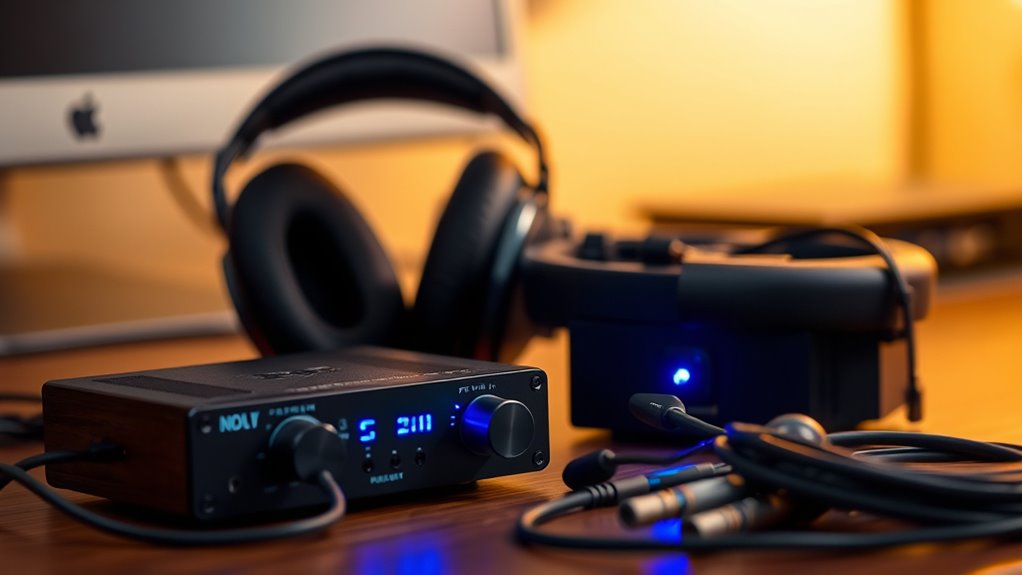
Choosing the right amplifier can make a noticeable difference in your headphone sound quality. Investing in quality cables guarantees a cleaner signal and reduces interference. When you select suitable amplification and accessories, your listening experience becomes clearer and more immersive.
Select Suitable Amplifiers
Selecting the right amplifier is crucial for releasing your headphones’ full potential. A suitable power amplifier or headphone amplifier can markedly improve sound clarity, detail, and dynamics. To choose the best one, consider these key points:
- Match the amplifier’s power output to your headphones’ impedance for peak performance.
- Opt for a dedicated headphone amplifier if you have high-impedance or audiophile-grade headphones.
- Confirm the amplifier’s quality components minimize noise and distortion.
- Think about portability if you want to listen on the go, or opt for a stationary model for home use.
Invest in Quality Cables
Investing in high-quality cables can considerably enhance your listening experience, especially when combined with proper amplification and accessories. Durable cables with strong cable resilience ensure they withstand daily use without losing performance, providing consistent sound quality over time. Choose connector types that match your headphones and equipment to prevent signal loss and ensure a secure fit. For example, balanced connectors can deliver cleaner sound, while gold-plated connectors minimize corrosion. Avoid cheap, flimsy cables that can introduce noise or degrade audio signals. Well-made cables improve overall sound clarity, bass response, and detail. When selecting cables, prioritize durability, compatibility, and quality construction. This investment ensures your headphones perform at their best, giving you a richer, more immersive listening experience.
Frequently Asked Questions
How Do I Choose Headphones for Different Music Genres?
To choose headphones for different music genres, focus on music genre compatibility and headphone style selection. For bass-heavy genres like EDM or hip-hop, opt for over-ear headphones with strong bass response. For detailed vocals and instruments in classical or jazz, choose open-back headphones for clarity. For portability and versatility, in-ear or on-ear options work well. Consider your preferred listening environment and sound signature to find the perfect match.
What Materials Best Improve Noise Isolation and Comfort?
Like a fortress protecting your peace, choosing soundproof materials such as memory foam or leather enhances noise isolation and comfort. Opt for headphones with ergonomic designs that contour to your ears, reducing fatigue during long listening sessions. These materials and designs work together, creating a snug fit that blocks out external noise while providing lasting comfort, so you can immerse yourself fully in your music without distraction or discomfort.
How Often Should I Replace Headphone Cushions or Ear Pads?
You should replace your headphone cushions or ear pads every 6 to 12 months, depending on usage and wear. Regular ear pad maintenance is essential for headphone hygiene, preventing bacteria buildup, and maintaining comfort. Keep an eye out for cracks, tears, or a flattening surface, as these indicate it’s time for replacements. Proper care ensures ideal sound quality and prolongs your headphones’ lifespan, making each listening session enjoyable.
Can Specific Headphone Designs Affect Sound Quality Significantly?
Did you know that headphone design can impact sound quality by up to 30%? Yes, earcup shapes and driver sizes play vital roles. You’ll notice that larger drivers often produce richer bass, while the shape of the earcups influences comfort and sound isolation. When choosing headphones, consider these design elements because they directly affect how well you experience clarity, depth, and overall audio performance.
What Are the Signs of Headphone Audio Degradation Over Time?
You’ll notice audio degradation over time if you experience audio distortion or connectivity issues. If your sound becomes crackly, muffled, or uneven, it’s a sign the headphones are wearing out. Connectivity problems, like frequent disconnections or static, also point to deterioration. Regularly check for these signs, and consider cleaning or replacing your headphones to restore peak sound quality and avoid further damage.
Conclusion
By paying attention to these tips, you’ll open a richer, more immersive listening experience. Small adjustments and mindful care can make your headphones sound surprisingly better, almost like discovering a hidden treasure. Don’t hesitate to experiment and find what works best for you — after all, the perfect sound is just a few simple steps away. Embrace the journey, and soon you’ll enjoy music in a way you never thought possible.