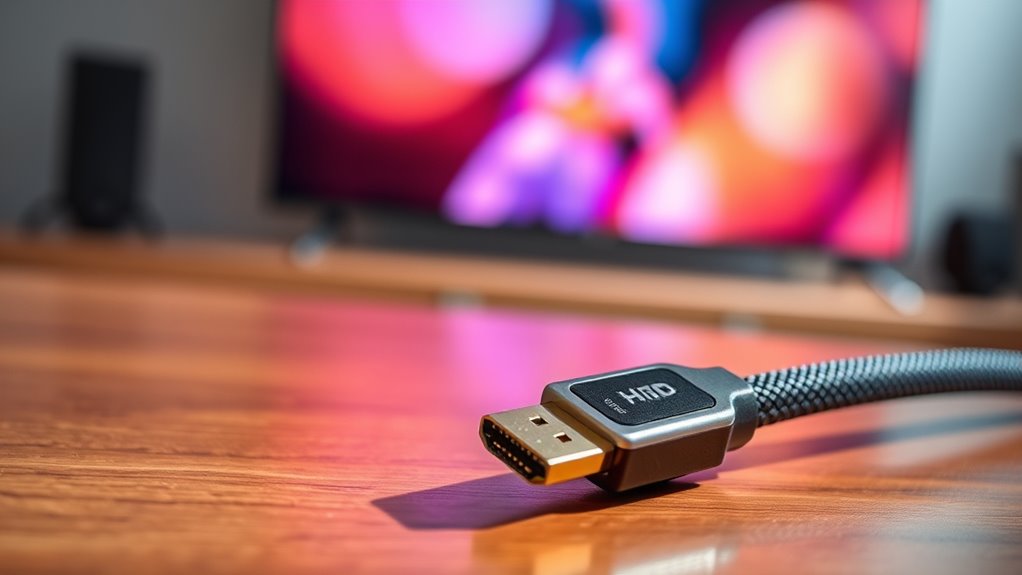

Many expensive HDMI cables claim to offer better picture and sound quality, but in reality, most don’t provide a noticeable difference over affordable options. Their performance mostly depends on shielding, construction, and avoiding interference, not price or fancy materials. If you want reliable performance without overspending, focus on cables with proper specifications. Want to uncover how to spot quality and when extra investment makes sense? Keep exploring to learn more.
Key Takeaways
- Most expensive HDMI cables offer little real performance improvement over standard cables if they meet basic standards.
- High-end features and materials are often marketed more for branding than actual signal quality benefits.
- Proper shielding and construction are key factors influencing HDMI performance, not price alone.
- For typical home setups, budget-friendly cables usually provide sufficient audio and video quality.
- Investing in expensive cables is unnecessary unless for long distances, high-resolution needs, or specific interference issues.
What Are HDMI Cables and How Do They Work?
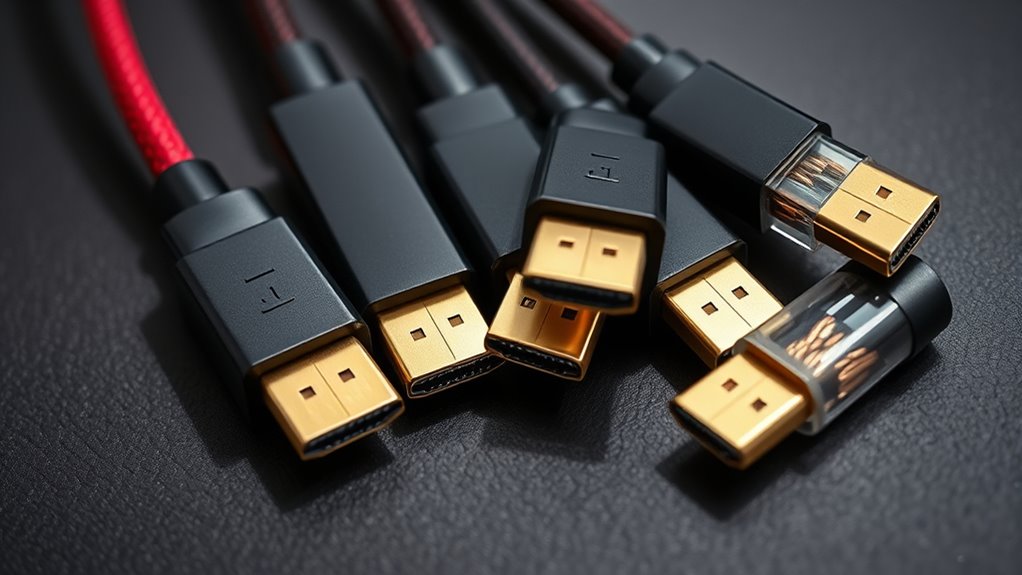
HDMI cables are essential tools that transmit high-quality audio and video signals between devices like TVs, computers, and gaming consoles. They use advanced cable technology to carry digital signals, ensuring clear images and crisp sound. When you connect devices with an HDMI cable, it sends uncompressed data directly, which helps maintain excellent audio quality. The cables consist of multiple twisted pairs of wires that reduce interference, preserving signal integrity. This technology allows for high-definition video and surround sound in a single cable, simplifying connections. The quality of the cable can influence signal stability, but for most standard uses, even lower-cost cables deliver sufficient audio quality. Overall, HDMI cables efficiently transfer digital data, making your viewing and listening experience seamless. Understanding the science behind HDMI cables can help you choose the right option for your needs. Additionally, advancements in cable manufacturing have contributed to improved durability and performance across different price ranges. Furthermore, ongoing innovations in materials used continue to enhance signal transmission and durability in modern cables. Recognizing the impact of cable quality can help prevent issues like signal loss or degraded audio/video performance. Exploring manufacturing standards can also provide insight into the reliability and consistency of various HDMI cables.
The Marketing Hype Behind High-End Cables

Although high-end HDMI cables are often marketed as essential for the best possible audio and video quality, much of the hype is driven by aggressive marketing rather than technical necessity. Manufacturers use clever marketing tactics to convince you that pricier cables deliver superior performance, even when the actual difference is negligible. They emphasize rare materials, exotic designs, and claims of enhanced signal integrity to justify inflated prices. This price inflation is largely unnecessary, as standard cables usually perform just as well for most users. The goal is to create a perception of exclusivity and quality, which persuades consumers to spend more. In reality, the supposed benefits are often exaggerated, and the affordability of standard cables makes them just as effective for your setup.
Do Material Quality and Construction Matter?

You might wonder if better materials and construction really make a difference in HDMI cables. The composition can affect durability and how long your cable lasts, especially with frequent use. Additionally, quality build and shielding influence signal integrity, which impacts picture and sound quality. For outdoor or exposed installations, weather-resistant features can be particularly important to ensure longevity. It’s also worth noting that material quality and proper construction can help prevent interference and signal degradation over time. In fact, signal transmission efficiency is closely tied to these factors, making them crucial for optimal performance. Advances in smart home integration can sometimes mitigate issues related to inferior cables by optimizing the overall system. Moreover, understanding how connectivity standards influence performance can help you choose the right cable for your setup.
Material Composition Impact
The material composition and construction quality of an HDMI cable can influence its durability and performance, even if not always in ways that justify high prices. High-quality cables often use better fiber optics and enhanced cable shielding, which can reduce interference and signal loss. The choice of materials impacts flexibility, longevity, and image quality. For example, superior shielding minimizes electromagnetic interference, ensuring clearer signals. Meanwhile, quality fiber optics can transmit data more efficiently over longer distances. Here’s a comparison:
| Aspect | Impact |
|---|---|
| Fiber Optics | Better data transmission and reduced signal degradation |
| Cable Shielding | Less prone to interference, clearer picture and sound |
| Conductors | Higher purity for improved conductivity |
| Insulation | Enhanced durability and reduced signal loss |
While material quality matters, it’s often not enough to justify exorbitant prices for most users.
Build Durability Factors
Material quality and construction considerably influence a cable’s durability, especially if you plan to use it regularly or in demanding environments. High build quality ensures that the cable can withstand bending, twisting, and daily wear without breaking or losing performance. Material durability plays a key role here; premium materials like braided shields and sturdy connectors resist damage better than cheaper alternatives. Well-constructed cables often feature reinforced strain reliefs and durable jackets that prevent cracking and fraying over time. When choosing an HDMI cable, pay attention to build quality indicators, as they directly affect longevity and reliability. Investing in a cable with solid construction can save you money in the long run by reducing the need for replacements and ensuring consistent performance.
Signal Integrity Concerns
While some argue that cable quality doesn’t considerably affect signal transmission, evidence shows that material quality and construction directly impact signal integrity. High-quality cable shielding helps prevent electromagnetic interference, ensuring a cleaner signal from your device to your display. Poor shielding can cause signal degradation, leading to flickering or loss of picture quality. Additionally, connector design plays a vital role; well-designed connectors create secure, stable connections that reduce signal loss and interference. Cheap connectors may be prone to oxidation or loose contacts, disrupting data transmission. Investing in cables with proper shielding and sturdy connectors can improve overall signal integrity, especially over longer distances. Moreover, understanding the physics behind signal transmission reveals that material properties and construction quality are crucial for maintaining clarity and stability of your audio and video signals.
Is There a Noticeable Difference in Audio and Video Quality?

You might wonder if spending more on HDMI cables actually improves picture and sound quality. Small differences in signal quality can cause noticeable visual or audio improvements, especially on high-end systems. However, for most setups, the change is often minimal or imperceptible.
Signal Quality Variations
Despite claims that expensive HDMI cables deliver superior audio and video, the actual difference in signal quality is often minimal or unnoticeable. Variations in signal quality usually result from issues like signal interference, which can cause temporary disruptions or degraded images. Good cable shielding helps minimize these problems by blocking external interference, but beyond a certain quality level, the impact becomes negligible. If your setup has a clear connection and runs within standard distances, upgrading to pricier cables rarely improves picture or sound. Most modern HDMI cables already provide sufficient shielding and performance. Hence, investing heavily in high-end cables doesn’t guarantee better signal quality, especially when interference isn’t a persistent issue in your environment.
Perceptible Visual Improvements
Many people believe that expensive HDMI cables automatically provide better visual and audio quality, but in reality, the differences are often subtle or imperceptible. Your visual perception plays a considerably role in noticing enhancements, yet most high-end cables rarely deliver noticeable improvements in clarity or detail. The aesthetic appeal of a cable, such as its design or branding, doesn’t translate to better image quality. Unless you’re dealing with extremely high resolutions or complex setups, the visual differences are minimal at best. For most viewers, standard or mid-range HDMI cables suffice, providing the same quality that’s virtually indistinguishable from pricier options. Ultimately, investing in expensive cables won’t substantially impact your viewing experience based on perceptible visual improvements.
The Role of Signal Transmission and Digital Data

Signal transmission in HDMI cables involves sending digital data that represents high-definition audio and video signals. Your cable’s ability to accurately transfer this data depends on its material conductivity, which affects signal quality. High-quality conductors, like gold or copper, help guarantee minimal data loss and interference. Cable durability also matters because a sturdy cable resists physical damage that could disrupt data flow. If a cable’s material conductivity is poor or it’s fragile, you risk degraded picture and sound quality. Conversely, a well-made, durable HDMI cable with good conductivity maintains consistent signal transmission, ensuring your high-definition content looks and sounds as intended. The importance of material conductivity in cables directly impacts overall performance and longevity. Proper cable construction ensures that signals are transmitted efficiently, reducing the likelihood of data loss or errors. This clarity hinges less on price and more on the quality of materials and construction, emphasizing that cable quality is essential for optimal performance. Additionally, test results can often reveal the true capabilities of a cable beyond its price tag.
Common Myths and Misconceptions About Expensive Cables

While the quality of materials and construction influences a cable’s performance, many people believe that expensive HDMI cables offer benefits far beyond what their technical specifications can justify. A common myth is that cost equals superior picture or sound quality, but this isn’t supported by evidence. Some assume that cable aesthetics, such as flashy designs or premium branding, enhance performance, but they mainly serve appearance rather than function. Others rely heavily on brand reputation, believing well-known brands automatically deliver better signals. In reality, most cables, regardless of price, perform similarly if they meet the necessary standards. These misconceptions lead many to overspend on unnecessary features or branding, rather than focusing on what truly impacts performance.
How to Choose a Cable That Fits Your Needs and Budget
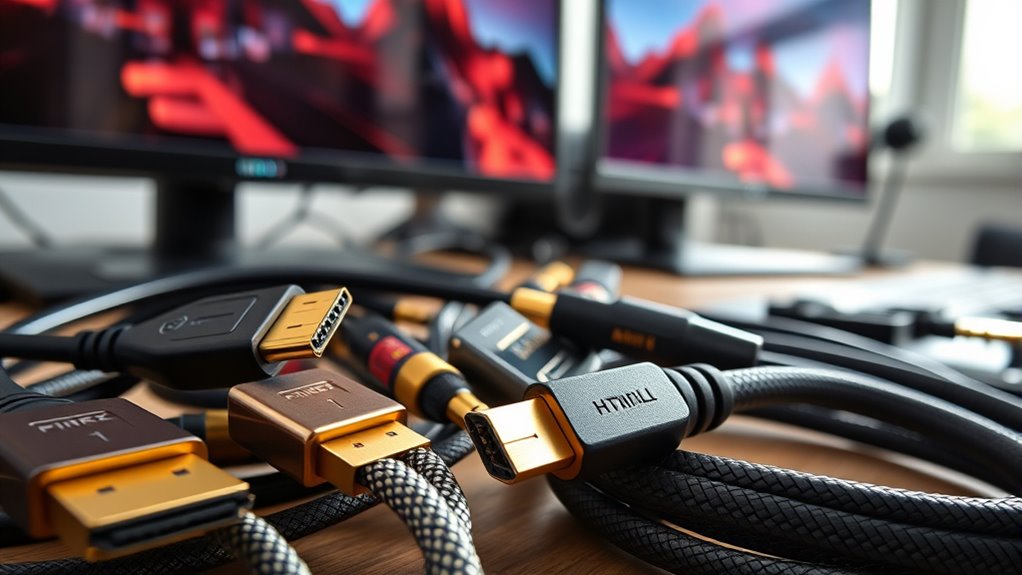
Choosing the right HDMI cable doesn’t have to be complicated or expensive. Start by considering your needs—if you’re just connecting a basic TV, a standard cable will do. If you want higher resolutions or better audio, look for cables that support those features. Cable aesthetics matter if you prefer a clean setup; choose cables with durable, flexible designs that match your style. Brand reputation also plays a role—reliable brands often guarantee quality and longevity, but you don’t need to splurge on top-tier brands for everyday use. Focus on specifications like HDMI version and length to avoid issues. Ultimately, select a cable that fits your budget while providing the performance you need without unnecessary extras.
When to Invest in Higher-Quality Cables
Knowing when to invest in higher-quality HDMI cables can guarantee you money and reliable performance. If you notice frequent connection issues, picture flickering, or degraded audio, upgrading might be necessary. Cable durability matters because cheaper cables often break or degrade quickly, leading to additional costs. Material impact plays a role too; higher-quality cables use better shielding and sturdy connectors, ensuring consistent signal transmission over time. Using cables with proper shielding can significantly reduce interference and improve overall picture and sound quality. Fostering a digital-friendly environment at home can help prevent unnecessary cable replacements by promoting proper handling and storage. Proper cable organization and care can extend the lifespan of your cables and maintain optimal performance. If your setup involves long runs or demanding environments, investing in a premium cable makes sense to maintain signal integrity. Additionally, future-proofing for 4K or even 8K content requires cables designed for higher bandwidths, which often come with improved materials and construction. Proper ventilation considerations can also help prevent overheating of certain cable types, extending their lifespan. Recognizing these signs helps you decide when a higher-quality cable can save you from frustration and repeated replacements. Moreover, understanding how material quality influences performance can help you choose cables that truly deliver reliable signals over the long term.
The Science Behind Signal Loss and Interference

You should understand that signals can weaken as they travel through cables due to factors like length and quality. Interference from nearby electronic devices and wireless signals can also disrupt data transmission. Recognizing these sources helps you see why cable quality might matter in certain situations. Additionally, using colorful presentation in cables and connections can sometimes reduce the impact of interference by making signal pathways more distinct. Proper shielding and insulation in high-quality cables further help to preserve signal integrity against external electromagnetic interference. Some experts also point out that signal degradation can occur over long distances, emphasizing the importance of cable quality and length considerations, especially when dealing with signal loss over extended runs. Being aware of signal integrity principles can guide better choices for your audio and video setups.
Signal Degradation Factors
Signal degradation in HDMI cables occurs primarily due to interference and the inherent properties of the materials used. Poor shielding, inferior insulation, and thin conductors can lead to higher signal loss, especially over longer distances. While cable aesthetics and branding influence your perception of quality, they don’t necessarily impact performance. Expensive cables often feature better shielding and higher-quality materials, which can reduce interference and preserve signal integrity. However, for most users, the differences are minimal, especially over short runs. Understanding these factors helps you see that many so-called “high-end” features are more about marketing than actual performance improvements. Ultimately, the core issue lies in how well the cable resists interference and maintains signal quality through its construction.
Interference Sources Impact
Interference sources can considerably impact the quality of your HDMI signal, especially during transmission. Electromagnetic interference (EMI) from nearby electronics, fluorescent lights, or wireless devices can cause signal disruptions or degradation. Proper cable shielding plays a vital role in protecting your data from these interference sources. High-quality HDMI cables often feature better shielding, reducing EMI’s impact and maintaining signal integrity. Conversely, poorly shielded cables are more vulnerable, leading to picture flickering, signal loss, or audio dropouts. To guarantee top-notch performance, keep your HDMI cables away from sources of electromagnetic interference and opt for cables with solid shielding. By understanding interference sources and choosing well-shielded cables, you can minimize signal loss and enjoy clearer audio and video.
While it might be tempting to believe that spending more on HDMI cables guarantees better performance, the truth is that many premium cables offer little to no tangible advantage over their cheaper counterparts. When making your decision, consider cable aesthetics—if a cable looks sturdy and well-made, that’s a plus, but it doesn’t necessarily mean better quality. Brand reputation can guide you, as trusted brands often ensure consistent standards, but high prices don’t always equate to superior performance. Focus on your actual needs, such as supported resolutions and compatibility, rather than flashy packaging or costly branding. Ultimately, a well-chosen affordable cable can deliver the same quality as a premium one, making it a smarter, more informed choice.
Frequently Asked Questions
Do Expensive HDMI Cables Last Longer Than Cheaper Ones?
Expensive HDMI cables don’t necessarily last longer than cheaper ones. Durability myths often suggest higher price means better material quality, but that’s not always true. Most HDMI cables, regardless of cost, are made to last if they’re well-made and used properly. Focus on reputable brands and proper handling rather than price alone. Ultimately, a mid-range cable with good reviews can be just as durable as a costly one.
Can Premium Audio Cables Improve Sound Quality for Casual Listeners?
Premium audio cables can improve sound quality for casual listeners, but the difference isn’t always noticeable. If your equipment and listening environment are good, upgrading to expensive cables might enhance your listening experience slightly. However, for most casual listeners, the sound quality gains are subtle and may not justify the higher cost. Focus on quality connections and proper setup first, then consider premium cables if you seek a refined listening experience.
Are There Specific Brands That Reliably Produce High-Quality HDMI Cables?
Think of brands like AudioQuest and Monoprice as trusted guardians of quality, standing tall with solid reputations. They reliably produce high-quality HDMI cables because they uphold strict manufacturing standards, ensuring your signal flows smoothly like a well-oiled machine. When you choose these brands, you’re investing in durability and performance, avoiding the pitfalls of cheap, unreliable cables that might falter and cause connection issues.
How Do Environmental Factors Affect the Performance of Audio and Video Cables?
Environmental factors can substantially impact your audio and video cables’ performance. Poor cable shielding makes them vulnerable to electromagnetic interference, which causes signal degradation or loss. Keep cables away from power sources, wireless devices, and fluorescent lights to minimize interference. Using well-shielded cables helps protect against external electromagnetic interference, ensuring clear audio and sharp video. Properly managing environmental factors preserves your cables’ quality and maintains ideal signal transmission.
Is There Scientific Evidence Supporting the Superiority of Costly Audio Cables?
Is there scientific evidence supporting the superiority of costly audio cables? Not really. Scientific studies show that most expensive cables don’t offer better sound quality than affordable ones. The perceived difference often results from the placebo effect, where your expectations influence your experience. So, instead of spending extra, focus on quality components and proper setup—your ears won’t notice a difference beyond a certain point.
Conclusion
Ultimately, choosing the right HDMI or audio cable depends on your needs and budget. Did you know that most high-end cables only offer a 1-2% improvement in signal quality? If you’re watching 4K content or gaming, investing in a quality cable might matter. But for everyday use, budget-friendly options often work just fine. Stay informed, and don’t be fooled by hype—your eyes and ears are your best guides.