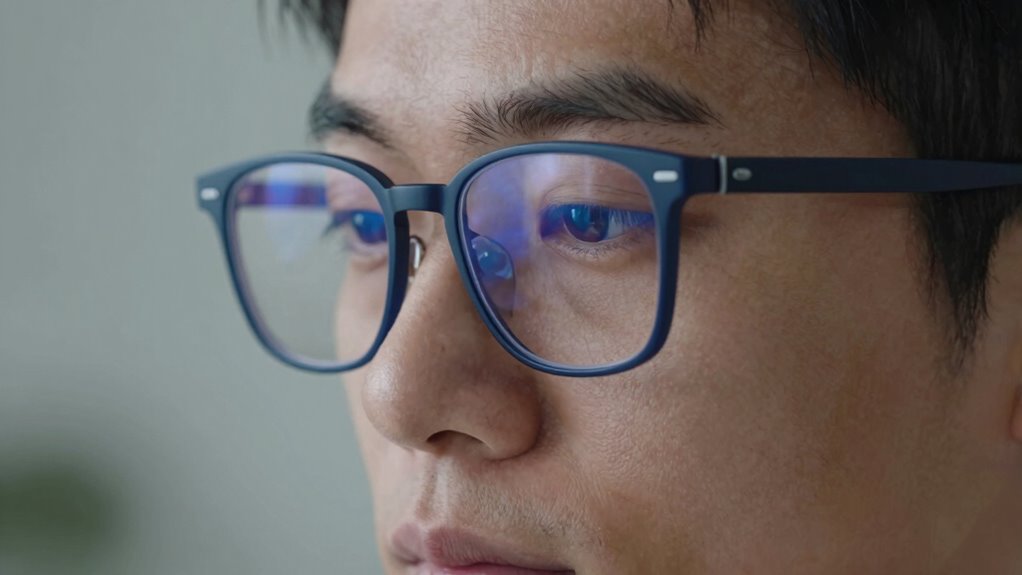
Blue light glasses can help reduce digital eye strain and improve sleep, but their effectiveness varies. They work by filtering blue light emitted from screens, which can cause eye fatigue and disrupt your sleep cycle. While some studies support their benefits, others show minimal results, and they shouldn’t be seen as a cure-all. To better protect your eyes, explore additional strategies—continue exploring for practical tips and options that suit your needs.
Key Takeaways
- Blue light glasses can reduce eye strain and discomfort, especially with prolonged screen use, but their effectiveness varies individually.
- They filter or block high-energy blue light, potentially improving sleep quality when used before bedtime.
- Combining blue light glasses with good habits like the 20-20-20 rule and proper lighting offers better eye protection.
- Scientific evidence is mixed; while some studies support their benefits, others show minimal impact, so results may differ.
- Selecting comfortable, well-designed glasses with proper coatings enhances protection and usability during extended screen time.
Understanding Blue Light and Its Effects on Eyes
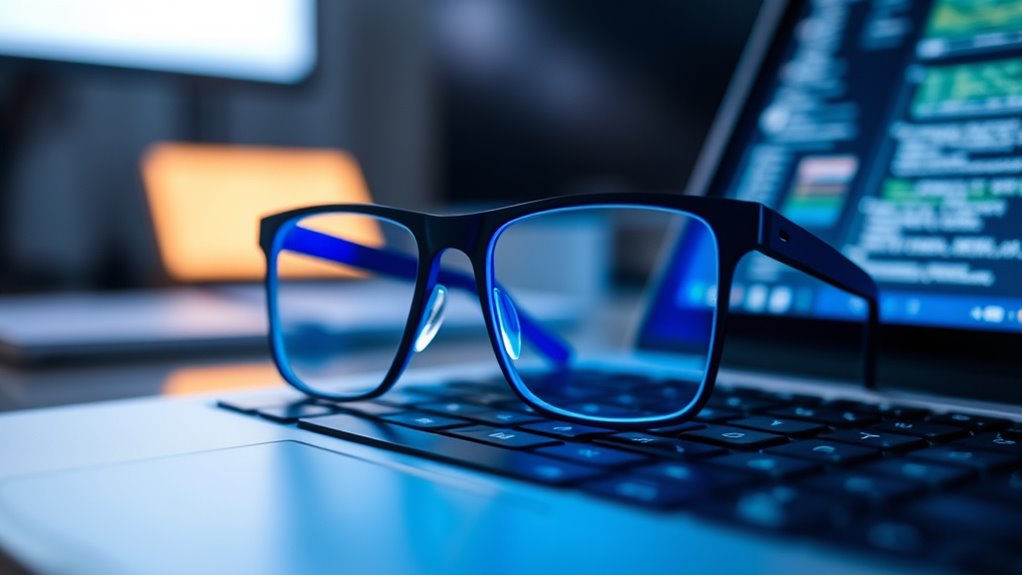
Blue light is a high-energy, short-wavelength light that digital screens emit in large amounts. When you’re exposed to it regularly, it can impact your retinal health by increasing oxidative stress, which may contribute to long-term damage. Additionally, blue light influences your circadian rhythm, the internal clock that regulates sleep-wake cycles. Excessive exposure, especially at night, can interfere with melatonin production, making it harder to fall asleep and disrupting your sleep quality. Recognizing the importance of blue light management helps you understand why limiting blue light exposure is important for maintaining healthy eyes and overall well-being. While blue light isn’t inherently harmful in small doses, prolonged or late-night exposure can pose risks to your eye health and sleep patterns. Implementing blue light filters can help reduce these effects and protect your eyes during screen time. Being aware of screen time habits and taking steps to reduce blue light exposure can further support your eye health and sleep quality. For example, blue light exposure can be minimized by adjusting device settings or using specialized eyewear.
How Do Blue Light Glasses Work?
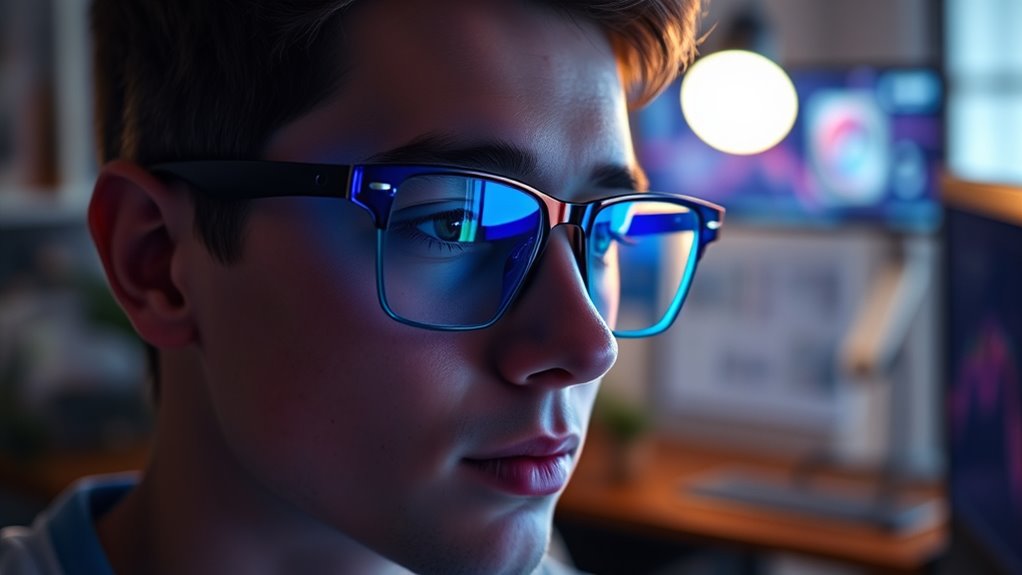
Blue light glasses use special filtering technology to block or reduce blue light from screens. This can help lessen eye strain and fatigue after long hours of use. Their design also focuses on comfort, so you can wear them for extended periods without discomfort. Additionally, understanding screen time and proper lighting practices can further protect your eyes from potential strain. Wearing blue light glasses may also benefit those with digital eye strain, helping to prevent discomfort caused by prolonged exposure. Incorporating natural lighting into your environment can further reduce reliance on artificial light and minimize eye strain. Recognizing light exposure patterns can also contribute to better eye health over time, especially when combined with smart home automation strategies that optimize lighting and reduce unnecessary screen time.
Blue Light Filtering Technology
Have you ever wondered how blue light glasses actually reduce eye strain? These glasses use blue light filtering technology to block or absorb high-energy blue light emitted from screens. Blue light hazards can contribute to eye fatigue symptoms, especially after long exposure, by overstimulating your eyes and disrupting sleep patterns. The lenses are coated with special filters that selectively reduce blue light transmission without altering overall color perception. This targeted filtering helps minimize the strain on your eye’s natural focusing mechanisms, making screen time more comfortable. By filtering out a portion of blue light, these glasses aim to protect your eyes from potential damage and reduce discomfort during extended use. Additionally, understanding the water in the wilderness can help you better manage your environment to reduce eye strain caused by outdoor glare and reflections. While they don’t eliminate eye strain entirely, they play a significant role in managing blue light exposure and can be complemented with other ergonomic practices to further reduce discomfort. Incorporating proper lighting conditions into your workspace can also make a meaningful difference in reducing overall eye fatigue.
Impact on Eye Strain
While blue light glasses are designed to reduce eye strain, their effectiveness depends on how well they filter high-energy blue light before it reaches your eyes. Blue light, emitted from screens, can contribute to eye fatigue by forcing your eyes to work harder to focus and adjust. When your eyes are exposed to excessive blue light, you might notice symptoms like dryness, headaches, or blurred vision. Blue light glasses help by blocking or absorbing some of this light, easing the strain on your eye muscles. This can make screen time more comfortable and reduce the likelihood of eye fatigue during long sessions. Additionally, understanding specialized equipment like blue light glasses can help you make informed choices for your eye health. The level of blue light filtering varies among different lens technologies, which can influence their overall effectiveness. Proper screen ergonomics and taking regular breaks are also important factors in protecting your eyes from digital eye strain. Furthermore, incorporating blue light filtering lenses into your routine can enhance your overall eye comfort. Regularly monitoring your eye health and consulting with an eye care professional can also support long-term eye comfort and function.
Design and Comfort
The effectiveness of blue light glasses largely depends on their design and how comfortably they fit your face. The right lens materials, such as lightweight polycarbonate or high-quality plastic, ensure clear vision without added weight. Frame styles vary from sleek rimless to bold full-frames, catering to different preferences and face shapes. Comfort features like adjustable nose pads and flexible hinges enhance wearability over long hours. Here’s a quick comparison:
| Frame Style | Benefits |
|---|---|
| Rimless | Lightweight, minimal distraction |
| Full-frame | Durable, offers more coverage |
| Half-frame | Balance of style and comfort |
Choosing well-designed glasses with suitable lens materials and styles makes a noticeable difference in your daily screen time comfort. Additionally, understanding AI ethics and the jobs shaping the future can help you make informed decisions about technology use and health. Recognizing the importance of ergonomic design can further improve your overall experience when using digital devices. Incorporating proper ergonomic practices can also reduce eye strain and fatigue during extended screen use. Being aware of blue light filtering technology can help you select glasses that provide additional protection against potential digital eye strain. An understanding of lens coatings can also influence how effectively they block blue light and reduce glare.
Scientific Evidence Supporting Blue Light Glasses
Scientific studies on blue light glasses present mixed results, but some research suggests they can reduce eye strain and improve sleep quality. Several experiments indicate that wearing these glasses helps lessen ocular health issues caused by prolonged screen time, such as dryness and discomfort. For sleep quality, studies show that blocking blue light before bedtime can support melatonin production, leading to better rest. However, not all research confirms significant benefits, and some findings are inconclusive. While evidence supports their potential to protect your eyes and enhance sleep, individual results vary. Overall, current scientific evidence points to possible advantages, but more rigorous studies are needed to fully verify their effectiveness. As you consider using blue light glasses, understanding that they may offer some real benefits is important.
Limitations and Criticisms of Blue Light Filtering Devices
Despite some promising claims, blue light filtering devices face significant limitations and criticisms. Many effectiveness claims are overstated, with some studies showing minimal impact on eye strain or sleep quality. Product limitations also exist; for example, not all glasses block enough blue light to make a meaningful difference, and the filters may not cover the entire visible spectrum. Additionally, some users find that these devices don’t address the root causes of eye discomfort, such as poor screen ergonomics or blinking habits. Critics argue that relying solely on blue light glasses may give a false sense of security, diverting attention from practical strategies like taking breaks or adjusting screen settings. Ultimately, their effectiveness varies, and they shouldn’t be viewed as a cure-all for digital eye strain.
Practical Strategies for Eye Protection in a Digital World

To protect your eyes while using digital devices, start by adjusting your screen brightness to match your environment. Incorporate blue light filters or glasses to reduce strain, and take regular breaks to rest your eyes. Practicing simple eye exercises can also help maintain your eye health over time.
Adjust Screen Brightness
Have you ever noticed how bright screens can cause eye strain or discomfort? Adjusting your screen brightness helps reduce screen glare, a major contributor to visual fatigue. When your screen is too bright compared to your environment, your eyes work harder to focus, leading to discomfort and tiredness. Lowering the brightness to match ambient lighting creates a more comfortable viewing experience. Most devices have auto-brightness settings, which adapt to your surroundings automatically. If not, manually adjusting brightness becomes essential. Keep in mind, overly dim screens can also cause eye strain, so find a balance that feels comfortable. Additionally, the quality of your display can influence how much eye strain you experience. By fine-tuning your screen brightness, you can minimize eye fatigue and make screen time more manageable for your eyes.
Use Blue Light Filters
Adjusting your screen brightness helps reduce glare, but using blue light filters offers additional protection from digital eye strain. Blue light filters minimize blue light exposure, which can contribute to eye fatigue and disrupt sleep patterns. By enabling built-in filters or using third-party apps, you actively promote better eye health awareness. These filters can be customized for comfort and effectiveness, fitting your daily routine. To maximize their benefits, consider:
- Adjusting filter intensity for comfort
- Using screen protectors with blue light filtering
- Activating night mode during evening hours
- Combining filters with regular breaks
- Staying mindful of overall digital eye health
- Assessing rug quality can help reduce visual discomfort in your environment, indirectly supporting better eye health. Regularly updating your device’s software can also ensure you have access to the latest blue light filtering features, providing enhanced protection. Additionally, choosing high-quality screens and proper lighting in your workspace can further reduce eye strain and improve overall visual comfort. Incorporating ergonomic workspace setups can also make a significant difference in reducing digital eye strain over time.
Implementing blue light filters as part of your eye protection strategy helps you manage digital eye strain more effectively and preserves your long-term eye health.
Practice Eye Exercises
Practicing eye exercises is an effective way to protect your eyes from digital strain and maintain comfort during long hours in front of screens. Eye exercises, part of vision training, help reduce eye fatigue and improve focus. You can start by the 20-20-20 rule: every 20 minutes, look at something 20 feet away for at least 20 seconds. Blink frequently to keep your eyes moist, especially when staring at screens. Gentle eye rotations and focusing on near and far objects strengthen eye muscles and reduce strain. Incorporate regular eye exercises into your routine to promote better eye health and prevent discomfort. Consistent practice can enhance your visual endurance and reduce the need for corrective measures over time.
Choosing the Right Blue Light Glasses for You
Choosing the right blue light glasses can make a significant difference in how well they protect your eyes and fit your lifestyle. Pay attention to lens materials, as some are better at blocking blue light and reducing glare, while others offer added durability. Frame styles also matter: lightweight designs are comfortable for extended wear, whereas sturdier frames provide longevity. Consider your daily activities—if you work at a computer all day, opt for glasses with anti-reflective coatings. Think about fit and comfort, especially if you wear glasses for long hours. Additionally, look for options that suit your fashion sense, matching your personal style. In conclusion, focus on lens quality, frame comfort, style, durability, and functionality for the best fit.
Tips to Reduce Eye Strain Without Glasses

Even with the best blue light glasses, your habits play a big role in reducing eye strain. To protect your eye health, follow the 20-20-20 rule: every 20 minutes, look at something 20 feet away for at least 20 seconds. Adjust your screen’s brightness to match ambient lighting, avoiding glare and harsh reflections. Keep your workspace well-lit and sit at an appropriate distance—about arm’s length from your screen. Blink frequently to keep your eyes moist and reduce dryness. Limit screen time before bed to prevent digital eye fatigue. Taking regular breaks and maintaining good posture also help minimize eye strain. These habits, combined with blue light awareness, promote better eye health and comfort during prolonged screen use.
Future Trends and Innovations in Eye Care Technology
Advancements in eye care technology are rapidly transforming how you prevent and treat digital eye strain. Future innovations focus on integrating virtual reality for immersive eye exercises and real-time feedback, improving eye health. Wearable devices may soon monitor eye strain levels continuously, alerting you when to take breaks or do visual exercises. Additionally, digital detox programs are evolving with apps that encourage scheduled screen time reductions and mindfulness practices. Researchers are also developing smart lenses with adaptive filters to minimize blue light exposure directly. These innovations aim to make eye care more personalized and accessible, helping you maintain eye health amidst increasing screen use. Staying ahead means embracing these trends to protect your vision proactively.
Frequently Asked Questions
Are Blue Light Glasses Suitable for Children and Teenagers?
Yes, blue light glasses can be suitable for children and teenagers, especially to support child safety and teenage eye health. You should choose glasses specifically designed for their age to guarantee proper fit and effectiveness. These glasses help reduce eye strain from screens, promote better sleep, and protect young eyes. Always consult an eye care professional to determine the best option for your child’s or teen’s needs.
Can Blue Light Glasses Improve Sleep Quality?
Blue light glasses can improve your sleep quality by reducing the blue light impact on your eyes, especially before bedtime. They help regulate your sleep cycle by minimizing blue light’s interference with melatonin production, which is essential for sleep. Wearing these glasses in the evening can make it easier for you to fall asleep and enjoy more restful sleep, supporting your overall health and well-being.
Do Blue Light Glasses Work for All Types of Screens?
If you use blue light glasses with your smartphone and computer, you’ll find they generally work well across different screens, thanks to their broad screen compatibility. For example, a user switching between devices notices less eye strain and improved comfort. These glasses are designed to be durable and withstand daily wear. So, whether you’re on a tablet, monitor, or phone, blue light glasses can help protect your eyes effectively.
Are There Any Side Effects From Wearing Blue Light Glasses Regularly?
Wearing blue light glasses regularly generally doesn’t cause side effects, and many users find relief from eye strain and headaches. Some might experience slight discomfort or dry eyes initially, but these usually fade as you get used to them. By filtering blue light, these glasses help reduce eye fatigue, making screen time more comfortable. If any persistent issues arise, it’s best to consult an eye care professional for personalized advice.
How Long Should I Wear Blue Light Glasses Daily for Optimal Protection?
Think of your eyes as a fortress needing daily reinforcement. For ideal protection, follow the duration guidelines of wearing blue light glasses for about 2 to 4 hours a day, especially during extended screen time. Your wearing frequency should be consistent with your screen habits. Regular use helps reduce eye strain and digital fatigue, but avoid overuse to prevent any potential discomfort. Balance is key to keeping your eyes safe and comfortable.
Conclusion
While blue light glasses can help reduce eye strain, they aren’t a magic fix. It’s important to combine them with practical habits like taking breaks and adjusting screen brightness. Remember, prevention is better than cure—an ounce of prevention is worth a pound of cure. Prioritize healthy screen habits and stay mindful of your eye health. Ultimately, protecting your eyes requires a balanced approach, not just relying on gadgets.