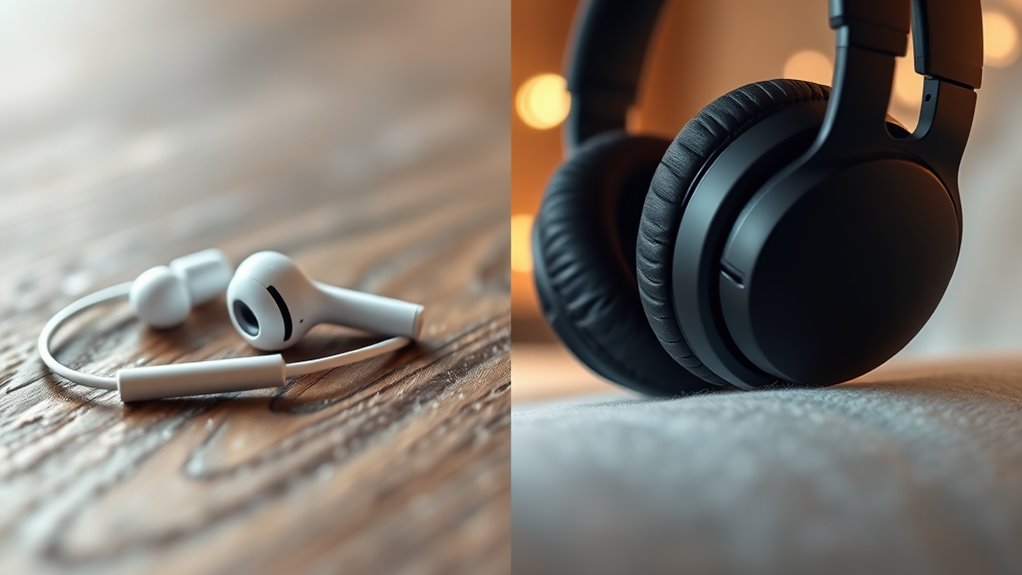

Choosing between earbuds and over-ear headphones depends on your lifestyle and preferences. If you want portability, quick convenience, and subtlety, earbuds are great for active use, travel, or workouts. But if you prioritize superior sound quality, noise cancellation, and long-lasting comfort, over-ear headphones might be better. Consider how you’ll use them daily, your budget, and if durability matters most. To find out which fits your needs best, explore the details below.
Key Takeaways
- Choose earbuds for portability, active lifestyles, and quick, discreet listening; opt over-ear headphones for immersive sound and comfort during extended use.
- Over-ear headphones generally provide superior sound quality and noise cancellation, ideal for critical listening and quiet environments.
- Earbuds are more affordable and lightweight, while over-ear models tend to be pricier but offer greater durability and longer battery life.
- Consider comfort and fit: earbuds are minimal and less bulky; over-ear headphones distribute pressure evenly and offer plush padding.
- Match your usage needs—commuting and workouts suit earbuds; home, gaming, or studio work benefit more from over-ear headphones.
Design and Comfort

When it comes to design and comfort, earbuds and over-ear headphones offer distinctly different experiences. Earbuds are compact, fitting snugly inside your ears, providing an ergonomic fit that’s lightweight and barely noticeable. They’re perfect for active use or quick commutes. Over-ear headphones, on the other hand, they envelop your ears completely, offering plush padding and a more substantial feel. They tend to be bulkier but provide excellent comfort for long listening sessions. Style options also vary widely; earbuds come in sleek, minimal designs, while over-ear headphones often feature bold, modern styles with various finishes and colors. Your choice depends on how you prioritize comfort versus style, and whether you prefer a discreet or a statement-making look. Additionally, the design and material quality of over-ear headphones can greatly influence their comfort level during extended wear, especially when considering the ergonomic design for prolonged use.
Sound Quality and Performance
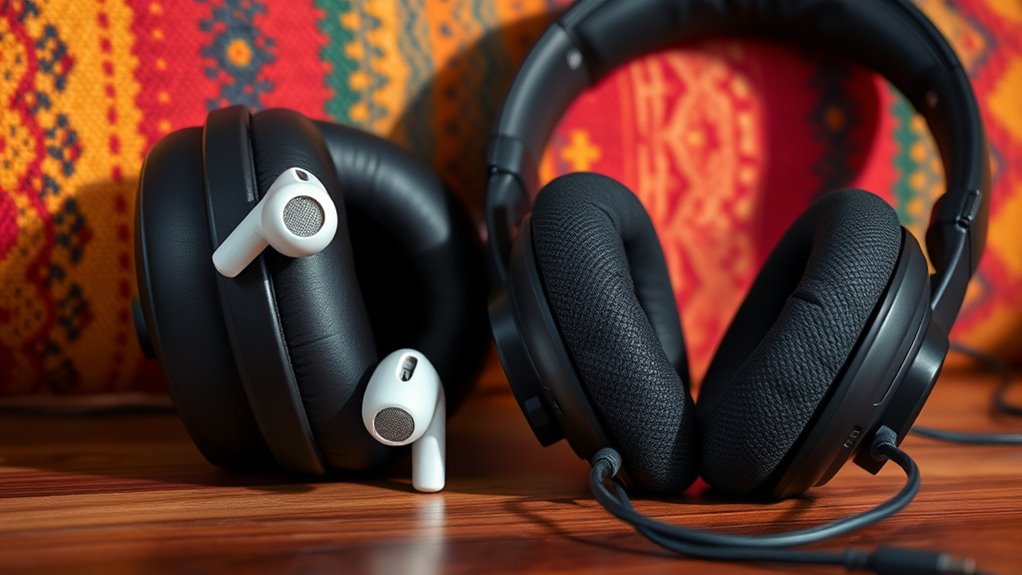
While earbuds excel in portability and convenience, over-ear headphones often deliver superior sound quality and performance. You’ll notice richer bass, clearer vocals, and better noise isolation with over-ear models. The sound experience depends heavily on wireless connectivity and the brand’s reputation for quality. High-end brands tend to offer advanced audio tech, ensuring consistent performance. Consider these aspects:
Over-ear headphones offer richer sound, better noise cancellation, and more consistent performance for critical listening.
- Deeper, more immersive soundstage
- Superior noise cancellation capabilities
- Stable wireless connections
- Consistent audio quality from reputable brands
- Better handling of complex sound details
Over-ear headphones generally provide a more balanced audio profile, making them ideal for critical listening. If sound quality is your priority, investing in a trusted brand with good wireless connectivity can considerably enhance your experience. High-quality audio technology plays a crucial role in achieving optimal sound clarity and fidelity. Additionally, contrast ratio in headphones can influence how well they reproduce dark and bright sounds, further impacting overall audio performance. For a truly immersive experience, selecting headphones with advanced noise cancellation features can make a significant difference. Moreover, understanding how sound quality and performance influence your listening sessions can help you choose the right headphones for your needs. Incorporating driver size and tuning into your considerations can also significantly affect the audio output quality.
Portability and Convenience
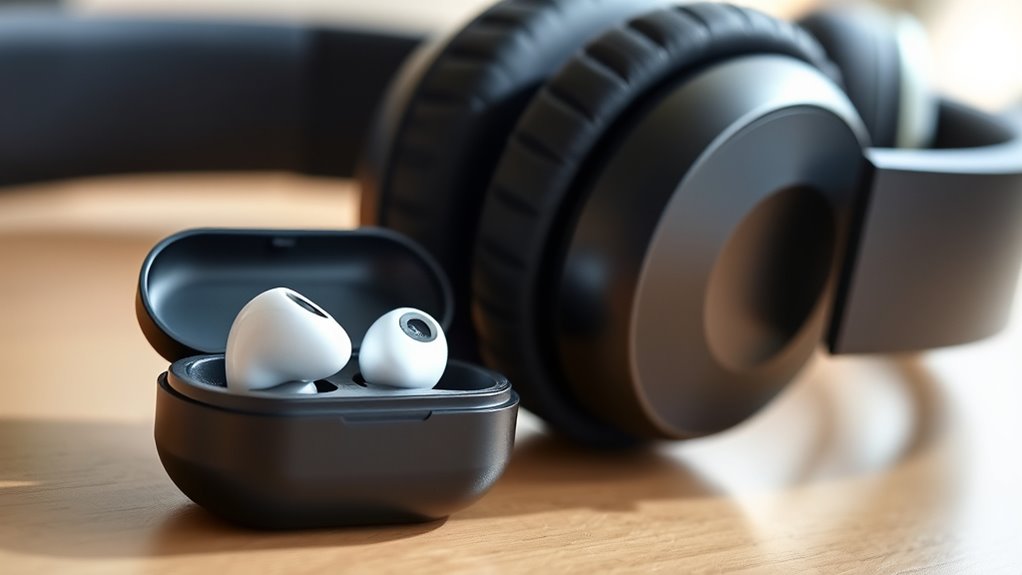
You’ll find earbuds are lightweight and small, making them easy to carry around all day. They easily fit in pockets or small cases, so storing them is quick and simple. Over-ear headphones, though bulkier, often come with cases that protect them during travel, but they’re less convenient for on-the-go use. Additionally, Free Floating designs allow for more comfortable extended wear, especially during active use. For those seeking a comfortable listening experience, over-ear models tend to distribute pressure more evenly around the head and ears. Moreover, understanding piercing care and hygiene can help prevent discomfort when using headphones for extended periods. Proper ear hygiene is essential to avoid infections and maintain comfort during long listening sessions. Maintaining clean headphones and following hygiene practices can further enhance comfort and safety during prolonged use.
Compact Size and Weight
Earbuds are incredibly compact and lightweight, making them easy to carry around and fit into pockets or small bags. Their small size ensures you can take them virtually anywhere without hassle. Plus, wireless options enhance their portability, so you’re not tethered to your device. When selecting earbuds, consider how well they distribute weight for comfort during extended wear. Here are some key points:
- Easy to slip into pockets or small compartments
- No bulky over-ear or headband to carry
- Ideal for active lifestyles and commuting
- Wireless options eliminate cable tangling
- Lightweight design reduces fatigue during long use
- Best Modern Toilet innovations emphasize water efficiency and ease of maintenance, similar to how earbuds simplify your daily routine with convenience and portability.
Ease of Storage
Thanks to their small size and lightweight design, earbuds are incredibly easy to store and carry. You can slip them into your pocket, bag, or purse without any hassle. Many wireless options come with compact storage cases, making it simple to keep your earbuds protected and organized. These cases are often small enough to take anywhere and help prevent damage or tangling. Over-ear headphones, on the other hand, tend to be bulkier, making storage a bit more cumbersome. While some models fold or collapse for easier packing, they still require more space than earbuds. Overall, earbuds excel in portability due to their minimal size and the convenience of small, protective storage cases, making them a preferred choice for on-the-go lifestyles. Additionally, understanding deep-sky imaging can inspire hobbyists to capture stunning images of the night sky using portable setups, similar to how earbuds offer portability for daily use. The compact design of earbuds is a key factor that contributes to their superior portability compared to over-ear headphones, and their minimal weight further enhances their convenience for everyday activities. Furthermore, their durability for active lifestyles ensures they can withstand daily wear and tear without sacrificing portability. Moreover, material quality plays a significant role in maintaining their durability over time.
On-the-Go Usage
Because earbuds are small and lightweight, they’re especially convenient for on-the-go use. They easily fit into pockets or small bags, making them perfect for travel, commutes, or workouts. With wireless connectivity, you can move freely without tangled cords, enhancing your convenience. Many earbuds feature sweat resistance, so you don’t have to worry about moisture during exercise. They also come with charging cases, ensuring your earbuds are always ready. Plus, their discreet design allows you to use them discreetly in public. To maximize portability, consider earbuds with quick access controls and long battery life. Overall, earbuds offer a compact, hassle-free listening experience, ideal for active lifestyles and busy schedules.
Noise Isolation and Cancellation
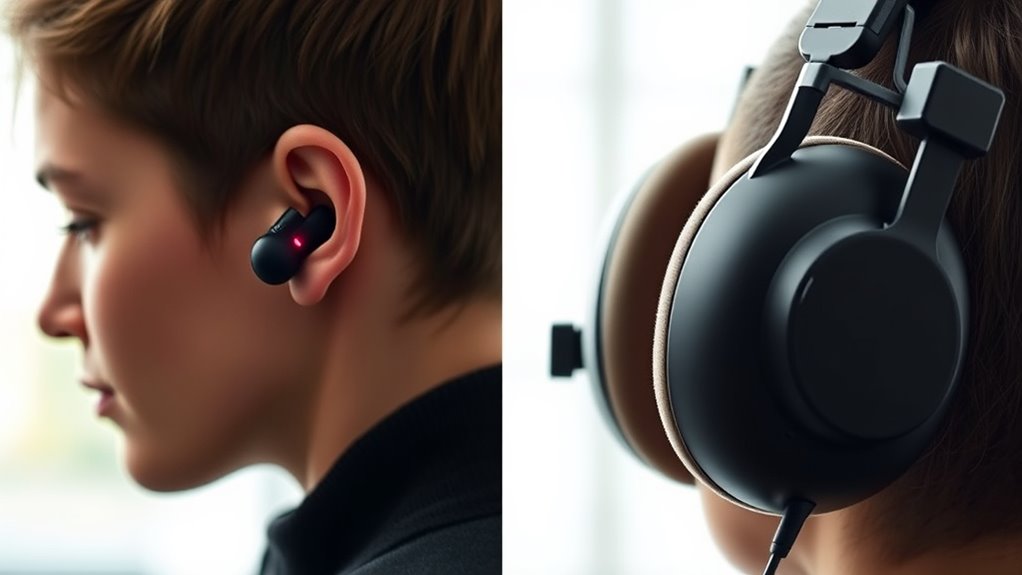
You might notice that earbuds can leak sound, which could disturb others around you. Over-ear headphones, on the other hand, often offer better noise cancellation and block out more ambient noise. Considering these differences can help you choose the right option for your environment. Additionally, safe installation practices ensure that your headphones provide effective noise control without causing discomfort or safety issues. Proper fit and soundproofing techniques can further enhance your listening experience and safety. Being mindful of noise isolation can also prevent listening fatigue and promote better hearing health over time. Using appropriate fitting methods can maximize comfort and ensure optimal sound quality during extended use. Furthermore, selecting headphones with quality materials can improve durability and overall user satisfaction.
Earbud Noise Leakage
Have you ever wondered how well earbuds block out external noise? Noise leakage can be a concern, especially with open designs. When earbuds don’t fit snugly or lack proper noise isolation, sound spills out, disturbing others. This is common with cheaper models or those with a loose fit. To minimize noise leakage, look for earbuds with secure, ergonomic designs and good noise isolation features. Wireless connectivity helps reduce cables that can cause movement noise, while sweat resistance ensures durability during workouts. Keep in mind, tight-fitting earbuds may be uncomfortable but offer better noise control. Consider these factors to find earbuds that deliver sound quality without disturbing your surroundings. Proper fit and quality matter when guarantee noise leakage is effectively minimized. Understanding noise isolation is key to selecting earbuds that meet your needs, and choosing quality audio equipment can further enhance your listening experience.
Over-Ear Noise Cancellation
Over-ear headphones excel at blocking out external noise through a combination of passive isolation and active noise cancellation technology. Their large ear cups create a physical barrier, preventing much sound from entering. When paired with advanced active noise cancellation, you can enjoy immersive listening even in noisy environments. Wireless connectivity enhances your experience by eliminating cumbersome cords, allowing you to move freely. Plus, their design aesthetics often combine comfort with style, making them suitable for both travel and everyday use. The noise-canceling feature adapts to your surroundings, reducing ambient sounds like traffic or chatter. This combination of effective noise isolation and sleek design ensures you can focus on your music or calls without distraction. Over-ear models truly excel at delivering a premium, noise-free listening experience.
Battery Life and Connectivity

When it comes to battery life and connectivity, earbuds and over-ear headphones each have their strengths and limitations. Earbuds often excel in wireless connectivity, offering quick pairing and stable signals through Bluetooth. Their battery longevity varies but generally lasts 4-8 hours, with some models providing quick recharges. Over-ear headphones tend to have longer battery life, sometimes exceeding 20 hours, making them ideal for extended use. They also support advanced wireless features like multi-device pairing. Consider these points:
Earbuds excel in quick Bluetooth pairing, while over-ear headphones offer longer battery life for extended use.
- Earbuds are compact and portable
- Over-ear headphones usually have longer battery life
- Wireless connectivity quality differs between models
- Quick charging features are common in earbuds
- Over-ear headphones often support multipoint pairing
Choose based on your need for portability versus extended listening sessions.
Durability and Maintenance

Durability and maintenance play a crucial role in choosing between earbuds and over-ear headphones, as each design faces different wear and tear challenges. Over-ear headphones often have sturdy build quality and may include replaceable parts like ear pads and cables, making them easier to maintain long-term. They’re generally more resistant to daily handling and less prone to damage from drops. In contrast, wireless earbuds tend to have delicate components and less robust construction, requiring careful handling. Their wireless features can also introduce potential points of failure, such as battery degradation over time. Regular cleaning and cautious storage extend their lifespan. Ultimately, your choice depends on how much effort you’re willing to invest in upkeep and how durable you need your headphones to be.
Use Cases and Lifestyle Compatibility

Choosing between earbuds and over-ear headphones largely depends on your daily activities and lifestyle. If you’re often on the go, earbuds offer portability and convenience for fitness motivation, like running or gym workouts. Over-ear headphones excel in immersive experiences, perfect for gaming compatibility and long listening sessions at home. Consider your routine:
- Commuting or traveling frequently
- Exercising or doing fitness motivation activities
- Gaming sessions and extended entertainment
- Working from home or office environments
- Casual listening and relaxation
If you need lightweight comfort for active days, earbuds are ideal. For richer sound and better noise isolation during gaming or leisure, over-ear headphones suit you better. Match your lifestyle to the use case for a more satisfying experience.
Price Range and Value
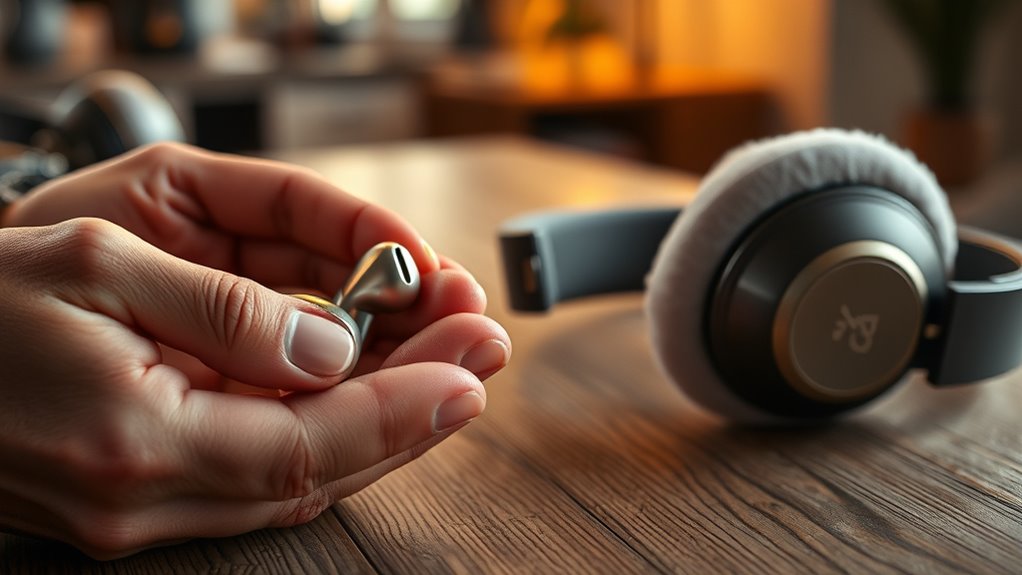
Price range and value are key factors that influence your choice between earbuds and over-ear headphones. You’ll find that wireless affordability varies greatly, with earbuds often costing less upfront and offering budget-friendly options. Over-ear headphones tend to have a higher price tag, but many models deliver superior sound quality and durability, reflecting strong brand value. If you’re looking for an economical choice, earbuds provide a cost-effective way to enjoy wireless convenience without sacrificing portability. However, investing in a reputable brand’s over-ear headphones can deliver long-term value through better build quality and sound performance. Ultimately, your budget and what you prioritize—whether affordability or premium features—will guide your decision, making price range and perceived value essential considerations.
Which Should You Choose?

Deciding between earbuds and over-ear headphones depends largely on your lifestyle and listening preferences. If you prioritize portability and discreetness, earbuds with wireless connectivity are ideal, especially as they follow current fashion trends. On the other hand, if you value immersive sound and comfort for long periods, over-ear headphones are better suited. Consider these factors:
Choose earbuds for portability and style, or over-ear headphones for immersive sound and comfort—all depends on your lifestyle.
- Your activity level (commuting, working out, relaxing)
- Preferred sound quality and noise isolation
- Comfort for extended use
- Style and fashion statements
- The importance of wireless connectivity features
Ultimately, your choice hinges on how you use your devices daily and what fits your aesthetic. Both options have their advantages, so think about which aspects matter most to you.
Frequently Asked Questions
Are Earbuds Better for Sports Than Over-Ear Headphones?
Yes, earbuds are generally better for sports because they offer sweat resistance and a secure fit stability. You can move freely without worrying about them falling out, thanks to their snug fit. Plus, their sweat-resistant design helps prevent damage during intense workouts. Over-ear headphones tend to be bulkier and less stable, making them less ideal for active movements. So, if you’re hitting the gym or running, earbuds are the smarter choice.
Can Over-Ear Headphones Cause Ear Fatigue During Long Use?
Yes, over-ear headphones can cause ear fatigue during long use because they put pressure around your ears, which may lead to discomfort or pain over time. This can affect your long-term comfort, especially if you wear them for hours. To avoid this, look for models with adjustable headbands and cushioned ear cups, and take regular breaks to give your ears a rest.
Do Wireless Earbuds Have Better Connectivity Than Over-Ear Bluetooth Headphones?
Wireless earbuds generally offer better wireless stability and signal range because of their smaller size and closer proximity to your device. You’ll likely experience fewer dropouts and a stronger connection compared to over-ear Bluetooth headphones, which can have slightly more interference due to their larger antennas and distance. If you prioritize reliable connectivity for workouts or commuting, earbuds might be the better choice for you.
How Do Earbuds Impact Hearing Health Compared to Over-Ear Models?
You might think earbuds are harmless, but they can be a wolf in sheep’s clothing when it comes to hearing health. Inserting earbuds directly into your ear canal increases the risk of ear canal health issues and potential hearing loss if used at high volumes or for long periods. Over-ear models are generally safer, as they keep sound away from your ear canal, reducing hearing loss risk and protecting your hearing health.
Are Noise-Canceling Features Equally Effective in Both Earbuds and Over-Ear Headphones?
Noise canceling effectiveness varies between earbuds and over-ear headphones due to design differences. Over-ear models generally provide better noise cancellation because their larger ear cups can house more advanced noise-canceling technology and create a better seal. Earbuds, while portable and convenient, typically have less effective noise canceling because their smaller size limits the tech and seal quality. So, if noise cancellation is your priority, over-ear headphones usually offer superior performance.
Conclusion
Ultimately, earbuds and over-ear headphones each serve different needs. While earbuds offer portability and convenience, over-ears provide immersive sound and comfort. Choosing between them depends on your lifestyle—whether you prioritize mobility or premium listening. Remember, size isn’t everything; sometimes, the best choice is the one that fits your habits and enhances your experience. So, weigh your priorities carefully—because what’s perfect for one person might not be for another.