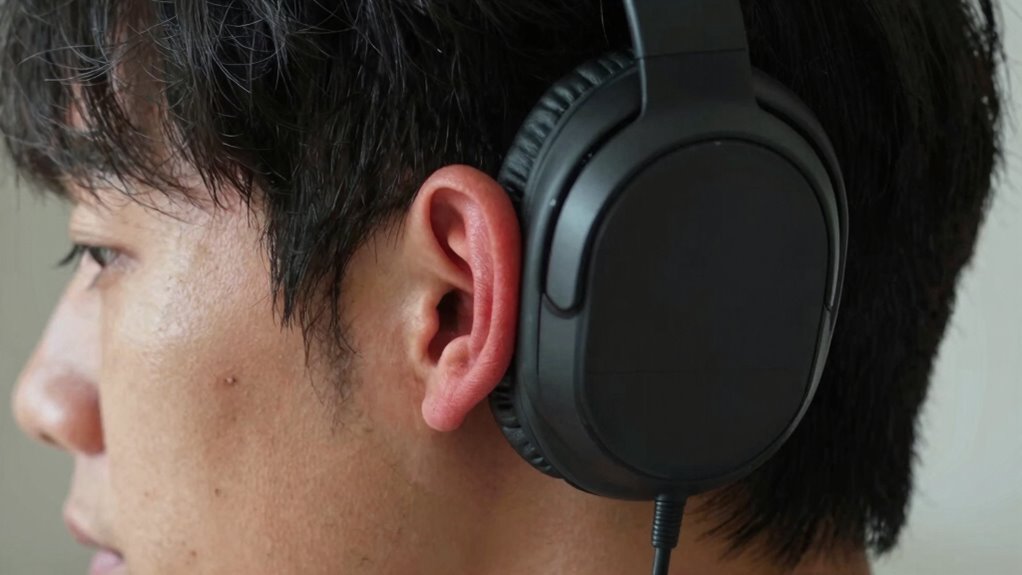

Ear pain after using headphones usually happens when they fit too tightly, press on sensitive areas, or sit incorrectly. Listening at high volumes can also cause discomfort or even damage your ears over time. To listen comfortably, choose well-fitting, ergonomic headphones, keep volume levels safe, and take regular breaks. If you want to learn more about preventing this discomfort and protecting your ear health, there’s helpful advice ahead.
Key Takeaways
- Poor headphone fit or excessive tightness can press against sensitive ear areas, causing discomfort and soreness.
- Listening at high volumes increases ear pressure and can lead to pain or damage over time.
- Extended use without breaks may cause ear fatigue, throbbing, or dizziness due to strain and heat buildup.
- Inserting in-ear headphones deeply or using uncomfortable styles can irritate ear canals and cause pain.
- Using headphones with soft, adjustable cushions and proper fit can distribute pressure evenly and enhance comfort.
Common Causes of Ear Discomfort From Headphones

One of the most common reasons your ears might hurt after wearing headphones is that they fit too tightly or don’t sit properly. When headphones press against your ears, they can increase ear canal pressure, leading to discomfort or pain. Many headphones are designed to provide noise isolation, which blocks out external sounds, but this can also cause a buildup of pressure inside your ear canal if the fit isn’t right. Poorly fitting headphones can push on sensitive areas, making your ears feel sore after extended use. Additionally, excessive pressure can interfere with blood flow, causing a throbbing sensation. To prevent this, ensure your headphones sit comfortably without excessive force, allowing for better noise isolation without compromising ear comfort. Being aware of proper headphone fit can help you avoid unnecessary discomfort and protect your ear health during extended listening sessions. Proper earcup design can also significantly improve comfort and reduce pressure points, especially when designed with ergonomic considerations in mind. Choosing headphones with adjustable headband tension can help customize the fit and minimize discomfort over time. Ensuring your headphones are made with pressure distribution in mind can further enhance comfort and prevent ear pain during long listening periods.
How Proper Fit and Size Affect Ear Comfort

When headphones fit properly and are the right size, your ears experience less pressure and discomfort. An ill-fitting headphone can press against your ear canal or create an uncomfortable seal, leading to pain or soreness. Choosing the correct headphone size guarantees a snug but gentle fit, preventing unnecessary pressure. If your headphones are too small, they may cause pinching or tightness, while oversized ones can slip or apply uneven pressure. Proper fit helps distribute pressure evenly across your ear, reducing strain and fatigue. When shopping for headphones, try different sizes and styles to find the best match for your ear shape and canal. This adjustment minimizes discomfort and allows you to enjoy your music or calls without pain. Additionally, understanding precious metals dealer reviews can guide you in selecting quality headphones that offer both comfort and durability. Ensuring the right body jewelry materials can also prevent allergic reactions or irritation during extended use. Moreover, paying attention to air purifier maintenance tips can help you keep your listening environment clean and healthy, enhancing overall comfort.
The Impact of Volume Levels on Ear Health

Listening to loud volumes can quickly damage your hearing over time. When you crank up the volume, you risk permanent hearing loss and ear pain. Keeping the volume at a safe level protects your ears and preserves your hearing health. Additionally, understanding the importance of Free Floating can help you maintain a comfortable listening experience without risking ear damage.
Loud Volume Damage
Exposing your ears to loud volume levels can cause immediate and lasting damage to your hearing. When you listen at high volumes, you risk noise induced damage that can raise your hearing threshold, making sounds harder to hear over time. This damage occurs because loud sounds can harm delicate hair cells in your inner ear, which don’t regenerate. To protect your hearing, consider these points:
- Listening above 85 decibels increases the risk of noise induced damage
- Prolonged exposure at high volumes accelerates hearing threshold shifts
- Sudden loud noises can cause immediate, irreversible harm
- Lowering volume helps preserve your ear health and prevents damage
Being mindful of volume levels is essential to avoid long-term hearing issues and maintain ear comfort.
Protect Hearing Loss
Volume levels play a significant role in safeguarding your ear health and preventing hearing loss. Listening at safe volumes protects your ear canal health and reduces damage over time. Using noise canceling technology can help you enjoy clearer sound at lower volumes, minimizing the need to turn up the volume in noisy environments. Remember, prolonged exposure to loud sounds, even at moderate levels, can cause irreversible damage. Be mindful of volume and duration, and give your ears regular breaks. Here’s a quick guide:
| Volume Level | Risk to Ear Health |
|---|---|
| Low | Safe, minimal risk |
| Moderate | Caution, limit listening time |
| High | Dangerous, risk of hearing loss |
| Very High | Immediate harm, avoid entirely |
Protect your hearing by staying within safe volume ranges and using technology to reduce strain.
Selecting the Right Type of Headphones for Comfort

Choosing the right type of headphones can make a significant difference in comfort, especially if you wear them for extended periods. You’ll want to weigh whether in-ear versus over-ear designs suit your needs. In-ear headphones are compact and portable but can cause discomfort if inserted too deeply or worn for long durations. Over-ear models distribute pressure more evenly and often provide better cushioning. Also, decide between wireless versus wired options. Wireless headphones offer freedom of movement and reduce cable tugging, which can irritate your ears. Wired headphones typically provide consistent sound quality but can be restrictive. When choosing, keep these factors in mind: proper fitting and adjustment to prevent discomfort and ensure optimal sound delivery. Additionally, understanding the features of the best headphones can help you select a model that minimizes discomfort while maximizing audio quality. Considering ergonomic design can also contribute to a more comfortable listening experience. Paying attention to headphone weight and materials can further improve comfort during prolonged use. Moreover, selecting headphones with adjustable headbands can help customize the fit for different head sizes and shapes.
Tips for Reducing Pressure and Friction on Your Ears

To reduce pressure and friction on your ears, start by adjusting the fit of your headphones so they aren’t too tight. Opt for soft ear cushions, which can provide extra comfort and lessen irritation. Enriched with moisturizing agents, these simple changes can make a big difference in preventing discomfort during extended listening sessions. Additionally, choosing headphones with space‑heating solutions designed for better ergonomic fit can help minimize ear pressure over time. Ensuring proper ventilation considerations can also help prevent excess heat buildup that might contribute to discomfort.
Adjust Headphone Fit
If your headphones are causing discomfort or pressure on your ears, adjusting their fit can make a significant difference. Proper fit guarantees better ear canal alignment and reduces unnecessary friction. Start by loosening or tightening the headband to avoid excessive pressure. Check if the ear cups are aligned with your ears, not pressing directly on the cartilage. Consider the headphone material—soft, adjustable headbands and ear pads can contour better to your head. Using headphones made from lightweight, flexible materials can also enhance comfort during extended listening sessions. Additionally, choosing headphones with ergonomic design can help distribute pressure more evenly across your head. Ensuring the correct size and style of headphones fit your head shape can further improve comfort and reduce strain. Incorporating adaptive ear cushions that conform to your ear shape can also help improve comfort and reduce pain. Selecting headphones with adjustable components allows for a more customized fit tailored to your individual needs. Making these adjustments helps reduce pain and allows for longer, more comfortable listening sessions.
Choose Soft Ear Cushions
Since the material of your ear cushions directly affects comfort, opting for soft, plush padding can markedly reduce pressure and friction on your ears. Soft ear cushions made from memory foam or velour provide a gentle barrier between your ears and the headphone padding, preventing soreness and irritation. When choosing headphones, look for models with replaceable or adjustable headphone padding to ensure a snug but comfortable fit. Soft ear cushions distribute pressure evenly, minimizing hotspots that cause pain after extended use. Avoid hard or stiff materials that can dig into your skin. By selecting headphones with high-quality, soft ear cushions, you’ll enjoy longer listening sessions without discomfort, making your experience more enjoyable and pain-free. Additionally, proper fit and positioning of headphones can significantly improve comfort and reduce ear pain during use. Ensuring the pressure distribution is optimized can prevent unnecessary soreness and enhance overall comfort.
Recognizing When to Take Breaks During Listening Sessions

Paying attention to how your ears feel during listening sessions is essential to prevent discomfort or damage. Recognizing the signs that you need a break helps maintain ear health and listening enjoyment. Keep an eye on your listening duration; prolonged use can lead to fatigue and discomfort. To avoid overexposure, consider these indicators:
- Ear pain or ringing
- Feeling of fullness or pressure
- Dizziness or headache
- Decreased sound clarity
Adjust your break frequency accordingly, taking a short pause every 60 minutes or sooner if you notice signs of strain. Incorporate regular breaks to allow your ears to recover. Staying mindful of these cues ensures a comfortable listening experience and helps prevent long-term ear issues. Additionally, understanding the importance of sound levels and using volume controls can further protect your hearing health. Being aware of ear health risk factors can also help you take proactive steps to safeguard your ears during extended listening sessions. Regularly monitoring your listening habits can make a significant difference in preventing ear fatigue and damage.
Additional Strategies for Long-Term Ear Health While Using Headphones
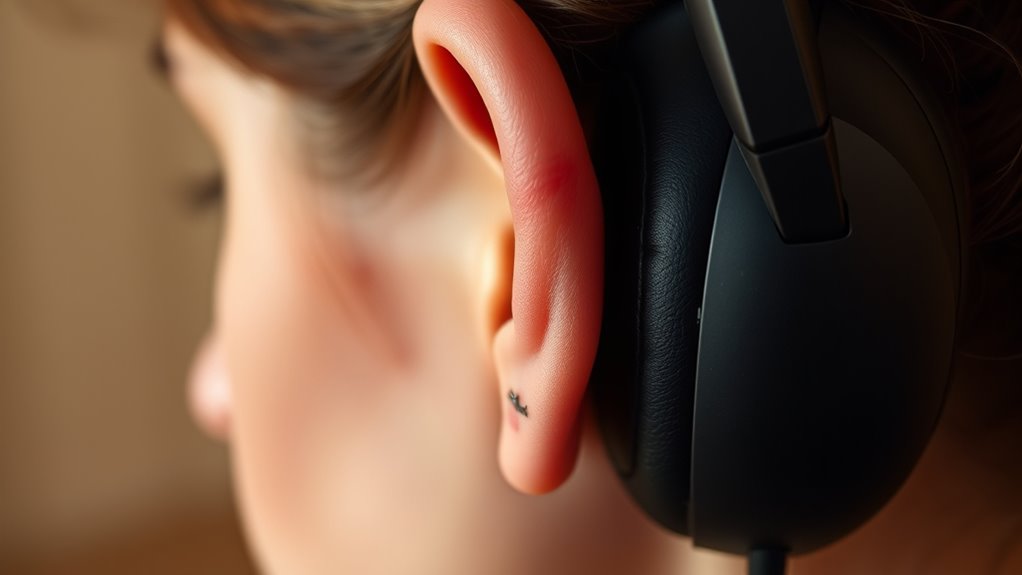
To protect your ears over the long term, it’s important to adopt good listening habits beyond just taking breaks. Maintaining proper ear hygiene helps prevent infections and buildup that can worsen discomfort. Regularly cleaning your ears and avoiding inserting objects reduces the risk of irritation. Additionally, practicing headphone maintenance is vital; clean your headphones frequently and ensure they fit properly to prevent unnecessary pressure. Use noise-canceling features to lower volume levels without sacrificing sound quality, which reduces ear strain. Keep your listening sessions within safe duration and volume limits. These strategies help preserve your hearing health and prevent long-term damage. By combining good ear hygiene with proper headphone maintenance, you can enjoy your favorite sounds comfortably and safely over time.
Frequently Asked Questions
Can Headphone Use Cause Permanent Ear Damage?
Yes, headphone use can cause permanent ear damage if you’re not careful. Listening at high volumes or for extended periods can lead to hearing loss and worsen earwax buildup. To protect your ears, keep the volume moderate, take regular breaks, and clean your ears gently. Proper headphone hygiene and limiting usage help prevent long-term damage, ensuring your hearing stays healthy and your ears remain comfortable.
Are Wireless Headphones Safer Than Wired Ones for Ears?
Wireless headphones are generally safer for your ears than wired ones because they eliminate the risk of accidental tugging or pulling, which can cause discomfort or injury. Bluetooth safety is also a concern, so keep volume levels moderate and avoid prolonged use. With wireless convenience, you can enjoy your music or calls freely without worrying about cords, but always prioritize listening at safe volumes to protect your hearing health.
How Do Ear Infections Relate to Headphone Use?
You might notice ear infections if you don’t practice good headphone hygiene, especially when sharing devices or using them for long periods. Poor hygiene increases the ear infection risk, as bacteria and fungi can thrive in moist environments. To avoid this, clean your headphones regularly and give your ears breaks. Staying mindful of hygiene helps reduce infection chances, ensuring your listening experience stays safe and comfortable.
Can Headphone Design Influence Ear Pain Severity?
Yes, headphone design can influence how much ear pain you experience. If your earcup materials are too hard or rough, they can cause discomfort over time. A proper headphone fit guarantees the earcups sit comfortably without pressing too tightly or causing pressure points. Choosing headphones with soft, breathable materials and adjustable fit options helps reduce ear pain, making your listening experience more comfortable and enjoyable.
What Are Signs of Serious Ear Injury From Headphones?
If you notice sudden, sharp pain, persistent dizziness, or ringing that won’t quit, you’re dealing with a serious ear injury from headphones. Signs include intense earwax buildup blocking your hearing or a drastic change in hearing sensitivity. Don’t ignore these symptoms—immediate medical attention is vital. Left untreated, these issues can escalate, causing long-term damage. Trust your instincts and get help if your ears scream for mercy!
Conclusion
By tuning into your ears’ whispers and choosing comfort over volume, you create a sanctuary where music soothes rather than stings. Think of your headphones as gentle companions, not foes, giving your ears room to breathe and heal. When you listen with care, you’re crafting a symphony of well-being that lasts. So, treat your ears like delicate gardens—nurture them, and they’ll reward you with endless melodies and comfort.