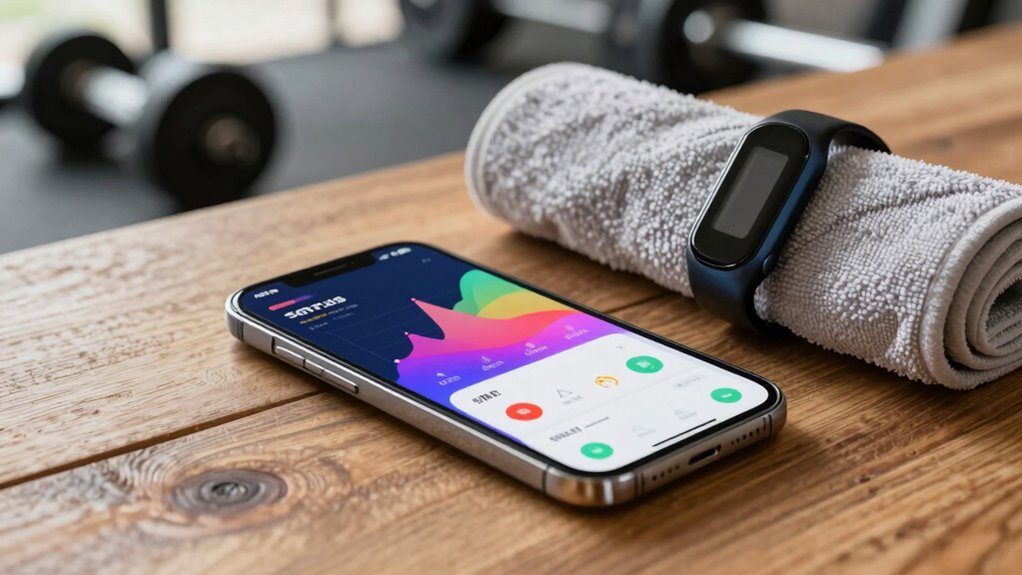
Your phone can handle many fitness tracking tasks like counting steps and monitoring sleep, but it may not match the accuracy, battery life, and continuous monitoring that dedicated fitness trackers offer. Wearables with specialized sensors provide more reliable data and can be worn all day without frequent charges. While apps are convenient and affordable, if you want precise, consistent insights, exploring the differences can help you choose the best tool—there’s more to discover if you continue exploring.
Key Takeaways
- Fitness trackers typically offer more accurate, real-time data with dedicated sensors compared to smartphone apps relying on phone sensors.
- Wearables provide longer battery life and continuous monitoring, whereas phones require daily charging, affecting consistent tracking.
- Fitness apps are generally more affordable and accessible, but trackers deliver detailed health metrics like heart rate and sleep quality.
- Smartphone apps can include social sharing and mindfulness features, but dedicated devices often excel in precise activity and health tracking.
- The choice depends on whether personalized, real-time data or broader motivational features better align with individual fitness goals.

pixtlcoe Fitness Smart Trackers with 24/7 Health Monitoring,Heart Rate Sleep Blood Oxygen Monitor/Calorie Steps Counter Pedometer Activity Tracker/Smart Notifications for Men Women
24H Accurate Heart Rate Monitoring: Go beyond basic tracking. Our watch automatically monitors your heart rate, blood oxygen…
As an affiliate, we earn on qualifying purchases.
As an affiliate, we earn on qualifying purchases.
Comparing Features and Functionality
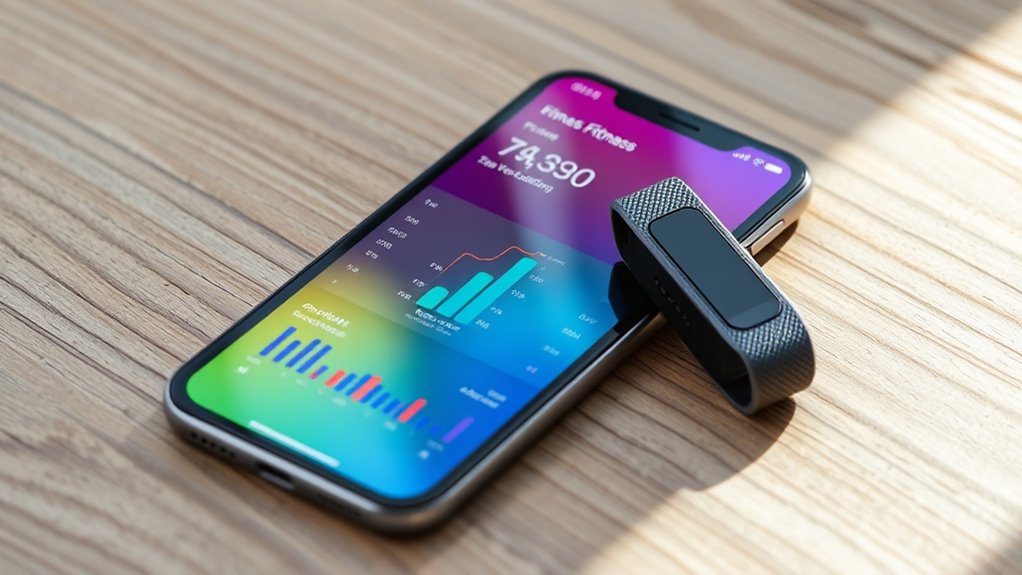
When comparing fitness apps and fitness trackers, understanding their features and functionality is essential. Fitness apps often offer mindfulness integration, helping you incorporate mental well-being practices like meditation and breathing exercises into your routine. They also excel in social sharing features, allowing you to connect, challenge friends, and share achievements through social media. Fitness trackers, on the other hand, focus more on real-time data collection, like step count, heart rate, and sleep tracking, often syncing seamlessly with apps to enhance overall insight. While apps provide a broad range of tools, trackers offer continuous monitoring with less manual input. Both can foster motivation, but their core functionalities differ, making it important to choose based on whether you value mental wellness, social engagement, or detailed activity tracking. Additionally, understanding the contrast ratio can help you select compatible devices that offer clearer visual feedback during workout sessions. Moreover, the ability of some devices to sync seamlessly with various platforms ensures a more integrated fitness experience. Recognizing the Net Worth of influencers can also offer insights into the financial investment behind popular fitness brands and devices. Furthermore, exploring the scientific basis behind these devices can aid in making more informed decisions about their effectiveness and reliability. To enhance your understanding, examining how essential oils can support health and recovery might offer complementary benefits to your fitness routine.

Zeacool Fitness Tracker with 24/7 Heart Rate, Blood Oxygen Blood Pressure Sleep Monitor, Activity Trackers 5 ATM Waterproof,Step Calorie Counter Pedometer Health Smart Watch for Women Men (Black)
24/7 Heart Rate Monitor :This blood pressure watch supports real-time dynamic heart rate, blood oxygen, blood pressure ,Sleep…
As an affiliate, we earn on qualifying purchases.
As an affiliate, we earn on qualifying purchases.
Accuracy and Reliability

Evaluating the accuracy and reliability of fitness apps and trackers is vital to guarantee you’re getting trustworthy data. Sensor precision plays a significant role in how accurately your device measures metrics like steps, heart rate, and calories burned. Fitness trackers typically have dedicated sensors designed for precise readings, ensuring better data consistency over time. In contrast, phone-based fitness apps rely on your phone’s built-in sensors, which may not be as specialized, leading to potential discrepancies. Reliable data is essential for tracking progress and making informed decisions about your fitness routine. If your device’s sensor precision isn’t high, your results could be off, affecting your motivation and progress. Sensor quality directly impacts the accuracy of the data collected. Hence, consider how well your device maintains data consistency when evaluating its effectiveness. Additionally, data synchronization between devices can influence overall reliability, especially if multiple platforms are used to track your progress.
![SAMSUNG Galaxy FIT 3 [2024] 1.6" AMOLED Display | 14 Days Battery Life | 100+ Watchfaces | 100+ Exercise Modes | International Model - (Gray)](https://m.media-amazon.com/images/I/41nTjvUQRPL._SL500_.jpg)
SAMSUNG Galaxy FIT 3 [2024] 1.6" AMOLED Display | 14 Days Battery Life | 100+ Watchfaces | 100+ Exercise Modes | International Model – (Gray)
Vibrant 1.6” AMOLED Display – Large, high-res screen with smooth touch for easy navigation
As an affiliate, we earn on qualifying purchases.
As an affiliate, we earn on qualifying purchases.
Battery Life and Convenience

Battery life and convenience considerably influence how effectively you can incorporate fitness devices into your routine. A fitness tracker typically offers longer battery life, allowing you to wear it continuously without frequent recharging. This convenience means you can focus on your workouts and daily activity tracking without interruptions. On the other hand, smartphones often require daily charging, which can disrupt your fitness tracking habits. If convenience matters to you, a device with longer battery life guarantees consistent use and seamless monitoring. Additionally, Free Floating features in some devices can enhance your experience by providing unobstructed data collection, making it easier to stay motivated and committed to your fitness goals. Ensuring your device has reliable power management can further improve your overall tracking consistency. In fact, choosing a device with optimal battery optimization can significantly reduce the need for frequent recharging. Incorporating a device that minimizes power consumption through efficient hardware design can extend usage time even further.

HOMOGO Smart Watches for Men Women, 1000mAh Battery Life Smart Watch for Android and iPhone Compatible, Fitness Tracker with Heart Rate/Sleep Monitor, 100+ Sports Modes, IP68 Waterproof
1000 mAh Long Battery Life: This android smart watch is built-in 1000 mAh battery large battery that can…
As an affiliate, we earn on qualifying purchases.
As an affiliate, we earn on qualifying purchases.
Cost and Accessibility
Cost and accessibility are key factors to contemplate when choosing between a fitness app and a fitness tracker. Your decision depends on your budget and how easily you can access these tools. Fitness apps are generally free or low-cost, offering broad user accessibility via smartphones. Fitness trackers, however, often come with a higher initial price but provide dedicated features. Consider this comparison:
| Aspect | Fitness App | Fitness Tracker | Emotional Impact |
|---|---|---|---|
| Price Comparison | Usually free or inexpensive | Higher upfront cost | Feeling of value for investment |
| User Accessibility | Instantly available on phone | Requires device purchase | Convenience and motivation |
| Long-term Cost | Minimal ongoing expenses | Potential replacement costs | Confidence in reliable tracking |
Additionally, fitness trackers often include advanced sensors that can provide more detailed health data compared to standard apps. These sensors can monitor metrics like heart rate, sleep patterns, and activity intensity, offering a comprehensive view of your health that many apps may not fully support. Moreover, some wearable devices incorporate real-time feedback features that can motivate users to stay active and improve their health outcomes, making them a valuable investment for many individuals. Your choice hinges on affordability and how seamlessly these tools fit into your daily life.
Making the Right Choice for Your Fitness Goals
Choosing between a fitness app and a fitness tracker depends on your specific goals and how you prefer to approach your fitness journey. To make the right choice, consider these factors:
- Personalization options – If you want tailored workout plans and goal tracking, fitness apps often offer extensive customization. Connected equipment can further enhance your personalized experience by providing real-time feedback and adjustments. Incorporating evidence-based guidance ensures that your training is grounded in scientific research and proven techniques.
- Social integration – If staying motivated through friends or communities matters, look for apps or trackers with social features.
- Device convenience – For real-time data and hands-free tracking, fitness trackers provide seamless, on-the-go monitoring. Additionally, fitness trackers often incorporate wearable technology designed specifically for continuous, passive data collection.
- Evidence-based guidance – Reliable tools are grounded in evidence-informed guidance, ensuring your efforts are scientifically supported and effective.
Your goal should guide your decision: opt for an app if you value deep customization and social features, or choose a tracker for constant, effortless data collection. Balancing these aspects helps you stay motivated and aligned with your fitness ambitions.
Frequently Asked Questions
How Do Fitness Apps and Trackers Sync With Other Health Devices?
You can sync fitness apps and trackers with other health devices through device compatibility features, like Bluetooth or Wi-Fi. These technologies enable seamless data synchronization, ensuring your activity, heart rate, or sleep data updates in real-time across devices. To do this, you simply pair your device, open the app, and follow prompts to establish a connection, making it easy to keep all your health information current and accurate.
Can Fitness Apps Provide Personalized Workout Plans Like Wearables?
You might imagine a personal trainer guiding your every move, but fitness apps have limitations. While they try to offer personalized workout plans, personalization limitations mean they can’t match the tailored guidance of wearables. Plus, data accuracy can vary, making it harder for apps to create truly effective routines. So, although convenient, your phone’s app may not fully replace the detailed insights and customization a wearable provides for your fitness journey.
Are There Privacy Concerns With Using Phone-Based Fitness Solutions?
Yes, there are privacy concerns with phone-based fitness solutions. You might worry about data encryption, which protects your personal info from unauthorized access, and location tracking, which can reveal your movements. When you use these apps, guarantee they have strong encryption protocols and clear privacy policies. Stay cautious about sharing sensitive data and review app permissions regularly to safeguard your privacy.
Do Fitness Apps Offer Real-Time Coaching Compared to Wearables?
Yes, fitness apps can offer real-time coaching, but the coaching accuracy depends on your device and app quality. You get immediate feedback during workouts, helping you stay on track. However, wearables often provide more precise real-time feedback because they track metrics directly from sensors. While apps are convenient, wearables typically deliver more accurate coaching, making them better suited for serious training or precise performance monitoring.
How Do Updates and App Improvements Impact Long-Term Usability?
Software updates and app improvements greatly enhance your long-term usability by fixing bugs, adding new features, and refining the user interface. When developers regularly update the app, you experience smoother navigation, better performance, and fresh functionalities that keep your fitness journey engaging. These improvements guarantee the app stays relevant, user-friendly, and reliable, helping you stay motivated and connected to your fitness goals over time.
Conclusion
Sure, your phone can track your steps and workouts, but if you’re serious about consistent, accurate data, a dedicated fitness tracker might be worth the investment. Don’t worry about it feeling bulky; many trackers are sleek and lightweight. Ultimately, choose what fits your lifestyle and motivates you to stay active. After all, the best device is the one that keeps you moving—so pick what works, and enjoy your fitness journey!