
Your next smartwatch could monitor essential health metrics like blood pressure, blood sugar, heart rate variability, oxygen saturation, and stress levels in real time. Advances in sensor technology and machine learning will make measurements more accurate, all while ensuring your data stays secure and private. These features will let you track your health continuously, helping you respond proactively to changes. If you keep exploring, you’ll discover how these innovations are shaping the future of wearable health tech.
Key Takeaways
- Continuous blood pressure monitoring using cuffless sensors and machine learning will provide real-time, accurate readings without inflations.
- Advanced glucose sensors will enable seamless, non-invasive blood sugar tracking integrated with insulin management systems.
- Heart Rate Variability analysis will offer insights into stress, recovery, and overall health through real-time biometric data.
- Optical SpO2 sensors will deliver ongoing oxygen saturation measurements, supporting better respiratory and overall health insights.
- Mental well-being metrics like stress levels and biofeedback will help users manage emotional health proactively.
Blood Pressure Monitoring
Have you ever wondered how wearable devices can track your blood pressure accurately in real time? Advances in cuffless monitoring technology now make this possible. Instead of bulky cuffs, these devices use sensors that analyze pulse wave velocity and other signals to estimate your blood pressure seamlessly. With real time analytics, your smartwatch can provide continuous updates, helping you manage health proactively. This approach offers a more comfortable and convenient way to stay informed without frequent cuff inflations. As the technology improves, expect your wearable to deliver precise, instant blood pressure readings right on your wrist. Furthermore, leveraging European cloud infrastructure enhances data security and privacy for health information, ensuring your sensitive metrics are protected. Incorporating advanced sensor technology is crucial for improving accuracy in cuffless blood pressure monitoring. The integration of machine learning algorithms can further refine measurement precision over time. This shift toward cuffless monitoring promises to enhance health tracking, making blood pressure management easier and more integrated into your daily routine, especially as privacy considerations become increasingly important in health data handling. Additionally, ongoing research into biometric signal analysis is expected to further improve the reliability of these measurements.
Blood Sugar Level Tracking
Just as wearable devices are revolutionizing blood pressure monitoring, they’re also transforming how you track blood sugar levels. Advanced glucose sensors integrated into smartwatches allow continuous, real-time monitoring without finger pricks. These sensors detect glucose levels through minimally invasive methods, giving you instant insights into your blood sugar trends. This innovative technology helps you make better decisions about diet, activity, and medication. Some wearables will even sync with insulin management systems, enabling automated insulin delivery based on your glucose readings. This integration simplifies diabetes management and reduces the risk of highs or lows. Additionally, these advancements are supported by ongoing research into continuous glucose monitoring, which is key to improving the accuracy and reliability of wearable health tech. As the market for wellness-focused wearables expands, expect more sensor accuracy improvements that provide even clearer health data.
Heart Rate Variability Analysis
Ever wonder what your heart rate variability (HRV) reveals about your overall health and stress levels? With innovative sensor technology, wearables now analyze HRV in real-time, providing insights into your body’s resilience and recovery. Imagine a table visualizing HRV data:
| Resting HRV | Stress Response | Recovery Rate |
|---|---|---|
| High | Elevated | Quick |
| Moderate | Moderate | Balanced |
| Low | High | Slow |
| Very Low | Very High | Very Slow |
| Essential | Adaptive | Efficient |
While these features are groundbreaking, data privacy concerns remain. You must trust that your sensitive health data stays secure, especially as devices become more sophisticated. Data security is a crucial aspect to consider when adopting these advanced health monitoring tools. Additionally, understanding biometric data and its implications can help you make informed decisions about your health tracking. Moreover, the accuracy of HRV measurements depends on sensor calibration, which varies across different wearable devices.
Blood Oxygen Saturation Measurement
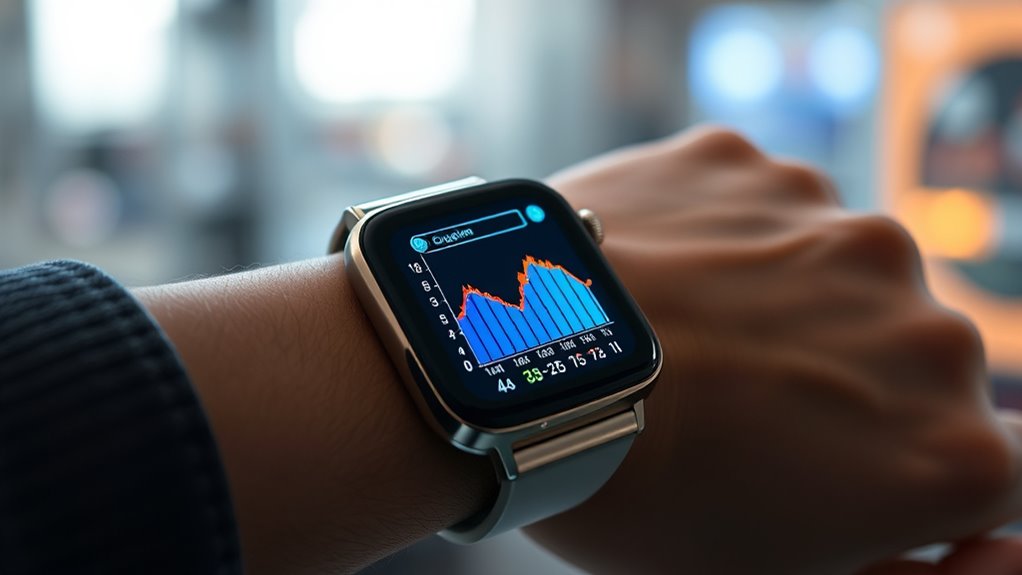
Blood oxygen saturation measurement has become a crucial feature in modern wearables, providing real-time insights into how efficiently your body is absorbing and utilizing oxygen. This function relies on optical sensors that need proper calibration to guarantee accuracy over time. Regular sensor calibration is key, especially as sensors age or conditions change. As you track your SpO2 levels, it’s important to consider data privacy, since health data is sensitive and must be protected. Wearables now incorporate advanced encryption to keep your information secure. Monitoring your blood oxygen levels can help detect potential issues early, but always verify device accuracy through calibration. Remember, reliable data privacy practices are essential to safeguard your health information during ongoing health monitoring. Additionally, understanding the underlying sensor technology can help users better interpret their health data and ensure consistent performance. Proper sensor calibration techniques are essential to maintain measurement accuracy over time, especially with evolving sensor conditions. Moreover, staying informed about sensor lifespan can help you anticipate when recalibration or sensor replacement might be necessary to maintain precise readings. Recognizing the importance of sensor performance can further ensure your device continues to deliver trustworthy health data.
Stress and Mental Well-Being Indicators

As wearable technology advances, monitoring stress and mental well-being has become an integral feature that helps you stay aware of your emotional health. Your device can now detect signs of stress through metrics like heart rate variability and skin conductance. When elevated stress levels are identified, your smartwatch can deliver mindfulness prompts to guide you through quick breathing exercises or meditation. These features aim to boost your emotional resilience, helping you manage daily challenges more effectively. Tracking these indicators over time allows you to recognize patterns and take proactive steps to improve your mental health. Additionally, understanding biofeedback metrics provided by wearables can help you better interpret your body’s responses to various stressors. Maintaining a methodical approach in monitoring these metrics ensures consistency and accuracy in tracking your progress. By integrating stress and mental well-being metrics, wearables empower you to maintain a balanced state of mind and foster long-term emotional strength.
Frequently Asked Questions
How Accurate Will Future Wearables Be in Predicting Health Risks?
Future wearables will be highly accurate in predicting health risks, thanks to improved sensor calibration and data interoperability. You’ll find that these devices better interpret your health metrics by integrating data from multiple sources, making predictions more reliable. As technology advances, expect smarter algorithms that adapt to your unique health profile, providing proactive alerts and personalized insights to help you stay ahead of potential health issues.
Will Wearables Be Able to Detect Rare or Genetic Health Conditions?
Yes, future wearables could be capable of detecting rare or genetic health conditions. They’ll incorporate advanced genetic screening technology and data analysis to identify markers linked to rare diseases. By continuously monitoring your health metrics, these devices can flag early warning signs, enabling timely intervention. As technology advances, wearables may become essential tools for personalized medicine, helping you catch genetic health issues before symptoms even appear.
How Will Data Privacy Be Ensured With Advanced Health Metrics?
You might worry about privacy, but with data encryption and strict user consent protocols, your health info stays secure. Imagine your smartwatch encrypting data in real-time, only accessible when you give explicit permission. This guarantees sensitive health metrics are protected from leaks or unauthorized access. By actively managing your consent, you control who sees your data, giving you peace of mind while benefiting from advanced health tracking.
Can Wearables Suggest Personalized Lifestyle Changes Based on Data?
Yes, wearables can suggest personalized coaching and lifestyle customization based on your data. They analyze your health metrics to identify patterns and recommend specific changes, like adjusting activity levels or sleep routines. This real-time feedback helps you make informed decisions and stay motivated. As technology advances, expect even more tailored suggestions that seamlessly integrate into your daily routine, supporting your health goals more effectively than ever before.
Will Future Devices Replace Traditional Medical Diagnostics Entirely?
You might wonder if future devices will fully replace doctors, but they won’t. While wearables become like trusty sidekicks with sharp medical insights, medical ethics and device affordability remain hurdles. These gadgets can guide you, but they can’t replace the nuanced judgment of a healthcare professional. So, expect them to be powerful allies, not complete replacements, helping you stay informed and proactive about your health journey.
Conclusion
As wearables evolve, you’ll find them gently guiding you toward healthier choices, quietly keeping an eye on your well-being. With each new metric they monitor, they become more like silent companions, helping you navigate life’s subtle shifts. While they may not replace everything, these advancements softly remind you to listen to your body’s whispers. Embrace the future, where your smartwatch gently partners in your journey to better health, one subtle signal at a time.