Protecting your hearing is essential if you love gaming or music, as loud sounds can cause irreversible damage over time. Exposure to high volume levels can lead to hearing loss, tinnitus, and difficulty understanding speech. Using ear protection like earplugs or noise-canceling devices helps reduce risk without sacrificing enjoyment. By understanding how loud environments affect your ears and implementing simple safety tips, you can enjoy your favorite sounds for years to come. Keep exploring to learn how to protect your hearing effectively.
Key Takeaways
- High volume levels during gaming and music can cause irreversible hearing damage over time.
- Using hearing protection reduces the risk of noise-induced hearing loss and preserves ear health.
- Recognizing early signs of hearing fatigue helps prevent permanent damage.
- Proper sound level management and protective devices enable safe enjoyment of audio experiences.
- Long-term hearing protection ensures sustained communication, enjoyment, and overall well-being.
The Impact of Loud Sounds on Hearing Health

Loud sounds can quickly damage your hearing if you’re not careful. Exposure to high volume levels, especially during gaming or music sessions, can cause irreversible harm to your ear structures. Over time, this damage may lead to hearing loss, making sound therapy a helpful tool in hearing restoration. Sound therapy involves controlled auditory stimuli designed to stimulate your hearing system gently, aiding recovery or adaptation. Protecting your ears from loud noises isn’t just about avoiding immediate discomfort; it’s about preserving your long-term hearing health. Continuous exposure to loud sounds can also lead to temporary threshold shifts, which, if untreated, might become permanent. Recognizing the importance of sound level management and proper sound levels is essential for maintaining hearing integrity. Implementing hearing conservation techniques can significantly reduce the risk of long-term damage. Being aware of listening habits and making mindful adjustments can further help minimize risk. Taking proactive steps now ensures you enjoy your favorite sounds without risking lasting damage.
Recognizing the Signs of Hearing Fatigue and Damage
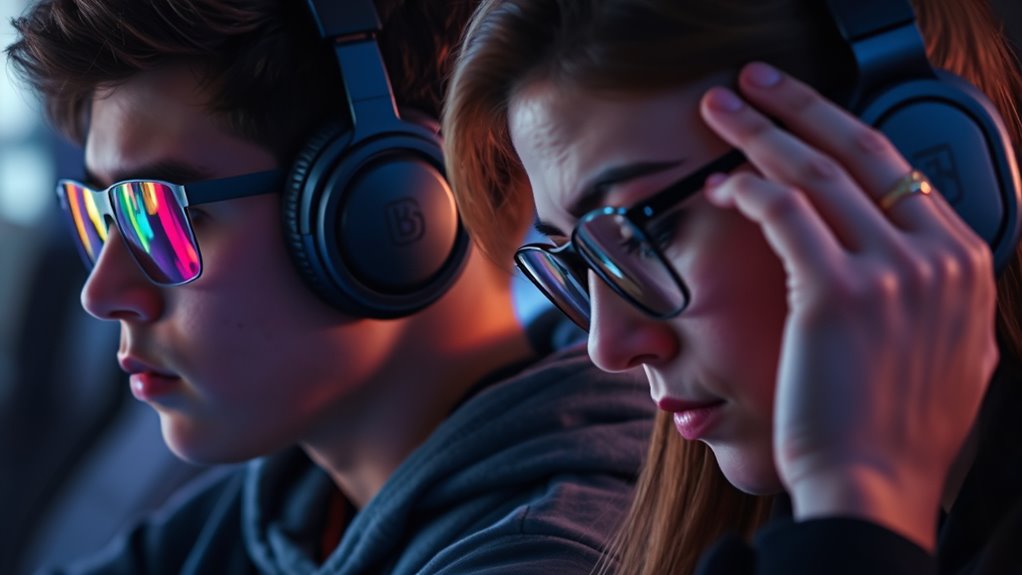
You might notice your ears feel tired or ringing after long gaming sessions or concerts. These are signs of hearing fatigue, which can lead to more serious damage if ignored. Recognizing these symptoms early helps you protect your hearing and avoid long-term risks. Developing an awareness of hearing protection techniques can further safeguard your ears during extended exposure to loud sounds. Using essential oils for ear health, such as lavender or eucalyptus, can provide soothing relief and promote overall ear well-being. Incorporating noise-canceling headphones into your routine can also reduce the impact of loud environments on your hearing.
Hearing Fatigue Symptoms
Hearing fatigue often sneaks up on you, making sounds seem muffled or less clear after prolonged exposure to loud noises. You might notice ringing in your ears, difficulty focusing, or a feeling of fullness that persists even after stopping the noise. These are signs you’re experiencing hearing fatigue, which can be temporary but also indicates strain on your ears. If you’re involved in music therapy or frequent loud environments, it’s vital to recognize these symptoms early. Regular hearing screening can help detect early signs of damage, allowing you to take preventive steps. Paying attention to how your ears feel during and after listening sessions, and don’t ignore signs of fatigue. Proper protection and awareness are key to maintaining healthy hearing in the long run. Recognizing hearing fatigue symptoms early can help prevent long-term damage and ensure you enjoy your favorite sounds safely. Incorporating proper ear protection when exposed to loud environments is essential for preserving hearing health. Additionally, understanding the importance of early detection can significantly reduce the risk of irreversible hearing loss. Being proactive about hearing health awareness can also empower you to make informed choices about your listening habits, especially when dealing with potential piercing-related risks that might affect ear health.
Long-term Hearing Risks
Recognizing the signs of hearing fatigue and damage is essential for preventing long-term harm. If you notice ringing, muffled sounds, or difficulty understanding speech after prolonged listening, it’s a clear sign you’ve pushed your ears too far. Regular exposure to loud music, whether during gaming sessions or music therapy, can lead to irreversible damage if ignored. Sound engineering plays a vital role in managing volume levels and protecting your hearing. Over time, untreated hearing damage can cause permanent hearing loss, tinnitus, or sensitivity to sound. To safeguard your long-term hearing health, use proper protection, take regular breaks, and be mindful of sound levels. Sound levels management is crucial for maintaining ear health. Early recognition and intervention are key to maintaining healthy hearing for years to come. Additionally, understanding hearing health risks can empower you to adopt safer listening practices and prevent potential damage before it occurs. Paying attention to hearing protection measures can further enhance your efforts to preserve your auditory well-being. Incorporating auditory monitoring techniques can help you stay aware of your hearing status during extended exposure to loud sounds.
The Science Behind Noise-Induced Hearing Loss

Understanding how noise damages your hearing starts with your ear’s delicate structures, which can be harmed by loud sounds. The louder the noise, measured in decibels, the greater your risk of permanent damage, especially with prolonged exposure. By knowing how sound intensity and duration affect your ears, you can better protect yourself during long gaming or music sessions.
Ear Anatomy and Damage
Your ears contain delicate structures that translate sound waves into signals your brain can interpret, but exposure to loud noises can cause lasting damage. The ear canal funnels sound waves toward the tympanic membrane, or eardrum, which vibrates in response. These vibrations transfer to tiny bones in the middle ear, amplifying sound before reaching the inner ear. Inside, the cochlea contains hair cells that convert vibrations into electrical signals sent to your brain. Loud noises can damage these hair cells, causing permanent hearing loss. The damage often starts with high-frequency hair cells and worsens with repeated or prolonged exposure. Because these structures are so sensitive, even brief exposure to loud sounds can lead to irreversible harm. Protecting your ears helps preserve their delicate anatomy and your ability to hear. Understanding how sound levels impact ear health can guide better protection practices. Additionally, noise-induced hearing loss is a common concern among musicians and gamers who frequently experience high volume levels.
Decibels and Hearing Risk
Loud noises can cause real damage to your ears, and the level of danger depends on how intense the sound is measured in decibel levels (dB). Sounds above 70 dB can start to harm your hearing, especially with prolonged exposure. The hearing threshold is typically around 0 dB, but when noise exceeds 85 dB, your risk of noise-induced hearing loss increases profoundly. For example, listening to music or gaming at high volumes often surpasses safe decibel levels, putting your ears at risk. The higher the decibel level, the less time you should spend exposed without protection. Understanding decibel levels helps you gauge when noise becomes dangerous and prompts you to take precautions to protect your hearing health. Additionally, using hearing protection gear such as earplugs or earmuffs can significantly reduce the risk of damage during loud activities. Recognizing the importance of specialized hearing devices can further help safeguard your hearing in noisy environments. Being aware of the sound frequencies involved can also assist in choosing appropriate protective measures. Moreover, awareness of sound exposure duration is crucial, as even moderate noise levels can be harmful if exposure is prolonged.
Duration of Noise Exposure
The amount of time you spend exposed to loud noise considerably influences your risk of hearing damage. Even short periods at high sound levels can harm your ears if you don’t take precautions. The longer your exposure duration, the greater the chance of damage from noise-induced hearing loss. Sound levels matter, but so does how long you’re exposed. For example, listening at 85 decibels for more than eight hours increases your risk, while lower levels require longer exposure to cause harm. It’s essential to monitor both sound levels and exposure duration, especially when gaming or listening to music for extended periods. Using protective gear or taking regular breaks helps minimize the cumulative effect of noise, preserving your hearing health over time. Monitoring noise levels is a crucial step in preventing long-term hearing damage, especially in environments with persistent loud sounds. Additionally, understanding noise exposure guidelines can help you set safe listening limits and protect your hearing over the long term.
Why Gamers and Music Fans Are at Increased Risk

Because gamers and music fans often listen to sounds at high volumes for extended periods, they face a greater risk of hearing damage. Prolonged exposure to loud sounds can diminish your auditory perception, making it harder to distinguish speech or enjoy subtle audio details. High volume levels also temporarily boost your hearing sensitivity, but over time, this can lead to permanent damage. When your ears are repeatedly exposed to loud noise, the tiny hair cells in your inner ear can become damaged or destroyed. This not only risks hearing loss but can also cause tinnitus. Since your hearing is essential for communication and enjoying music or games, protecting it is crucial to prevent long-term consequences.
Types of Hearing Protection Devices Available

You have several options when it comes to protecting your hearing, starting with different types of earplugs designed for comfort and effectiveness. Electronic hearing protectors offer the advantage of reducing loud sounds while allowing you to hear important cues clearly. Exploring these options helps you find the right fit for your gaming or music sessions.
Earplug Varieties Available
There are several types of earplugs designed to protect your hearing while gaming or enjoying music. Foam earplugs are popular for their affordability and high noise reduction ratings, making them ideal for blocking out loud sounds. Silicone earplugs offer a softer, more comfortable fit, which helps improve earplug comfort during extended use. Custom-molded earplugs provide a tailored fit, ensuring maximum comfort and excellent noise reduction ratings, especially for frequent users. Flanged earplugs use multiple barriers to reduce sound levels effectively. Each variety varies in comfort and noise reduction, so you can choose based on your activity and preference. Whether you prioritize comfort or maximum noise reduction, there’s a suitable earplug type to safeguard your hearing without sacrificing enjoyment.
Electronic Hearing Protectors
Electronic hearing protectors offer a modern solution for gamers and music lovers seeking effective hearing protection without sacrificing sound quality. These devices often feature a custom fit, ensuring comfort and a secure seal that blocks harmful noise while maintaining clarity of sound. Many models now come with wireless options, allowing you to connect seamlessly to your devices without tangled cords. This wireless functionality enhances mobility and convenience, making it easier to enjoy your music or gaming sessions. Advanced electronic protectors can automatically filter out loud noises while amplifying softer sounds, giving you precision control over your listening environment. Whether you’re attending concerts, gaming, or recording, these protectors deliver personalized, high-quality sound protection tailored to your needs.
Choosing the Right Ear Protection for Your Lifestyle
Choosing the right ear protection depends on understanding your specific lifestyle and listening habits. If you frequently use in-ear devices, look for options with a custom fit to guarantee comfort and effective noise reduction. Custom fit ear protection molds to your ear’s shape, providing a secure seal that enhances sound quality while protecting your hearing. Maintaining good ear hygiene is also essential; regular cleaning prevents infections and ensures your ear protection stays effective. For active lifestyles, consider durable, sweat-resistant options. If you’re a gamer or music lover who values clarity, choose ear protection that balances noise reduction with sound fidelity. Ultimately, selecting the right ear protection means matching features to your daily routines, ensuring comfort, safety, and an enjoyable listening experience.
Tips for Using Ear Protection Effectively During Long Sessions

To guarantee your ear protection remains effective during long gaming or music sessions, it’s important to take regular breaks and monitor how your ears feel. Pay attention to earbud ergonomics; ensure they fit comfortably and securely to prevent discomfort or unnecessary pressure, which can compromise protection. Adjust the fit as needed, avoiding overly tight or loose earbuds. Be mindful of ambient noise levels—use noise-canceling features or earplugs designed for your environment to maintain ideal hearing safety without sacrificing sound quality. Limit prolonged exposure by switching ears or removing protection periodically to give your ears a rest. Staying attentive to comfort and ambient conditions helps you use ear protection effectively, reducing fatigue and maintaining hearing health during extended sessions.
The Long-Term Benefits of Preserving Your Hearing

Taking steps to protect your ears during long gaming or music sessions not only prevents immediate discomfort but also safeguards your long-term hearing health. Prioritizing hearing conservation now means you’ll enjoy clear, vibrant sound for years to come. Preserving auditory health helps reduce the risk of permanent hearing loss or tinnitus, which can profoundly impact your quality of life. Consistent use of hearing protection allows you to maintain your hearing abilities and stay engaged in your favorite activities without fear of damage. By making mindful choices today, you invest in your future ability to experience sound fully and comfortably. Protecting your hearing isn’t just about avoiding pain; it’s about ensuring your auditory health remains intact for all the moments that matter ahead.
Debunking Common Myths About Hearing Protection

Many people believe that hearing protection isn’t necessary unless sounds are painfully loud, but this is a common misconception. Some think musician stereotypes mean only professionals need protection, but anyone exposed to loud sounds risks damage. It’s also a myth that hearing aids hinder your listening experience; modern hearing aid technology is discreet and designed to enhance sound clarity without sacrificing safety. Wearing ear protection doesn’t make you less of a music lover or gamer; it preserves your hearing for the long run. By debunking these myths, you can confidently use protective gear without feeling out of place. Protecting your hearing is about smarter choices, not avoiding enjoyment. You don’t have to sacrifice fun for safety—effective protection supports both.
Practical Strategies for Balancing Enjoyment and Safety

Finding the right balance between enjoying your favorite music or games and protecting your hearing is essential, and it starts with practical strategies. One effective approach is incorporating sound therapy techniques to reduce exposure to damaging sounds while still enjoying immersive audio experiences. Using hearing aid technology with advanced noise-canceling features can help protect your ears during loud sessions. Set volume limits on your devices and take regular breaks to prevent fatigue and overexposure. Consider wearing custom earplugs designed for musicians or gamers, which reduce volume without sacrificing sound quality. Staying mindful of your listening habits helps you enjoy your passions safely. By combining these strategies, you can preserve your hearing health without sacrificing the enjoyment that music and gaming bring into your life.
Frequently Asked Questions
Can Hearing Protection Devices Affect Audio Quality During Gaming or Music Listening?
Hearing protection devices can slightly affect audio fidelity and sound clarity during gaming or music listening. You might notice a minor reduction in volume or some muffling, but modern earplugs or earmuffs are designed to minimize this impact. To enjoy clear audio while protecting your hearing, choose high-quality devices with flat frequency responses. This way, you maintain sound clarity without compromising your hearing health.
Are There Specific Brands or Models Recommended for Prolonged Use?
You’d think finding a brand isn’t rocket science, but for prolonged use, opt for custom-fit earplugs like Etymotic or Hearos, which offer superior noise reduction and comfort. These brands are designed for long gaming or music sessions, ensuring your ears stay protected without sacrificing sound quality. Ironically, the best choice often feels like a rare gem—precisely because they’re tailored, providing a perfect fit and clear audio.
How Often Should I Replace or Upgrade My Hearing Protection Gear?
You should replace or upgrade your hearing protection gear based on device maintenance and comfort considerations. Regularly inspect your devices for signs of wear, damage, or deterioration, and replace them as needed to guarantee maximum protection. If you notice discomfort or decreased sound quality, it’s time for an upgrade. Typically, replacing earplugs or earmuffs every 6-12 months is recommended, but always follow manufacturer guidelines for the best performance.
Is It Possible to Damage Hearing Even With Low-Volume Exposure?
Like a whisper in a storm, low-volume exposure can still harm your hearing. Even with background noise or when your hearing sensitivity feels fine, prolonged or frequent low-volume sounds can cause damage over time. Your ears are delicate, and sound waves at any level can strain them if exposure is consistent. Protect your hearing by taking regular breaks and using proper hearing protection, even at seemingly safe volumes.
Can Hearing Protection Be Discreet Enough to Wear in Social or Public Settings?
Yes, hearing protection can be discreet enough for social settings. Many models feature a discreet design, allowing you to wear them comfortably without drawing attention. Compact, stylish earplugs or sleek in-ear monitors blend seamlessly into your routine, making social interactions easier. With these options, you can protect your hearing while staying engaged in conversations or enjoying events without feeling self-conscious or hindered by bulky gear.
Conclusion
Protecting your hearing is like guarding a precious lighthouse amid stormy seas—without it, your world dims and drifts away. By choosing the right protection and using it wisely, you make certain your love for gaming and music stays vibrant and clear. Don’t let the silent thief steal your moments of joy. Keep your senses sharp, and your future sounds bright, just like a beacon guiding you through life’s symphony.