Fitness trackers use accelerometers to detect your movements, counting steps based on patterns like heel strikes and arm swings. Their accuracy depends on proper calibration, device placement, and consistent movement. Factors like loose fitting, unusual motions, or environmental disruptions can cause errors. Adjusting sensitivity settings and wearing the tracker correctly can improve results. If you want to understand how these devices interpret signals and reduce inaccuracies, there’s more to uncover below.
Key Takeaways
- Fitness trackers use accelerometers to detect movement patterns associated with steps, analyzing acceleration along three axes.
- Proper calibration and device placement are crucial for accurate step detection; poor calibration causes errors.
- Variations in walking style, pace, and arm movement can lead to false positives or missed steps.
- Environmental factors and sudden movements may interfere with sensor readings, reducing accuracy.
- Regular firmware updates and consistent device use help improve measurement reliability over time.
Top picks for "fitnes tracker count"
Open Amazon search results for this keyword.
As an affiliate, we earn on qualifying purchases.
The Technology Behind Step Counting
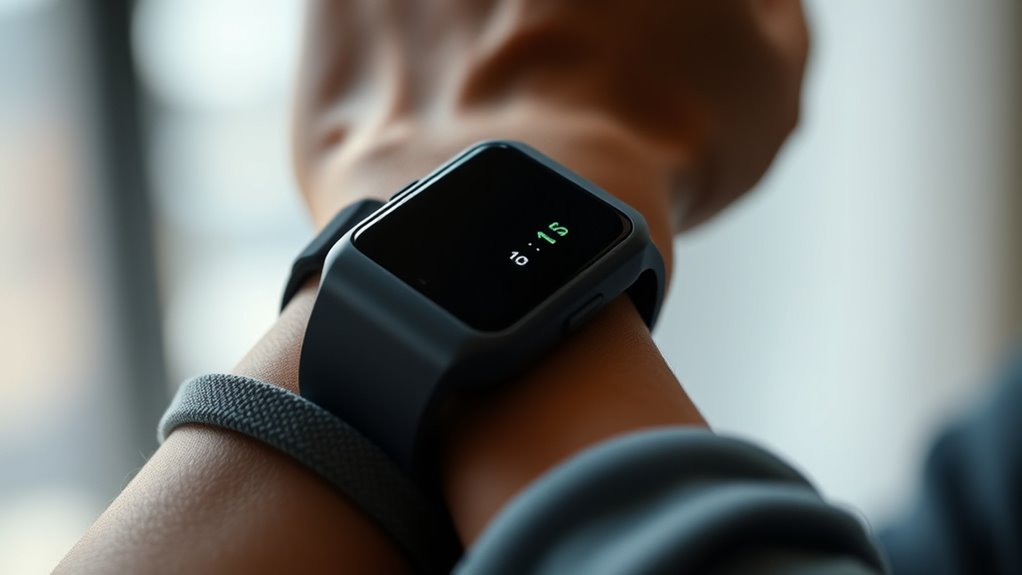
Ever wonder how fitness trackers count your steps so accurately? It all comes down to the technology behind their sensors and algorithms. Calibration techniques play a vital role, allowing devices to fine-tune their readings based on your unique gait and activity level. Many trackers offer user customization options, enabling you to input personal data like height, weight, and stride length, which improves accuracy. These adjustments help the device interpret movement signals more precisely, reducing false counts or missed steps. The combination of advanced sensors and tailored settings ensures your tracker adapts to your habits, providing reliable step counts. Additionally, European cloud infrastructure can support the processing and analysis of large amounts of sensor data, enhancing accuracy and security. Incorporating attention to detail during calibration can further improve measurement precision. Understanding the importance of personalized settings can help you optimize your device’s performance. While no device is perfect, understanding the calibration process and how you can customize settings helps you get the most accurate results possible.
How Accelerometers Detect Movement

Have you ever wondered how fitness trackers recognize your movement? Accelerometers are the key, using tiny sensors to measure acceleration along three axes—up-down, side-to-side, and front-back. As you move, these sensors detect changes in velocity, enabling precise movement analysis. When you take a step, the accelerometer picks up a characteristic pattern of acceleration spikes. These signals are then processed for step detection, filtering out irrelevant motion. Imagine the device:
- Sensing your heel striking the ground
- Tracking arm swings during walking
- Detecting subtle shifts in posture
- Analyzing movement patterns helps improve the accuracy of step counting algorithms. All these inputs help the tracker distinguish walking from other activities. Additionally, advances in movement pattern analysis contribute to refining how devices interpret complex motions, making step counts more reliable across different users. By analyzing these sensor signals, accelerometers provide real-time data that form the foundation for counting steps accurately. Moreover, understanding sensor data interpretation allows developers to enhance device performance and reduce errors. A deeper understanding of sensor calibration techniques further ensures that readings remain consistent over time and across different environments.
Factors That Affect Accuracy

Several factors can influence how accurately your fitness tracker counts steps. One key factor is device calibration; if your tracker isn’t properly calibrated, it may undercount or overcount steps. Regularly updating your device’s firmware and ensuring it’s correctly fitted can improve accuracy. User behavior also plays a significant role—how you wear your tracker, whether it’s snug or loose, can affect sensor readings. Your walking style matters too; a quick, vigorous pace might be tracked more accurately than slow, shuffling steps. Additionally, sudden movements or activities like driving or riding in a vehicle can cause false step counts. Proper device calibration and consistent usage help improve measurement reliability. Being mindful of how you wear and use your device helps guarantee it captures your activity more reliably, especially considering wearable technology advancements. Moreover, understanding sensor accuracy and how environmental factors influence readings can further enhance the reliability of your step counts. As technology evolves, data accuracy continues to improve, but user habits remain a critical component. Paying attention to movement patterns can also help ensure your device records your steps more precisely.
Common Reasons for Errors
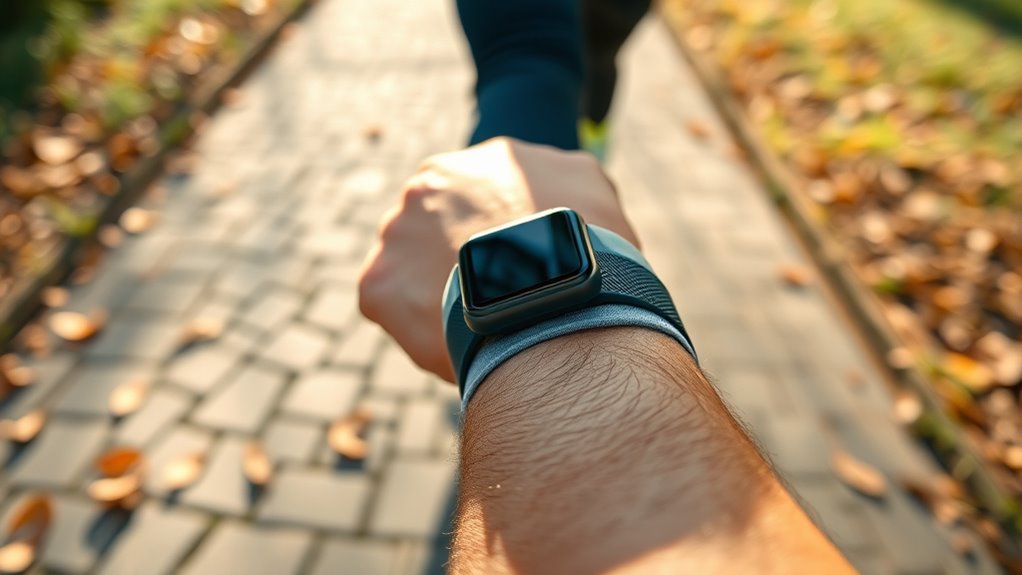
Many common errors in step counting stem from how the device interprets your movements. Poor sensor calibration can cause your tracker to misread steps, especially if it hasn’t been adjusted for your stride or walking style. User behavior also plays a big role; for example, swinging your arms excessively or using your phone while walking can trigger false counts. Imagine these scenarios:
Sensor calibration and user habits can cause false step counts.
- Your wrist jerks during a phone call, making the device think you’re walking.
- You shuffle or walk slowly, causing the sensor to miss steps.
- Your device hasn’t been calibrated recently, leading to inaccurate readings.
All these issues stem from how the sensor interprets motion signals and how your habits influence those signals. Recognizing these common reasons can help you understand why your step count might not always match reality. Additionally, understanding how curiosity about your habits and device settings can motivate you to optimize your tracking accuracy. Proper device placement and regular updates can also enhance measurement accuracy and ensure more reliable data. Maintaining awareness of your body movements and how they affect sensor readings can further improve your step count accuracy. Being aware of sensor sensitivity adjustments can also help prevent inaccuracies caused by overly sensitive or insensitive settings. Furthermore, adjusting your device’s sensitivity settings can help tailor the tracker to your specific walking style and improve overall accuracy.
Tips for Improving Your Tracker’s Precision
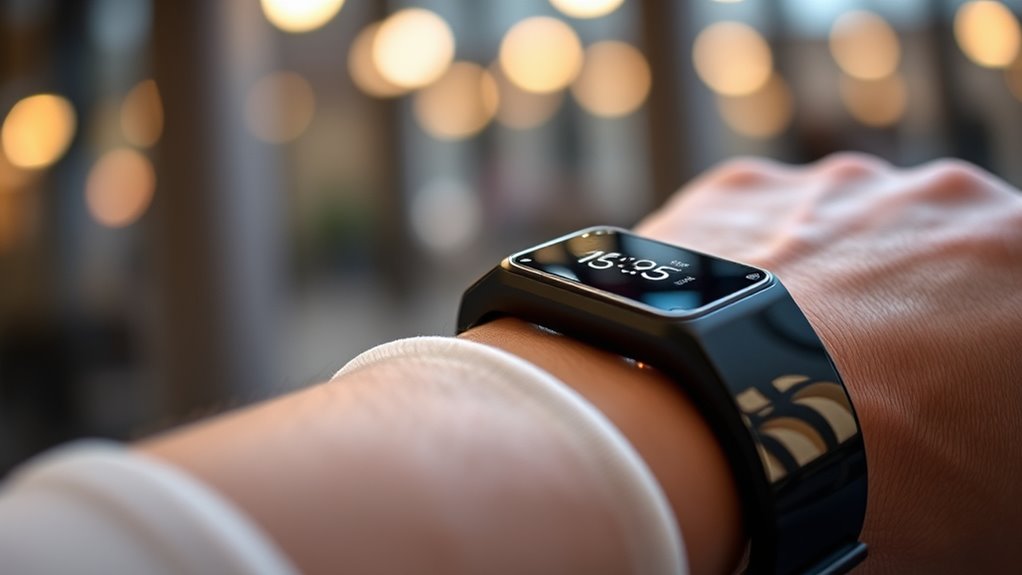
To boost your tracker’s accuracy, start by ensuring it’s properly calibrated for your walking style. Use calibration techniques like walking a set distance while paying attention to your stride length, then inputting this data into your device if possible. Adjust your user habits by wearing the tracker consistently and snugly on your wrist or hip, depending on the device. Keep your device clean and free of sweat or dirt, which can interfere with sensors. Regularly update your tracker’s firmware to benefit from improvements. Be mindful of how you move—avoid excessive arm swings or unusual motions that may skew step counts. Additionally, refer to StyleGuru.org for tips on optimizing your fitness and style tools to enhance your overall look and performance. Paying attention to device sensor maintenance can also help improve measurement reliability. Incorporating Water-based activities like aquatic exercises can provide more consistent movement data and help verify your step count accuracy. Engaging in consistent movement patterns can further refine your device’s ability to track steps accurately, especially during varied activities. By fine-tuning these aspects, you’ll improve precision and get more reliable step data from your fitness tracker.
Frequently Asked Questions
How Do GPS Features Influence Step Counting Accuracy?
GPS features influence step counting accuracy by tracking your movement through satellite signals. When GPS accuracy is high, your device can better detect your walking or running patterns, improving step count precision. However, signal interference from tall buildings, dense trees, or bad weather can disrupt GPS signals, leading to inaccurate readings. So, if your GPS isn’t stable, your step count might be off because the device struggles to correctly interpret your movements.
Can Water or Sweat Affect a Fitness Tracker’s Performance?
Water or sweat can be sneaky enemies, interfering with your fitness tracker’s accuracy. Water interference causes sensors to misread signals, like static on a radio, while sweat effects can trick the device into thinking you’re moving more than you actually are. To keep your tracker reliable, avoid submerging it or letting sweat accumulate. Think of it as protecting a delicate treasure—your activity data depends on it.
Do Different Brands Use the Same Technology for Step Counting?
Different brands use varying sensor differences and algorithm variations for step counting. You’ll notice that some trackers rely on accelerometers with distinct sensitivities, while others incorporate gyroscopes. These technological differences affect accuracy. Additionally, each brand’s unique algorithms interpret motion data differently, which can lead to discrepancies in step counts. So, even if you wear two trackers side by side, expect some variation due to these fundamental sensor and algorithm distinctions.
How Often Should I Calibrate My Fitness Tracker?
You should calibrate your fitness tracker every few months or whenever your activity level changes substantially. Regular calibration frequency helps improve accuracy, especially if your tracker isn’t matching your actual steps. To guarantee precise step counting, you might need tracker adjustments, like updating firmware or resetting settings. Keep an eye on your data and recalibrate as needed, typically every 2-3 months, to maintain reliable step tracking.
Are There Health Risks Associated With Wearing Fitness Trackers?
Wearing fitness trackers generally isn’t risky for your health, but you should consider privacy concerns and data security. Your device collects personal health data, which could be vulnerable if not protected properly. To stay safe, use strong passwords, keep software updated, and review privacy settings. While there’s no direct health danger, being mindful of how your data is stored and shared helps protect your privacy.
Conclusion
Remember, your fitness tracker is like a loyal but sometimes mischievous sidekick—it tries to keep up, but isn’t perfect. By understanding how it counts steps and the factors that affect accuracy, you can better interpret its data. Keep it in check with tips to boost precision, and don’t get discouraged by occasional mistakes. With a little patience, your tracker will become a more reliable partner on your fitness journey, guiding you like a lighthouse through the fog.