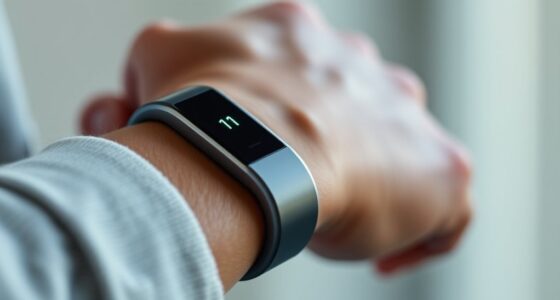

Your smartwatch collects sensitive data like heart rate, location, and activity, which raises privacy concerns. While encryption helps protect your information, vulnerabilities like unsecured networks or third-party apps can expose your data. It’s important to review privacy settings and stay informed about device security features. If you want to understand how to better safeguard your personal information and avoid unwanted spying, exploring these privacy aspects further can be very helpful.
Key Takeaways
- Wearables collect sensitive data like heart rate, location, and sleep patterns, raising privacy concerns about data misuse.
- Proper encryption of transmitted data is crucial to prevent unauthorized access and protect user privacy.
- User consent and privacy settings during setup determine how much personal information is shared or restricted.
- Security vulnerabilities from manufacturer oversights, unsecured networks, and third-party apps increase the risk of spying.
- Staying informed, managing permissions, and demanding transparency help users maintain control over their wearable data.
As wearable devices become more popular, concerns about privacy are increasingly common. You might wonder whether your smartwatch is quietly collecting your personal data and how safe that information truly is. The reality is that these devices gather a wide range of sensitive information—your heart rate, location, activity levels, even your sleep patterns. While this data can help improve your health and fitness, it also raises questions about who has access to it and how it’s protected. One essential aspect of safeguarding your privacy is the implementation of data encryption. When your smartwatch transmits data to servers or syncs with your phone, encryption acts like a digital security guard, scrambling your information so that unauthorized parties can’t easily decipher it. Proper data encryption ensures that even if hackers intercept your data, they can’t read or misuse it. However, the effectiveness of encryption depends on how well the device’s security protocols are designed and maintained, so you should stay informed about your device’s security features. Additionally, understanding the thermal behavior of your device can be important, as it influences how data is processed and protected during operation.
Another critical element is user consent. When you set up a wearable device, you’re often prompted to agree to various terms and conditions. While these documents might seem lengthy and tedious, they are essential for understanding how your data will be used. Manufacturers should clearly explain what data they collect, how it’s stored, and who might access it. Your informed user consent ensures you’re aware of and agree to the data practices involved. It’s important not to overlook or skip these permissions; instead, review them carefully. You have the right to control your privacy, and opting out of certain data collection features or adjusting privacy settings can help you retain more control over your personal information.
Despite the technical safeguards like data encryption and the importance of user consent, vulnerabilities still exist. Sometimes, device manufacturers or app developers may not prioritize security, leaving gaps that could be exploited. Additionally, you should be cautious about connecting your wearable to unsecured Wi-Fi networks or sharing data with third-party apps that haven’t been thoroughly vetted. Regularly updating your device’s software and privacy settings can also strengthen your defenses. Remember, you’re ultimately responsible for managing your privacy. Being aware of how your data is being handled, demanding transparency from manufacturers, and making informed choices about permissions can help you maintain control over your personal information.
Frequently Asked Questions
Can Wearable Data Be Hacked by Third Parties?
Yes, wearable data can be hacked by third parties through unauthorized access. If your device lacks strong data encryption, hackers can intercept sensitive information like health stats or location data. To protect yourself, make certain your smartwatch has updated security features and use strong, unique passwords. Regularly reviewing app permissions and firmware updates also help prevent unauthorized access, reducing the risk of your wearable being compromised.
Do Wearable Devices Share Data With Insurance Companies?
Wearable devices can share your data with insurance companies, depending on their data sharing policies. Insurance implications arise when insurers use your activity and health data to adjust premiums or determine coverage options. Always review your device’s data sharing policies to understand what information is shared and how it might affect your insurance. Stay informed and consider adjusting privacy settings if you want to limit data sharing with insurers.
Are Wearables Compliant With International Privacy Laws?
You might think your wearables are playing by the rules, and they generally aim to. They endeavor to be compliant with international privacy laws by implementing data encryption and obtaining user consent. However, laws vary across countries, so it’s wise to stay informed. While manufacturers do their best, you’re the best advocate for your privacy—know your rights and read those privacy policies carefully. Don’t let the tail wag the dog.
How Long Is My Wearable Device Data Stored?
Your wearable device typically stores data for a period set by the manufacturer’s data retention policies, which can range from a few months to several years. You often have some control over this, such as deleting data or adjusting settings. It’s important to review your device’s privacy options so you can manage how long your data is kept and guarantee your personal information stays secure.
Can I Delete My Data From Wearable Manufacturer Servers?
Yes, you can delete your data from wearable manufacturer servers. Most companies allow you to do this through your account settings or privacy dashboard. They often use data anonymization techniques to safeguard your identity during storage. However, your user consent is usually required before deleting data. Be sure to review the privacy policy, and if needed, contact customer support to confirm your data is fully removed and your privacy is protected.
Conclusion
While your smartwatch offers unmatched convenience, it’s wise to stay mindful of the subtle ways your data might be shared. Think of it as a quiet dance—your device and your privacy moving together in harmony. By staying informed and adjusting your settings, you can enjoy your wearable tech without worry. After all, a little awareness goes a long way in keeping your digital life just the way you like it—personal, private, and in your control.