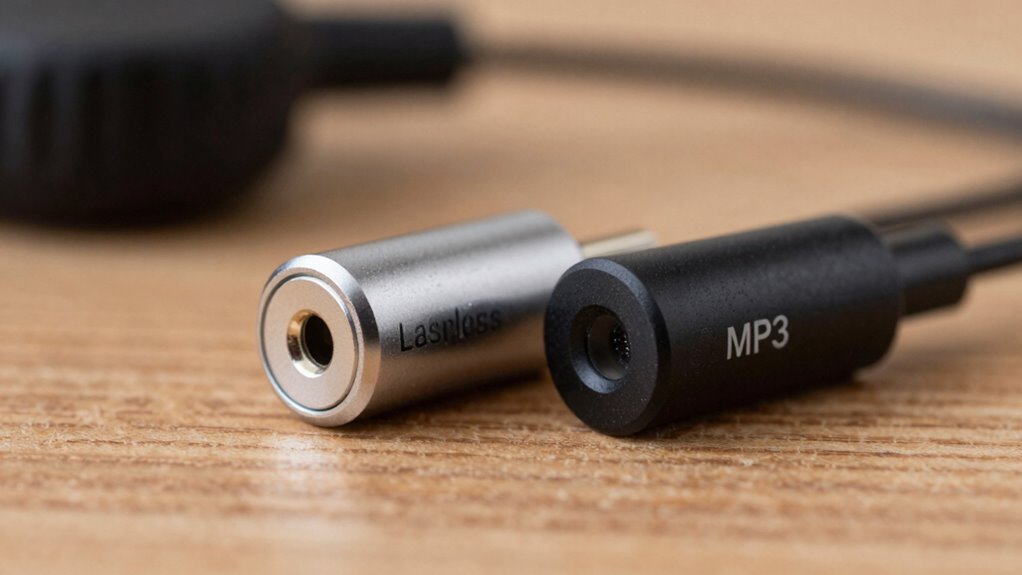

You can often notice the difference between lossless audio and MP3 if you use quality headphones or speakers in a quiet environment. Lossless files preserve every detail of the original recording, providing richer sound, while MP3 compression reduces some nuances, especially at lower bitrates. However, in everyday listening scenarios or with basic equipment, the difference can be subtle or hardly noticeable. Keep exploring to discover how factors like equipment and environment influence what you hear.
Key Takeaways
- Lossless audio preserves all original sound details, providing richer clarity compared to MP3’s compressed quality.
- Higher-end headphones and speakers enhance the ability to perceive differences between formats.
- Listening environment, such as quiet rooms and acoustic treatment, significantly influences detectable audio quality gaps.
- At lower MP3 bitrates, sound quality loss is more pronounced, making differences more noticeable under ideal conditions.
- Personal hearing ability, equipment, and environment determine whether one can reliably distinguish between lossless and MP3 audio.
Top picks for "lossles audio really"
Open Amazon search results for this keyword.
As an affiliate, we earn on qualifying purchases.
Understanding the Basics of Audio Compression
To understand the differences between lossless audio and MP3, it’s important to grasp the basics of audio compression. An audio format defines how sound data is stored and played back. Compression algorithms are used to reduce file sizes by removing redundant or less audible information. Lossless compression retains all original audio data, ensuring perfect reproduction, while MP3 uses lossy compression, discarding some details to save space. When you choose an audio format, you’re selecting how the data is processed and stored. Compression algorithms determine how much data can be removed without noticeably affecting quality. Knowing these fundamentals helps you understand why lossless files are larger but more accurate, whereas MP3 files are smaller but may sacrifice some fidelity. Understanding audio codecs is essential for making informed choices about sound quality and file management.
What Is Lossless Audio and How Does It Work?
Lossless audio uses compression techniques that reduce file size without losing any sound quality. This means your original audio data is preserved exactly as it was recorded. Understanding how this preservation works helps you appreciate the difference from other formats like MP3. Additionally, high fidelity ensures that every nuance of the sound is maintained, providing a listening experience that is as close to the original recording as possible.
Lossless Compression Techniques
When you listen to lossless audio, you’re experiencing a digital file that preserves every detail of the original recording without any quality loss. Lossless compression techniques use algorithms that achieve this by focusing on bitrate optimization, reducing file size while maintaining perfect fidelity. These methods rely heavily on psychoacoustic modeling to identify and eliminate inaudible sounds, ensuring only perceptible audio data is retained. This process differs from lossy formats by avoiding data removal that affects sound quality. The compression algorithms analyze audio patterns to efficiently encode data, preserving the full richness of the original.
| Technique | Description |
|---|---|
| FLAC | Uses psychoacoustic modeling for high-quality compression |
| ALAC | Apple Lossless, optimized for Apple devices |
| WAV | Uncompressed, no compression involved |
| AIFF | Similar to WAV, uncompressed audio data |
Audio Data Preservation
Understanding how lossless audio preserves your music is key to appreciating its quality. Lossless formats keep every detail intact, ensuring no sound is lost during compression. This is achieved through precise bitrate optimization, balancing file size and audio fidelity. Additionally, audio metadata is preserved, maintaining your playlists, artist info, and album art without compromise. When you choose lossless, you’re safeguarding the original recording’s richness and depth.
Consider these emotional benefits:
- Relive every nuance of your favorite tracks
- Experience music as the artist intended
- Hold onto priceless memories embedded in sound
- Feel immersed in authenticity and clarity
- Preserve your musical legacy for generations
The Characteristics of MP3 and Its Compression Method
MP3, short for MPEG Audio Layer III, revolutionized digital music by compressing audio files to considerably smaller sizes without a noticeable loss in sound quality for most listeners. This is achieved through techniques like bitrate optimization, where you adjust the data rate to balance quality and file size. MP3 relies heavily on psychoacoustic modeling, which takes advantage of human hearing limitations by removing sounds masked by louder ones or inaudible details, reducing file size without *substantially* affecting perceived quality. The compression process discards redundant information, focusing on what the human ear can perceive. This method allows MP3s to deliver manageable file sizes suitable for streaming and storage, making digital music more accessible without sacrificing too much audio fidelity.
Audio Quality: Comparing Lossless and MP3 Files

The difference in audio quality between lossless and MP3 files becomes clear once you listen closely. Lossless files preserve every detail of the original recording, offering a richer, more immersive experience. In contrast, MP3s use compression techniques that reduce file size, often at the expense of audio fidelity. When comparing bitrate, lossless formats typically range from 400 to 1411 kbps, providing superior sound clarity. MP3s usually hover around 128 to 320 kbps, which can compromise subtle nuances. Understanding audio fidelity can help you appreciate the true depth of high-quality sound. Recognizing filter maintenance and proper cleaning techniques ensures optimal performance of your audio equipment, enabling you to experience music as intended. Feel the impact of these differences with:
Lossless audio retains every detail, offering superior clarity compared to compressed MP3 files.
- Crystal-clear vocals and instrumentals
- Rich, full soundstage
- Accurate reproduction of complex melodies
- Less background noise or artifacts
- A truly authentic listening experience
Your choice affects not just sound quality but your emotional connection to music. Additionally, considering compression techniques can help you understand how different formats balance quality and file size.
The Role of Human Hearing and Perception
While lossless audio provides a detailed and authentic listening experience, human hearing plays a pivotal role in how we perceive sound quality. Your auditory perception determines what sounds stand out or get lost, influenced by hearing thresholds— the minimum sound level you can detect across frequencies. If your hearing thresholds are higher in certain ranges, subtle differences between lossless and compressed MP3 files may become imperceptible. Your brain processes sound based on these thresholds and how well your ears distinguish between nuances. Even with high-quality audio, perception varies from person to person. Additionally, the hearing thresholds can change over time due to age or exposure to loud noises, further affecting your ability to discern audio differences. Factors like auditory perception and the limits of your hearing shape whether lossless audio truly enhances your listening experience. Moreover, listening environments can significantly influence how you perceive sound quality, regardless of the file format. The quality of audio equipment you use also plays a crucial role in detecting subtle differences in sound fidelity, affecting your overall listening experience.
Equipment and Environment: Factors Affecting Audio Experience

Your playback device and listening environment greatly influence your audio experience. High-quality equipment can reveal details in lossless files that cheaper gear might miss, while poor conditions like background noise can diminish sound clarity. Understanding these factors helps you get the most out of your music, regardless of format. Additionally, considering soundproofing and optimal placement of speakers or headphones can further enhance your listening quality. Proper acoustic treatment can make a significant difference in how music sounds in your space. Investing in high-fidelity audio gear can also help you appreciate subtle nuances that distinguish lossless audio from compressed formats. Moreover, integrating smart home technology such as acoustic sensors and automated sound adjustments can optimize your listening environment for the best possible experience. Being aware of the listening environment and actively managing it can help ensure you experience the full quality of your audio files.
Playback Device Quality
Playback device quality profoundly influences how you experience lossless audio and MP3 files. A high-quality device can reveal the richness and detail in lossless formats, while lower-end equipment may mask subtle nuances. When using wireless streaming or portable devices, the clarity depends heavily on your hardware’s capabilities. Poor speakers or earbuds can diminish the difference between formats, making high-res audio feel wasted. The right device elevates your listening, making every note immersive and full-bodied. Consider these factors:
- Crisp, clear sound from quality speakers or headphones
- Reduced distortion and background noise
- Enhanced bass and treble response
- Better handling of dynamic range
- Greater emotional connection to the music
- The quality assurance of your playback equipment plays a crucial role in the overall listening experience.
Additionally, hardware limitations such as driver quality and digital-to-analog converters significantly impact your ability to perceive audio differences. Proper equipment maintenance and regular updates can ensure your device performs at its best, further improving your listening experience. Your device choice shapes your listening experience more than you might realize.
Listening Environment Conditions
The environment in which you listen to music considerably impacts how you perceive lossless audio and MP3 files. Your listening room plays a vital role; a well-treated space with minimal echo enhances audio clarity. Ambient noise, like traffic or chatter, can drown out subtle details, making it harder to distinguish differences between formats. If you’re in a noisy environment, even the best equipment won’t reveal the nuances of lossless sound. Conversely, a quiet, controlled space allows you to notice the depth, detail, and richness that lossless files can provide. Keep your listening environment optimized by reducing background distractions and choosing a suitable room. Doing so ensures you get the most accurate experience, whether you’re listening to high-quality lossless audio or compressed MP3s.
When Can You Tell the Difference? Practical Listening Tests

Determining whether you can hear the difference between lossless audio and MP3 often depends on the listening environment and the quality of your equipment. To truly notice the nuances, try simple listening tests with familiar songs. Focus on these factors:
- Variations in bitrate differences that affect clarity
- Your equipment’s ability to reproduce subtle details
- Extended listening sessions that may cause listening fatigue
- Listening in quiet, controlled environments
- Comparing tracks side-by-side to detect subtle disparities
These tests can evoke strong emotions, like frustration or amazement, depending on your experience. Usually, if your gear is high-quality and the environment is ideal, you might discern slight differences. But often, the impact is minimal, especially with lower bitrate MP3s.
Making the Choice: Is Lossless Worth It for Everyone?
Deciding whether investing in lossless audio is worthwhile depends on your listening habits, equipment, and priorities. If you enjoy high-fidelity sound and have quality headphones or speakers, lossless formats can enhance your experience, especially with music streaming services that support them. However, if you primarily listen on basic earbuds or are on a limited data plan, MP3s may suffice. Additionally, if you do audio editing or produce content, lossless files provide better quality for editing and mastering. For casual listeners, MP3s often offer a good balance of convenience and sound quality. Ultimately, consider how much value you place on audio fidelity versus storage and ease of use. Lossless isn’t necessary for everyone, but it’s worth it if you prioritize sound quality and have the right setup. Understanding audio quality can help you make a more informed decision based on your specific needs. Moreover, understanding file formats is essential for choosing the best option for your listening environment. Being aware of audio compression techniques can also help you appreciate the trade-offs involved in different formats.
Frequently Asked Questions
Can Lossy Formats Like MP3 Ever Fully Replicate Lossless Audio Quality?
Lossy formats like MP3 can’t fully replicate lossless audio quality because of bitrate limitations, which restrict the amount of data preserved during compression. This often results in compression artifacts, especially at lower bitrates, reducing sound clarity and detail. While high-bitrate MP3s come close, they still can’t match the fidelity of lossless audio, making it noticeable to audiophiles or those with high-quality listening setups.
How Much Does Streaming Compression Impact Perceived Audio Fidelity?
When it comes to streaming, you’re often trading quality for convenience, and it’s a case of “you get what you pay for.” Compression impacts perceived audio fidelity by reducing bit rate, which can diminish dynamic range and detail. While some listeners notice the difference, many won’t, especially on smaller speakers or headphones. High bit rate streams preserve more of the original quality, but lower ones might make music sound flatter and less lively.
Are There Specific Genres Where Lossless Audio Makes a More Noticeable Difference?
Yes, in genres like classical and jazz, lossless audio makes a noticeable difference. You’ll notice the clarity of classical instruments and the richness of jazz textures more vividly with lossless files. MP3s can sometimes obscure subtle details and depth, but lossless audio preserves the full fidelity. If you’re an audiophile or deeply appreciate these genres, opting for lossless will enhance your listening experience considerably.
What Are the Best Affordable Devices for Experiencing High-Quality Audio?
You can enjoy high-quality audio with affordable headphones like the JBL Quantum 200 or Sony MDR7506, which provide great sound without breaking the bank. Pair them with portable DACs such as the AudioQuest DragonFly Black or FiiO Q1 Mark II to access richer, clearer sound. These devices make it easy to experience lossless audio on the go, giving you impressive sound quality without overspending.
Does Higher Bit Depth Improve Audio Quality in MP3 or Lossless Formats?
Higher bit depth is like adding more vibrant colors to a painting, enhancing your audio experience. It benefits both lossless formats and MP3s by increasing audio resolution, which means more detail and dynamic range. While lossless files can fully utilize higher bit depths, MP3s have limitations. Still, higher bit depth can improve overall sound quality, making music feel richer and more immersive, regardless of format.
Conclusion
Ultimately, whether you notice the difference between lossless and MP3 comes down to your ears and environment. If you’re chasing that extra edge of clarity, lossless might be worth the investment. But if you’re content with convenience and smaller files, MP3 does the job just fine. Remember, it’s not always about having the best gear—it’s about enjoying the music without losing sight of what truly matters. Sometimes, it’s the little things that make all the difference.