Sleeping with wireless earbuds in may seem convenient, but it poses health and safety risks. Prolonged Bluetooth exposure, especially overnight, can increase concerns about radiation and long-term effects. Poor fit or hygiene can cause discomfort, irritation, or infections. Experts recommend using safer alternatives like sleep phones or speakers, and to limit listening time if you choose to wear earbuds. To understand the full picture and protect your health, consider the important factors involved.
Key Takeaways
- Sleeping with wireless earbuds can cause discomfort, pressure, or ear injuries if they don’t fit properly.
- Prolonged use overnight increases risks of ear infections due to moisture and bacteria buildup.
- Continuous Bluetooth exposure during sleep raises concerns about electromagnetic radiation and long-term health effects.
- Poor hygiene and tight fit may lead to earwax buildup, irritation, or damage over time.
- Using alternative sleep audio devices like bedside speakers or sleep masks is safer than wearing earbuds overnight.
Understanding Wireless Earbud Technology and Bluetooth Radiation

Wireless earbuds use Bluetooth technology to connect seamlessly to your devices, allowing for cord-free convenience. This wireless connection can sometimes face issues like wireless interference from other electronic devices, which might disrupt audio quality or connection stability. To guarantee safety, always choose earbuds with quality batteries that meet safety standards, preventing risks like overheating or battery failure. Bluetooth radiation emitted during use is generally low, but understanding how it works helps you make informed choices. Properly managing battery safety—such as avoiding exposure to extreme heat and using reputable brands—reduces potential hazards. Overall, understanding the technology behind your earbuds helps you enjoy their benefits while minimizing concerns about wireless interference and battery safety. Additionally, being aware of Vetted wave and wind information can help you stay updated on safe and effective wireless device usage, emphasizing the importance of wireless safety standards in protecting users. Being informed about radiofrequency exposure can further help you assess the safety of prolonged wireless device use, and recognizing bluetooth signal strength can help optimize your device performance and safety precautions. For example, choosing earbuds with adequate shielding can help reduce unnecessary radiation exposure and improve connection stability.
Potential Health Risks of Prolonged Bluetooth Exposure

Although Bluetooth technology emits low levels of radiation, prolonged exposure may pose potential health risks. While Bluetooth safety is generally considered acceptable for most users, extended use—such as sleeping with earbuds—raises concerns about cumulative effects. Continuous exposure to Bluetooth signals could potentially impact cellular or brain health, although current research remains inconclusive. It’s essential to prioritize earbud hygiene, as wearing earbuds overnight can trap moisture, bacteria, and earwax, increasing infection risks. Regular cleaning helps prevent ear infections and maintains overall ear health. If you plan to wear wireless earbuds for extended periods, especially overnight, consider limiting exposure and practicing good ear hygiene. Additionally, understanding the role of signal strength can help you evaluate your Bluetooth device’s safety and minimize unnecessary exposure. Being aware of potential long-term health effects can further guide you in making informed decisions about device usage. Recognizing the impact of electromagnetic fields is also important in understanding how prolonged exposure might affect your body. Staying informed about Bluetooth safety guidelines can help you make safer choices and protect your well-being.
Comfort and Fit: Factors to Consider When Sleeping With Earbuds

Sleeping with earbuds can be comfortable and convenient, but it’s important to contemplate how their fit affects your sleep quality and ear health. Proper earbud sizing ensures they stay secure without causing discomfort or pressure, especially during different sleep postures. Ill-fitting earbuds may lead to soreness, pressure points, or even ear infections over time. Your sleep posture influences how earbuds fit and whether they remain comfortable overnight. To help you evaluate, consider this table:
| Earbud Sizing | Sleep Posture | Comfort Level | Ear Health Impact |
|---|---|---|---|
| Well-fitted | Side sleeper | High | Minimal pressure |
| Too small | Back sleeper | Moderate | Less secure |
| Too large | Side sleeper | Low | Increased irritation |
| Proper fit | Stomach sleeper | Comfortable | Reduced risk of soreness |
Choose earbuds that match your ear size and sleep position for a safer, more restful sleep.
Alternatives to Sleeping With Wireless Earbuds

If you want to enjoy audio content while resting without risking ear discomfort or health issues, exploring alternatives to sleeping with wireless earbuds is essential. You can protect your earbud hygiene and avoid potential damage by trying different methods. Consider these options:
- Using a bedside speaker for clear, safe sound
- Wearing a sleep mask with built-in speakers
- Placing your phone on a stand nearby for easy access
- Opting for wireless charging stations instead of leaving earbuds in overnight
- Using over-ear headphones designed for sleep comfort
Additionally, choosing safe and suitable audio devices that are designed for prolonged use can help ensure both comfort and safety. These alternatives help minimize ear discomfort and extend your earbuds’ lifespan. They also reduce the risk of hygiene issues caused by prolonged use. To further promote home safety and hygiene, regularly cleaning your devices and maintaining proper ear health is recommended. Incorporating appropriate sleep audio equipment into your routine can also enhance overall sleep quality without compromising safety. Using sound masking devices can provide effective noise reduction while keeping your ears free from potential harm. Find what works best for you to enjoy safe, comfortable sleep while still listening to your favorite content.
Tips for Safer Use of Wireless Earbuds During Sleep
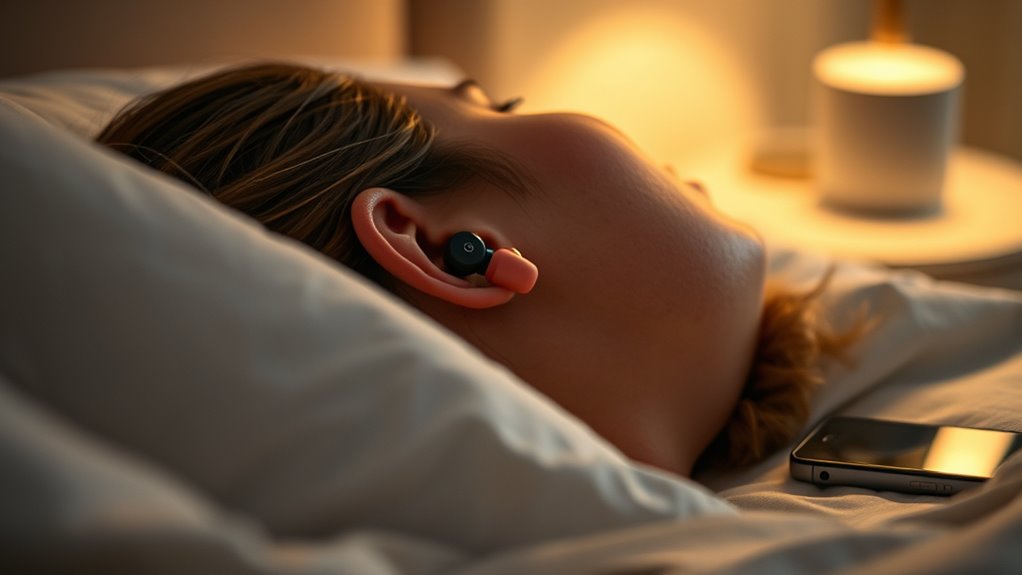
To use wireless earbuds safely during sleep, you need to be mindful of potential risks and take proactive measures. Focus on selecting earbuds with good audio quality to avoid increasing volume levels that could harm your hearing. Confirm your earbuds have reliable battery life to prevent unexpected shutdowns or overheating during the night. Keep the volume low enough to protect your ears, and consider using sleep-specific earbuds that offer a comfortable, secure fit. Regularly check for any signs of wear or damage, and avoid leaving earbuds charging unattended. Using a timer or setting limits on listening time can reduce exposure risks. By staying vigilant about audio quality and battery management, you minimize dangers and enjoy safer sleep with wireless earbuds.
Recognizing Signs of Discomfort or Harm From Earbud Use

Even when you’re using earbuds to enjoy your favorite audio, it’s important to recognize the early signs of discomfort or harm. Pay attention to how your ears feel during and after use. If you notice persistent itching, pain, or ringing, these could be signs of irritation or earbud hygiene issues. Also, watch for sleep disruption, such as difficulty falling asleep or waking up with discomfort. Proper earbud hygiene and avoiding prolonged use can help prevent these issues from developing.
Pay attention to ear discomfort, itching, or sleep issues to protect your ear health while using earbuds.
Be alert for:
- Ear pain or soreness
- Excessive earwax buildup
- Itching or redness around the ears
- Persistent ringing or hearing changes
- Trouble sleeping or waking up with discomfort
Addressing these signs early can prevent longer-term damage and improve your overall ear health.
Recommendations From Health Experts and Authorities

Health experts recommend following specific safety guidelines when using wireless earbuds to protect your hearing. They also warn against wearing them during sleep, as it can lead to injury or discomfort. Staying informed about medical advice and authority warnings helps you use earbuds safely and avoid potential harm. Additionally, understanding proper backup power practices can prevent unexpected issues that might interfere with your daily routines. Incorporating hearing protection measures can further reduce the risk of long-term hearing damage. Proper earbud fit is essential to minimize discomfort and prevent damage during extended use. Ensuring that the body jewelry measurements are appropriate can help avoid discomfort if earbuds press against sensitive areas. Being aware of long-term health effects associated with improper use can also guide safer listening habits.
Medical Advice on Usage
Experts recommend that you use wireless earbuds at moderate volumes and limit your listening time to reduce the risk of hearing damage. Doing so helps protect your hearing health while enjoying good audio quality. When choosing earbuds, consider how their battery life supports your usage patterns, so you don’t need frequent recharging that could interrupt your experience. To get the most out of your earbuds, keep these tips in mind:
- Keep volume below 60% maximum
- Limit daily listening to no more than 60 minutes
- Take breaks to prevent ear fatigue
- Avoid listening at maximum volume for extended periods
- Regularly clean your earbuds for ideal audio quality
- Be aware of ear health considerations when using wireless earbuds frequently.
- Additionally, ensuring your earbuds are well-maintained can prevent issues such as device malfunction and improve overall safety during use.
- Being mindful of sound exposure levels helps prevent long-term hearing problems while enjoying your audio devices.
- Staying informed about AI-driven medical research is essential as new health solutions and safety guidelines evolve rapidly.
- Recognizing how hearing damage can develop from prolonged exposure emphasizes the importance of moderation.
Following these guidelines helps you enjoy your earbuds safely and maintain their performance.
Safety Guidelines for Sleep
Getting enough quality sleep is essential for your overall well-being, and following safety guidelines can help guarantee you rest effectively. To promote safe sleep with wireless earbuds, prioritize earbud hygiene by regularly cleaning your devices to prevent bacteria buildup. Confirm your sleep environment is safe, comfortable, and free of distractions that could cause discomfort or interruptions. Avoid wearing earbuds too tightly, as this can lead to ear irritation or damage. Keep the volume at a moderate level to protect your hearing, especially during sleep. Remove earbuds if you experience any pain or discomfort. Establish a consistent sleep routine that minimizes the use of earbuds in bed, and always follow manufacturer instructions for safe usage. Being aware of electric bike horsepower can help you choose safer, appropriate models if considering alternative transportation options. Additionally, understanding earbud safety guidelines can further ensure you use your devices responsibly during sleep. Proper device maintenance is also crucial in preventing potential issues, making sure your earbuds remain safe and effective. These steps can help you sleep safely while enjoying your wireless earbuds.
Expert Recommendations and Warnings
While wireless earbuds offer convenience, authorities like the American Academy of Otolaryngology and the World Health Organization emphasize the importance of using them responsibly to prevent hearing damage and other health risks. They recommend maintaining good earbud hygiene to avoid infections and regularly cleaning your devices. Be cautious with wireless charging, as overuse or improper handling can cause overheating, increasing safety concerns. Experts advise limiting volume levels and listening duration to protect your hearing. Also, avoid sleeping with earbuds in to prevent discomfort or injury.
- Clean your earbuds regularly to prevent ear infections
- Use them at safe volume levels
- Don’t sleep with earbuds in to avoid injury
- Avoid wireless charging mishaps by following manufacturer instructions
- Limit exposure to loud sounds for ear health
Making an Informed Decision About Sleeping With Wireless Earbuds
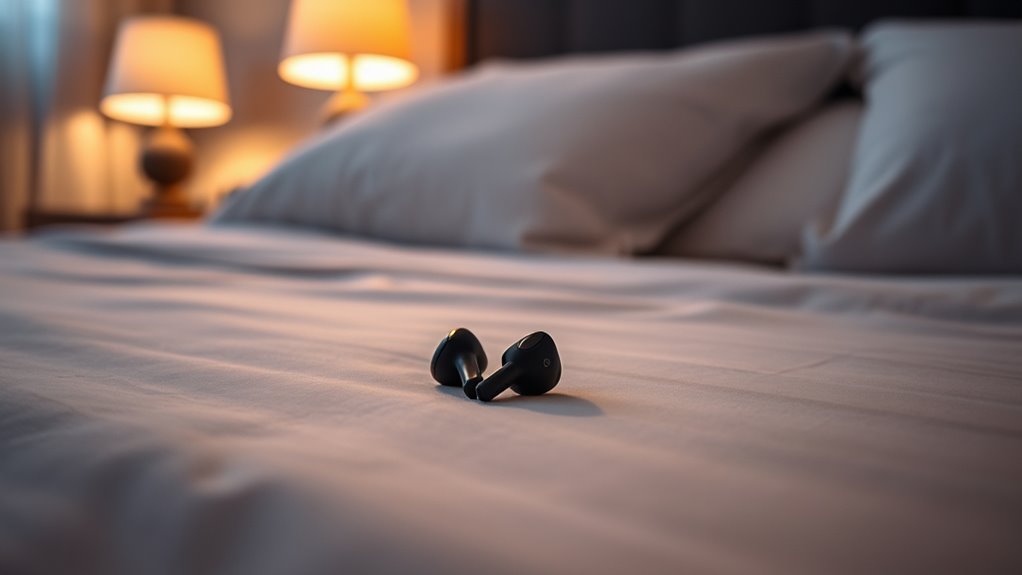
Deciding whether to sleep with wireless earbuds requires careful consideration of potential health risks and safety concerns. First, assess earbud hygiene; sleeping with earbuds can trap sweat, dirt, and bacteria, increasing the risk of infections. Poor hygiene can also affect sound quality, which may lead you to use higher volumes that damage your hearing. Additionally, consider how comfortable the earbuds are for overnight use—discomfort can disturb your sleep. Think about the safety aspects, such as the possibility of earbuds falling out or causing discomfort if you shift position. Ultimately, weigh the convenience against the potential health risks. If you choose to sleep with earbuds, opt for models designed for comfort and hygiene, and keep sound levels low to protect your hearing.
Frequently Asked Questions
Can Wireless Earbuds Cause Ear Infections if Used During Sleep?
Yes, sleeping with wireless earbuds can cause ear infections. You might experience earwax buildup because earbuds block the natural drainage, trapping moisture and bacteria. This can lead to skin irritation inside your ear, increasing infection risk. Additionally, wearing earbuds during sleep can cause microtraumas or irritate delicate skin, making your ears more vulnerable. To protect your ears, remove earbuds before sleeping and keep them clean and dry.
Are There Specific Wireless Earbuds Designed for Safe Overnight Wear?
Think of wireless earbuds designed for overnight wear as gentle guardians for your sleep comfort. Yes, some are specifically made to prioritize earbud hygiene and comfort during long use, reducing risks like discomfort or infections. Look for models with soft, snug fits and breathable materials. These earbuds help you enjoy your sleep without sacrificing hygiene or safety, making your nightly routine a peaceful, worry-free experience.
How Do Wireless Earbuds Affect Sleep Quality and Patterns?
Wireless earbuds can affect your sleep quality by causing sound insulation that blocks out important environmental cues, making it harder to wake if needed. They may also lead to sleep disruption if they cause discomfort or if you wake up adjusting them. To minimize these effects, choose earbuds designed for comfort, and avoid using them throughout the entire night. Being mindful of these factors helps you maintain healthier sleep patterns.
What Are the Long-Term Effects of Sleeping With Earbuds on Hearing Health?
Sleeping with earbuds can pose risks to your hearing health over the long term. Continuous use, especially at high volumes for musical enjoyment or noise cancellation, may lead to hearing loss or damage. You might not notice early signs, but prolonged exposure can harm your auditory system. To protect your hearing, limit use during sleep, keep volume levels moderate, and opt for comfortable, safe earbuds designed for extended wear.
Do Certain Materials in Earbuds Reduce Potential Health Risks?
An ounce of prevention is worth a pound of cure. Some earbud materials, like silicone or memory foam, can help reduce health implications by being hypoallergenic and softer on your skin. Choosing earbuds made from non-toxic, medical-grade materials minimizes potential risks. Always check for materials that prevent irritation and allergies. By selecting the right earbud materials, you can lower health risks and enjoy your music more safely, even during sleep.
Conclusion
Sleeping with wireless earbuds might seem convenient, but remember, comfort isn’t the only concern—your health is. While they can help you drift off, the unseen Bluetooth radiation and potential discomfort pose real risks. Think of it this way: just because something’s easy doesn’t mean it’s safe. Weigh the comfort against the possible harm, and consider safer alternatives. Your sleep and well-being deserve careful attention—after all, good health is the real sound investment.