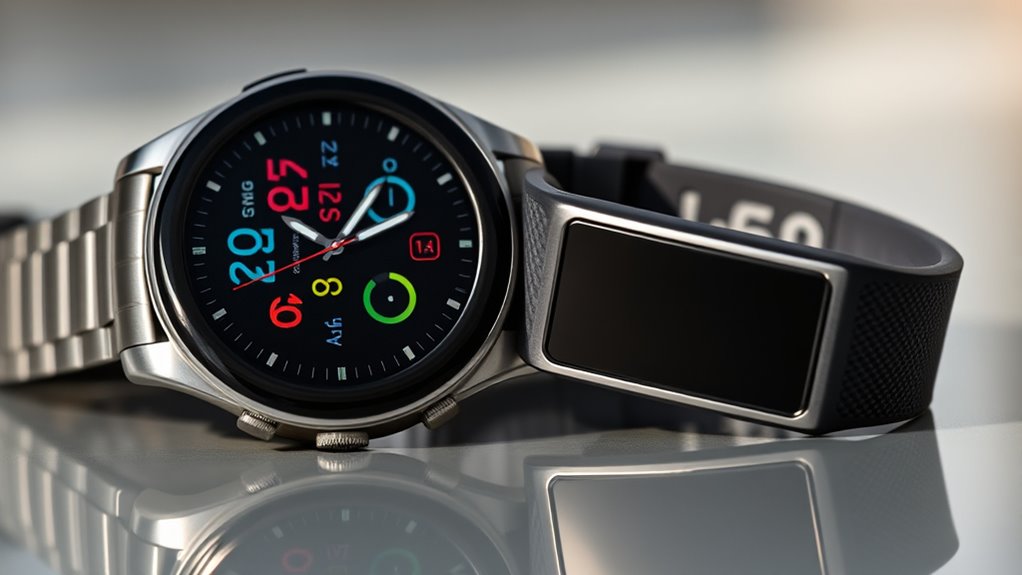

Choosing between a smartwatch and a fitness tracker depends on your goals and lifestyle. If you want advanced features like ECG, customizable watch faces, and notifications, a smartwatch suits you better. But if you focus mainly on activity tracking and simplicity, a fitness tracker might be enough. Both offer durability, comfort, and compatibility with your devices. To find out which fits you best and how to make the right choice, keep exploring the details.
Key Takeaways
- Choose a smartwatch for advanced health features, app customization, and seamless notifications; opt for a fitness tracker for core activity tracking and affordability.
- Consider device comfort, design, and durability to ensure long-term wear and resistance to environmental factors.
- Align your device choice with personal health goals and lifestyle for better motivation and ongoing satisfaction.
- Evaluate compatibility with your smartphone and existing apps to maximize health data integration.
- Balance features, performance, and cost to select a device that offers optimal long-term value and reliability.
Top picks for "smartwatch fitnes tracker"
Open Amazon search results for this keyword.
As an affiliate, we earn on qualifying purchases.
Key Features and Functionalities

When comparing smartwatches and fitness trackers, understanding their key features and functionalities is essential. Both devices excel at health monitoring, providing metrics like heart rate, sleep analysis, and step counts. Smartwatches often offer advanced health features such as ECG readings or blood oxygen sensors, making them suitable for all-encompassing health tracking. Fitness trackers focus on core activity data, helping you stay motivated and on target. Customization options are also significant; smartwatches usually allow you to change watch faces, install apps, and customize notifications, enhancing user experience. Fitness trackers typically offer limited customization but excel at providing straightforward activity insights. Additionally, the Free Floating design of some devices allows for seamless integration into daily life without feeling bulky, which can be a crucial factor in choosing between the two. Recognizing the impact of contrast ratio and color accuracy on display quality can also influence your decision if you prioritize screen clarity and visual appeal, especially during outdoor activities or in bright environments. Understanding wearable device compatibility ensures that your chosen device works seamlessly with your existing smartphones and smart home systems. Moreover, the battery life of devices can vary significantly, affecting how often you need to recharge, which is important for users with active lifestyles. Furthermore, many devices now include advanced sensors that can monitor additional health parameters, providing a more comprehensive view of your wellness. Knowing these differences helps you choose a device aligned with your health goals and preferred level of personalization.
Design and Comfort
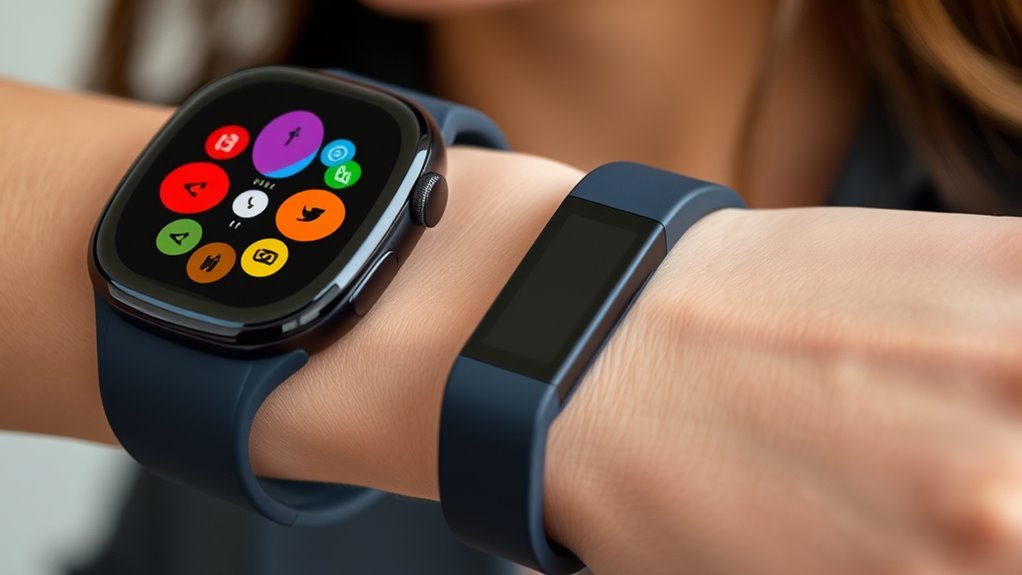
The design and comfort of a device play a crucial role in how often you’ll wear it and how effectively it fits into your daily routine. With band customization options, you can choose styles and colors that match your personal taste, making the device feel more like an extension of your everyday look. Material comfort is equally important; lightweight, breathable materials reduce irritation and make wearing the device for extended periods more enjoyable. A well-designed smartwatch might have a sleek, ergonomic shape, while a fitness tracker often prioritizes a slim profile for comfort during workouts. Your choice depends on how much you value aesthetics and comfort—since a device that’s uncomfortable or poorly suited to your style is less likely to become a regular part of your routine. Incorporating comfortable materials can significantly enhance your overall experience with these devices. Additionally, considering wearable fitness tech that emphasizes ergonomic design can further improve comfort during prolonged wear. Exploring device ergonomics can help you select options that minimize fatigue and maximize comfort over time, especially when selecting devices with Lifevest Advisors recommended features. Being aware of battery performance, for example, can influence how often you need to recharge, impacting overall convenience.
Compatibility and Connectivity

Compatibility and connectivity determine how seamlessly your smartwatch or fitness tracker integrates with your existing devices. You’ll want to check if your device supports app integration with your smartphone’s operating system, whether it’s iOS or Android. Wireless connectivity options like Bluetooth and Wi-Fi are essential for syncing data and receiving notifications in real-time. A device with easy-to-use app integration ensures your health stats, messages, and calls stay synchronized without hassle. Consider compatibility with other apps or platforms you already use, like fitness or health apps, to maximize functionality. Strong wireless connectivity guarantees smooth data transfer and minimizes lag. Choosing a device with broad compatibility and reliable connectivity means you’ll get a more integrated, user-friendly experience that complements your daily routine. Understanding industry trends can also help you select a device with the latest features and compatibility options. Additionally, staying informed about software updates ensures your device remains compatible and secure over time. Keeping an eye on device standards can further support consistent performance across different products and brands. Regular updates often include improvements in connectivity protocols, enhancing overall device performance and user experience.
Battery Life and Durability
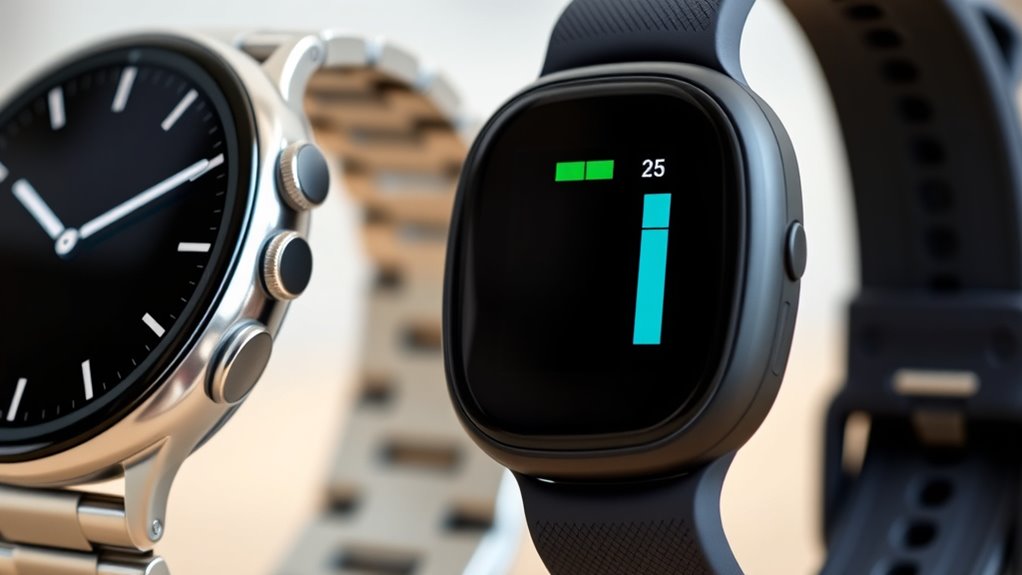
Battery life and durability considerably influence how you experience your smartwatch or fitness tracker daily. If you rely on long-lasting power, consider devices with solar power capabilities, which extend battery life by harnessing sunlight. This feature is especially useful if you’re frequently outdoors and forget to charge regularly. Durability also matters—look for water resistance to ensure your device withstands splashes, sweat, or even swimming. Water resistance ratings vary, so pick one aligned with your activity level. A durable device saves you money and hassle, maintaining performance over time. Additionally, selecting a device with advanced water resistance features can provide extra peace of mind during various activities. Choosing a device made with high-quality materials can further enhance its longevity and resistance to damage. Incorporating robust construction methods can also improve a device’s ability to withstand harsh environments and rough handling. Regular maintenance and cleaning can further extend your device’s lifespan, especially if it features water-resistant technology. Furthermore, opting for a device with battery-saving modes can help maximize usage between charges. Whether you choose a smartwatch or fitness tracker, prioritizing battery longevity and water resistance will keep your device functioning reliably, no matter your routine or environment.
Cost and Value for Money

While both smartwatches and fitness trackers vary widely in price, considering their overall value helps you make a smarter investment. Pricing options range from budget-friendly devices to premium models with advanced features. Fitness trackers generally cost less upfront, making them a good choice if you want basic activity monitoring without breaking the bank. Smartwatches tend to be pricier but often include more functionalities like GPS, notifications, and apps. When evaluating cost and value for money, think about long-term savings. A durable device with features you regularly use can reduce the need for frequent replacements. Additionally, understanding the cost differences between devices can help you select the best option for your budget. For example, many people are exploring AI-related job roles that may influence future device functionalities and user experience. Moreover, considering device durability can further enhance your long-term satisfaction. This is especially relevant as performance ratings based on suction power and durability from trusted sources like Witbeck Vacuums highlight the importance of quality in long-term use. Furthermore, assessing the energetic alignment of a device can ensure it complements your personal health and wellness goals. Ultimately, choosing a device that fits your lifestyle and budget ensures you get the best value for your money over time.
Frequently Asked Questions
Can a Smartwatch Replace a Dedicated Fitness Tracker Entirely?
A smartwatch can replace a dedicated fitness tracker for many users, but it depends on your needs. While smartwatches offer extensive customization options and features like notifications, their battery life usually isn’t as long as fitness trackers. If you prioritize detailed fitness metrics and longer battery life, a dedicated fitness tracker might be better. However, if you want all-in-one device with versatile functions, a smartwatch can definitely serve as a full replacement.
Which Device Offers Better Sleep Tracking Accuracy?
Think of sleep tracking accuracy as your personal night owl guiding you through your sleep jungle. Generally, fitness trackers tend to have better sleep tracking accuracy because they’re more specialized and better calibrated for sleep patterns. Smartwatches, while versatile, often get sidetracked by their multitasking nature, making their sleep data slightly less reliable. For precise insights, a dedicated fitness tracker is your best ally in decoding your nightly adventures.
Are Fitness Trackers Suitable for Swimming or Water Sports?
Yes, fitness trackers with water resistance are suitable for swimming and water sports. Look for models that specifically support swim tracking and have a high water resistance rating, like 5 ATM or more. These devices can monitor your strokes, distance, and calories burned underwater, making them ideal for water-based activities. Just verify your tracker is designed for water use to avoid damage and get accurate data during your swim sessions.
How Often Do Firmware Updates Improve Device Performance?
Think of firmware updates as tuning a car—they keep your device running smoothly. These updates usually improve performance every few months, enhancing battery life and refining the user interface. By installing them regularly, you guarantee your device stays efficient, responsive, and up-to-date. So, don’t skip updates; they’re like a pit stop that keeps your device in peak condition, giving you a better experience each time.
Do Smartwatches Provide More Health Insights Than Fitness Trackers?
Smartwatches generally provide more health insights than fitness trackers, thanks to their advanced sensors and capabilities. You’ll find better health data accuracy, especially for heart rate, sleep, and oxygen levels. Plus, smartwatches often feature a more user-friendly interface, making it easier to access and interpret your health data quickly. If you want extensive health insights and a smooth user experience, a smartwatch might be the better choice for you.
Conclusion
Ultimately, choosing between a smartwatch and a fitness tracker depends on what matters most to you. Did you know that over 60% of wearables users say they wear their device daily? Whether you want advanced features or just basic activity monitoring, pick the one that fits your lifestyle and budget. Both options can boost your health journey—so go ahead, make a confident choice and stay motivated every step of the way!