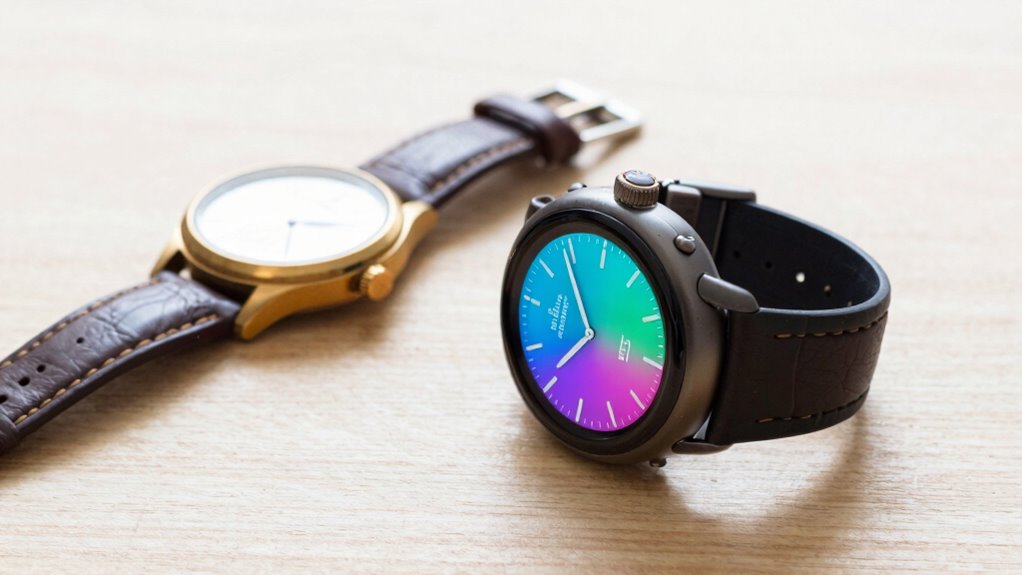

Smartwatches offer advanced technology, customization, and modern style, making them perfect for fitness tracking and connectivity. However, they can’t replace the timeless appeal, craftsmanship, and emotional value of traditional watches, which serve as symbols of heritage and personal milestones. Your choice depends on whether you prioritize innovation or enduring elegance. To discover how each style can fit your lifestyle and values, explore further to make an informed decision.
Key Takeaways
- Traditional watches embody timeless design and heritage, emphasizing craftsmanship that technology cannot fully replicate.
- Smartwatches excel in functionality and customization but often lack the classic aesthetic and emotional value of traditional timepieces.
- Technology enhances convenience and features but does not replace the cultural and sentimental significance of vintage-style watches.
- Durable materials and long-lasting craftsmanship in traditional watches sustain their appeal beyond technological trends.
- While tech offers versatility, the enduring charm of timeless design remains irreplaceable for many collectors and enthusiasts.
The Evolution of Wristwear: From Craftsmanship to Connectivity

The history of wristwear reflects a remarkable shift from intricate craftsmanship to high-tech connectivity. You can see this evolution in how watches once showcased heritage craftsmanship, with each piece carefully assembled by skilled artisans. Vintage appeal played a significant role, as classic designs emphasized durability and timeless style. Over time, the focus shifted from handcrafted details to advanced technology, transforming watches into smart devices. Despite this change, the appreciation for heritage craftsmanship remains in the craftsmanship of luxury traditional watches, which still highlight meticulous detail. Today, wristwear balances vintage charm with modern innovation, allowing you to enjoy both the artistry of the past and the functionality of the present. This evolution underscores how wristwear continues to adapt while honoring its roots, with technological integration becoming an essential tool for improving clarity and engagement in modern writing. Additionally, the integration of sustainable materials reflects a growing commitment to environmentally responsible design in contemporary watchmaking. Recognizing the importance of heritage preservation helps maintain a connection to the craftsmanship traditions that have shaped wristwear over centuries.
Key Features and Functionalities of Smartwatches and Traditional Watches
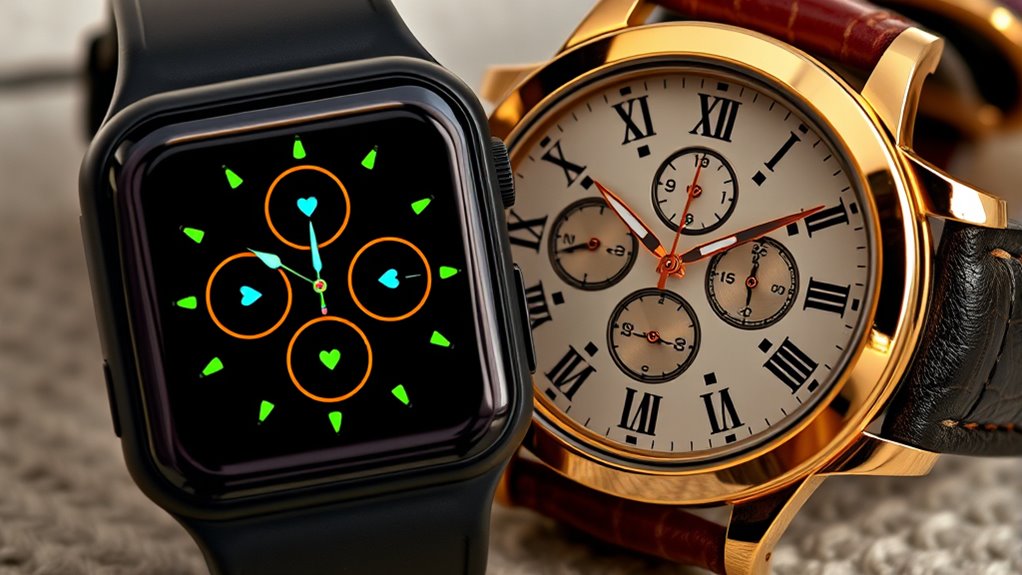
Smartwatches and traditional watches differ markedly in their display and interface, with smartwatches offering touchscreens and customizable options, while traditional watches rely on analog dials. You’ll also find that smartwatches track health and fitness metrics like heart rate and steps, features that classic watches don’t provide. Additionally, their power sources vary greatly, as smartwatches need frequent charging, whereas traditional watches often run for years on a single battery. Some smartwatches also include advanced features such as GPS and notifications, further enhancing their versatility compared to traditional timepieces. Moreover, the battery life of smartwatches is typically shorter, which is an important consideration for users seeking convenience and longevity. As technology advances, smartwatches are increasingly integrating smart home connectivity, enabling users to control devices and receive alerts directly from their wrists. This expanding compatibility with other devices highlights the growing role of smartwatches in everyday digital ecosystems. Additionally, innovations in wearable technology continue to push the boundaries of what smartwatches can do, making them more integrated into our daily lives.
Display and Interface
While traditional watches typically feature simple analog or digital displays, smartwatches offer a dynamic interface packed with interactive features. Your watch face on a smartwatch is customizable, allowing you to choose from various designs, complications, and widgets that suit your style and needs. The interface design is intuitive and responsive, enabling you to swipe, tap, and scroll through apps and notifications seamlessly. Unlike traditional watches, which rely solely on physical dials and hands, smartwatches integrate touchscreens that provide instant access to information and functions. This combination of versatility and user-friendly navigation makes smartwatches highly adaptable, giving you control over your experience while maintaining an easy-to-read display. Additionally, the Free Floating aspect of smartwatches allows for flexible and unobstructed interactions that can be tailored to individual preferences.
Health and Fitness Tracking
Traditional watches primarily focus on telling time and often include basic features like date display, but they generally lack advanced health and fitness tracking capabilities. With a smartwatch, you gain access to all-encompassing fitness tracking and health monitoring features. You can monitor your heart rate, count steps, track sleep patterns, and even measure your oxygen levels. These functionalities help you stay aware of your physical health and motivate you to reach fitness goals. Unlike traditional watches, smartwatches sync with apps that analyze your data over time, providing insights into your overall wellness. If healthcare and fitness are priorities for you, a smartwatch offers the tools needed for proactive health monitoring, making it a powerful health data tool to complement your daily routine. Additionally, wearable sensors in smartwatches continually collect data, offering a more comprehensive picture of your health status. This continuous data collection enhances your ability to monitor health trends, enabling more informed decisions about your well-being and lifestyle choices. The integration of real-time health monitoring further allows for immediate responses to changes in your health metrics, improving overall wellness management. The ability to integrate health data across multiple platforms further enhances your understanding of wellness trends and helps in making informed lifestyle choices.
Power and Battery Life
Power and battery life are essential factors to contemplate when choosing between smartwatches and traditional watches. Your daily routines depend on reliable battery longevity, whether you’re tracking fitness or simply telling time. Smartwatches require frequent charging due to their advanced features, but they offer seamless power management options to extend battery life. Traditional watches excel here, often lasting years without needing a new battery, thanks to their simple mechanics. Consider how your lifestyle demands efficient power management and lasting battery life.
- Feel confident knowing your watch won’t die during important moments
- Experience the freedom of fewer charging breaks
- Appreciate the simplicity of long-lasting traditional watches
- Enjoy smart features without constant charging worries
- Trust that your device can keep up with your busy life
Aesthetics and Personal Style: What Do Each Offer?
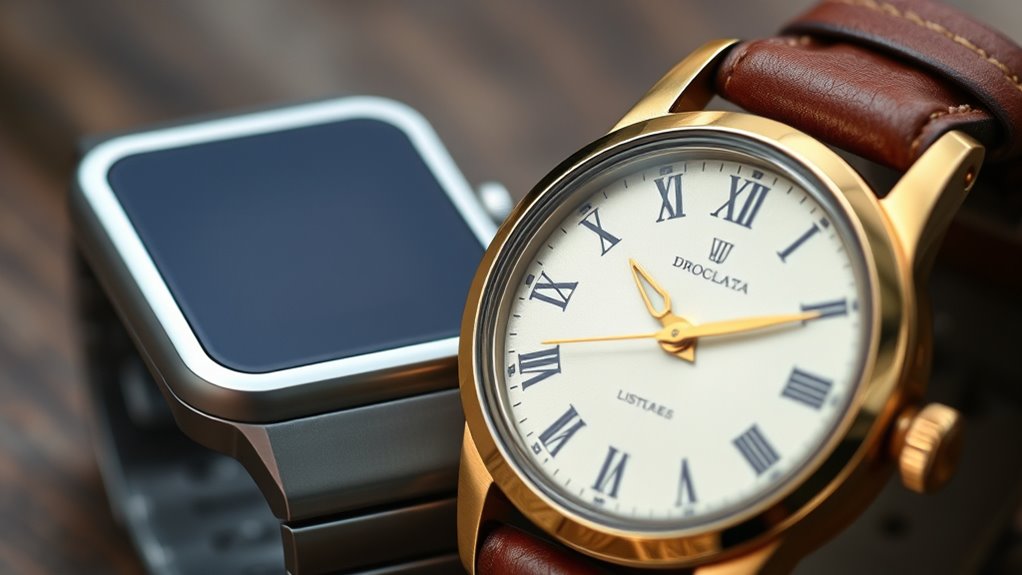
Your style can be expressed differently with smartwatches and traditional watches, especially in their visual appeal. You’ll find more customization options with smartwatches, allowing for a personalized look, while traditional watches often emphasize classic design. Consider whether you prefer a statement piece focused on style or a versatile accessory that balances form and function. Additionally, aesthetic versatility enables smartwatches to adapt to various occasions, further enhancing their appeal as a modern accessory. The craftsmanship of traditional watches highlights their timeless appeal and intricate detailing, making them prized possessions for collectors and enthusiasts alike. When choosing between the two, understanding brand reputation can also influence your decision, as it reflects quality and heritage.
Visual Appeal Differences
When it comes to visual appeal, smartwatches and traditional watches cater to different aesthetic preferences and personal styles. You’ll notice that traditional watches often emphasize timeless elegance, with classic designs, rich materials, and a wide range of color options that evoke sophistication. Smartwatches, on the other hand, offer sleek, modern looks that prioritize functionality but still provide a variety of customizable watch faces. They excel in blending tech with style, often featuring contemporary designs that appeal to a tech-savvy audience. The material variety in traditional watches—leather, metal, and ceramic—adds texture and character, while smartwatches focus on lightweight, durable cases with customizable bands. Each offers a distinct visual appeal that influences your personal expression. Additionally, electric power generation with bike generators demonstrates how innovative designs can combine functionality with aesthetic appeal, much like the integration of advanced materials and customizable features in modern watches.
Customization Options Available
Both smartwatches and traditional watches offer a range of customization options that let you tailor their appearance to match your personal style. With traditional watches, you can choose from various bracelet materials like leather, stainless steel, or NATO straps, and swap straps easily to reflect different looks. Smartwatches also provide customizable strap options, often featuring silicone, leather, or metal bands, and some models allow you to change straps quickly via quick-release mechanisms. While traditional watches focus on classic materials and craftsmanship, smartwatches emphasize versatility with interchangeable straps suited for different occasions. Your choice depends on whether you prefer the timeless appeal of traditional bracelet materials or the adaptable strap options of modern smartwatches. Both let you express your style uniquely. Additionally, the materials used in watch straps influence durability and comfort, allowing further personalization based on your lifestyle and preferences. Many smartwatches also support digital watch faces, enabling you to further customize their appearance to suit your mood or activity. Furthermore, some smartwatches allow you to create customized watch faces, adding another layer of personalization that traditional watches cannot offer. For example, you can select from a variety of design themes to match your daily outfits or activities.
Style Versus Function
Smartwatches and traditional watches each prioritize different aspects of style and functionality. You might choose a classic timepiece for its vintage appeal, exuding timeless elegance and luxury branding that makes a statement. Alternatively, a smartwatch offers a sleek, modern aesthetic that emphasizes innovation and versatility. When considering compatibility with personal style, UST projector rankings and screen pairing guides can serve as a parallel example of how choosing the right features enhances your overall experience. Consider these emotional touches: – The nostalgic charm of a well-worn leather strap – The prestige of a renowned luxury brand – The bold, futuristic look of digital displays – The personal expression through customizable watch faces – The understated elegance of minimalist design While traditional watches focus on craftsmanship and heritage, smartwatches highlight tech-savvy sophistication. Your choice reflects whether you value a personal style rooted in history or a forward-thinking, functional approach.
Durability and Maintenance: Comparing Longevity and Care

Durability and maintenance play a crucial role in determining how long your watch will last and how much effort it takes to keep it in good condition. Traditional watches with leather straps require regular care, like avoiding water exposure and conditioning the leather to prevent cracking. Water resistance varies among models, but even high water-resistant watches need proper sealing checks over time to maintain their integrity. Smartwatches, on the other hand, are generally more susceptible to damage from water and impacts, often needing replacement or repairs for screens and batteries. While traditional watches can last decades with proper care, smartwatches typically have shorter lifespans due to electronic component wear. Both demand maintenance, but traditional designs tend to be more resilient with minimal ongoing effort. Additionally, understanding the Water resistance ratings and how to properly care for each type can significantly extend their usable life. Regular updates and software maintenance are essential for smartwatches to stay functional and secure, which adds another layer of device upkeep compared to traditional watches. Proper wear and storage practices can further enhance the longevity of both types of watches, ensuring they remain in optimal condition for years to come.
Emotional and Cultural Significance of Classic Timepieces

Classic timepieces often hold a deeper emotional and cultural significance that goes beyond their function of telling time. They serve as symbols of heritage preservation, connecting you to generations past. These watches often carry emotional attachment, reminding you of special moments, family traditions, or personal milestones. Wearing a classic watch can evoke feelings of pride, nostalgia, and identity. They embody craftsmanship, history, and timeless style that digital devices can’t replicate. Such pieces often become family heirlooms, passed down and cherished, reinforcing cultural values and personal stories. This emotional and cultural connection makes a traditional watch more than just an accessory—it’s a meaningful part of your identity and history.
- Preserving legacy through heirlooms
- Celebrating craftsmanship and history
- Connecting to cultural roots
- Marking significant life moments
- Fostering emotional bonds
Technological Limitations and Opportunities for Smartwatches
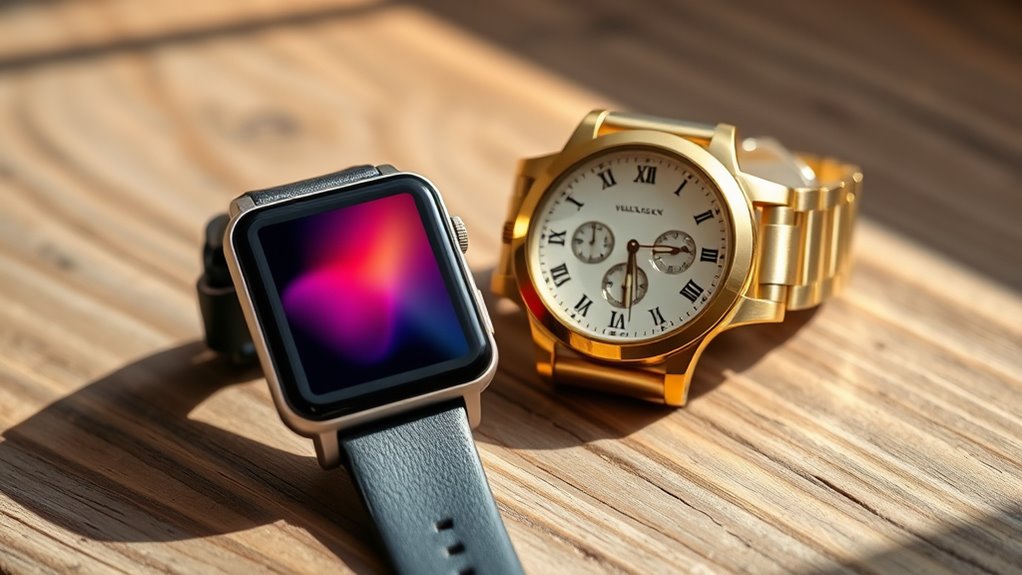
While smartwatches offer innovative features that enhance everyday life, their technological capabilities are still limited compared to traditional timepieces. Battery efficiency remains a challenge; they often require frequent charging, limiting continuous use. Software updates are vital for performance and security, but not all manufacturers provide timely support, risking outdated functionality. These limitations highlight opportunities for improvement, such as better power management and more responsive update cycles. Imagine the following:
| Feature | Limitation | Opportunity |
|---|---|---|
| Battery Life | Shorter than traditional watches | Enhanced power efficiency |
| Software Updates | Inconsistent or delayed updates | Faster, more reliable updates |
| Display Technology | Limited battery impact | More efficient screens |
| Sensor Accuracy | Varies across models | Improved precision |
Which Style Fits Your Lifestyle? Making the Right Choice
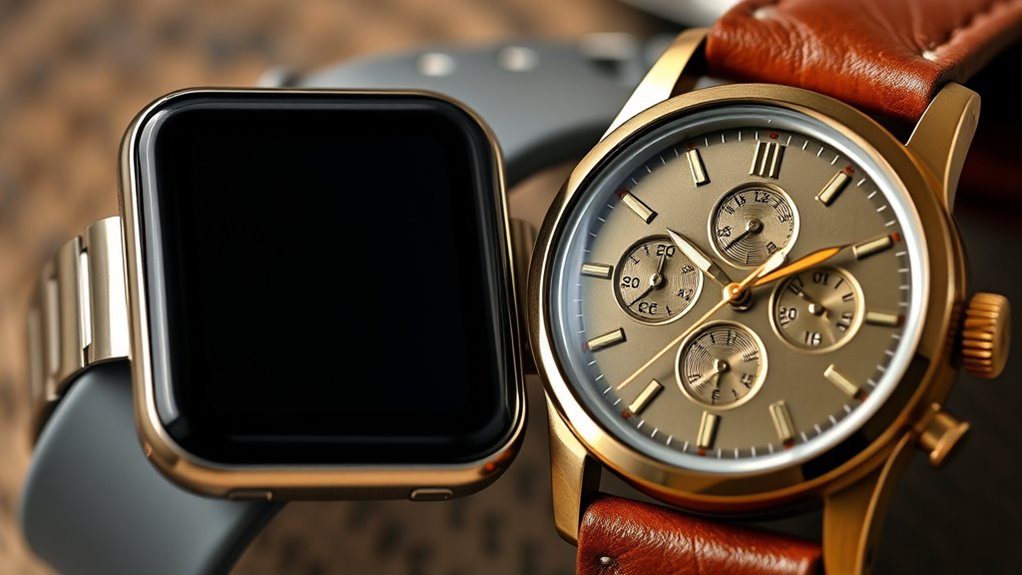
Choosing between a smartwatch and a traditional watch depends on your lifestyle and personal preferences. If you crave the latest technology and seamless connectivity, a smartwatch keeps you organized and on-trend. On the other hand, if you value craftsmanship, timeless design, and luxury branding, a traditional watch makes a bold fashion statement.
Consider these factors:
- Your daily activities and how a watch complements them
- Whether you want a versatile accessory or a luxury piece
- The importance of tradition versus innovation in your style
- How your watch reflects your personality and status
- Your desire to stand out or blend in with classic elegance
Ultimately, your choice should mirror your lifestyle, helping you feel confident and authentic in every moment.
Frequently Asked Questions
How Do Smartwatches Impact Traditional Watchmaking Craftsmanship?
Smartwatches challenge traditional watchmaking craftsmanship by pushing horology innovation, but they also threaten craftsmanship preservation. You might find that smartwatches make timekeeping more functional and accessible, yet they can diminish the appreciation for artisanal skills. As a result, traditional craftsmanship may decline, but it also encourages horologists to innovate creatively. Your role as a collector or enthusiast is crucial in supporting craftsmanship preservation amidst these technological advancements.
Can Smartwatches Fully Replicate the Emotional Value of Vintage Watches?
No, smartwatches can’t fully replicate the emotional connection and nostalgic value of vintage watches. You might enjoy their convenience and modern features, but they lack the history and craftsmanship that make vintage pieces special. When you wear a vintage watch, you feel a personal connection and a sense of tradition that tech can’t evoke. The sentimental worth of a timeless design remains unmatched by digital devices, no matter how advanced.
Are There Environmental Benefits to Choosing Smartwatches Over Traditional Watches?
Imagine a sleek smartwatch, crafted from recyclable materials, sitting lightly on your wrist—less waste, less impact. Choosing smartwatches can reduce environmental harm because they often use recyclable components and lower energy consumption compared to manufacturing traditional watches. By making this switch, you help conserve resources, cut down on waste, and support sustainable practices, turning your daily tech use into a small but meaningful environmental act.
How Does Battery Life Affect Daily Use of Smartwatches Versus Traditional Watches?
Battery life substantially impacts your daily use of smartwatches versus traditional watches. Smartwatches often have shorter battery longevity, requiring frequent charging, sometimes daily or every few days. This can interrupt your routine, especially if you’re busy or forget to charge. In contrast, traditional watches boast long-lasting batteries or manual winding, so you rarely worry about charging. Your choice depends on whether you prioritize convenience or timeless, low-maintenance design.
Will Future Technology Make Traditional Watches Obsolete?
Future technology likely won’t make traditional watches obsolete, especially in luxury branding. You’ll still appreciate their mechanical precision and timeless design that smartwatches can’t replicate. While tech evolves, classic watches remain symbols of craftsmanship and status, appealing to those who value tradition and elegance. So, even as smartwatches advance, traditional timepieces will endure, maintaining their charm and prestige for collectors and enthusiasts like you.
Conclusion
Whether you prefer the timeless elegance of a traditional watch or the cutting-edge features of a smartwatch, it’s all about what fits your lifestyle. Did you know that over 60% of smartwatch users say they wear their device daily for both fitness and notifications? Ultimately, both styles serve different needs—so choose what feels right for you, blending tradition with innovation to keep time on your side.