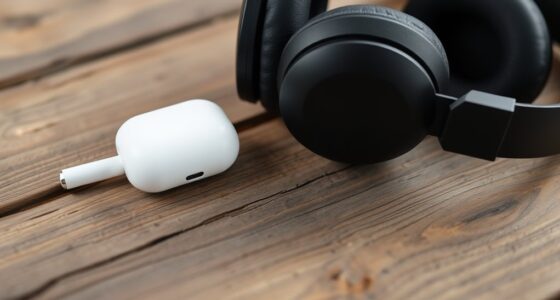

Noise-canceling headphones work by using microphones to pick up ambient sounds around you. The device then uses advanced signal processing to analyze these sounds and create anti-noise signals that cancel out unwanted noise, especially low-frequency sounds like engine hums. Some headphones combine passive materials with active technology to block noise more effectively. If you keep exploring, you’ll discover how these intricate systems create a more peaceful listening experience.
Key Takeaways
- Noise-canceling headphones use microphones to detect external sound waves and analyze ambient noise in real-time.
- They generate anti-noise signals that are phase-inverted to cancel out unwanted sounds through destructive interference.
- Active noise cancellation primarily targets low-frequency sounds like engine hums and consistent background noise.
- Signal processing algorithms continuously adapt anti-noise signals to changing environmental sounds for effective noise reduction.
- Combining passive insulation with active noise cancellation enhances overall sound isolation and audio quality.
Top picks for "science behind noise"
Open Amazon search results for this keyword.
As an affiliate, we earn on qualifying purchases.
The Basics of Sound and Noise
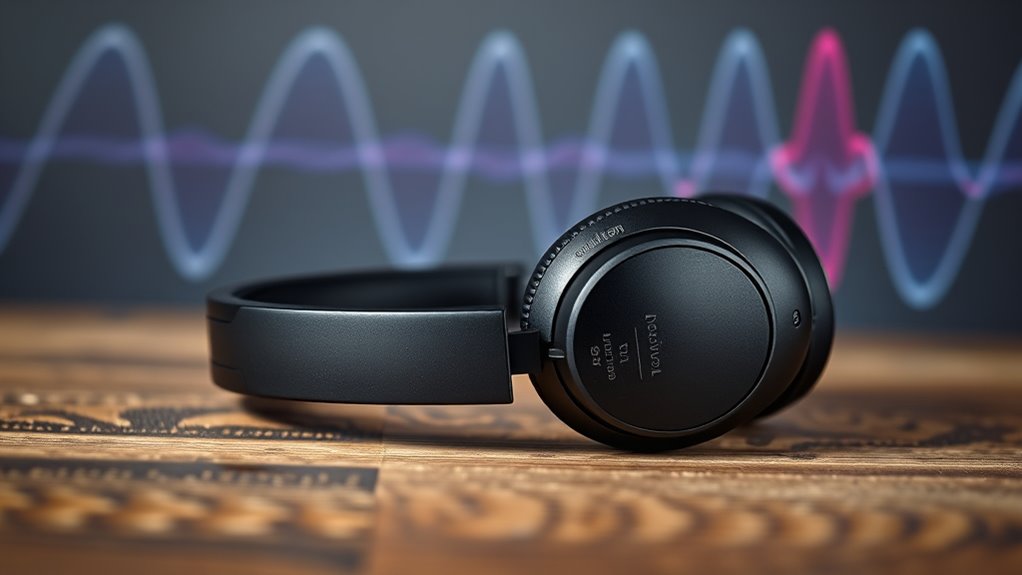
Have you ever wondered what sound really is? It’s the movement of sound waves through the air that reach your ears. These waves are vibrations that travel in patterns, carrying energy from a source like a speaker or engine. When sound waves hit your eardrum, they cause it to vibrate. Your auditory perception then processes these vibrations, turning them into what you recognize as sound. Noise, on the other hand, consists of random or unwanted sound waves that create a cluttered auditory experience. Understanding sound waves helps you grasp how noise affects your environment. The physics of sound explains how these waves behave and interact, which is fundamental to understanding how noise-canceling headphones work by counteracting these waves, reducing unwanted sounds, and enhancing your listening experience. This basic knowledge is key to appreciating how these devices function. Additionally, advances in sound wave manipulation enable more effective noise cancellation technologies by precisely targeting specific frequencies, ultimately improving the noise reduction process. Recognizing the role of interference patterns further clarifies how noise-canceling headphones generate anti-noise signals to cancel out ambient sounds effectively.
How Active Noise Cancellation Works
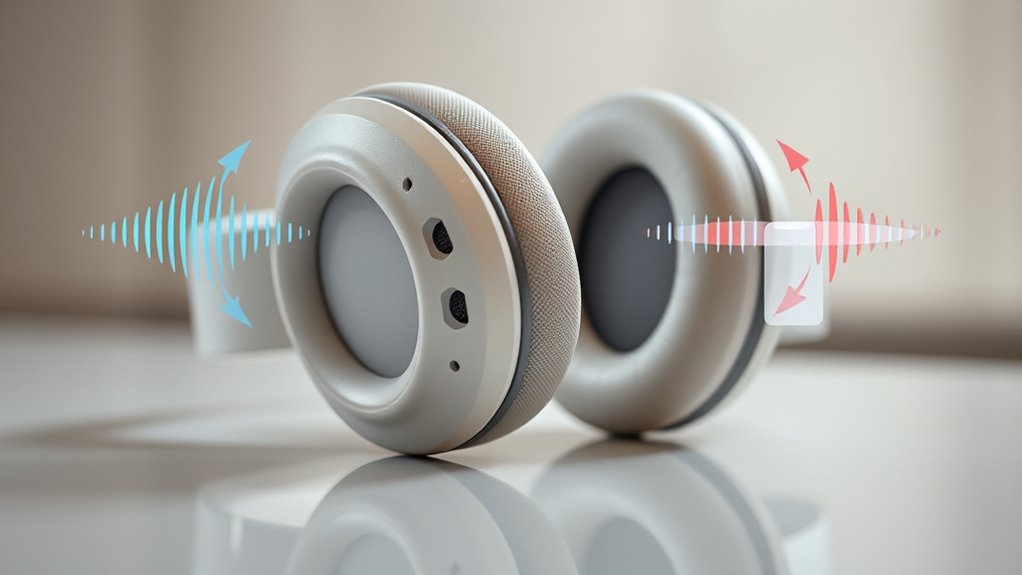
Active noise cancellation uses advanced technology to reduce unwanted sounds by creating sound waves that cancel out noise. It relies on adaptive filtering, which continuously analyzes incoming sounds and adjusts the anti-noise signals in real-time for *maximum* noise reduction. This process *guarantees* effective cancellation of consistent, low-frequency sounds like engine hums or engine noise. Additionally, psychoacoustic masking plays a role by taking advantage of how our brains perceive sounds, masking residual noise with more pleasant or less intrusive audio signals. As a result, you experience a quieter environment without needing to hear every detail of surrounding sounds. The effectiveness of active noise cancellation depends heavily on the precise timing and accuracy of the anti-noise signals, which are achieved through sophisticated signal processing techniques. This combination of adaptive filtering and psychoacoustic masking makes active noise cancellation highly effective, providing a seamless listening experience even in noisy settings. Moreover, ongoing advancements in technology continue to enhance the performance and comfort of noise-canceling headphones. In addition, integrating smart home systems with noise-canceling headphones can help create a more personalized and immersive listening environment by adapting to ambient noise levels and user preferences. Furthermore, ongoing research into acoustic algorithms aims to improve the adaptability and efficiency of noise cancellation in various environments. Continuous improvements in noise reduction methods are also contributing to more effective and comfortable headphones for everyday use.
The Role of Microphones and Signal Processing

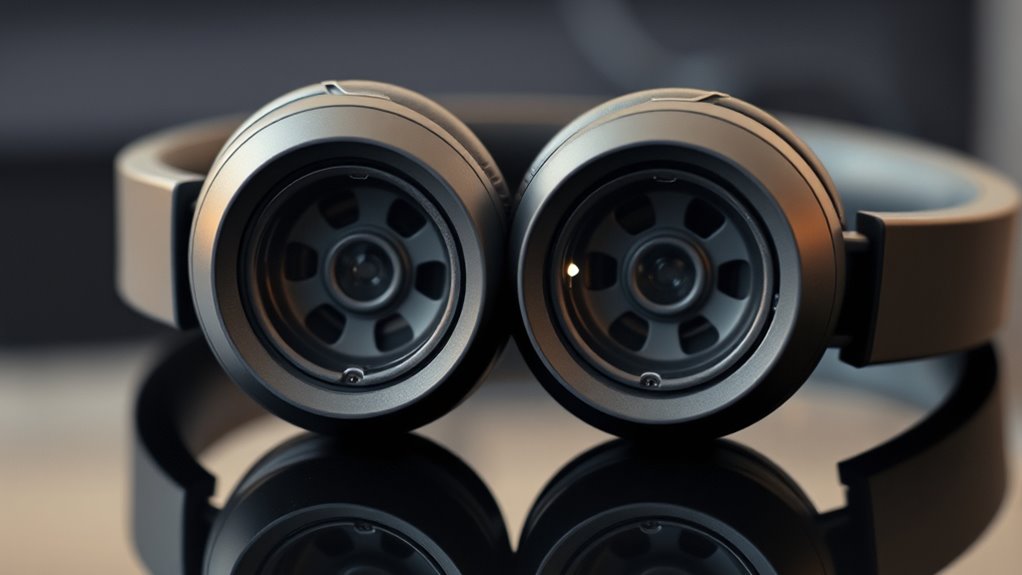
Microphones play a crucial role in noise-canceling headphones by capturing the ambient sounds around you. Proper microphone placement guarantees they pick up external noises accurately without interference from the headphones’ internal components. Once the microphones detect the surrounding sounds, the headphone’s signal processing system steps in. It filters the incoming audio signals through advanced algorithms, known as signal filtering, which distinguishes noise from desired sounds. This process allows the headphones to generate an anti-noise signal that effectively cancels out the ambient noise. The quality of microphone placement and the efficiency of signal filtering directly influence how well your headphones block unwanted sounds. Signal processing techniques are continually refined to improve noise cancelation performance. Together, they work seamlessly to create a quiet, immersive listening experience. Understanding the principles of Free Floating technology can further enhance the effectiveness of noise cancellation.
Types of Noise Cancellation Technologies

There are different approaches to noise cancellation, each designed to reduce unwanted sounds effectively. Passive insulation relies on soundproof materials like foam, rubber, or dense plastics that block or absorb noise before it reaches your ears. This method creates a physical barrier, minimizing external sounds through soundproof materials integrated into the headphones’ ear cups or ear tips. Active noise cancellation, on the other hand, uses electronic circuitry and microphones to detect ambient noise, then generates anti-noise signals to cancel it out. Some headphones combine both approaches, providing enhanced noise reduction. Passive insulation is especially effective against high-frequency sounds, while active cancellation works best with consistent, low-frequency noise. Understanding these technologies helps you choose headphones suited to your environment and listening needs. Additionally, cost‑of‑ownership considerations, such as battery life and maintenance, can influence your long-term satisfaction with a pair of noise-canceling headphones. Incorporating sound quality features can further optimize your listening experience and complement the noise cancellation technology. Recognizing the types of noise cancellation technology can help you select the most suitable headphones for your specific needs. It’s also beneficial to consider the technology’s effectiveness in various real-world scenarios to ensure your chosen headphones meet your expectations.
Benefits and Limitations of Noise-Canceling Headphones
Have you ever wondered why noise-canceling headphones are so popular? One major benefit is their ability to improve sound quality by reducing ambient noise, allowing you to enjoy your music or calls more clearly. They’re especially useful in noisy environments like airports or busy streets. However, these headphones have limitations. Their battery life can be a concern, as active noise cancellation consumes power, requiring regular charging. Additionally, some users notice that noise cancellation might slightly affect sound quality, making the audio feel less natural. While they excel at blocking out external sounds, they may not completely eliminate all noise, and their effectiveness depends on the technology and design. Understanding these benefits and limitations helps you choose the right pair for your needs. Understanding noise-canceling technology can also help you make an informed decision about which headphones are best for your lifestyle. Furthermore, advancements in AI detection methods are improving how devices recognize and adapt to different noise environments, enhancing overall performance. Exploring noise-canceling techniques used in various models can give you a better idea of what to look for when shopping. Additionally, ongoing research into sound wave manipulation offers promising avenues for creating even more effective noise-canceling solutions in the future. Recognizing the role of perception of sound quality is important, as it influences user satisfaction with these headphones.
Frequently Asked Questions
How Do Noise-Canceling Headphones Affect Sound Quality?
Noise-canceling headphones can slightly affect sound quality by causing some sound distortion, especially at higher volumes. While they aim to preserve audio fidelity, the active noise-canceling process might introduce a subtle change in how you perceive music or calls. Overall, though, modern headphones minimize these effects, allowing you to enjoy clear sound, but be aware that some minor adjustments in sound quality can occur with noise cancellation activated.
Can Noise Cancellation Be Effective in All Environments?
No, noise cancellation isn’t effective in all environments. It works well against consistent environmental noise like engines or chatter but struggles with sudden or unpredictable sounds, due to technological limitations. In noisy, chaotic environments, you might find some sounds still slip through. While advanced noise-canceling headphones can reduce a lot of ambient noise, they can’t eliminate everything, especially abrupt or complex sounds, so expect some limitations depending on your surroundings.
What Is the Difference Between Passive and Active Noise Cancellation?
You might wonder how noise cancellation actually works. Passive noise cancellation relies on a passive design—like thick ear cushions—to block sound physically. Active noise cancellation uses active circuitry that detects ambient noise and generates sound waves to cancel it out. While passive methods block sound naturally, active techniques actively reduce noise, making your experience more immersive. Both approaches have their strengths, but active noise canceling offers a higher level of silence in noisy environments.
How Long Do Noise-Canceling Headphones Typically Last?
Noise-canceling headphones typically last between 20 to 40 hours on a full charge, depending on the model and usage. Your battery lifespan can decrease with frequent recharging and wear and tear over time. To maximize their longevity, avoid exposing them to extreme temperatures and store them properly. Regularly recharge them and handle with care to ensure they perform well and last as long as possible.
Are Noise-Canceling Headphones Safe for Long-Term Use?
You’re probably wondering if noise-canceling headphones are safe for long-term use. Studies show that listening at moderate volumes for extended periods can protect your ear health and support long-term safety. As long as you avoid very loud settings and take breaks, noise-canceling headphones are generally safe. They help reduce the risk of hearing damage and keep your ears healthy, making them a good choice for everyday use.
Conclusion
Understanding how noise-canceling headphones work helps you appreciate their power to block out unwanted sounds. For instance, imagine you’re on a noisy train, and your headphones reduce the engine noise so you can enjoy your music or focus. While they’re great for many situations, they might struggle with very loud or unpredictable sounds. Knowing their capabilities helps you decide when to rely on them and when to seek quieter environments for the best experience.