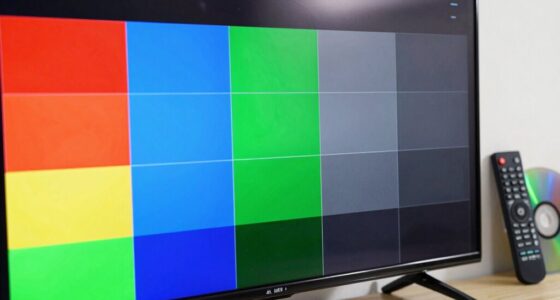

Choosing an OLED TV means enjoying vibrant colors, deep blacks, and high contrast that make every image pop. Each pixel emits its own light, allowing for stunning picture quality, wider viewing angles, and better energy efficiency. OLED displays also offer improved durability and a sleek, flexible design. If you want impressive visuals and a more immersive experience, an OLED TV is a smart choice. To discover more about why this tech stands out, keep exploring the details below.
Key Takeaways
- OLED offers superior color accuracy, vibrant hues, and deeper blacks for a more immersive viewing experience.
- Each pixel in OLED displays can turn off completely, resulting in high contrast ratios and perfect black levels.
- Wide viewing angles ensure consistent image quality and color accuracy from any seat in the room.
- OLED technology provides thinner, flexible designs ideal for sleek, modern TV aesthetics.
- Despite higher costs, OLED’s energy efficiency and stunning picture quality make it a worthwhile investment.
What Is OLED Technology and How Does It Work?
OLED technology is a display method that uses organic compounds to emit light when electricity passes through them. This allows each pixel to produce its own light, resulting in vibrant colors and deep blacks. However, this design can lead to screen burn-in if static images stay on the screen for too long, which may cause permanent ghost images. Additionally, manufacturing OLED panels is more complex and costly compared to traditional LCDs, contributing to higher prices. Despite these challenges, OLED screens are favored for their superior contrast and color accuracy. The organic nature of the display also means the technology is thinner and more flexible, opening possibilities for innovative designs. Display technology is continually evolving, with new innovations promising to address some of OLED’s current limitations. For example, ongoing research into durability enhancements aims to improve the lifespan of OLED panels, making them more suitable for long-term use. Advances in manufacturing processes are also helping to reduce costs and improve the uniformity of OLED displays. Moreover, the integration of advanced materials is expected to further enhance the overall performance and durability of OLED screens. Increased focus on innovative engineering is driving these improvements, which will help OLED technology become more accessible and reliable for consumers. Overall, OLED technology combines impressive visual quality with some unique durability considerations.
The Visual Advantages of OLED Displays
With OLED displays, you’ll notice colors that are incredibly vivid and true to life. You also get perfect black levels that make images look more striking and immersive. Plus, wide viewing angles guarantee the picture stays clear and vibrant from almost any position. Additionally, OLED technology allows for energy-efficient operation, helping to reduce power consumption while delivering stunning visuals. Moreover, the contrast ratio of OLED screens enhances overall image depth and realism.
Vivid Color Accuracy
Have you ever noticed how some screens make images pop with vibrant, true-to-life colors? That’s thanks to OLED’s superior color accuracy and saturation levels. OLED displays produce richer, more precise colors because each pixel emits its own light, allowing for better control over color output. This independent pixel lighting capability results in images that look more realistic and engaging, whether you’re watching movies, playing games, or browsing photos. Unlike other display types, OLED can display a wider color gamut, enhancing the vibrancy without oversaturation. You’ll see more nuanced shades and smoother gradations, making every scene visually striking. With OLED, your viewing experience becomes more immersive, delivering colors that stay true to the original content. In short, OLED’s vivid color accuracy elevates your visual enjoyment to a whole new level.
Perfect Black Levels
Thanks to their ability to turn off individual pixels completely, OLED displays can produce perfectly deep black levels. This results in a stunning contrast ratio, making dark scenes more realistic and immersive. You’ll notice that blacks appear pure and uniform, without any grayish tint common in other display types. The high contrast ratio enhances overall picture quality, giving images more depth and dimension. With OLED, you won’t struggle with lost details in shadows or overly bright highlights. Instead, you’ll enjoy consistently rich blacks regardless of the content. Self-Emissive technology allows each pixel to operate independently, providing superior control over brightness and contrast. Additionally, display technology benefits from precise pixel control, which further improves picture clarity. This precise control is especially important for HDR content, ensuring vibrant colors and detailed highlights. Moreover, the ability of OLED to precisely control individual pixels makes it ideal for high dynamic range displays, delivering more lifelike images. The pixel control also helps reduce motion blur, enhancing fast-moving scenes for a smoother viewing experience.
Wide Viewing Angles
OLED displays excel in providing wide viewing angles, ensuring that your picture remains vibrant and accurate from almost any position. Unlike other display technologies, OLED panels maintain consistent viewing angles, so colors stay true and brightness doesn’t fade when you shift your angle. This means you won’t experience color shifting or washed-out images, even when sitting off-center. The color uniformity across the screen is exceptional, providing a seamless viewing experience no matter where you’re seated. Whether you’re watching alone or with a group, everyone gets a great picture without distortion or loss of detail. This wide viewing angle capability makes OLED ideal for living rooms, home theaters, or any shared space, where consistent image quality from multiple perspectives is essential. Safe installation practices are especially important to ensure optimal performance and longevity of your display. Additionally, understanding display technology can help you make informed choices about your viewing setup, especially considering panel design, which influences viewing angle performance and durability. Recognizing the importance of material quality can further enhance the longevity and picture quality of your OLED screen. Moreover, manufacturing precision plays a crucial role in maintaining the consistent viewing experience across the entire display surface.
Comparing OLED to Other Screen Technologies

While OLED screens offer remarkable contrast and vibrant colors, they are just one option among various display technologies. LCD, QLED, and MicroLED each have unique strengths. LCD screens tend to be more durable and handle ambient light well, making them suitable for bright rooms. QLED displays excel in brightness and color volume, providing vivid images even in challenging lighting. MicroLED offers improved screen durability and nearly perfect black levels, combining advantages of OLED and traditional tech. When choosing, consider how ambient light affects visibility and how durable the screen needs to be for your environment. Each technology balances these factors differently, so your choice depends on your viewing habits and environment. OLED’s superior contrast is great, but other options might better suit your needs based on durability and ambient light conditions. Additionally, understanding display technology fundamentals can help you make a more informed decision tailored to your specific viewing environment, especially when factoring in brand reputation and long-term performance. Considering long-term durability is also essential to ensure your investment remains reliable over time. It’s also important to evaluate security features and warranty options to ensure your investment remains protected over time. Moreover, exploring smart home integration features can enhance your overall entertainment setup and ensure compatibility with your existing devices.
Why Black Levels and Contrast Matter in Viewing

Black levels and contrast considerably influence how vivid and realistic your viewing experience feels. When blacks are deep, scenes appear more lifelike, and details stand out even in dark areas. High contrast helps images pop, making colors richer and more immersive. Ambient lighting and screen glare can diminish this effect, washing out details and dulling colors. To visualize this, consider:
| Bright Room | Dark Room |
|---|---|
| Blacks look gray | Blacks stay deep |
| Colors seem faded | Colors remain vibrant |
| Screen glare causes reflections | Minimal glare enhances contrast |
In well-controlled lighting, OLED screens excel by providing perfect blacks and high contrast. This ensures your viewing remains sharp, vivid, and immersive, regardless of ambient conditions. Properly managing ambient lighting can further optimize your viewing experience. Additionally, screen glare can be mitigated with anti-reflective coatings or placement strategies to maintain optimal contrast.
The Durability and Lifespan of OLED TVs
Despite concerns about their longevity, OLED TVs are designed to last many years with proper use. Modern OLED screens have improved durability, but you should still be aware of potential issues. Screen burn-in is a common worry, especially if static images stay on the screen for long periods. To prevent this, avoid leaving logos or HUDs displayed continuously. Additionally, OLED TVs now feature enhanced moisture resistance, making them more resilient in humid environments. Proper maintenance can extend your TV’s lifespan considerably. Keep these points in mind:
- Minimize static images to prevent screen burn-in
- Use built-in screen savers and auto-shutdown features
- Ensure good ventilation to protect against moisture damage
With proper care, your OLED TV can provide stunning visuals for many years.
Energy Efficiency and Environmental Impact
You’ll notice that modern display tech uses less power, helping you save energy while reducing your carbon footprint. Many screens are made with eco-friendly materials that are safer for the environment. Plus, their longer lifespans mean less waste and fewer replacements over time.
Reduced Power Consumption
Modern display technologies aim to reduce power consumption, making devices more energy-efficient and environmentally friendly. OLED screens excel in power saving because they only light up the pixels needed for each image, unlike traditional displays that illuminate the entire screen. This targeted lighting results in significant energy reduction during use. As a result, your TV consumes less electricity, lowering your energy bills and reducing environmental impact. Additionally, OLED’s ability to turn off pixels completely when displaying black enhances power efficiency further. To maximize benefits, consider these factors:
- Dynamic brightness adjustment
- Contrast optimization
- Local dimming capabilities
Eco-Friendly Materials Used
Eco-friendly materials play a crucial role in making display technology more sustainable. OLED screens often utilize eco friendly manufacturing processes that reduce harmful waste and emissions. By choosing sustainable materials, manufacturers lower their environmental impact and promote greener production. These materials are designed to be less toxic and easier to recycle, helping minimize landfill waste. Using eco friendly manufacturing techniques ensures that the entire production cycle is more responsible, from sourcing raw materials to final assembly. This focus on sustainability not only benefits the environment but also aligns with consumers’ growing demand for eco-conscious products. When you opt for an OLED TV made with sustainable materials, you support a greener future and enjoy cutting-edge display technology that’s better for the planet.
Longer Lifespan Benefits
Because they are designed for durability, display technologies with longer lifespans consume less energy over time and reduce electronic waste. OLED screens, for example, resist screen burnout and maintain quality longer, enhancing overall lifespan. This lifespan enhancement means fewer replacements and less environmental impact. Additionally, energy efficiency improves since modern displays optimize power use during operation. You benefit from lower electricity bills and a smaller carbon footprint. Moreover, durable screens prevent premature failure, ensuring your TV remains functional longer.
- Reduced screen burnout risk extends the device’s useful life
- Lower energy consumption saves money and helps the environment
- Less frequent replacements decrease electronic waste and landfill impact
Is an OLED TV the Right Choice for You?
Deciding whether an OLED TV is the right choice depends on your viewing habits and priorities. If you value vibrant colors, deep blacks, and exceptional contrast, OLED is a great option. Consider your preferred screen size; OLEDs excel in larger formats, making them ideal for immersive viewing. However, if you’re concerned about longevity or budget, research brand reputation, as some brands offer better durability and warranties. OLED TVs are perfect for movie enthusiasts and gamers who want stunning visuals, but might be less suitable if you prioritize affordability or need a small screen. Ultimately, evaluate how much importance you place on picture quality versus cost and reliability. This way, you can decide if an OLED TV aligns with your entertainment needs.
Frequently Asked Questions
How Do OLED Displays Perform in Bright Sunlight Conditions?
OLED displays can struggle with sunlight readability, making outdoor visibility challenging in bright conditions. You might notice reflections and reduced contrast when exposed to direct sunlight, which can hinder your viewing experience. To improve outdoor visibility, consider using a TV with anti-reflective coatings or positioning it in shaded areas. Keep in mind, while OLED offers stunning colors indoors, its sunlight readability isn’t always ideal for outdoor use.
Are OLED Screens Susceptible to Any Specific Types of Damage?
Yes, OLED screens are susceptible to damage, especially from screen burn-in and moisture. Their screen durability can be compromised if you leave static images for long periods, leading to burn-in. Additionally, exposure to water or high humidity can cause damage vulnerability, affecting performance and longevity. To protect your OLED TV, avoid static images, keep it dry, and handle it carefully to ensure it stays in top condition.
Can OLED Technology Be Used Effectively Outdoors or in Portable Devices?
OLED technology can be used effectively outdoors and in portable devices, but you should consider outdoor durability and portable display viability. While OLED screens deliver stunning visuals, they’re more sensitive to direct sunlight, which can wash out images. For portable use, OLED offers excellent color and contrast, making it ideal for on-the-go viewing. Just remember, extended exposure to harsh elements might affect durability, so choose models with protective coatings or enhanced weather resistance.
What Are the Latest Innovations in OLED Display Manufacturing?
You’ll be excited about the latest OLED innovations, like quantum dot integration that boosts color accuracy and brightness. MicroLED advancements also play a role, enabling even better contrast and durability. Manufacturers are refining the production process with new materials and techniques, making OLED displays more cost-effective and scalable. These innovations guarantee your next TV will deliver stunning visuals, combining OLED’s deep blacks with enhanced performance from quantum dot and microLED tech.
How Does the Cost of OLED TVS Compare Over Their Lifespan?
You’ll find that OLED TVs tend to have a higher initial cost compared to LED models, but a thorough longevity analysis shows they often save you money over time. Their superior picture quality and longer lifespan mean fewer replacements and repairs. The cost comparison reveals that investing in OLED can be more economical in the long run, especially since their vibrant displays and durability keep them looking fresh and functional for years.
Conclusion
Choosing an OLED TV means inviting stunning visuals into your living room—vivid colors, deep blacks, and sharp contrast that breathe life into every scene. It’s like stepping into a world where light dances freely, and shadows whisper secrets. With durability and energy efficiency on your side, this display tech transforms how you experience entertainment. So, if you crave immersive, breathtaking images, an OLED TV isn’t just a choice—it’s your window to a more vibrant, mesmerizing world.