When choosing your first camera, consider your photography goals and style—do you prefer natural, candid, or staged photos? Think about size, weight, and handling; mirrorless models are lighter and more portable, while DSLRs offer durability and a traditional feel. Budget wisely, factoring in lens options and future compatibility, and test different models to see which feels right in your hands. Keep exploring all these aspects to make an informed choice that suits your needs perfectly.
Key Takeaways
- Determine your photography style and goals to choose a camera system that matches your creative needs.
- Consider size, weight, and handling preferences for comfortable extended shooting sessions.
- Evaluate your budget alongside long-term investment factors like accessory compatibility and durability.
- Check lens options and system support to ensure growth potential and versatility.
- Test multiple models for ergonomics, autofocus, and image quality to find the best fit for your skills.
Top picks for "first real camera"
Open Amazon search results for this keyword.
As an affiliate, we earn on qualifying purchases.
Assess Your Photography Goals and Style
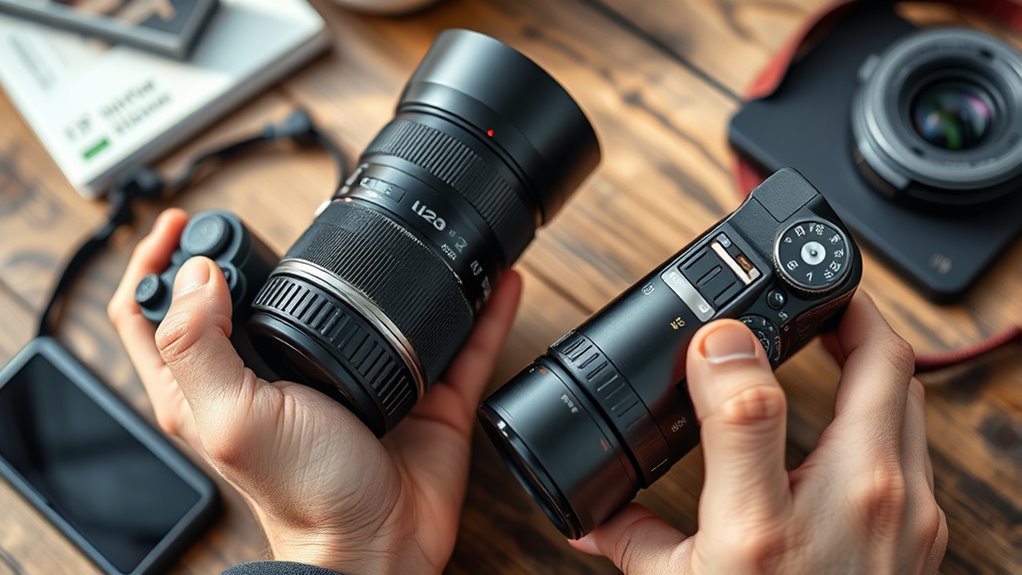
Have you thought about what kind of photos you want to capture? Your photography goals and style shape the camera you choose. If you enjoy natural light and candid moments, a lightweight mirrorless camera might suit you best. For more control over lighting techniques, a DSLR offers versatility and better manual settings. Consider how much editing software you’ll use to refine your images—some cameras produce files that are easier to edit. If you aim for professional-looking results, choose a camera with RAW image capability. Think about whether your style is spontaneous or planned. Clarifying your goals helps you select features that match your creative vision, making your first camera a true tool for expressing your unique photography style. Additionally, understanding camera sensor sizes can influence image quality and performance, helping you make a more informed decision. Exploring the philosophical insights on existence and ethics can also inspire a more thoughtful approach to your craft and how you view your creative process. Recognizing the importance of sustainable technology can guide you toward choosing environmentally conscious equipment that aligns with your values. For instance, opting for brands committed to eco-friendly manufacturing practices ensures your gear supports sustainable innovation.
Understand the Key Differences in Size, Weight, and Handling
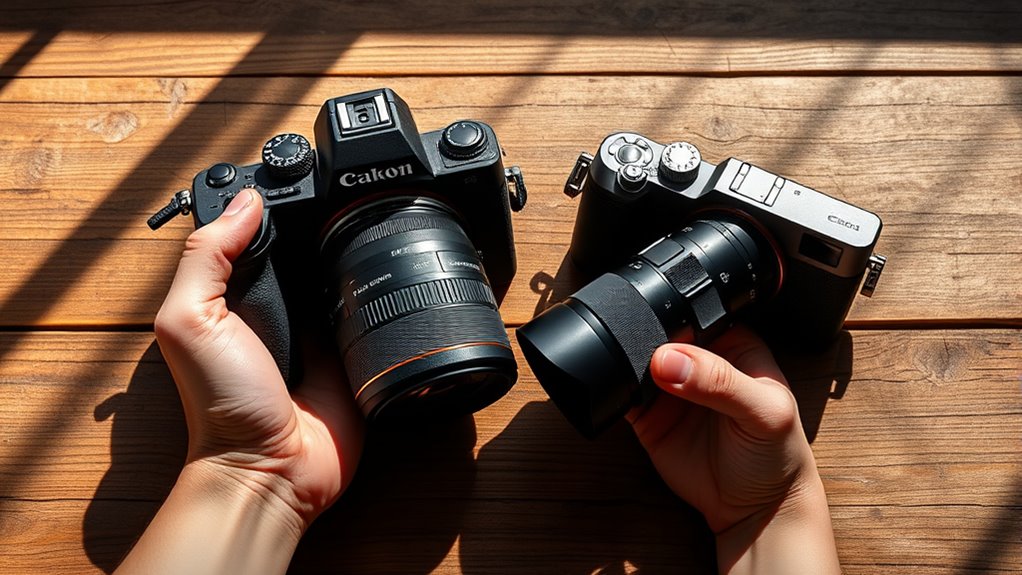
Understanding the size, weight, and handling of different cameras helps you find one that feels comfortable to use regularly. Ergonomics comfort is key, especially if you’ll shoot for extended periods. Mirrorless cameras tend to be smaller and lighter, offering greater portability convenience, making them easier to carry around. DSLR cameras are generally larger and heavier, providing a more substantial feel and often better grip, which can improve handling. Consider how the camera’s size impacts your ability to stabilize shots and your overall comfort during use. If you prefer a lightweight option for travel or street photography, a compact mirrorless model might suit you better. Conversely, if you value sturdy ergonomics and a traditional grip, a DSLR could be more comfortable for longer sessions. Additionally, contrast ratio can influence your decision if you plan to shoot in varied lighting conditions, as it affects how well your camera reproduces details in shadows and highlights.
Consider Your Budget and Long-Term Investment
Your budget plays a crucial role in choosing the right camera, but it’s important to think beyond the initial purchase. Consider the brand reputation, as well-known brands often offer better support, durability, and resale value, making your investment more worthwhile in the long run. Also, think about accessory compatibility—will you need extra lenses, flashes, or other gear? Some brands have extensive accessory ecosystems, which can save you money and frustration down the line. While a cheaper camera might seem appealing now, investing in a reputable brand with a solid track record can provide better performance and future-proofing. Additionally, researching potential scams and red flags in the camera market can help you make safer purchasing decisions. Exploring brand reputation and customer reviews can give you insights into the long-term reliability and service quality of your chosen camera. Moreover, understanding market trends can help you anticipate future updates or shifts in technology, ensuring your investment remains relevant. Being aware of technology evolution can also guide you toward cameras that are more adaptable to changing features and standards, protecting your investment over time. Staying informed about industry developments can help you choose a camera that will continue to meet your needs as technology advances.
Evaluate Lens Options and Compatibility
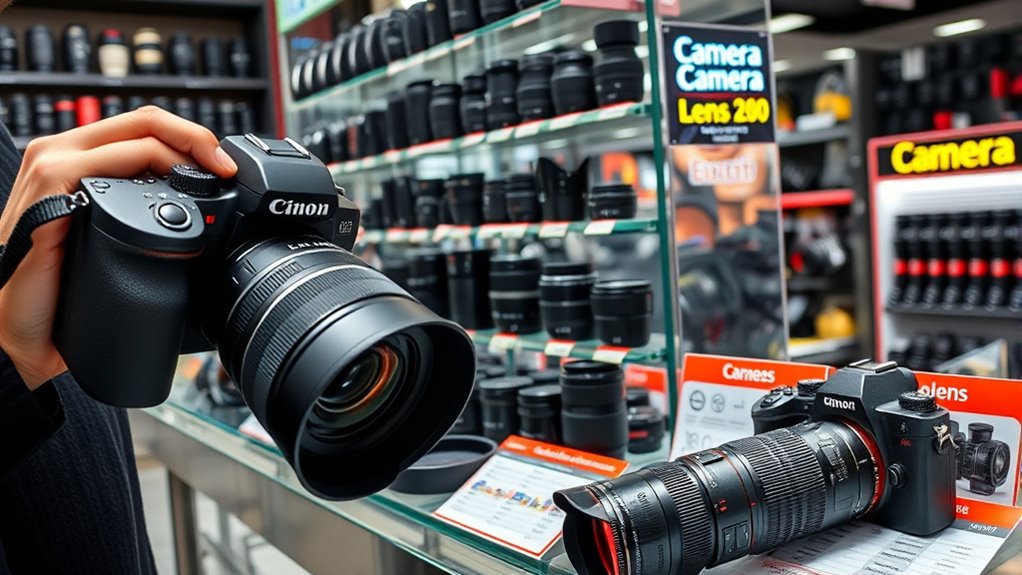
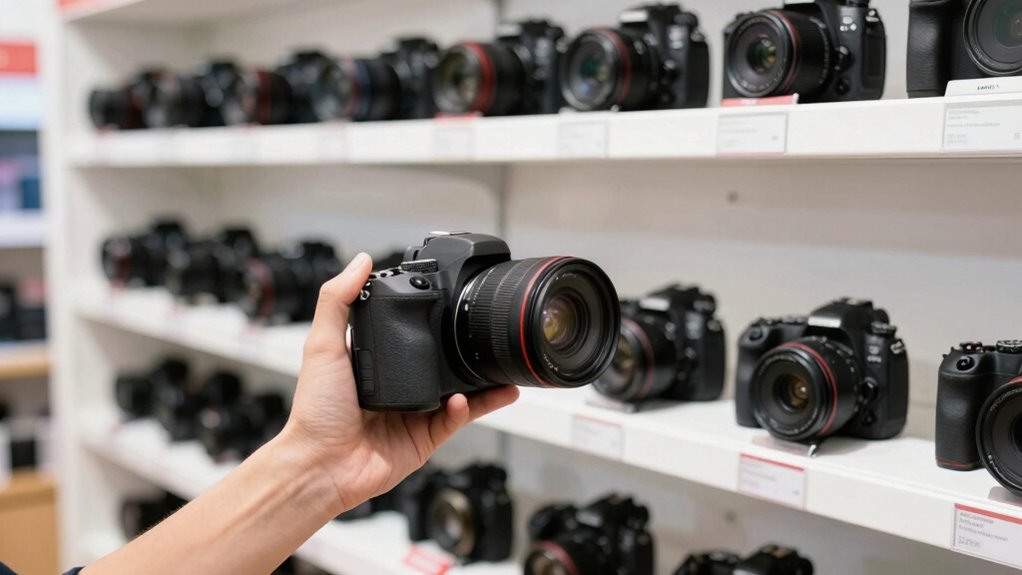
Choosing a camera brand with good accessory support is just the first step; now, it’s important to evaluate your lens options and compatibility. Not all cameras support the same lenses, so check the lens compatibility before making a decision. Interchangeable lenses give you flexibility, but verify the camera you select offers a wide range of compatible lenses for different styles and needs. Some brands have extensive lens ecosystems, making it easier to find affordable or specialized options later. Additionally, consider whether you’ll need adapters to use lenses from other systems. Investing in a camera with versatile lens compatibility means you can expand your gear without replacing your camera every time you want a different shot. This approach saves you money and ensures your camera grows with your skills. lens ecosystems are a key factor to consider when choosing a camera, as they influence future upgrade options and overall versatility. Moreover, a well-developed camera accessory ecosystem can provide you with a variety of compatible flashes, mounts, and other peripherals that enhance your photography experience. Understanding the importance of digital compatibility standards can also help you select accessories that will work seamlessly with your camera setup. Researching lens mount compatibility is also crucial to prevent costly mistakes and ensure you’re investing in gear that truly fits your camera system. Additionally, exploring manufacturer support and updates can help you maintain compatibility with new accessories and firmware improvements over time.
Test and Compare Models Before Making a Decision
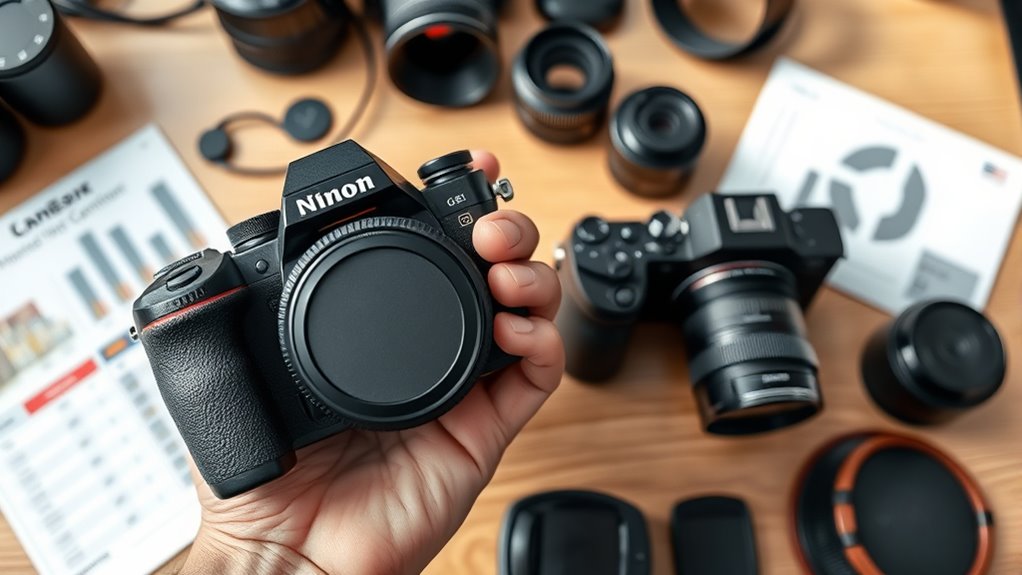
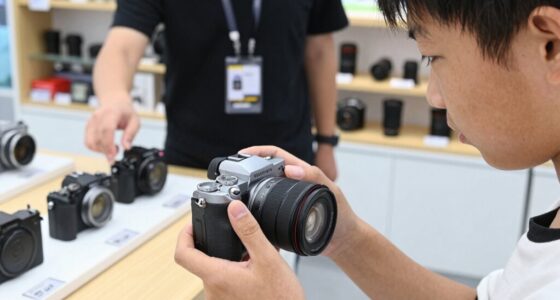
Before settling on a camera, conducting tests and comparing different models to see which feels best in your hands and suits your shooting style is essential. Handle various options to assess comfort, ergonomics, and responsiveness. Pay attention to sensor technology, as it impacts image quality and low-light performance. Don’t forget to contemplate brand reputation, since trusted brands often offer better durability and customer support. Test features like autofocus speed, viewfinder clarity, and menu navigation to make sure you’re comfortable using the camera in real situations. Comparing models side-by-side helps you identify subtle differences that matter most to your photography needs. Taking the time to thoroughly test and compare will guide you toward a camera that not only fits your budget but also enhances your creative potential. Additionally, understanding sound healing science can inspire you to explore new creative ways to incorporate environmental elements into your photography, which can deepen your artistic expression. Incorporating AI-powered tools like passive voice detection can assist in refining your writing for clarity and impact.
Frequently Asked Questions
Which Camera Brand Offers the Best Customer Support?
You’ll find Canon offers the best customer support, especially with its reliable customer service and extensive warranty support. They’re known for prompt responses and helpful advice, making it easier if you encounter issues. Nikon also provides solid warranty support, but Canon’s reputation for attentive customer service gives you peace of mind. When choosing, consider these brands for dependable assistance, ensuring your investment stays protected and your questions get answered quickly.
How Do Weather Sealing Features Differ Between DSLR and Mirrorless?
Weather sealing comparison shows that both DSLR and mirrorless cameras can be highly durable, but DSLRs often have more extensive sealing due to their design. You’ll find that durability features like weather-resistant bodies are common in professional-grade models from both categories. However, check each model’s specifications carefully, as some mirrorless options now offer comparable weather sealing, making them suitable for challenging outdoor conditions.
Are There Any Significant Differences in Battery Life?
You’ll notice that DSLR cameras generally offer better battery longevity because they use optical viewfinders, which consume less power. Mirrorless cameras, on the other hand, rely on electronic viewfinders or LCD screens, making them less power-efficient. If you plan long shoots without frequent charging, a DSLR might be more suitable. However, newer mirrorless models are improving in power efficiency, so consider your shooting style and battery needs carefully.
Can I Use My Existing Lenses Across Different Camera Brands?
You can’t typically use your existing lenses across different camera brands due to lens compatibility issues. However, you might find adapter options that allow you to fit your lenses onto different camera bodies. Keep in mind, using adapters can sometimes impact autofocus speed and image quality. Before purchasing, research specific lens compatibility and adapter options for your intended camera system to guarantee you get the best performance.
Which Camera Type Has Better Video Recording Capabilities?
Mirrorless cameras generally offer better video recording capabilities, giving you superior video quality and faster autofocus speed. They tend to have advanced features like higher resolutions, better stabilization, and more versatile codecs, making your videos sharper and smoother. If capturing high-quality videos quickly is a priority, a mirrorless camera is likely your best choice. Their compact design also makes them easier to handle during extended shooting sessions.
Conclusion
Choosing between a DSLR and mirrorless camera might seem intimidating, but remember, your perfect match often appears when you least expect it. As you explore options and test models, you might stumble upon a camera that feels just right—like it was made for you. Trust your instincts, consider your goals, and keep an open mind. Sometimes, the best camera finds you when you’re not looking for it.