Drones are revolutionizing filmmaking by acting as Hollywood’s new camera crew, capturing stunning aerial shots that were once costly and complex. They offer creative freedom with smooth, high-resolution footage, supporting innovative angles and dynamic scenes. Plus, drones are more affordable and easier to operate than traditional equipment, all while complying with safety regulations. If you want to explore how these flying cameras are shaping modern cinema, you’ll find plenty of exciting details ahead.
Key Takeaways
- Drones enable high-quality, dynamic aerial shots that were previously costly and complex with traditional equipment like helicopters.
- Advanced stabilization and camera technology allow for smooth, cinematic footage in various environments and creative angles.
- Reduced costs and setup time make aerial cinematography more accessible for productions with limited budgets.
- Improved safety, regulatory compliance, and remote operation streamline workflows while minimizing risks.
- Ongoing innovations like AI and autonomous flight expand creative possibilities and revolutionize filmmaking techniques.
The Evolution of Aerial Cinematography
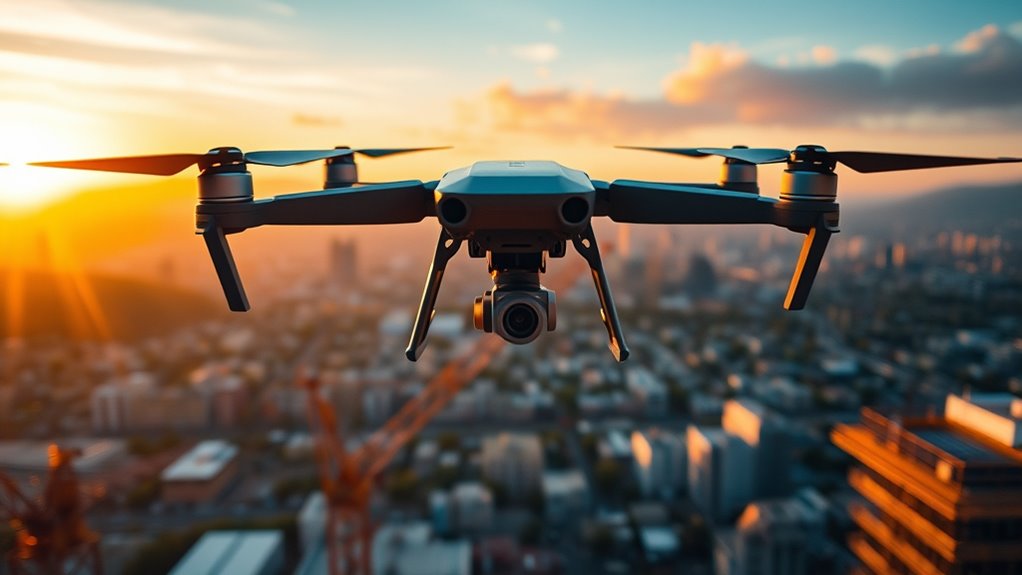
The evolution of aerial cinematography has transformed how filmmakers capture breathtaking visuals from above. As a drone pilot, you know that maintaining your equipment is crucial; regular drone maintenance ensures optimal performance and safety during shoots. Staying on top of drone upkeep prevents malfunctions that could ruin a shot or cause accidents. Additionally, pilot certification has become a vital requirement, demonstrating your skills and knowledge of flight safety regulations. Certification not only boosts your credibility but also grants access to more complex filming opportunities. Over time, advances in drone technology and stricter certification standards have elevated the quality and safety of aerial cinematography. This progress allows you to push creative boundaries while ensuring responsible and professional drone operation. Moreover, understanding the role of high-quality cameras in drone systems enables you to capture sharper, more detailed footage, giving your work a competitive edge. Furthermore, integrating European cloud solutions can enhance data management and storage, ensuring your footage is securely backed up and easily accessible for editing and distribution.
Technological Advancements in Drone Cameras
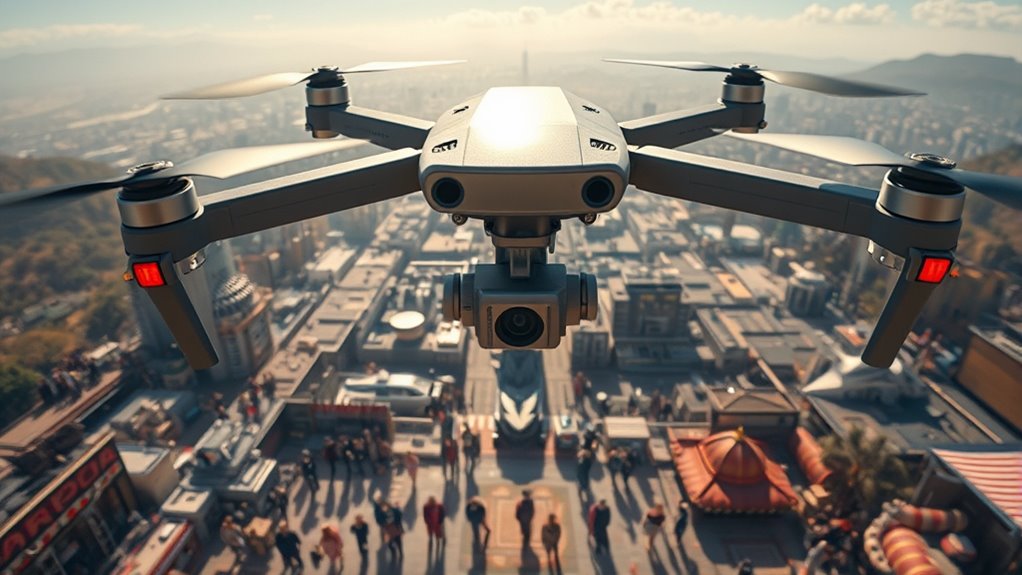
Advancements in drone camera technology have dramatically expanded creative possibilities for filmmakers. Modern drones feature longer battery life, allowing for extended shooting sessions without frequent landings. Improved signal transmission ensures a stable connection, even during complex maneuvers or in challenging environments. This reliability lets you focus on capturing dynamic shots without worrying about losing control or footage. Additionally, safety & setups such as proper pre-flight checks help prevent accidents and ensure smooth operation during shoots.
| Feature | Benefit |
|---|---|
| Drone Battery Life | Enables longer, uninterrupted filming sessions |
| Signal Transmission | Maintains a strong, stable connection during flight |
| Camera Technology | Provides higher resolution and smoother footage |
These technological improvements give you more freedom to push your creative boundaries while ensuring your drone performs reliably throughout your shoot.
Creative Possibilities Unlocked by Drones
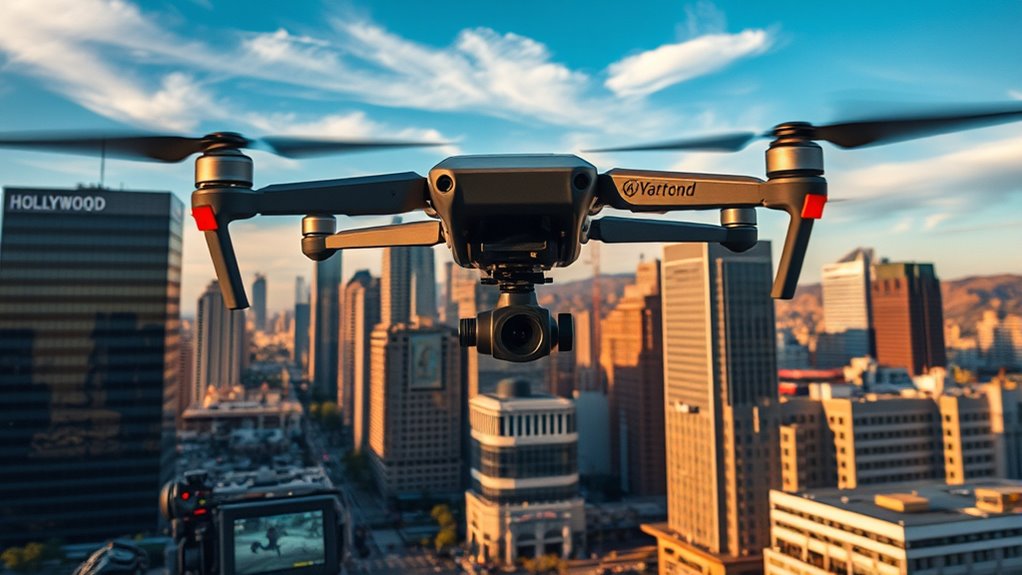
Drones give you the power to capture stunning aerial perspectives that were once impossible or costly. You can explore innovative camera angles that add excitement and depth to your shots. These creative options open new doors for storytelling and visual impact in filmmaking.
Aerial Perspective Enhancement
By giving filmmakers the ability to capture breathtaking aerial shots, drones considerably enhance the creative possibilities for visual storytelling. You can now craft sweeping landscapes, dynamic cityscapes, and intimate overhead scenes with ease. Longer drone battery life means extended flight times, allowing for continuous shots without interruption. However, FAA regulations require strict adherence to altitude limits and flight paths, ensuring safety and compliance. Proper regulatory compliance ensures safe and responsible drone operation, opening up even more creative opportunities. With a solid understanding of pool terminology, operators can better plan and execute complex shots in diverse environments, ensuring safety and precision. Understanding environmental considerations is essential to minimize ecological impact and adhere to legal and safety standards. Additionally, awareness of airspace restrictions helps prevent interference with manned aircraft and protected areas. Imagine the scene as you fly over a vibrant city:
| Skyline at Dawn | Rolling Hills | Coastal Cliffs |
|---|---|---|
| City lights fade | Green fields spread | Waves crash below |
| Birds soar high | Winds whisper | Sunset paints sky |
This aerial perspective accesses new dimensions, elevating your storytelling with sweeping, immersive visuals.
Innovative Camera Angles
With the ability to maneuver into unconventional positions and angles, aerial filming opens up a world of creative possibilities that were once difficult or impossible to achieve with traditional equipment. Drones enable you to capture innovative camera angles, such as sweeping overhead shots, low-level ground hovers, and dynamic tracking shots. Achieving these angles requires excellent camera stabilization, which drones now handle with advanced gimbal systems, ensuring smooth footage even in complex maneuvers. Additionally, proper drone maintenance** is essential to prevent technical issues that could compromise shot quality, including checking batteries, motors, and propellers to prevent disruptions during shots. Regularly inspecting body jewelry measurements and materials can also prevent equipment failures that could impact filming. This combination of innovative angles and reliable stabilization allows you to push creative boundaries, delivering visually stunning scenes that elevate your storytelling. Proper battery management is also crucial to ensure uninterrupted filming sessions and avoid power failures during critical shots. Furthermore, understanding natural lighting conditions** can significantly enhance the quality of drone footage, making scenes more vivid and dynamic.
Cost-Effective Alternatives to Traditional Equipment
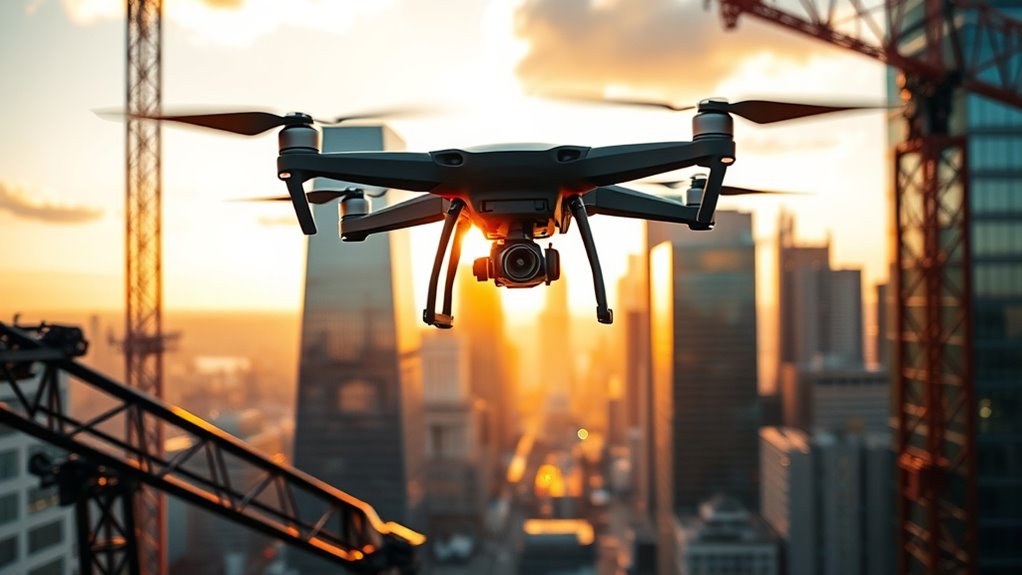
Drones offer a smart way to lower your equipment expenses while still capturing stunning footage. They also reduce the need for a large crew, making your shoots more efficient. With these budget-friendly options, you can produce professional-quality films without breaking the bank. Additionally, incorporating smart‑home integrations can help streamline your drone operations and improve safety protocols during filming. Leveraging trusted gadget insights can further enhance your understanding of the latest drone technology and safety features. Understanding tool functionalities and how they impact your setup can lead to more successful shoots and safer operation practices. Recognizing technology trends in drone design can keep your equipment up-to-date with industry standards. Incorporating AI-powered applications can also optimize flight paths and improve footage quality during shoots.
Lower Equipment Expenses
Thanks to advancements in drone technology, filmmakers can now access high-quality aerial footage without breaking the bank. Compared to traditional camera equipment, drones are more affordable, reducing overall production costs. Drone maintenance is minimal, and many models are durable enough to withstand frequent use, further lowering expenses. Additionally, pilot training has become more accessible and cost-effective, allowing crews to quickly develop the skills needed to operate drones safely and efficiently. Unlike bulky, expensive equipment, drones require less space for setup and storage, saving on logistical costs. This affordability makes aerial shots achievable even on tight budgets, democratizing high-quality filmmaking. Moreover, the ease of operation associated with modern drones allows even smaller crews to capture complex shots, expanding creative possibilities and enabling more innovative storytelling.
Reduced Crew Requirements
By reducing the need for bulky equipment and extensive setup, drones allow filmmaking crews to operate more efficiently, cutting down on the number of personnel required for aerial shots. Instead of relying on large cranes or helicopters, you can hire a skilled remote pilot to handle the drone, simplifying logistics. FAA regulations govern drone operations, ensuring safety and compliance, which streamlines the process further. With fewer crew members needed on set, your team saves time and resources. Drones also eliminate the need for extensive rigging or special permits associated with traditional aerial equipment. This shift not only cuts costs but also accelerates production schedules. As a result, you can focus more on creative direction while maintaining safety and efficiency throughout your shoot.
Budget-Friendly Filming
Using drones for aerial shots offers a cost-effective alternative to traditional equipment like cranes and helicopters. Drones substantially reduce expenses, as they require less setup, crew, and fuel. While drone maintenance and proper pilot training are essential investments upfront, they pay off by minimizing ongoing costs. Pilot training ensures safe, skilled operation, preventing costly accidents or damage. Unlike renting helicopters or cranes, owning or leasing drones allows you to shoot dynamic scenes without breaking the bank. Additionally, technology advances have made high-quality drone cameras more affordable, expanding access for smaller productions. Moreover, understanding digital distractions and their impact on creativity can help filmmakers stay focused and innovative during production. Incorporating power management solutions ensures your drone equipment remains reliable and ready when needed. The integration of smart IoT technologies in drone systems further enhances flight stability and camera control, leading to superior shot quality. Overall, integrating drones into your filming process delivers impressive visuals at a fraction of the traditional costs, making budget-friendly filmmaking more accessible and efficient. Furthermore, investing in proper maintenance can extend the lifespan of your drone fleet and ensure consistent performance. Staying informed about technological advancements can also help filmmakers leverage the latest features for even better results.
Safety and Regulation Challenges

Have you ever wondered how the rapid rise of drone technology challenges aviation safety and public security? As drones become more common on film sets, managing safety and regulation is crucial. You might face insurance issues if a drone causes damage or injury, leading to costly liability concerns. Additionally, privacy concerns are significant; unauthorized filming can infringe on people’s rights and spark legal disputes. Regulations vary by region, and staying compliant requires understanding complex rules for drone operation in different airspaces. Balancing creative freedom with safety measures is essential to prevent accidents and legal problems. If you ignore these challenges, you risk delays, fines, or even losing your flying privileges. Navigating safety and regulation hurdles is vital to ensure your drone filmmaking remains both innovative and responsible. Furthermore, Rhythm Failure highlights the importance of understanding evolving technological landscapes to adapt effectively. Staying informed about regulatory compliance can help mitigate legal risks and improve project planning. It is also important to consider insurance coverage to safeguard against unforeseen incidents during drone operations. Being aware of aviation regulations can help filmmakers avoid legal pitfalls and ensure smooth operations across different regions.
Notable Films and Projects Using Drone Technology

| Film/Project | Key Feature | Impact |
|---|---|---|
| The Lion King (2019) | Aerial landscape shots | Enhanced visual grandeur |
| Mission: Impossible | Dynamic chase scenes | Elevated action sequences |
| Planet Earth II | Wildlife footage | Stunning, immersive visuals |
| Top Gun: Maverick | Formation flying sequences | Realistic aerial stunts |
Future Trends and Innovations in Drone Filmmaking
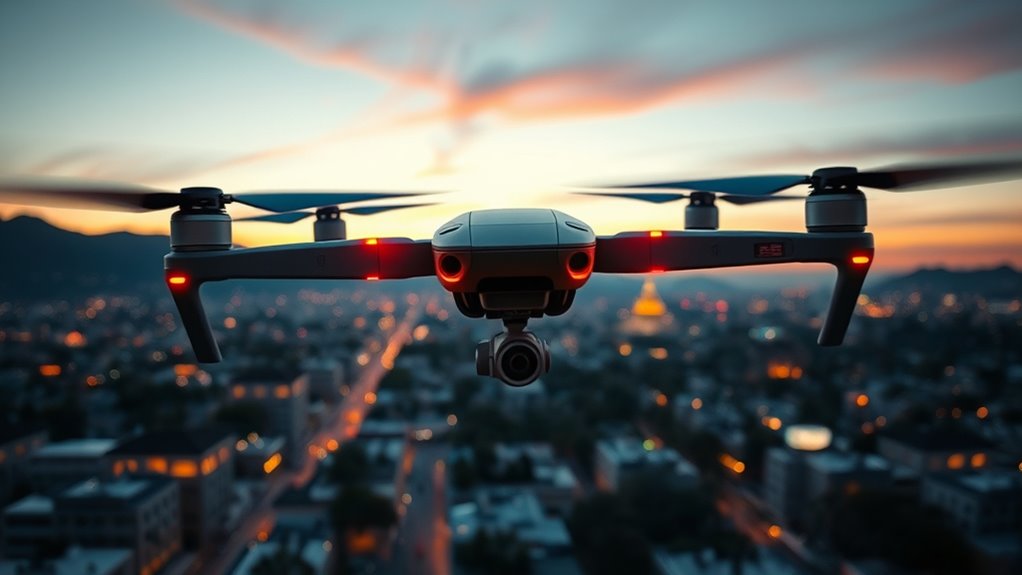
As drone technology continues to advance, filmmakers can expect a wave of innovative trends shaping the future of aerial storytelling. Urban landscapes will become even more dynamic, with smarter drones enabling complex shots in crowded environments while ensuring safety. Expect autonomous flight systems to improve, allowing for more precise, long-duration captures in congested areas. In wildlife conservation, drones will play a bigger role, providing non-intrusive ways to film elusive species and monitor habitats, supporting both filmmaking and environmental efforts. Enhanced camera stabilization and AI-powered tracking will make shots smoother and more accurate, reducing post-production work. These innovations will open new creative possibilities, making your storytelling more immersive and impactful across diverse settings, from cityscapes to remote wilderness.
Frequently Asked Questions
How Do Drone Operators Obtain Necessary Filming Permits?
You need to research local regulations and submit an application to obtain necessary filming permits. Be prepared to address legal hurdles by providing proof of insurance requirements, which protect everyone involved. Contact the relevant authorities early, as permits can take time to process. Ensuring compliance with all legal and insurance requirements helps you avoid fines or project delays, making your drone filming smooth and professional.
What Training Is Required for Professional Drone Cinematographers?
You need drone certification and pilot licensing to become a professional drone cinematographer. This training includes understanding FAA regulations, mastering drone operation, and safety protocols. You’ll also learn how to capture high-quality footage, navigate complex environments, and handle emergency situations. Through coursework and practical flight hours, you gain the skills necessary to operate professionally, ensuring you meet legal standards and produce stunning cinematic shots.
How Do Drones Impact the Environmental Footprint of Filmmaking?
You can reduce your environmental footprint by using drones in filmmaking, as they promote sustainable practices and emissions reduction. Drones require less equipment and energy compared to traditional helicopters and cranes, cutting down on fuel consumption and emissions. By choosing drone technology, you’re contributing to more eco-friendly productions, minimizing disturbance to ecosystems, and promoting greener filmmaking practices overall.
Can Drones Replace Traditional Camera Crews Entirely?
Drones can’t fully replace traditional camera crews, but they considerably enhance aerial innovation and offer creative perspectives that were once impossible. You’ll find drones excel at capturing dynamic shots and hard-to-reach angles, but they often need skilled operators and additional equipment for complex scenes. While they transform filmmaking, a talented crew still plays a crucial role in creating high-quality, cinematic visuals that drones alone can’t achieve.
What Are the Privacy Concerns Associated With Drone Filming?
You should be aware that around 70% of people worry about privacy violations when drones film nearby. Drones can unintentionally capture private moments, raising concerns about data security and unauthorized recordings. These privacy issues can lead to legal complications and erode public trust. To safeguard privacy, filmmakers must follow strict regulations, obtain permissions, and ensure that drone footage doesn’t infringe on personal rights, balancing innovation with respect for individual privacy.
Conclusion
As drone technology continues to evolve, you’re at the forefront of a filmmaking revolution. With endless creative possibilities and increasing affordability, it’s clear drones are transforming how stories are told from above. Will you embrace these innovations to push your cinematic boundaries? As Hollywood demonstrates, the sky’s no longer the limit—it’s just the beginning of a new era in filmmaking.