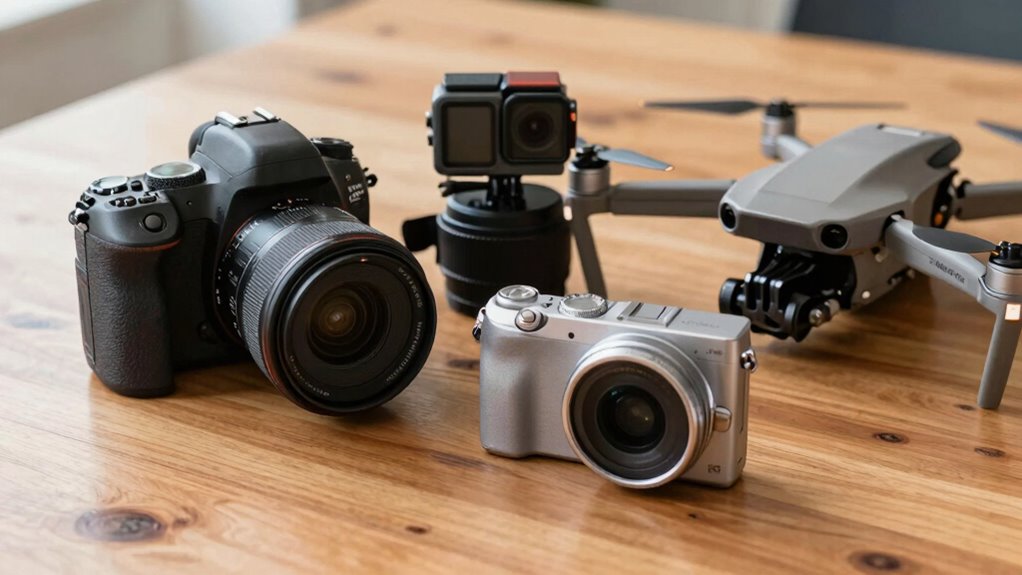

If you’re choosing between DSLR, mirrorless, action cam, or drone cameras, each offers unique benefits. DSLRs deliver high image quality and versatility, ideal for professional photography. Mirrorless cameras are compact with advanced features, great for everyday use. Action cams are rugged and perfect for outdoor adventures, while drone cameras provide stunning aerial shots with stabilization. To find the best fit for your needs, exploring their differences can help you make an informed decision. More details await to guide your choice.
Key Takeaways
- DSLR cameras offer high image quality, versatile lenses, and manual controls, ideal for professional photography.
- Mirrorless cameras are compact, lightweight, with fast autofocus and interchangeable lenses, suitable for versatile shooting.
- Action cameras are small, rugged, waterproof, and perfect for extreme sports and outdoor adventures.
- Drone cameras provide aerial footage with stabilization features, GPS, and flight controls for unique perspectives.
- Choice depends on use case, portability, image quality needs, and budget considerations.
Understanding DSLR Cameras
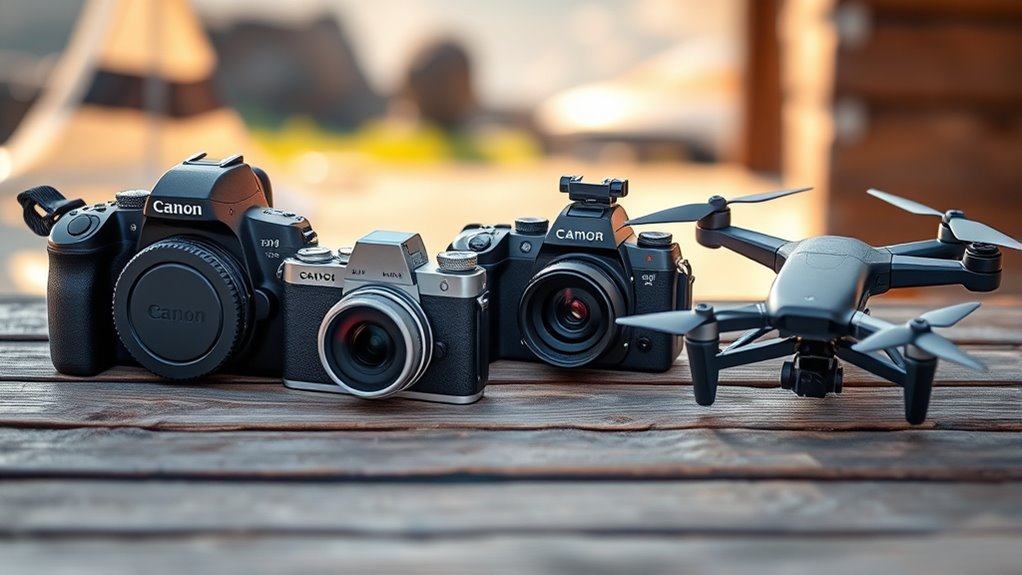
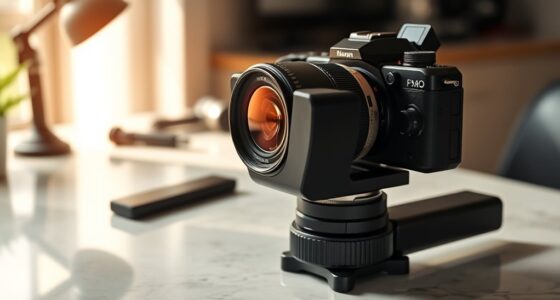
DSLR cameras are popular among photographers because they offer excellent image quality and versatile features. One key advantage is lens compatibility, allowing you to swap lenses for different shooting scenarios. Whether you need a wide-angle or telephoto lens, DSLRs provide a broad range of options to suit your needs. Another critical feature is shutter speed, which you can control precisely to capture fast-moving subjects or create motion blur effects. The ability to adjust shutter speed quickly helps you adapt to various lighting conditions and creative intentions. These cameras often have robust manual controls, giving you full command over your settings. Overall, DSLR cameras combine flexibility and control, making them a favorite choice for both amateurs and professionals alike. Additionally, the color accuracy of DSLR sensors contributes significantly to achieving true-to-life images, which is essential for high-quality photography. Moreover, the sensor size in DSLRs typically results in better low-light performance and depth of field control. Furthermore, advancements in sensor technology continue to enhance image quality and efficiency in modern DSLR models. When considering a DSLR, it’s also important to evaluate the ergonomics and build quality, which can impact comfort during extended shooting sessions.
Exploring Mirrorless Camera Features

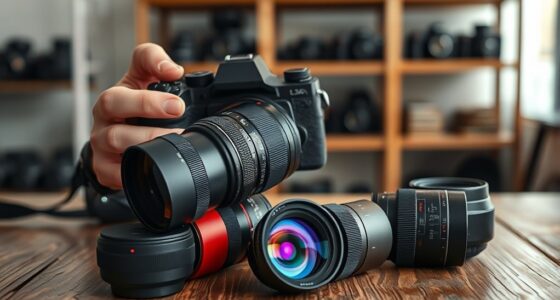
Mirrorless cameras have gained popularity for their compact size and advanced technology, making them a compelling alternative to traditional DSLRs. One key feature is their lens compatibility; many models allow you to use a wide range of lenses, often through adaptable mounts. This flexibility is especially useful for photographers who want to experiment with different styles and techniques. Additionally, sensor sizes in mirrorless cameras vary, from smaller APS-C sensors to full-frame options, affecting image quality and depth of field. Because they lack a mirror mechanism, these cameras are lighter and more portable, without sacrificing performance. The advanced autofocus systems, electronic viewfinders, and quick shutter speeds give you a seamless shooting experience. Interchangeable lenses is another significant advantage, offering versatility for various creative needs. The evolving technology in mirrorless cameras continues to improve their capabilities and user experience. Moreover, some models feature image stabilization, which helps reduce blur caused by hand movement, enhancing image sharpness in various conditions. Furthermore, many models incorporate connected features that allow for easy integration with smartphones and editing platforms. As the market for mirrorless cameras expands, manufacturers are investing heavily in developing innovative features to meet diverse user needs. Overall, exploring these features helps you choose a mirrorless camera that best fits your needs and creative goals.
Benefits and Drawbacks of Action Cameras

Action cameras offer a compact and rugged solution for capturing high-adrenaline moments, making them ideal for outdoor enthusiasts and sports lovers. Their waterproof design lets you record underwater adventures without extra gear, while their small size ensures portability. Additionally, the availability of fiber-rich ingredients and low-carb vegetables makes it easier to maintain a healthy keto diet while enjoying outdoor activities. Their compact design also makes it suitable for discreet filming in various environments. For those seeking reliable footage, sensor technology plays a crucial role in image clarity and color accuracy. However, their battery life can be limited, requiring extra batteries for extended use. Here are some benefits and drawbacks:
- Durable and waterproof design, perfect for extreme conditions.
- Compact size makes it easy to mount on helmets, bikes, or surfboards.
- Shorter battery life may interrupt long sessions.
- Limited sensor size can affect video quality compared to larger cameras.
- DIY-friendly features and accessories make customization easier for users seeking specific setups.
- Advances in sensor technology and image processing continue to improve the overall video quality of action cameras.
While action cameras excel in portability and durability, their battery life and image quality are potential drawbacks, especially for those seeking professional-grade footage.
The Rise of Drone Cameras for Aerial Shots
Drone cameras give you stunning aerial perspectives that were once hard to capture. Their advanced flight stability guarantees smooth footage, even in windy conditions. As these features become more accessible, they’re transforming how you film from above. Additionally, ownership essentials like proper operation and safety protocols are essential for maximizing their benefits. Developing outdoor safety skills ensures you can enjoy drone technology responsibly while exploring new heights. Understanding navigation and mapping features can further enhance your ability to plan complex shots safely. Embracing modern connectivity options can also improve control and real-time adjustments during your flights. Incorporating regulatory knowledge helps ensure compliant and trouble-free flying experiences.
Enhanced Aerial Perspectives
Have you noticed how aerial shots now capture stunning perspectives that were once impossible or prohibitively expensive? Drone cameras have revolutionized the way you approach aerial photography. They offer affordable, versatile options for capturing incredible shots. To maximize your drone’s potential, consider these key points:
- Use the right camera accessories, like filters and stabilizers, to improve image quality.
- Master shooting techniques, such as smooth panning and altitude changes, for dynamic compositions.
- Experiment with different flight paths to add variety and depth to your footage.
- Regularly update your drone’s firmware to guarantee optimal performance and safety.
Advanced Flight Stability
As drone technology advances, flight stability has become a crucial factor in capturing smooth, professional-quality aerial footage. Modern drones utilize sophisticated sensors and algorithms to maintain their flight path and altitude control, even in challenging conditions. These features ensure your footage remains steady and clear, reducing jitters and unwanted movements. The table below highlights key stability features:
| Feature | Function | Benefit |
|---|---|---|
| Gyroscopic Stabilizers | Detects rotational movements | Keeps camera steady |
| GPS Positioning | Maintains precise location | Prevents drift |
| Barometric Sensors | Controls altitude | Ensures smooth height changes |
| Optical Flow Sensors | Tracks ground movement | Stabilizes hover |
| IMUs (Inertial Measurement Units) | Detects rapid changes in movement | Enhances flight responsiveness |
These advancements make drone shots more reliable and professional. Modern drone stabilization techniques leverage these sensors and algorithms, enabling even amateur pilots to achieve cinematic-quality footage.
Comparing Image Quality and Performance

When comparing camera types, you’ll notice differences in image resolution and clarity that can impact your photos’ sharpness. Autofocus speed and stabilization also play vital roles in capturing clear, steady shots, especially in action or low-light situations. Understanding these performance features helps you choose a camera that meets your specific needs. Additionally, considering appliance testing and compatibility can be beneficial when evaluating the overall reliability of electronic devices, including cameras. Recognizing performance benchmarks ensures that your chosen camera performs optimally under various conditions. To ensure consistent results, it’s also important to assess sensor quality, which directly influences image detail and color accuracy. Incorporating sensor performance into your evaluation can help you select a camera that delivers high-quality images consistently, even in challenging environments. Incorporating herbal infusion machines and tools in your equipment lineup can streamline workflows if you’re into creative culinary or infusion projects, ensuring reliable and high-quality results.
Image Resolution and Clarity
Image resolution plays an essential role in determining the clarity and detail of your photos. Higher resolutions mean sharper images with more visible detail. When comparing camera types, consider how sensor technology influences resolution—larger sensors typically capture more information, enhancing image quality. Additionally, advanced image processing improves clarity by refining details and reducing noise. Here’s what to look for:
- Megapixel count, which directly impacts image resolution.
- Sensor size, affecting the amount of light and detail captured.
- Image processing algorithms, enhancing sharpness and color accuracy.
- The balance between resolution and processing speed, critical for real-time shooting.
- Understanding how net worth and technological investments can impact camera features and upgrades. This investment often determines access to latest sensor technology and software improvements that boost image quality.
Choosing a camera with cutting-edge sensor technology and robust image processing ensures your photos are crisp and clear, no matter the device.
Autofocus and Stabilization
Ever wondered how autofocus and stabilization impact your photo quality? Focus accuracy is essential for sharp images, especially in fast-moving scenes. DSLR and mirrorless cameras typically offer rapid, precise autofocus, ensuring your subject stays crisp. Action cams and drones often rely on advanced autofocus systems to keep up with motion. Image stabilization, whether optical or digital, reduces blur caused by hand shake or vibrations, resulting in clearer shots. Good stabilization is critical in low-light conditions or when shooting at slow shutter speeds. Drones and action cameras often include electronic stabilization, while DSLRs and mirrorless models feature in-body stabilization. Together, focus accuracy and image stabilization determine how sharp and steady your images appear, making them necessary for capturing high-quality photos and videos across all camera types.
Size, Weight, and Portability Considerations

Have you ever thought about how much the size and weight of a camera influence your shooting experience? A compact design can make a big difference, especially when you’re on the move. Smaller cameras offer notable portability advantages, allowing you to carry them easily and shoot spontaneously. Here are some key points to consider:
- DSLR cameras tend to be larger and heavier, providing stability but less portability.
- Mirrorless cameras often strike a balance with a smaller, lightweight form factor.
- Action cams are ultra-compact, perfect for active or adventurous shooting.
- Drone cameras are lightweight but require consideration of size for transport and flight stability.
Choosing a camera with the right size and weight depends on your shooting style and mobility needs.
Ideal Uses for Each Camera Type
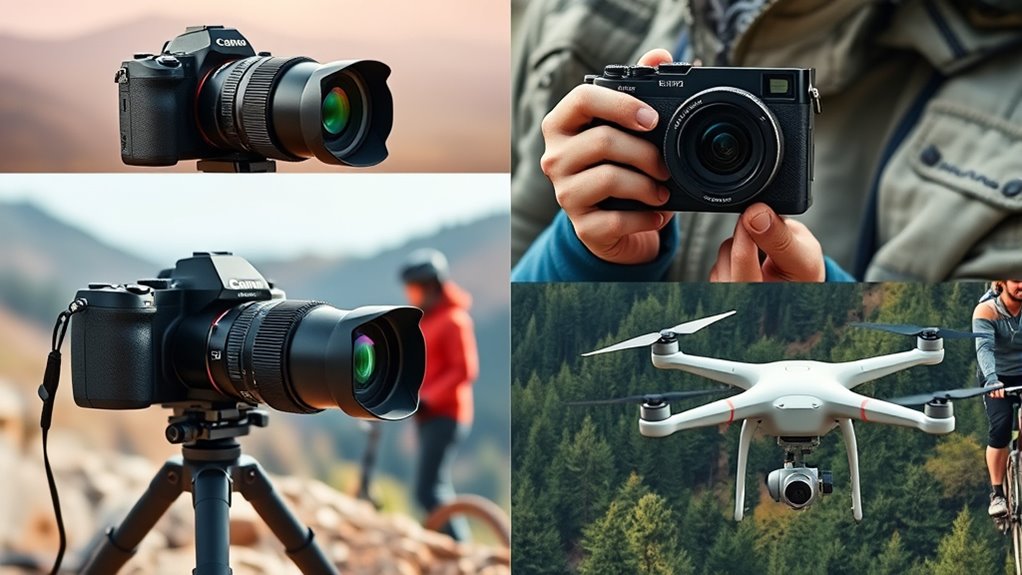
Each camera type excels in specific scenarios, making it essential to choose the right one for your needs. DSLR and mirrorless cameras are ideal for professional photography and versatile shooting techniques, allowing you to use a wide range of camera accessories like lenses and filters. They’re perfect for portraits, landscapes, and events where image quality matters most. Action cams shine in extreme sports and outdoor adventures, offering durability and compactness to capture fast-paced moments. Drone cameras are best for aerial photography and videography, giving you unique perspectives that ground-based cameras can’t achieve. Knowing the ideal uses helps you select the right equipment and accessories, ensuring you maximize your camera’s capabilities in every situation.
Budget and Cost Factors

When choosing a camera, taking into account your budget and cost factors is essential to making a smart investment. Doing a thorough price comparison helps you identify budget-friendly options that fit your needs. Here are key points to consider:
- Initial Purchase Price: DSLR, mirrorless, action cams, and drones vary widely in cost.
- Accessories and Lenses: Budget-friendly options might require additional purchases for lenses or mounts.
- Maintenance and Repairs: Think about long-term expenses, especially for higher-end models.
- Upgrades and Software: Some cameras may need software updates or accessories that add to the overall cost.
Balancing your needs with these factors ensures you find a camera that offers the best value without overspending.
User Experience and Ease of Use
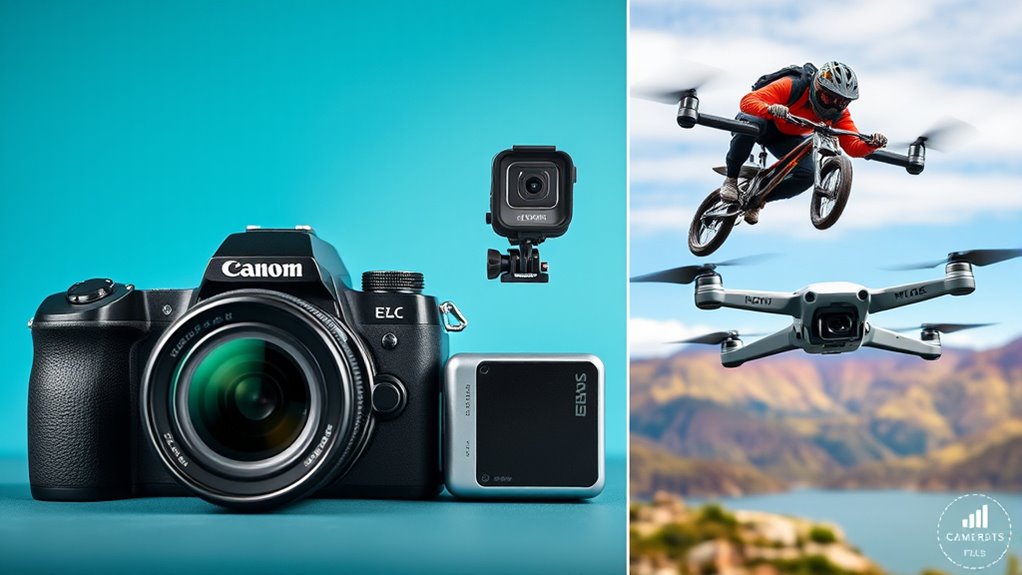
Choosing a camera that’s user-friendly can make a significant difference in how enjoyable and productive your photography experience is. The user interface plays a crucial role, determining how easily you can navigate settings and controls. A straightforward interface reduces frustration and allows you to focus on capturing moments rather than figuring out complex menus. The learning curve varies across camera types: DSLR cameras might require more time to master due to their extensive features, while action cams and drones often feature simplified controls aimed at quick setup. Ease of use is especially important if you’re just starting or need quick adjustments in dynamic situations. A camera with an intuitive interface helps you become confident faster, so you can concentrate on your creativity instead of technical hurdles.
Tips for Choosing the Right Camera for Your Needs

Finding the right camera starts with understanding your specific needs and how you plan to use it. Consider these key factors:
Choosing the right camera depends on understanding your needs and intended use.
- Lens options: Choose a camera with versatile lens choices if you want flexibility for different shots, or fixed lenses for simplicity.
- Battery life: Determine how long you’ll shoot; longer battery life benefits outdoor adventures or extended shoots.
- Size and weight: If portability matters, opt for smaller, lighter models like action cams or mirrorless cameras.
- Intended use: For professional photography, prioritize DSLR or mirrorless with advanced features; for casual or sports filming, action cams or drones might suit you better.
Ultimately, matching your shooting style with these factors guarantees you’ll select a camera that fits perfectly with your needs.
Frequently Asked Questions
How Do Camera Sensors Impact Image Quality Across Different Types?
Sensor size and pixel density directly impact your image quality. Larger sensors capture more light, resulting in better detail and low-light performance, regardless of camera type. Higher pixel density can improve resolution but might introduce noise if not managed well. So, when choosing a camera, consider a larger sensor for richer images and balanced pixel density to maintain clarity without sacrificing quality.
What Are the Best Accessories for Enhancing Each Camera’s Performance?
To boost each camera’s performance, invest in accessories like sturdy tripods to improve stability, especially for landscape or long exposure shots. Lens filters, such as UV or ND filters, enhance image quality and protect your lens. For action cams, consider waterproof cases and extra mounts. Drones benefit from extra batteries and propeller guards. These accessories help you capture sharper images and expand creative possibilities.
How Do Maintenance and Care Differ for DSLR, Mirrorless, Action, and Drone Cameras?
You should follow specific cleaning routines and storage considerations for each camera type. For DSLRs and mirrorless cameras, regularly clean lenses, sensor, and body with appropriate tools, and store in a dry, dust-free environment. Action and drone cameras need gentle cleaning after outdoor use, especially after exposure to dirt or moisture. Always power off your camera before cleaning, and keep batteries and accessories in a secure, climate-controlled space to prolong lifespan.
Can You Upgrade Lenses or Features on All Camera Types Easily?
Think of upgrading your camera’s features like adding new chapters to a book; some cameras make this easier than others. You can generally upgrade lenses on DSLRs and mirrorless cameras because of lens compatibility, but action and drone cameras often have limited options. Firmware updates can improve performance across all types, but check if your device supports these updates before upgrading features. Always verify compatibility first to avoid surprises.
How Do Weather Conditions Affect Camera Operation and Durability?
Weather conditions can considerably impact your camera’s operation and durability. You’ll want weather resilience in your gear, especially in rain, snow, or dust. Environmental protection features, like sealed bodies and weatherproofing, help shield your camera from moisture and debris. Always check your camera’s specifications for weather resistance, and consider using protective covers or housings in harsh conditions to maintain ideal performance and prolong your camera’s lifespan.
Conclusion
Choosing the right camera depends on your needs—whether you crave the professional quality of a DSLR, the versatility of a mirrorless, the adventure of an action cam, or the aerial perspective of a drone. Each offers unique advantages and challenges, blending precision with portability. So, weigh your priorities carefully—capture moments with clarity or explore new angles. Ultimately, the perfect camera balances your passion with your budget, helping you tell your story in vivid detail.