
To fly your drone safely for the first time, start by familiarizing yourself with its controls and practicing in an open, obstacle-free area. Keep your movements slow and gentle to improve stability and avoid crashes. Choose a calm day with good weather, and stay alert to your surroundings. Progress gradually, focusing on basic maneuvers before trying more advanced ones. If you want to learn more about safe flying tips, you can discover them just ahead.
Key Takeaways
- Start in an open, obstacle-free area with minimal wind to build confidence and control.
- Practice gentle, slow movements to improve stability and reaction time.
- Familiarize yourself with your drone’s controls and perform pre-flight checks, including battery and firmware.
- Avoid flying in bad weather or near power lines, trees, or crowded places.
- Gradually increase flight complexity after mastering basic maneuvers.
Getting Familiar With Your Drone and Its Controls
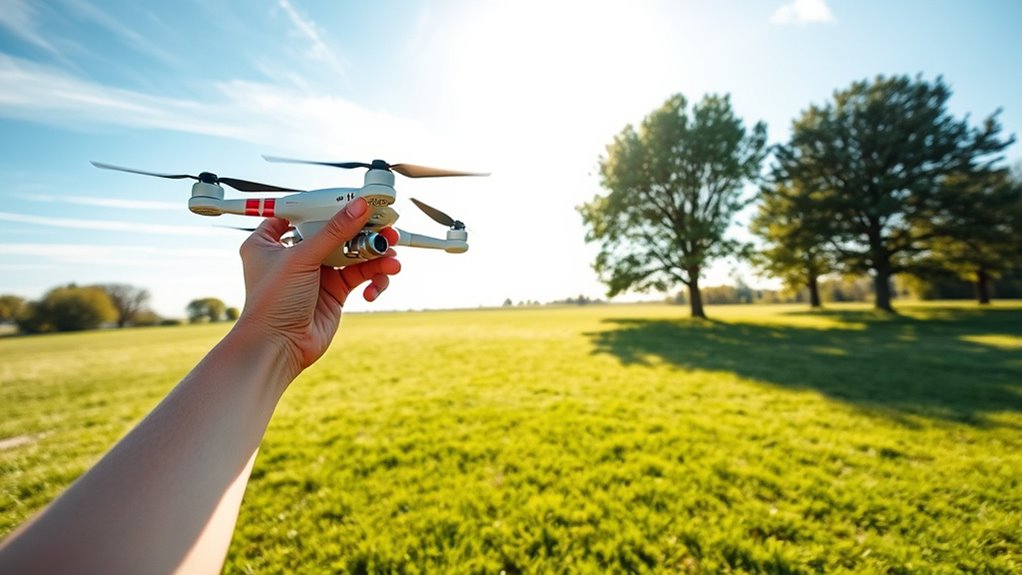
Before you take your drone into the air, it’s essential to understand its basic controls and features. Start by familiarizing yourself with the remote’s buttons and sticks, which control movement, altitude, and camera functions. Effective battery management is crucial; always check your drone’s battery level before flying and keep spares handy. Regular firmware updates are vital to ensure your drone runs smoothly and safely, so connect to the manufacturer’s app and update the firmware when prompted. These updates often include important safety features and performance improvements. Practice using the controls in a safe environment to build confidence. Knowing how to manage your drone’s battery and keeping its firmware current help prevent crashes and technical issues. Energy-efficient design in modern drones contributes to longer flight times and better overall performance. Mastering these fundamentals sets a solid foundation for safe flying.
Choosing the Right Location for Your First Flights
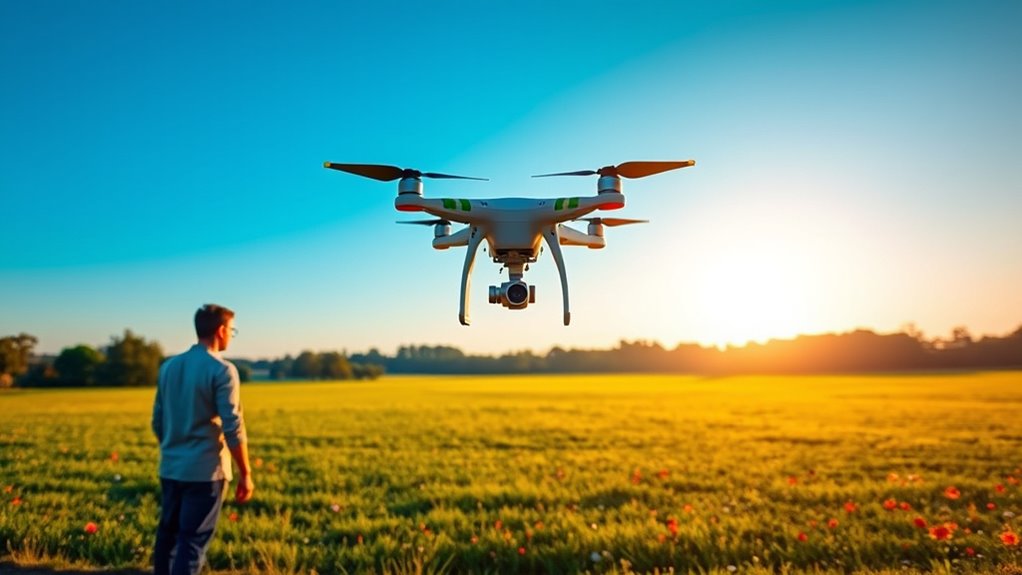
Selecting the right location is key to a successful first flight. You want an open, unobstructed area away from crowded places, guaranteeing compliance with airspace regulations. Check local rules about drone flying, especially near airports, sports fields, or government buildings. Wildlife considerations are also vital—avoid areas with nesting birds or protected habitats to prevent disturbance. Look for places like large parks or rural open spaces where you can fly safely and legally. Ensure the area has minimal wind and no interference from power lines or tall structures. Picking the right spot helps you focus on learning controls without distractions or hazards. Understanding airspace regulations is crucial for avoiding legal issues and ensuring safe flying practices. Taking the time to choose a proper location sets a solid foundation for a safe, enjoyable first flight. Additionally, researching drone laws and restrictions in your area can help prevent unintentional violations. Considering local environment conditions can further improve your flying experience by reducing unpredictable factors.
Practicing Basic Maneuvers and Slow Movements
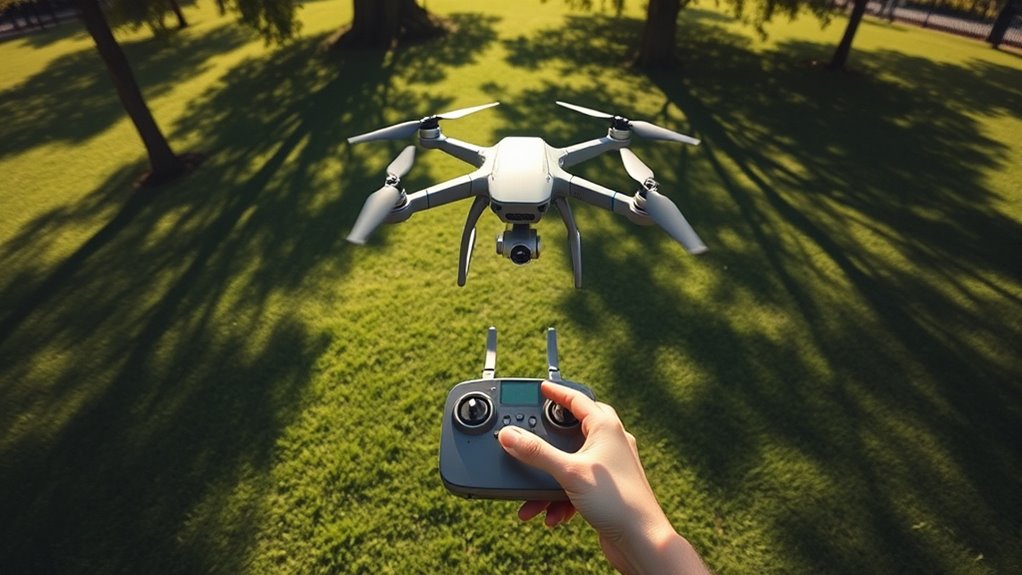
Once you’ve chosen a good location, it’s time to start practicing basic maneuvers and slow movements. Focus on gentle control to build confidence and improve your handling skills. Practice moving the drone forward, backward, and side to side at low speeds, paying attention to smooth throttle and stick inputs. This helps you gain precision, which is essential for aerial photography and capturing stable shots. As you become comfortable, incorporate obstacle avoidance features if your drone has them, practicing how it reacts to nearby objects. Avoid rushing; slow, deliberate movements help prevent crashes and build a solid foundation for more advanced flying. Consistent practice with these simple maneuvers will boost your control and prepare you for more complex flights.
Starting With Small, Easy Flights Before Gradually Increasing

Starting with small, easy flights sets a solid foundation for your drone skills. Keep initial flights simple, focusing on basic controls and steady movements. As you gain confidence, experiment with advanced camera settings to capture better footage, but avoid overcomplicating your flights early on. Proper battery management is essential; don’t push your drone to its limits during these initial sessions. Make sure to monitor your battery levels and land before it drops too low. Gradually increase flight complexity only after mastering these basics. This approach minimizes risks and builds your confidence. Remember, patience is key—building skills step by step ensures safer, smoother flights and prepares you for more challenging adventures ahead. Additionally, understanding the importance of Free Floating can help you maintain better control and stability during your flights, especially when dealing with drone responsiveness and environmental factors. Being aware of pinball machine weight and how it affects handling can also serve as a useful analogy for understanding drone stability and control during flight, emphasizing the importance of weight distribution and proper equipment handling. Recognizing the nutritional considerations of your drone’s components, such as battery health, can also contribute to longer-lasting and more reliable flights. Paying attention to environmental conditions like wind and lighting can further enhance your flying experience and safety.
Being Mindful of Weather Conditions and Obstacles
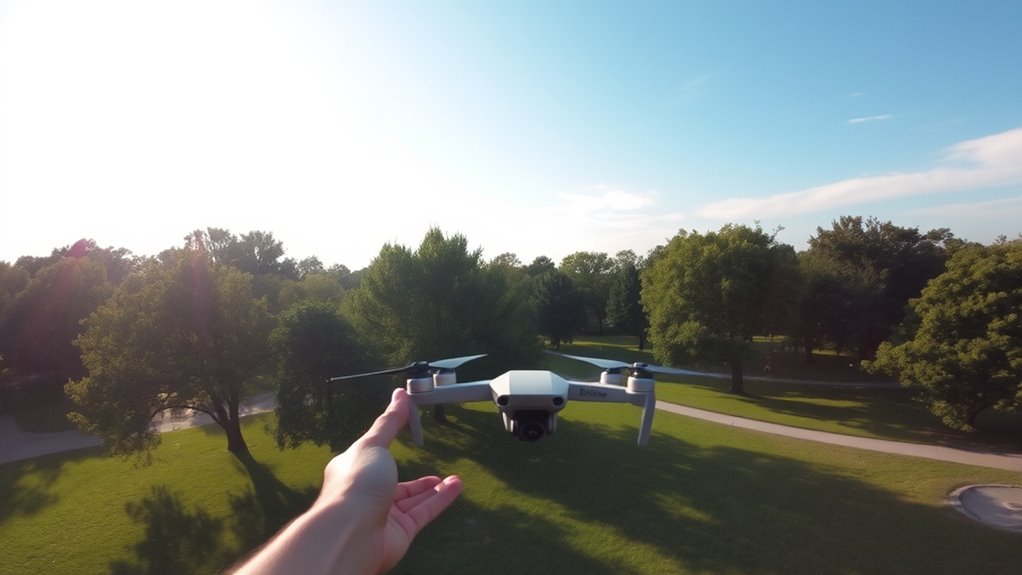
Being mindful of weather conditions and obstacles is crucial for safe drone flying, as unpredictable weather and cluttered environments can quickly cause accidents. Wind patterns can impact your drone’s stability, making it harder to control, especially for beginners. Always check the forecast before flying and avoid gusty or stormy conditions. Obstacles like trees, power lines, or buildings pose collision risks; ensure your drone’s obstacle detection features are active and functioning correctly. Keep a close eye on your surroundings and plan your flight path to steer clear of hazards. If weather conditions change unexpectedly, land your drone safely and avoid flying in heavy wind or rain. Being aware of weather and obstacles helps you maintain control and fly confidently, reducing the chances of crashes. Additionally, understanding drone safety guidelines can further enhance your awareness and safety practices during flight.
Frequently Asked Questions
How Do I Troubleshoot Common Drone Malfunctions During Flight?
When troubleshooting common drone malfunctions during flight, start by checking for propeller issues; make certain they’re securely attached and not damaged. If you experience GPS errors, try recalibrating the GPS system or resetting the drone’s connection. Keep an eye on signal strength and battery levels, as these often cause malfunctions. If problems persist, land safely, restart the drone, and update its firmware to fix software glitches.
What Are the Legal Regulations for Flying a Drone in My Area?
You need to check your area’s drone regulations before flying. This includes registering your drone if required and understanding privacy laws to avoid legal issues. Always stay within the maximum altitude limits and keep your drone in sight. Be aware of no-fly zones like airports or government buildings. Following these rules helps you fly responsibly and legally, ensuring a safe and enjoyable experience without any trouble.
How Can I Improve My Drone’s Battery Life Effectively?
Ever wonder how you can extend your drone’s flight time? You can improve your drone’s battery life through simple battery enhancement and effective power management. Always fly in ideal weather conditions, avoid rapid accelerations, and turn off unnecessary features like camera or lights when not in use. Keep your batteries at proper storage levels and regularly calibrate them. These small steps make a big difference in maximizing your drone’s battery life.
What Accessories Are Recommended for Beginner Drone Pilots?
As a beginner, you should consider accessories like a drone camera to capture your flights and propeller guards for added protection. A quality camera enhances your footage, while propeller guards help prevent damage during accidental crashes. These accessories improve your flying experience, making it safer and more enjoyable. They’re affordable investments that boost your confidence and help you practice without worrying about damaging your drone.
How Do I Safely Land My Drone After a Flight?
Think of your drone as a paper airplane—careful, smooth landings prevent tears. To guarantee a safe landing, gradually reduce the drone’s altitude using gentle controls and maintain a steady, level flight path. Use landing techniques like approaching a clear, flat area and slowly lowering the throttle. Always monitor your drone’s position and battery life, so you’re prepared for a controlled, safe landing every time, avoiding sudden descents or crashes.
Conclusion
Now that you’re equipped with these tips, your drone’s first flight will feel like a gentle dance, not a wild storm. Trust your instincts, stay steady, and let each cautious step build your confidence. As you navigate the skies, remember—every crash is just a stepping stone to mastery. With patience and practice, you’ll soon be soaring smoothly, turning your newfound skills into a symphony of soaring adventures. Happy flying!