To shoot 4K or 8K videos smoothly, you need a memory card with high transfer speeds—look for UHS-II, V60, or V90 ratings. These formats handle the large file sizes and high bitrates without lag or dropped frames. Capacity is also crucial, so choose larger cards to avoid frequent swaps. Durability and compatibility matter, too. Keep these factors in mind, and you’ll guarantee your footage stays safe and playback is seamless—more tips await as you continue.
Key Takeaways
- Use UHS-II or V90 SD cards to handle high bitrates of 4K and 8K video without dropping frames.
- Ensure the card’s write speed meets or exceeds your camera’s recording requirements for smooth footage.
- Opt for high-capacity cards (128GB or more) to accommodate large 4K/8K files during extended shoots.
- Choose durable, weather-resistant cards to protect data in challenging environments.
- Match storage format and speed standards to your device for seamless compatibility and reliable recording.
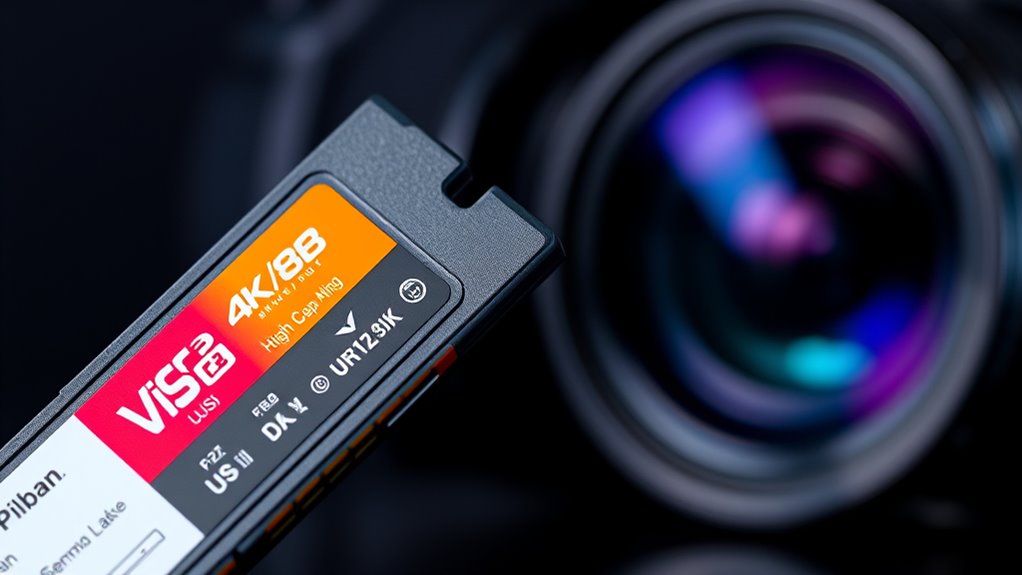
Recording 4K and 8K videos demands high-performance memory cards that can keep up with the massive data rates involved. When you’re capturing such detailed footage, the choice of storage formats becomes essential. Modern memory cards utilize advanced storage formats like UHS-II, UHS-III, and V60 or V90 Video Speed Class ratings, which are designed to handle high bitrates without dropping frames or causing lag. These formats optimize data transfer speeds, ensuring that your camera can write large files quickly and efficiently. Understanding these storage formats helps you select a card that matches your recording needs, preventing frustrating delays or lost footage during critical shoots.
Beyond speed, card durability plays a key role in maintaining your workflow. High-resolution video recording often takes place in diverse environments—hot deserts, humid jungles, or cold mountain peaks—so your memory card needs to withstand physical stress, temperature fluctuations, and environmental hazards. Look for cards that feature robust construction, including waterproof, shockproof, X-ray proof, and temperature-resistant certifications. This durability ensures the card remains reliable over time, even when exposed to rough handling or adverse conditions, saving you the hassle of data corruption or card failure in the middle of a project.
Choosing the right storage format and durable card isn’t just about meeting technical specifications; it’s about making sure your footage is safe and accessible whenever you need it. High-speed formats like UHS-II or V90 are essential for recording uncompressed or high-bitrate 8K videos, where every second counts. Meanwhile, durability guarantees your investment remains protected against real-world challenges. These features allow you to focus on your creative process instead of worrying about technical hiccups or equipment breakdowns.
In addition, consider the capacity of the memory card. High-resolution videos generate enormous files, often in the range of several gigabytes per minute. Opt for larger capacity cards—128GB or more—to avoid frequent swaps or running out of space during extended shoots. Combining high storage capacity with fast data transfer rates and rugged construction equips you with a reliable tool that supports professional workflows, no matter where or how you shoot.
Furthermore, choosing cards that incorporate the latest memory card standards ensures compatibility with the newest recording devices and maximizes performance. Ultimately, understanding storage formats and card durability equips you to make informed decisions. When you select a memory card that balances speed, resilience, and capacity, you make certain of seamless recording and secure storage of your 4K or 8K footage. This way, you can focus on capturing stunning visuals without technical interruptions, confident that your cards will keep pace with your creative ambitions.
Top picks for "memory card video"
Open Amazon search results for this keyword.
As an affiliate, we earn on qualifying purchases.
Frequently Asked Questions
How Do I Determine the Right Card Capacity for My Projects?
To determine the right card capacity for your projects, start with your storage planning by evaluating your project requirements. Consider the length and resolution of your videos, as well as your shooting style. If you work on lengthy 4K or 8K footage, opt for higher capacities—at least 128GB or more. Regularly back up your footage to avoid running out of space and ensure smooth workflow.
Can I Use SD Cards for 8K Video Recording?
Like a vintage cassette player, SD cards can be used for 8K video recording, but you’ll hit some limitations. Not all SD cards are compatible with 8K video, so check the SD card compatibility carefully. Many standard SD cards struggle with the high data rates needed, leading to video recording limitations like dropped frames or corruption. For reliable 8K footage, look for high-speed SD cards specifically rated for 8K recording.
What Brands Are Most Reliable for High-Speed Video Recording?
You should trust high-speed brands like SanDisk, Lexar, and Sony for reliable high-speed video recording. These brands are known for their brand reliability and consistent performance, especially for demanding 4K and 8K footage. Always choose cards with V30, V60, or V90 ratings to guarantee they handle high data transfer rates. Investing in reputable brands minimizes the risk of data loss or corruption during your recording sessions.
How Do Temperature and Weather Affect Memory Card Performance?
Worried about temperature fluctuations and weather conditions affecting your memory card? They can cause data corruption or read/write errors if you don’t take precautions. Extreme heat can cause overheating, while cold may slow performance. To keep your cards working smoothly, avoid extreme temperatures, store them in protective cases, and allow them to acclimate before use. Proper care guarantees your high-speed cards perform reliably under any weather conditions.
Is It Necessary to Format Memory Cards Before Each Use?
You should format your memory card before each use to guarantee ideal performance and prevent data corruption. Card formatting helps organize the storage, making data recovery easier if needed. Regular formatting also reduces the risk of file system errors, which can cause issues during high-resolution video recording. Just remember to back up important data before formatting, so you don’t lose valuable footage or files.
Conclusion
Now that you know the speeds you truly need, you can pick a card that keeps up with your 4K or 8K footage without missing a beat. Don’t settle for anything less—your camera’s potential is practically begging for the fastest, most reliable card out there. Think of your memory card as the engine fueling your cinematic masterpiece. With the right speed, you’ll be creating stunning videos faster than you can say “action”!