

The rule of thirds is a simple photography guideline that helps you create more balanced and engaging images. By dividing your frame into nine equal parts with grid lines, you learn to position key elements along these lines or at their intersections. This technique guides the viewer’s eye smoothly across the photo, making your compositions more dynamic. mastering this principle will elevate your photography—so keep exploring to discover how to apply it effectively.
Key Takeaways
- The rule of thirds divides the frame into nine equal parts with guiding lines for balanced composition.
- Placing key subjects along grid lines or at intersections creates more engaging and natural photos.
- Applying this rule guides the viewer’s eye smoothly and enhances visual harmony.
- It helps avoid cluttered or static images, adding dynamism and emphasis on important elements.
- Regular use of the rule develops a photographer’s eye for framing and improves overall image quality.
Top picks for "photography basic rule"
Open Amazon search results for this keyword.
As an affiliate, we earn on qualifying purchases.
Understanding the Concept of the Rule of Thirds
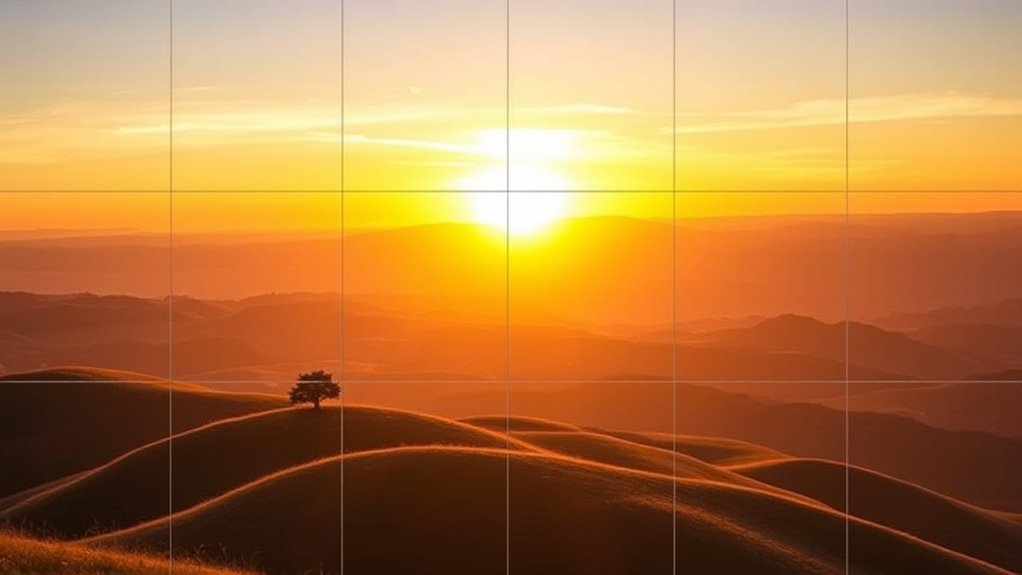
Have you ever wondered why some photos instantly catch your eye? The secret often lies in effective composition techniques, especially the rule of thirds. This simple guideline helps you create visual balance, making your images more engaging. By imagining your frame divided into nine equal parts with two horizontal and two vertical lines, you position key elements along these lines or at their intersections. This technique prevents your photo from feeling centered or static, guiding the viewer’s eye naturally through the scene. When you apply the rule of thirds, your photos gain a sense of harmony and interest, highlighting important details without clutter. Incorporating visual composition principles can further enhance your photography, creating more compelling images. It’s a powerful way to improve your photography instantly, ensuring your images are balanced and enthralling from the very first glance.
How to Visualize the Grid in Your Camera or Smartphone
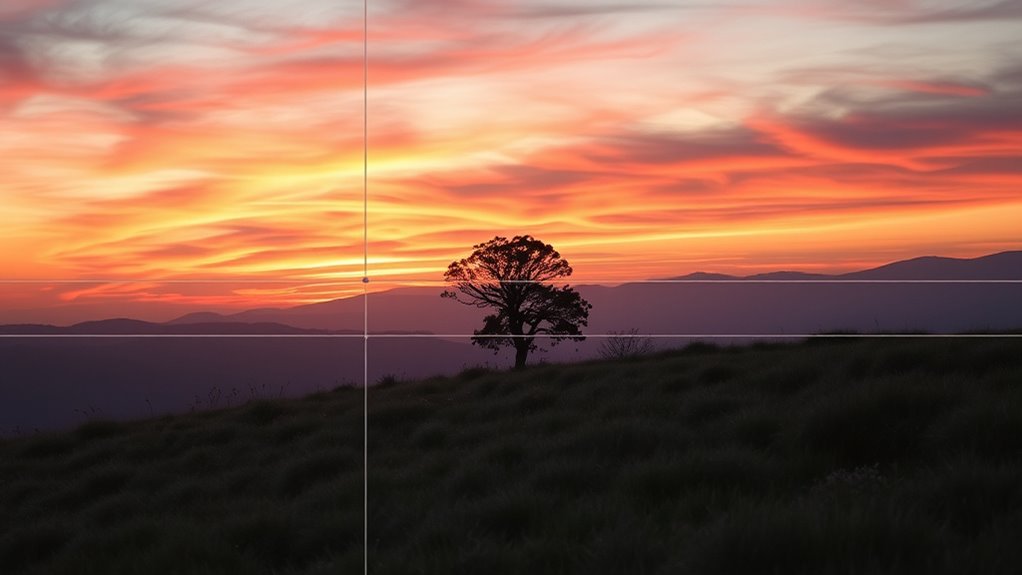
Ever wonder how to easily apply the rule of thirds while taking photos? It all begins with grid visualization. Most cameras and smartphones have a grid overlay feature—activate it to see the framing techniques in action. This grid helps you align important elements along the lines and intersections, making your photos more balanced. To visualize the grid effectively:
- Enable grid lines in your camera settings
- Practice framing subjects at the intersection points
- Use the vertical and horizontal lines as guides
- Keep horizons and key features along the grid lines
- Experiment with different compositions using the grid as a guide
- Understanding contrast ratio can also help you evaluate how well your photos will display in different lighting conditions.
The Benefits of Applying the Rule of Thirds in Photography
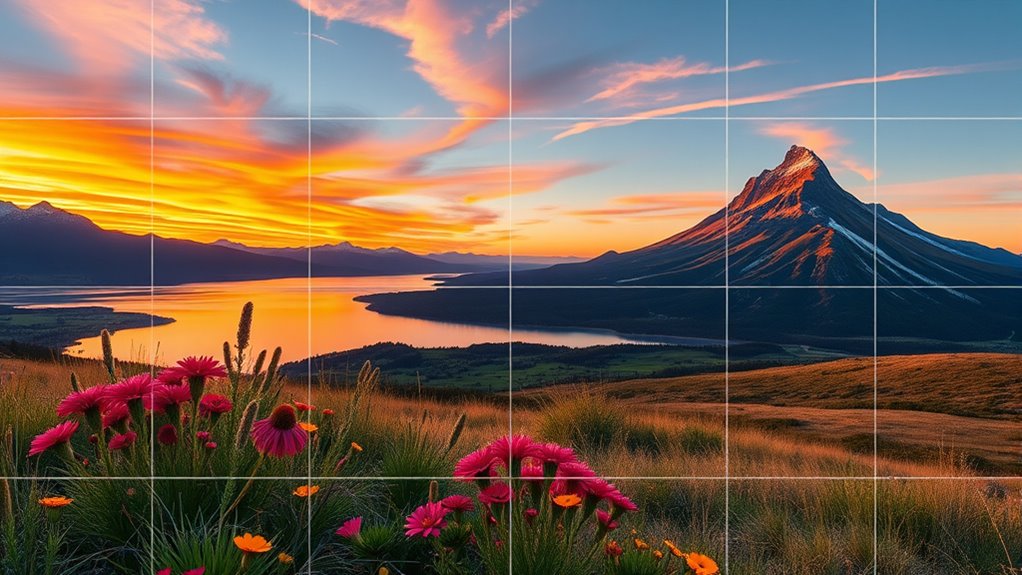
Applying the rule of thirds transforms your photos from ordinary to mesmerizing by creating a natural sense of balance and interest. When you position key elements along the gridlines or at intersections, you achieve better visual balance, guiding the viewer’s eye smoothly across the image. This technique enhances compositional harmony, making your photos feel more dynamic and engaging. It helps you avoid cluttered or static compositions, giving your shot a sense of intentionality. By thoughtfully applying this rule, you make your subject stand out without overwhelming the scene. The result is a more compelling image that feels well-structured and pleasing to look at. Overall, using the rule of thirds elevates your photography, making your photos more professional and impactful.
Examples of the Rule of Thirds in Landscape Photography
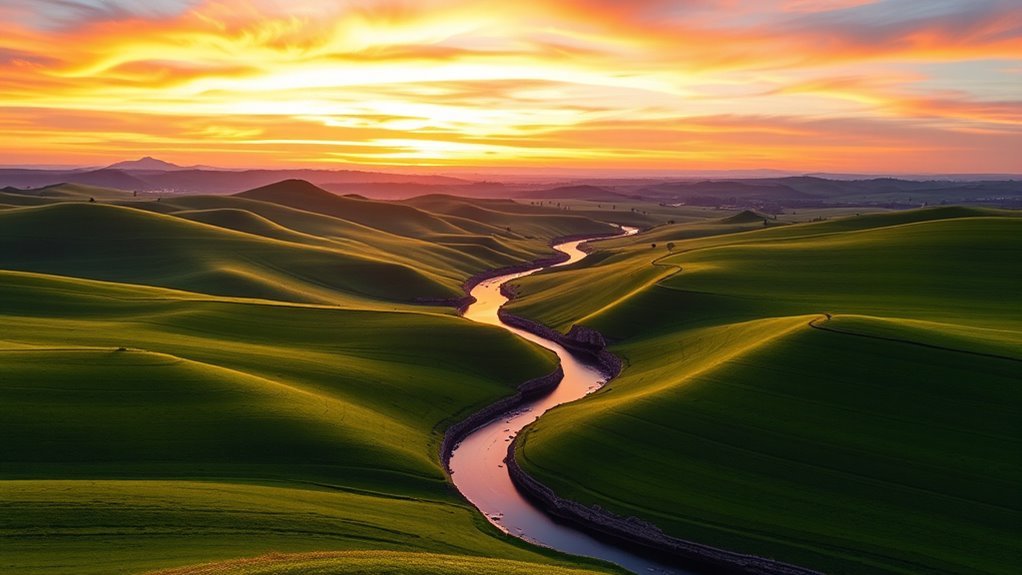
How can you practically see the rule of thirds in action within landscape photography? By focusing on landscape framing and horizon placement, you position key elements along the grid lines or at intersections. This technique creates balance and visual interest. For example:
Using horizon placement and key elements along grid lines enhances landscape photos’ balance and appeal.
- Placing the horizon on the top or bottom third line emphasizes sky or land.
- Positioning a prominent mountain or tree at an intersection draws attention.
- Using foreground elements to balance the composition.
- Framing a lake or river along one vertical third for depth.
- Aligning features like cliffs or clouds with grid points to guide the viewer’s eye.
These examples show how applying the rule of thirds enhances landscape photos, making them more engaging and harmonious. It’s a simple yet powerful way to improve your landscape framing and horizon placement.
Using the Rule of Thirds to Capture Engaging Portraits

Using the rule of thirds helps you position your subject off-center, making your portraits more interesting. By placing key features along the grid lines, you create a balanced and dynamic composition. This simple technique guides the viewer’s eye and adds energy to your photos. Incorporating natural elements and landscaping can further enhance the overall visual appeal of your images. Additionally, understanding visual literacy can help you better interpret and apply compositional principles effectively. Recognizing the importance of image analysis can deepen your understanding of how compositional choices influence viewer perception, especially when emphasizing dog breeds in pet photography.
Positioning the Subject
Have you ever wondered why some portraits immediately grab your attention? It’s often about how you position your subject using the rule of thirds. Placing your subject off-center creates depth perception, making the photo feel more three-dimensional. This technique guides the viewer’s eye naturally, emphasizing the subject’s personality and expression. To make your portraits pop, consider these tips:
- Align key facial features with grid lines
- Use background elements to complement the subject
- Balance color harmony between the subject and surroundings
- Incorporate foreground and background layers for depth
- Adjust positioning to highlight the subject’s eyes
Creating Dynamic Compositions
Creating dynamic compositions begins with mastering the rule of thirds. By placing your subject off-center, you create balance and visual interest, making your portraits more engaging. Use portrait lighting strategically to highlight your subject’s features, and position their eyes along the top third grid for an immediate connection. Experiment with macro focus to capture intricate details, like textures in hair or subtle expressions, adding depth to your shot. Incorporate negative space thoughtfully to emphasize your subject or create mood. Remember, the rule of thirds isn’t strict—trust your eye to adjust and break the grid when it enhances your composition. With practice, you’ll develop an instinct for framing portraits that draw viewers in and tell compelling stories.
Common Mistakes When Using the Rule of Thirds

Ever wondered why some photos with the rule of thirds feel off despite following the guidelines? It’s often due to common mistakes that disrupt visual balance and symmetry. Overusing the rule can make your composition feel rigid, lacking natural flow. Placing the main subject exactly on a grid line instead of at an intersection can reduce impact. Ignoring the overall balance between elements creates a jarring feel. Focusing solely on one side of the frame can throw off symmetry. Additionally, neglecting foreground or background details can make the shot feel incomplete.
Even with the rule of thirds, imbalance and neglect can make photos feel off. Use it wisely for natural, harmonious compositions.
Watch out for these pitfalls:
- Overemphasizing the rule at the expense of balance
- Misplacing key elements on grid lines instead of intersections
- Ignoring the importance of symmetry in composition
- Relying too heavily on the rule without considering overall harmony
- Forgetting to consider the entire scene’s visual weight
Tips for Practicing the Rule of Thirds in Your Shots
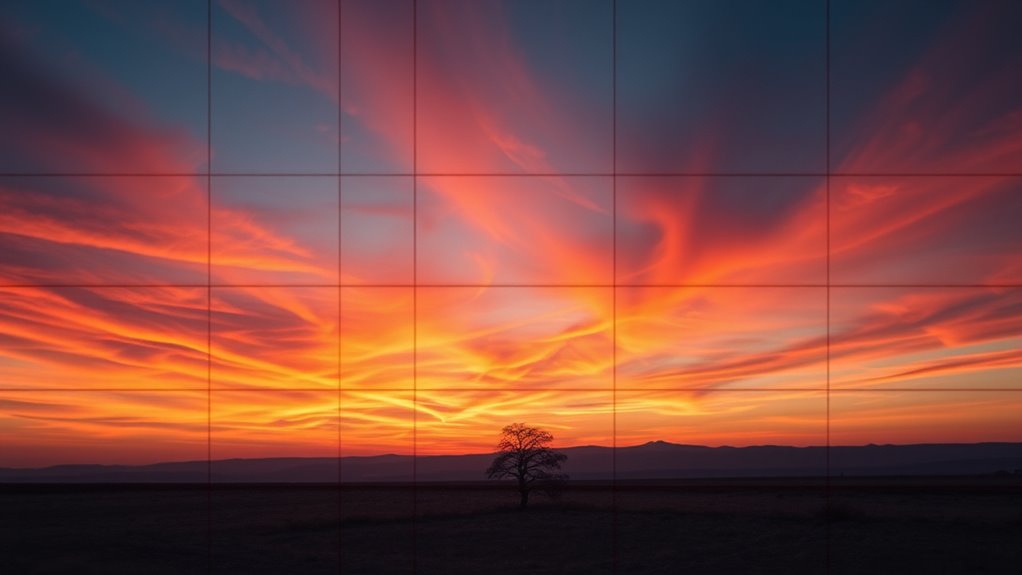
Practicing the rule of thirds effectively requires intentional setup and observation. Use framing techniques to position your subject along the gridlines or at intersections, creating a balanced composition. Don’t be afraid to experiment with perspective shifts—try shooting from different angles or heights to see how the rule influences your framing. As you practice, pay attention to how shifting your viewpoint can emphasize or de-emphasize elements in your scene. Keep visual balance in mind and look for natural points of interest that align with the grid. Over time, these deliberate adjustments will become second nature, helping you develop a keen eye for composition. Remember, consistent practice and mindful observation are key to mastering the rule of thirds in your photography. Incorporating power tools and heavy‑duty equipment into your setup can help you create stable and precise shots, especially when working on complex or large-scale projects. Additionally, understanding composition principles enhances your ability to craft compelling images and improves your overall photographic skills. Developing an awareness of visual hierarchy can further improve your ability to guide the viewer’s eye through your photos seamlessly. Being aware of lighting conditions and how they interact with your composition also plays a crucial role in capturing impactful images. By understanding how astrological traits influence visual perception, you can also choose subjects and compositions that resonate more deeply with your audience.
How Post-Processing Can Enhance Rule of Thirds Composition

Post-processing offers powerful tools to refine and emphasize the rule of thirds in your photos. With effective post processing techniques, you can highlight key elements and improve overall balance. Using digital enhancements, you can subtly adjust composition to better align subjects with the grid lines. Here are some ways to do it:
- Cropping to realign the focal points
- Brightening or darkening specific areas
- Sharpening to draw attention to key subjects
- Adjusting contrast to create visual interest
- Applying vignettes to focus the viewer’s eye
These techniques allow you to fine-tune your image, making the rule of thirds more impactful. By mastering post processing, you ensure your photos better engage viewers and communicate your intended message effectively.
Comparing Photos With and Without the Rule of Thirds
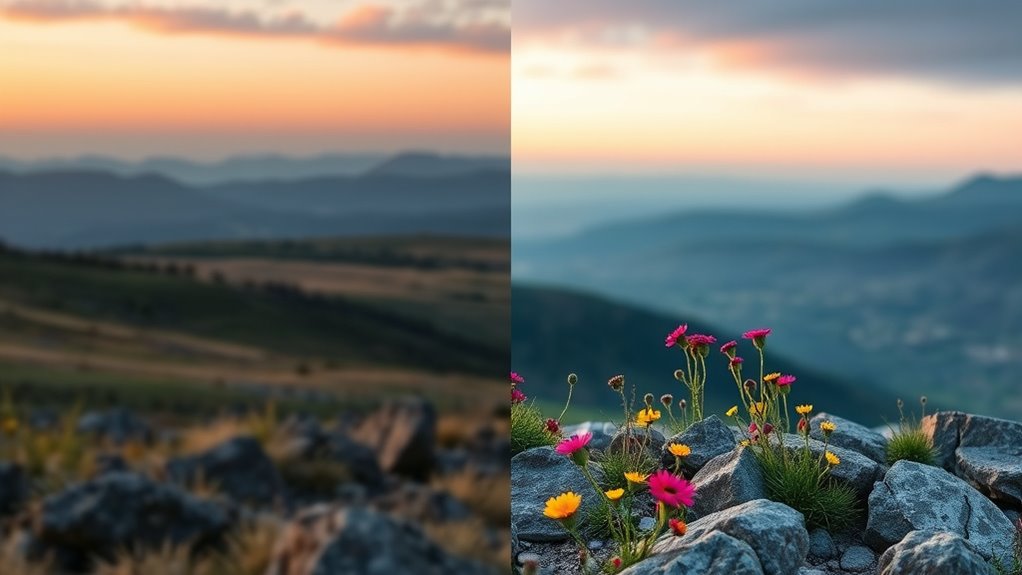
When comparing photos with and without the rule of thirds, the difference in visual impact becomes immediately clear. Photos that follow this rule achieve better visual balance by naturally guiding your eye to key focal points. Without it, images can feel static or unengaging. The rule helps emphasize the subject, making your composition more dynamic. To illustrate:
| Without Rule of Thirds | With Rule of Thirds |
|---|---|
| Focal point centered | Focal point off-center |
| Less visual balance | Improved visual balance |
| Static composition | Dynamic composition |
| Less engaging | More engaging |
| Less natural feel | Natural, balanced feel |
Using the rule directs attention effectively, enhancing your photos’ overall impact. Incorporating coaching and mentoring dynamics can also help photographers develop their skills and understanding of composition techniques.
Incorporating the Rule of Thirds Into Your Overall Photography Style

Incorporating the rule of thirds helps you create consistent composition techniques that guide viewers’ eyes naturally. By balancing visual elements using this rule, you can develop a personal style that feels cohesive and intentional. Over time, these practices become a seamless part of your overall approach to photography.
Consistent Composition Techniques
Integrating the rule of thirds into your photography style helps create balanced and engaging images that draw viewers’ attention naturally. To establish consistent composition techniques, focus on aligning key elements with the grid lines for cohesive visuals. Use lighting techniques to highlight your subject while maintaining harmony across your shots. Adjust camera settings like aperture and shutter speed to enhance focus and depth, reinforcing your compositional choices. Consider these tips:
- Practice framing your subject along the grid lines
- Maintain consistent distance and angles
- Use natural light or artificial lighting to emphasize focal points
- Experiment with different camera settings for varied effects
- Develop a signature style by applying the rule of thirds routinely
Consistency builds your style, making your photos more compelling and recognizable.
Balancing Visual Elements
Balancing visual elements is essential for creating harmonious and dynamic photographs that resonate with viewers. By applying the rule of thirds, you can effectively distribute elements across your frame, enhancing balance. Use color theory to choose complementary or contrasting hues that draw attention without overwhelming the scene. This approach helps maintain visual harmony and guides the viewer’s eye naturally through your composition. Additionally, consider depth perception to add layers and dimension, making your image more engaging. Placing key subjects along the grid lines or at intersections ensures they’re balanced within the overall scene. This approach prevents clutter and emphasizes important features, creating a well-organized image. Understanding sound healing science and how it influences your camera’s sensor can also help you optimize lighting conditions and exposure. Paying attention to sensor heat can prevent issues like noise and ensure your photos are clear and sharp. Recognizing how piercings can influence your personal style and how to incorporate them thoughtfully into your visual storytelling can also add a unique touch to your images. Moreover, being aware of sensor calibration techniques can further enhance image quality by maintaining accurate color and exposure. Mastering this balance allows your photos to feel cohesive and compelling, elevating your overall style.
Developing Personal Style
Building a distinctive photography style involves more than just technical skill; it requires intentional choices about composition. Incorporating the rule of thirds helps you develop a cohesive look that reflects your vision. To craft your style, experiment with color theory to evoke mood and emotion, and adjust camera settings for desired effects. Keep these tips in mind:
- Use the rule of thirds to create balanced, engaging frames
- Play with color schemes to define your unique aesthetic
- Vary your camera settings for different atmospheres
- Develop a consistent editing style to reinforce your identity
- Study your favorite photographers to identify recurring themes
Frequently Asked Questions
Can the Rule of Thirds Be Applied to All Types of Photography?
Yes, you can apply the rule of thirds to all types of photography, including landscape photography and portrait composition. It helps you create balanced, engaging images by positioning key elements along the gridlines or at intersections. Whether capturing vast scenery or close-up portraits, using this rule guides your eye through the photo naturally, making your shots more compelling and visually appealing. Experiment and adapt it to suit your creative vision.
How Does the Rule of Thirds Influence Viewer Perception?
The rule of thirds influences your viewer’s perception by creating visual balance and guiding their eye naturally across the photo. When you place key elements along the gridlines or at intersections, it enhances emotional engagement, making your image more compelling. This technique helps viewers connect with the subject and creates a harmonious composition, ensuring your photos feel balanced and evoke the intended emotion effectively.
Are There Cultural Differences in the Use of the Rule of Thirds?
Cultural differences definitely shape how you interpret and apply the rule of thirds. Some cultures emphasize symmetry and balance, shifting focus away from traditional grid placement. Artistic variation thrives across diverse cultural contexts, encouraging you to experiment beyond standard rules. Recognizing these cultural interpretations helps you creatively craft images that resonate globally, blending universal principles with local perspectives. So, don’t be afraid to adapt the rule of thirds to fit your unique cultural and artistic vision.
Is It Better to Follow the Rule Strictly or Creatively Bend It?
You should embrace creative flexibility and bend the rule of thirds when it serves your vision. Strictly following it can make your photos predictable, so experiment with rule breaking techniques to add interest and uniqueness. Use the rule as a guideline, but don’t hesitate to deviate when it enhances your composition or storytelling. This approach allows you to develop your style and create more compelling, dynamic images.
How Does the Rule of Thirds Impact Composition in Mobile Photography?
In mobile photography, the rule of thirds impacts your composition by guiding you to place key focal points along the grid overlay lines or at their intersections. This creates balanced, engaging images that draw viewers’ eyes naturally. When you align subjects with these points, your photos become more dynamic and visually appealing. Using the grid overlay helps you easily visualize and apply this technique, making your shots more compelling.
Conclusion
Mastering the rule of thirds is like discovering a secret recipe for stunning photos. It guides your eye through the frame, turning ordinary shots into mesmerizing stories. As you practice, you’ll find your images naturally more balanced and engaging—like a well-composed symphony. Keep experimenting and let this simple grid become your trusty compass, helping your photography flourish with beauty and purpose. Your pictures will tell stories as vivid as a painter’s canvas.