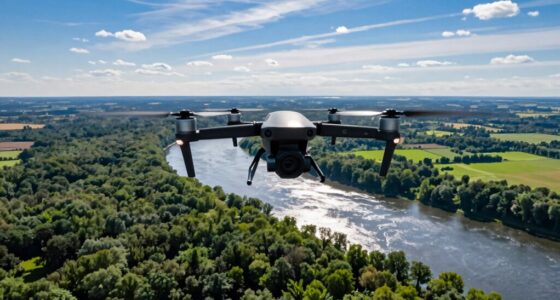
Underwater drones are high-tech gadgets designed to explore the ocean’s depths. They come in various types, from compact models for quick maneuvers to larger, advanced ones for detailed surveys. These drones capture high-resolution images, collect data, and help researchers uncover shipwrecks, study marine life, and monitor ecosystems. With innovations like better sensors and longer battery life, underwater drones are expanding our knowledge of the ocean. Keep exploring to discover how they are transforming underwater science.
Key Takeaways
- Underwater drones are robotic devices designed for ocean exploration, inspection, photography, and scientific research.
- They vary in size and features, from compact models for quick maneuvers to larger, advanced systems for detailed surveys.
- Equipped with sensors, cameras, and navigation systems, they can operate autonomously or via remote control.
- Recent advancements focus on durability, battery life, and environmental resilience to explore extreme depths.
- These gadgets have led to discoveries like shipwrecks, marine ecosystems, and underwater archaeological sites.
Top picks for "underwater dron explain"
Open Amazon search results for this keyword.
As an affiliate, we earn on qualifying purchases.
Types of Underwater Drones and Their Features
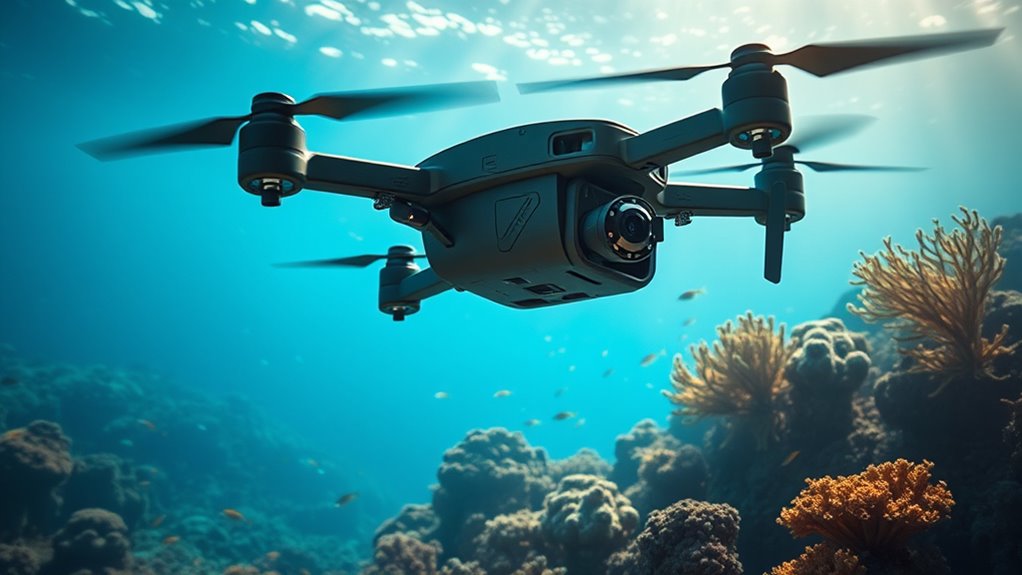
Underwater drones come in various types, each designed for specific tasks and environments. Their underwater drone design varies depending on their purpose, whether for exploration, inspection, or photography. Some models are compact and lightweight, perfect for quick maneuvers, while others are larger with advanced stabilization for detailed surveys. The remote control systems are equally diverse, ranging from simple handheld controllers to sophisticated interfaces with real-time video feeds. These systems allow you to precisely navigate underwater terrains, adjust depth, and capture images or data. Whether you’re a hobbyist or a professional, understanding the specific features of different underwater drone types helps you choose the right one for your needs. Their design and control systems are tailored to optimize performance in challenging aquatic environments. Additionally, energy-efficient components in some models enhance battery life and operational duration in remote underwater missions.
How Underwater Drones Are Used in Scientific Research

You can see how underwater drones play an essential role in scientific research by monitoring marine ecosystems and tracking changes over time. They also enable scientists to explore the depths of the ocean with advanced technology that was once impossible to access. By using these drones, researchers gather critical data that helps protect marine life and expand our understanding of the deep sea. Standardization of design in underwater drones ensures consistent and reliable data collection across various missions, enhancing the accuracy of scientific findings. Additionally, the use of precision navigation systems allows for more accurate positioning and data collection during complex underwater explorations.
Marine Ecosystem Monitoring
Marine ecosystem monitoring has become more efficient and accurate thanks to the use of underwater drones. These gadgets help you track marine pollution levels, identifying sources of contaminants and their impact on ecosystems. Drones collect high-resolution images and water samples, enabling detailed analysis of coral reefs, kelp forests, and fish populations. They also assist in monitoring underwater agriculture projects, ensuring sustainable practices and preventing damage to surrounding habitats. With real-time data, you can quickly detect changes or threats, allowing for immediate action. Underwater drones provide a safer, more all-encompassing way to study delicate environments without disturbing marine life. This technology enhances your ability to protect and preserve ocean ecosystems, supporting scientific research and conservation efforts worldwide. Sustainability practices are integrated into drone operations to minimize environmental impact and promote responsible exploration. Additionally, these drones are equipped with advanced sensors that facilitate comprehensive data collection, improving the accuracy of environmental assessments.
Deep-Sea Exploration Technology
How do scientists explore the mysterious depths of the ocean? They rely on advanced deep-sea exploration technology, especially underwater drones equipped with precise underwater navigation systems. These drones can reach remote marine habitats that are impossible for humans to access safely. Using sonar and GPS, they maneuver through complex terrains, capturing high-resolution images and collecting valuable data. This technology allows scientists to study fragile ecosystems, like deep-sea vents and coral reefs, without disturbing them. Underwater drones also monitor changes in the environment, track marine life, and map uncharted areas. Their ability to operate autonomously or via remote control makes deep-sea exploration more efficient, opening up new horizons in understanding the ocean’s mysteries and the ecosystems that thrive in the darkest depths.
Key Technologies Powering Underwater Exploration

Advancements in key technologies have revolutionized underwater exploration, enabling drones to navigate the depths with remarkable precision and autonomy. Cutting-edge underwater drone interfaces make controlling and data collection seamless, allowing you to operate complex systems intuitively. Battery life optimization is vital, extending mission durations and reducing the need for frequent retrievals. These innovations work together to improve reliability and efficiency in challenging environments. As you explore the ocean, you’ll benefit from smarter power management and user-friendly controls. Here’s a quick overview: sensor integration provides detailed, real-time environmental data. Additionally, Free Floating technology allows drones to adapt to currents, maintaining stability and trajectory accuracy during missions. Furthermore, material durability ensures components withstand harsh underwater conditions, increasing operational longevity.
Notable Missions and Discoveries Made by Underwater Drones

You’ve probably heard about how underwater drones have mapped extensive deep-sea coral reefs, revealing ecosystems previously hidden from view. They’ve also uncovered remarkable archaeological finds, such as ancient shipwrecks and submerged cities. These missions continue to expand our understanding of the ocean’s mysteries and history. Additionally, innovative designer looks in drone technology are enhancing navigation and data collection capabilities, making these explorations more efficient and detailed.
Deep-sea Coral Reef Mapping
Deep-sea coral reef mapping has seen remarkable progress thanks to underwater drones that can access areas once too dangerous or inaccessible for humans. These drones capture detailed images and data, revealing the rich coral biodiversity hidden beneath the waves. By mapping expansive reef systems, scientists gain insights into reef health, growth patterns, and areas vulnerable to climate change or human impact. This detailed information supports reef conservation efforts, helping prioritize protection zones and monitor recovery efforts. Notable missions have uncovered previously unknown coral communities, expanding our understanding of deep-sea ecosystems. With advanced imaging and navigation capabilities, underwater drones are transforming how we explore and safeguard these crucial underwater habitats, ensuring future generations can appreciate their biodiversity and ecological importance. Discover Chemistry Insights for Everyone
Underwater Archaeological Finds
Have underwater drones revolutionized archaeological discoveries beneath the waves? Absolutely. They’ve uncovered incredible sites like ancient shipwrecks and submerged cities, revealing stories lost to time. These missions evoke awe as you imagine explorers peering into history’s depths. Drones now navigate treacherous terrains, capturing detailed images and videos that once seemed impossible. Their discoveries ignite curiosity and deepen our understanding of past civilizations. Advanced navigation technology allows these drones to explore complex underwater environments with remarkable precision. Additionally, remote sensing capabilities enable operators to cover vast areas efficiently. The use of specialized sensors further enhances their ability to detect and analyze submerged objects. Furthermore, ongoing advancements in underwater robotics technology continue to expand the scope of archaeological exploration. Here’s a glimpse of notable finds:
| Discovery | Location | Significance |
|---|---|---|
| Titanic Wreck | North Atlantic | Unveiled details of the tragic voyage |
| Yonaguni Monolith | Japan | Evidence of ancient submerged structures |
| Uluburun Shipwreck | Turkey | Insights into Bronze Age trade |
| Port Royal Site | Jamaica | Uncovered pirate history |
Challenges and Limitations of Underwater Drone Technology
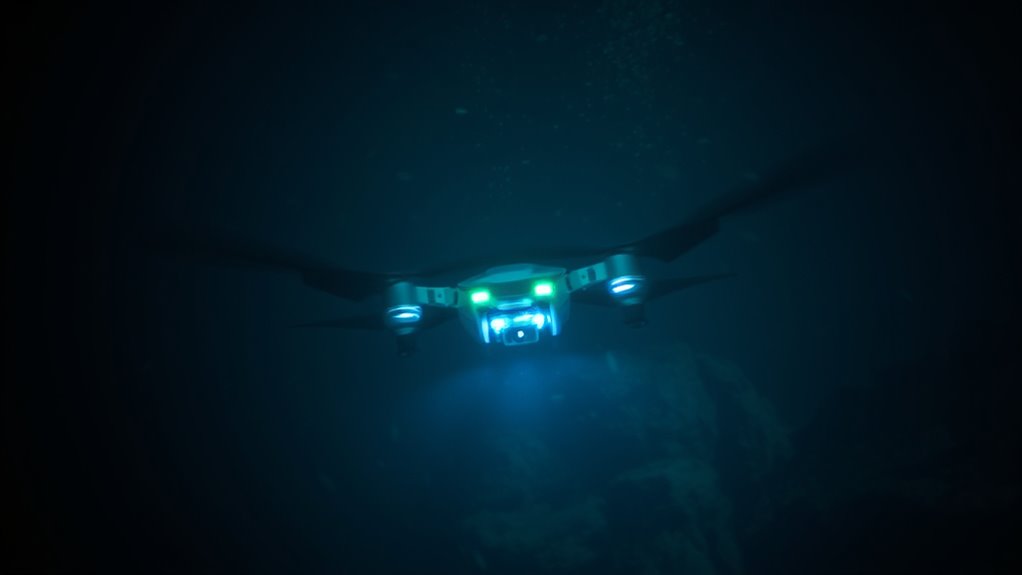
Underwater drone technology faces significant challenges that limit its effectiveness and adoption. Technical limitations, such as battery life, camera resolution, and maneuverability, restrict how long and how well these gadgets can operate underwater. Environmental challenges, like strong currents, low visibility, and high pressure at great depths, make navigation and data collection difficult. These conditions can cause communication issues between the drone and its operator, reducing control and safety. Additionally, hardware must withstand corrosion from saltwater, which increases costs and maintenance needs. As a result, many drones struggle with reliability in harsh environments. Hardware durability advancements are ongoing, but these technical and environmental hurdles still prevent underwater drones from reaching their full potential in exploration and research. The development of corrosion-resistant materials is a promising area that could significantly improve the longevity and performance of underwater drones in these challenging conditions. Furthermore, ongoing research into power efficiency aims to extend operational times, making underwater drones more practical for extended missions. Improving environmental resilience remains a key focus to overcome the persistent environmental challenges faced by these gadgets.
Future Trends and Innovations in Underwater Exploration
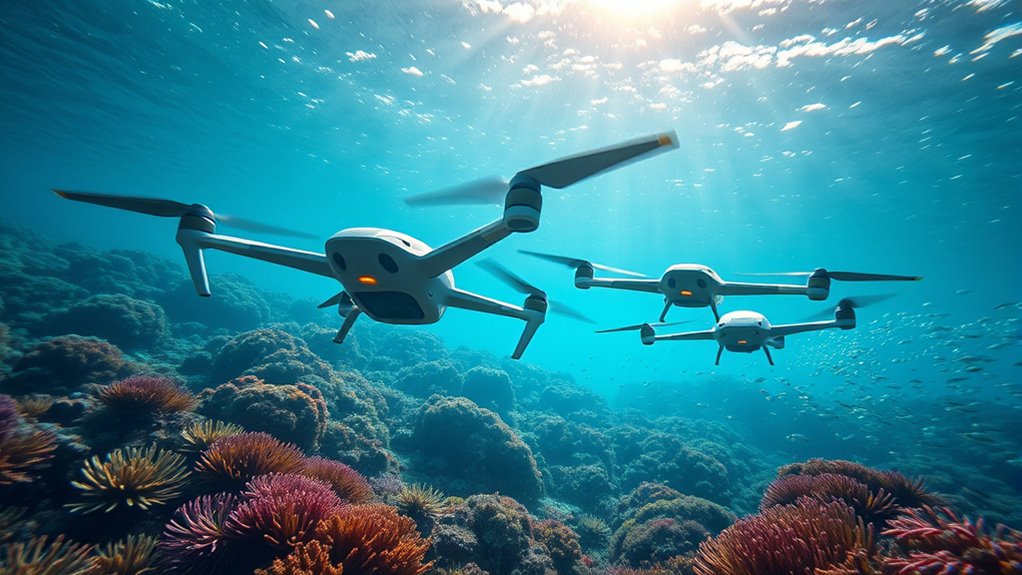
Advancements in underwater drone technology are opening new possibilities for exploration and research, despite current challenges. Future trends focus on increasing autonomy, improving data collection, and ensuring sustainable practices. You can expect more sophisticated AI to enable drones to make real-time decisions, reducing the need for human control. As commercial underwater drone use grows, regulations around underwater drone ethics become essential to protect marine environments and respect territorial boundaries. Innovations may include quieter, more energy-efficient designs to minimize disturbance to marine life. Additionally, partnerships between tech companies and scientific institutions will accelerate discoveries. These trends promise safer, more ethical exploration, enabling you to access previously unreachable depths while balancing technological progress with environmental responsibility.
Frequently Asked Questions
How Long Can Underwater Drones Operate Before Needing a Recharge or Battery Replacement?
You can expect underwater drones to operate for about 4 to 12 hours, depending on their battery life and operational duration. Factors like payload, speed, and environmental conditions influence how long they stay submerged. To maximize their exploration time, you might need to recharge or swap batteries during extended missions. Always check the drone’s specifications before deployment to verify it meets your project’s needs and plan for recharging accordingly.
What Safety Measures Are in Place to Prevent Underwater Drone Accidents?
You should follow strict safety protocols to prevent underwater drone accidents. These include regular maintenance checks, obstacle detection systems, and emergency procedures like manual shutdowns. Most drones are equipped with sensors that identify hazards and automatically pause operations if needed. Always guarantee proper training and adhere to guidelines. These safety measures help protect both the drone and the environment, minimizing risks during deep-sea exploration.
Can Underwater Drones Be Used for Commercial Underwater Construction Projects?
Yes, underwater drones can be used for commercial underwater construction projects. Their applications include inspecting structures, mapping seabeds, and assisting with installation tasks. They integrate seamlessly into commercial construction workflows, providing real-time data and reducing risks for human divers. By utilizing underwater drone applications, you can enhance precision, efficiency, and safety during complex underwater projects, making them an invaluable tool for modern marine construction endeavors.
How Do Underwater Drones Communicate With Operators Beneath the Water Surface?
Think of underwater drones like secret agents using a special language. They communicate with you through acoustic signaling by sending sound waves, as radio frequency signals can’t travel well underwater. This method allows the drone to relay data and receive commands, even deep beneath the surface. Acoustic signaling acts as their underwater walkie-talkie, ensuring you stay connected and in control, no matter how deep they venture.
Are There Any Legal Restrictions on Deploying Underwater Drones in Protected Marine Areas?
Yes, there are legal restrictions on deploying underwater drones in protected marine areas. You need to respect marine conservation laws that aim to preserve delicate ecosystems. Before using your drone, check local regulations and obtain any necessary permits to avoid fines or environmental harm. By following these legal restrictions, you help guarantee the protection of marine life and contribute to sustainable exploration efforts.
Conclusion
As you explore the depths with underwater drones, remember their transformative potential. For instance, imagine deploying a drone to document a rare coral reef, revealing new species and ecosystems. Despite challenges like limited battery life, ongoing innovations promise even greater discoveries. As technology advances, you’ll witness more detailed mapping, deeper dives, and groundbreaking scientific insights—making underwater drones essential explorers of our planet’s final frontier.