
When flying with batteries, follow FAA rules to stay safe and avoid delays. Spare lithium-ion batteries should go in your carry-on, with terminals covered or in original packaging. Batteries over 100 Wh need airline approval beforehand, and larger ones must be declared. Always pack batteries properly and follow airline policies. If you keep these tips in mind, you’ll minimize risks and fly worry-free. To discover more about safe battery handling, keep exploring this guide.
Key Takeaways
- Carry spare lithium-ion batteries in carry-on luggage only; avoid checked baggage to reduce fire risk.
- Batteries over 100 Wh need airline approval and must be declared during check-in.
- Pack batteries properly: keep in original packaging or cover terminals to prevent short circuits.
- Using devices during flight is allowed; charging or replacing batteries generally isn’t permitted without airline approval.
- Follow airline-specific policies and review FAA regulations to ensure safe and compliant battery travel.

Traveling by air with batteries requires careful attention to safety regulations because lithium-ion batteries can pose fire risks if not packed properly. Understanding the rules about battery safety and carry-on restrictions helps you avoid delays, fines, or confiscation. The FAA has clear guidelines for carrying batteries on planes, especially since these energy sources can be volatile if mishandled. Your first priority should be ensuring that your batteries are within the permitted size, quantity, and packaging standards to keep everyone safe onboard.
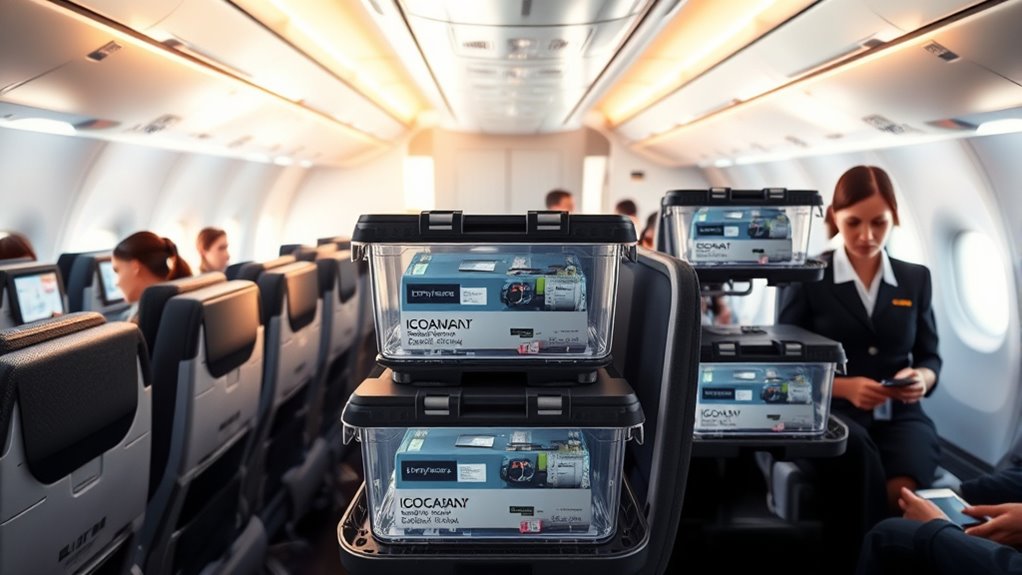
When it comes to battery safety, the key is to prevent short circuits and accidental activation. Most airlines and the FAA recommend keeping spare lithium-ion batteries in your carry-on luggage rather than checked bags. This is because cabin crew can quickly respond to any issues, such as overheating or smoke, whereas checked baggage is less accessible in an emergency. Always keep batteries in their original packaging or cover the terminals with tape to minimize the risk of contact with metal objects, which can cause sparks or fires. For devices like smartphones, tablets, or cameras, using them during the flight is generally fine, but avoid charging or replacing batteries during the trip unless permitted by airline rules. Additionally, understanding battery safety regulations can help you prepare more confidently for your trip.
Carry-on restrictions are strict about the size and capacity of batteries you can bring. Lithium-ion batteries rated over 100 watt-hours (Wh) typically require airline approval before you travel. These larger batteries are often found in professional equipment, high-capacity power banks, or e-cigarettes. If you have batteries rated between 100 Wh and 160 Wh, you’re usually allowed to carry up to two in your carry-on, but you must declare them at check-in. Batteries under 100 Wh are generally safe to carry on without special approval, provided you follow the packaging rules. Always check the airline’s specific policies before packing your batteries, as rules can vary slightly between carriers.
Top picks for "travel battery made"
Open Amazon search results for this keyword.
As an affiliate, we earn on qualifying purchases.
Frequently Asked Questions
Can I Carry Spare Lithium Batteries in My Checked Luggage?
You shouldn’t carry spare lithium batteries in checked luggage because airline policies generally prohibit it due to safety concerns. Always keep spare batteries in your carry-on, where you can monitor them and prevent potential hazards. Proper battery storage involves keeping the terminals protected and preventing damage. Check your airline’s specific policies before flying, as rules can vary, and always follow safety guidelines to ensure a smooth travel experience.
Are There Size Restrictions for Batteries in Carry-On Bags?
Sure, you can bring batteries in your carry-on, but beware of size limits! FAA’s carry-on restrictions cap lithium batteries at 100Wh for most, with some up to 160Wh if approved. Anything bigger? Leave it behind or risk a dramatic airport meltdown. So, check your battery size before packing—oversized batteries aren’t just a travel faux pas, they could turn your flight into a fiery saga.
What Types of Batteries Are Prohibited on Planes?
You should know that certain batteries are prohibited on planes due to safety concerns. Lithium metal and lithium-ion batteries, especially those not installed in devices, face strict battery restrictions. Larger spare batteries over 100Wh are usually banned, and some battery types, like lithium primary (non-rechargeable), can be forbidden entirely. Always check airline rules to avoid carrying prohibited items, and confirm your batteries comply to keep your flight safe.
How Should I Pack Damaged or Defective Batteries?
Think of damaged or defective batteries as delicate treasures needing special care. You should pack them in non-conductive, insulated containers, avoiding contact with metal objects, to guarantee safe battery disposal and prevent short circuits. Use original packaging if possible, or secure them in a sturdy, leak-proof container with padding. Always inform airline staff about these batteries, so they can handle them properly and keep everyone safe during your flight.
Are There Special Rules for Traveling With E-Cigarettes or Vaporizers?
You should know that e-cigarette regulations and vaporizer restrictions require you to carry these devices in your carry-on luggage only. You can’t pack them in checked bags due to fire risks. Make sure your vaporizers are turned off, and batteries are removed if possible. Follow airline policies and keep batteries in protective cases to prevent accidental activation. Being compliant with these rules helps you travel smoothly without any issues.
Conclusion
So, next time you’re rushing to catch your flight, remember that your trusty batteries are basically the airline’s biggest worry—yet they’re also what powers your devices. It’s funny how something so small can cause so much fuss, isn’t it? Just follow the FAA rules, pack smart, and enjoy your trip. After all, who knew that keeping your gadgets safe could be the ultimate test of patience and compliance? Happy flying!