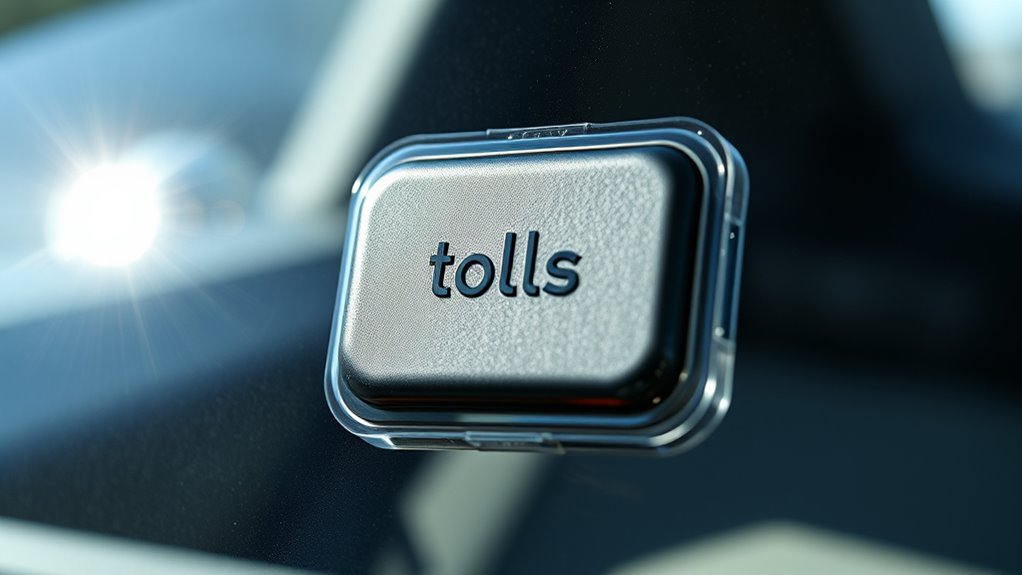

U.S. toll transponders like E-ZPass, SunPass, and others help you pay tolls without stopping at booths by using wireless signals that communicate with toll infrastructure. These small devices stick to your windshield and automatically deduct fees from your prepaid accounts or linked credit cards as you pass through toll points. They make traveling smoother, faster, and safer, eliminating delays and reducing congestion. If you’re curious about how these systems work and where you can use them, there’s more to discover ahead.
Key Takeaways
- U.S. toll transponders like E-ZPass and SunPass enable automatic toll payments across multiple states.
- These small devices are mounted on vehicle windshields and communicate wirelessly with toll readers.
- They reduce congestion, eliminate toll booth stops, and improve safety on highways.
- Transponders often work across several toll agencies, allowing seamless travel nationwide.
- Users can manage accounts online, reload funds, and review toll charges easily.
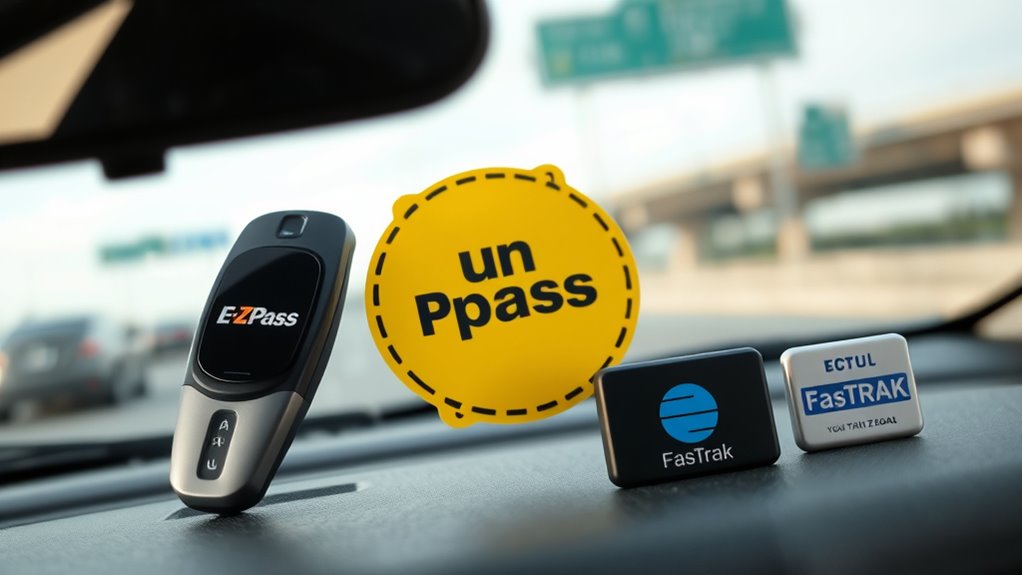
Have you ever wondered how tolls are collected without stopping at every booth? The answer lies in electronic payment systems and advanced toll booth technology that make the process seamless. When you drive through a toll plaza equipped with electronic toll collection, you don’t need to slow down or stop; instead, your vehicle is identified automatically, and the toll fee is deducted from your account. This system relies on toll transponders—small devices you attach to your windshield—that communicate wirelessly with toll infrastructure. These transponders, like E-ZPass, SunPass, and others, are the backbone of modern toll collection, allowing for quick and efficient transactions.
Toll booth technology has evolved considerably over the years. Instead of traditional booths where drivers pay cash or card, many toll facilities now operate as open-road or all-electronic tolling zones. Cameras and sensors detect your transponder as you pass through, and the toll amount is automatically charged to your prepaid account or linked credit card. This not only reduces congestion but also minimizes the need for toll collectors, cutting costs and streamlining traffic flow. The electronic payment process is fast, reliable, and helps drivers avoid long lines, especially during peak hours. Plus, it’s safer, since you don’t have to fumble with cash or worry about stopping in traffic.
Your toll transponder works on a simple principle: it emits a radio frequency signal that interacts with a reader installed at the toll point. When the transponder and reader connect, the system verifies your account details and deducts the toll fee immediately. Many transponders are compatible with multiple toll agencies, making them versatile if you frequently travel across different states. The technology is designed to be user-friendly; once you install your transponder and load funds or link a payment method, you’re set for hassle-free toll payments. Additionally, the European cloud infrastructure supporting innovative solutions demonstrates the importance of secure, reliable technology in modern systems.
The benefit of electronic toll collection extends beyond convenience. It also improves safety by reducing traffic backups and the risk of accidents at toll plazas. Plus, it offers drivers the flexibility to manage their accounts online, review toll charges, and receive alerts about account activity. As toll booth technology continues to advance, expect to see even more integration with GPS and vehicle data, making the process smarter and more personalized. For now, having a transponder like E-ZPass or SunPass means you’re part of a modern system designed to make your travels smoother, faster, and more efficient—no stopping required.
Frequently Asked Questions
Can I Use the Same Transponder Across Different States?
Yes, you can often use the same transponder across different states due to interstate compatibility and transponder portability. Many transponders, like E-ZPass, are designed to work in multiple regions, making travel easier. However, it is crucial to verify specific regional agreements and make sure your transponder is compatible with all toll systems you’ll encounter. This way, you avoid surprises and keep your toll payments seamless wherever you go.
How Do I Replace a Lost or Damaged Transponder?
If you’ve lost or damaged your transponder, you need to replace it to maintain toll account management. Contact your toll agency or visit their website to order a new transponder. They’ll guide you through the transponder installation process, which is usually simple and quick. Once you get the replacement, activate it as instructed to guarantee smooth toll payments across the applicable states or regions.
Are There Any Fees for Switching Transponders?
Switching transponders might cost you, but it’s usually just a small transponder fee or switching cost. While some toll agencies waive these fees for certain reasons, others might charge a little to activate your new device. Don’t worry—you won’t need to pay a fortune, but it’s smart to check with your specific toll agency for details on transponder fees or switching costs before making the change.
What Is the Maximum Number of Transponders per Vehicle?
You can typically have up to two transponders per vehicle, but this depends on transponder compatibility and your state’s vehicle registration requirements. Most toll agencies allow one primary transponder and an optional secondary for convenience or multiple drivers. Check with your local toll authority to make certain your transponders meet compatibility standards, and always update your vehicle registration info to avoid issues with toll payments or account linking.
How Do I Update My Billing Information for Toll Accounts?
You can update your billing information through your toll account online or via the provider’s app to safeguard account security. Log in, navigate to billing or payment settings, and make your changes. Doing so helps prevent billing disputes and ensures seamless toll payments. Always double-check your updated info for accuracy, and contact customer support if you encounter issues, so your account remains secure and up-to-date.
Conclusion
Guiding toll transponders is like mastering a new language—you just need to learn the basics. Once you understand how E-ZPass, SunPass, and others work, you’ll find driving through tolls smoother than ever. Think of your transponder as a trusted sidekick, saving you time and hassle. Just like a well-trained team, it makes your journey seamless, so you can focus on the road ahead rather than toll booth delays.