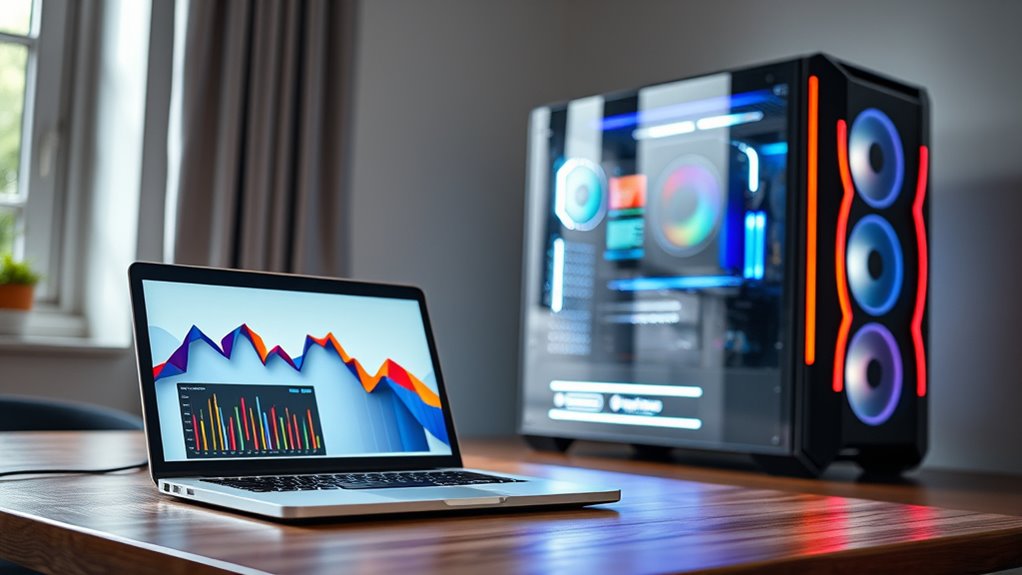

If you need portability and flexibility, a laptop is your best choice because it’s compact, lightweight, and works on batteries, perfect for working anywhere. However, if you prioritize power, customization, and easier upgrades, desktops offer better performance and more room for growth. Your decision depends on whether you value mobility or high performance at a fixed workspace. To find out which suits your lifestyle best, explore more detailed differences ahead.
Key Takeaways
- Choose a laptop for portability and ease of use in multiple locations, ideal for on-the-go tasks and frequent travel.
- Opt for a desktop if you need high performance, easier upgrades, and a customizable workspace for intensive tasks.
- Consider long-term costs: desktops generally have lower initial and upgrade expenses, while laptops may incur higher repair costs.
- Prioritize ergonomics and space: desktops offer flexible setup options, whereas laptops are space-saving and ergonomic for extended use.
- Base your decision on your primary use: mobility favors laptops, while demanding applications favor desktops with superior hardware.
Portability and Mobility

When it comes to portability and mobility, laptops clearly have the advantage. You can easily carry a laptop anywhere, fitting into bags and backpacks with minimal effort. Their compact size means you’re not tethered to a desk, allowing you to work or browse on the go. Good battery life is essential for uninterrupted use, especially when outlets aren’t nearby. Modern laptops are designed with ergonomic considerations, making prolonged use comfortable with features like adjustable screens and lightweight keyboards. This ergonomic design reduces strain during extended sessions and enhances your overall experience. Additionally, understanding field‑of‑view and imaging‑scale examples can help you optimize your setup for portable deep-sky imaging. Portability features in modern laptops continue to improve, further enhancing their suitability for mobile professionals. For instance, battery technology advancements have significantly increased the duration of use without needing to recharge. Whether you’re commuting, traveling, or working remotely, a laptop offers the flexibility and convenience that desktops simply can’t match. It keeps you connected and productive wherever life takes you, supported by advanced connectivity options like Wi-Fi 6 and Bluetooth 5.0 that facilitate seamless communication. Innovations in portable power solutions are also making it easier to keep devices charged during extended outings.
Performance and Power
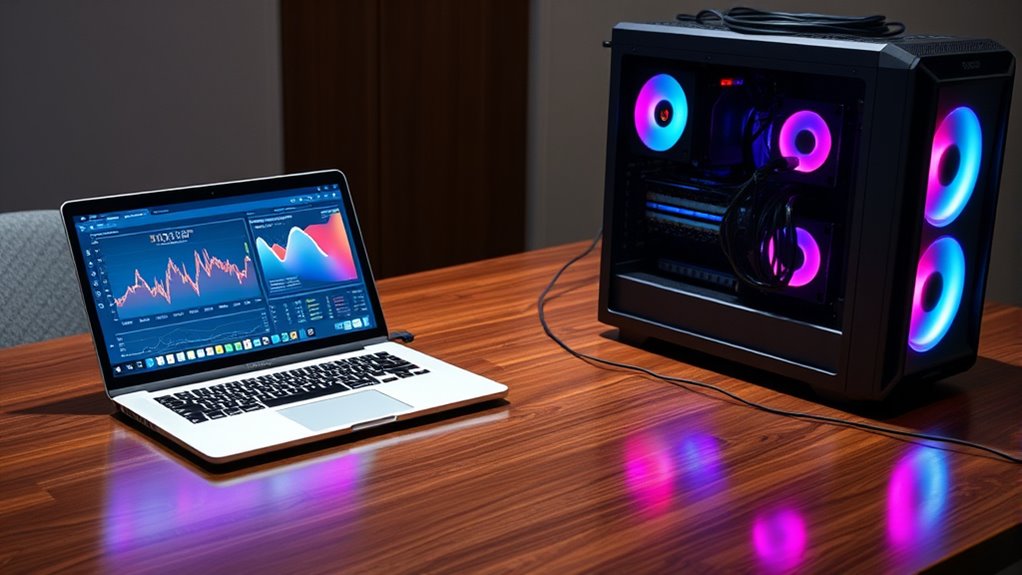
Laptops have made significant advances in performance and power, but they often still lag behind desktops when it comes to raw computing strength. If gaming performance and hardware specifications matter most, desktops usually win because they can house more powerful components. Consider these key points:
- Desktops typically feature higher-end CPUs and GPUs, improving gaming performance.
- They offer better thermal management, allowing hardware to run at higher speeds without overheating.
- Upgrading hardware is easier, enabling you to improve power and performance over time.
- Additionally, many desktops support sustainable practices by allowing easier upgrades and repairs, contributing to a longer lifespan and reduced electronic waste.
- The flexibility of desktops also supports user customization, making it easier to tailor your system to specific needs and preferences.
- Moreover, desktops often provide more extensive hardware options, giving users greater control over their system configurations.
- The ability to customize components further enhances the overall user experience and system longevity.
- This adaptability also facilitates compliance with appliance testing and safety standards, ensuring safe operation and maintenance over time.
While laptops are portable, their compact design limits hardware options, affecting gaming performance and overall power. If ultimate strength and customization are your priorities, desktops tend to be the better choice.
Customization and Upgradability

Desktops excel in customization and upgradability because they are designed with user modifications in mind. You can easily swap out components like RAM, storage drives, and graphics cards, thanks to their flexible hardware compatibility. This makes upgrading straightforward, allowing you to enhance performance or add new features without buying a new machine. Additionally, desktops often feature a more versatile aesthetic design with accessible cases that encourage personalization. You won’t be limited by compact form factors or integrated components, so you can tailor the system to your specific needs. This flexibility means your desktop can evolve over time, keeping pace with your changing requirements and technological advances, all while maintaining a user-friendly upgrade process. Furthermore, the ability to incorporate smart home technology components into your desktop setup can streamline your entire smart environment and create a more interconnected living or working space. The ease of hardware customization also enables DIY enthusiasts to experiment with and optimize their setups for various tasks or performance goals. Moreover, desktops can be configured to support specialized hardware for niche applications such as gaming, video editing, or 3D rendering. In addition, the availability of a wide range of accessories and peripherals makes it easier to customize your workspace for comfort and productivity.
Cost and Budget Considerations
When comparing laptops and desktops, your initial purchase price is a key factor to contemplate. Keep in mind that long-term expenses for upgrades and maintenance can add up over time. Balancing upfront costs with future spending helps you choose the option that fits your budget best. Considering cost-effective options can also ensure that your choice remains affordable and suitable for your needs over the long term. Additionally, evaluating the total cost of ownership can provide a clearer picture of the financial commitment involved in each option. Recognizing that upgrades and maintenance may be necessary depending on your device can further influence your decision-making process. For example, desktops often allow for easier and more affordable hardware upgrades, which can reduce costs over time. Being aware of future upgradeability can help you select a device that remains functional and cost-efficient as your needs evolve.
Initial Purchase Price
Are you trying to decide which option fits your budget better? The initial purchase price is a key factor. With a price comparison, desktops generally cost less upfront than laptops, especially for similar specs. However, laptops can sometimes be more affordable when you consider portability. Here’s a quick breakdown:
- Desktops often have a lower initial cost for comparable hardware.
- Laptops tend to be pricier, but portable design adds value.
- Financing options may make higher-priced laptops easier to afford upfront.
- When evaluating your options, consider the best heat pump technologies available to ensure energy efficiency and long-term savings.
- Additionally, understanding investment scams can help you make safer purchasing decisions and avoid unnecessary financial risks.
- It’s also helpful to compare warranty options to understand what protections are included with each device.
Keep in mind, a higher initial investment in a desktop might save you money long-term. But if portability is essential, a slightly more expensive laptop might be worth it. Consider your budget, needs, and available financing options to make the best choice.
Long-term Expenses
While the initial purchase price is important, considering long-term expenses is essential for making the best investment. When evaluating laptops and desktops, think about your budget planning over time. Laptops often have higher repair costs due to their portability, so warranty coverage becomes a key factor. A comprehensive warranty can save you money on repairs and replacements, making it a smart investment. Desktops generally have lower maintenance costs and easier upgrades, which can reduce long-term expenses. However, initial costs for accessories and peripherals might add up. By appraising these ongoing costs, you can choose a device that aligns with your financial plan and minimizes surprises. Additionally, understanding the upgradability and repairability of your device can significantly impact long-term costs, as desktops typically offer more straightforward options for upgrades and repairs. Considering the availability of replacement parts can further influence your decision, as easier access to parts can reduce repair times and costs. Moreover, choosing a device with durability and reliability can help prevent frequent repairs and replacements, ultimately saving money over time. Balancing upfront costs with potential future expenses ensures you get the best value from your purchase.
Upgrade and Maintenance
Upgrade and maintenance costs can substantially impact your overall budget, so it’s important to contemplate how easy and affordable it is to keep your device running smoothly. When evaluating laptops and desktops, think about:
- Upgradeability: Desktops often offer better options for hardware upgrades like RAM, storage, or graphics, which can extend their lifespan.
- Software Compatibility: Ensure your device supports essential software updates without costly replacements, especially for productivity tools.
- Ergonomic Design: Maintenance is easier with ergonomic setup options, reducing strain and increasing comfort during long use.
While desktops might have higher initial costs, their upgrade potential can save you money long-term. Laptops, with their integrated design, may be more challenging and costly to upgrade, but they offer portability and convenience.
Space and Setup Requirements

When choosing between a laptop and a desktop, space and setup requirements play a crucial role. Laptops are compact, needing minimal desk space and easy portability. Desktops, however, demand more room for the tower, monitor, and peripherals, which can clutter your workspace. An ergonomic setup is easier with a desktop, allowing you to position the monitor and keyboard for comfort. Consider this comparison:
| Aspect | Laptop | Desktop |
|---|---|---|
| Desk Space | Minimal, portable | Requires significant space |
| Setup Flexibility | Limited, integrated design | Highly customizable for ergonomic setup |
Use Cases and User Preferences

Your choice between a laptop and a desktop depends on how you prioritize portability, performance, and workspace flexibility. If you need to work on the go, a laptop offers mobility, but for high-power tasks, a desktop might be better. Consider your daily routines and preferences to find the best fit for your use case.
Portability and Mobility
Have you ever wondered which type of computer best fits a busy, on-the-go lifestyle? Portability is key when mobility matters. A laptop excels here because it’s designed for easy transport. Consider these points:
- Battery life ensures you stay productive without constant charging.
- Weight considerations make carrying your device less tiring.
- Compact size allows you to work anywhere—cafes, airports, or meetings.
If you often move between locations, a lightweight laptop with long battery life can keep you connected. Desktops, on the other hand, are less portable and better suited for stationary use. Your choice depends on how much mobility you need versus your willingness to carry a device around. For frequent travelers or remote workers, portability influences the decision in favor of laptops.
Performance and Power
Performance and power needs vary greatly depending on your specific use cases and preferences. If you prioritize gaming performance, a desktop often provides better graphics cards and cooling systems, delivering smoother gameplay and higher frame rates. For multitasking capabilities, desktops typically offer more RAM and processing power, allowing you to run multiple demanding applications simultaneously without slowing down. Laptops have made significant strides, but they usually compromise a bit on raw performance due to size constraints and thermal limits. If your work involves intensive tasks like video editing or 3D rendering, desktops are generally more suitable. However, if you need flexibility and portability without sacrificing too much power, some high-end laptops can handle demanding workloads effectively. Choose based on whether mobility or maximum performance aligns better with your needs.
Workspace Flexibility
When considering workspace flexibility, the choice between a laptop and a desktop depends heavily on how you work and where you prefer to do it. Laptops offer mobility, allowing you to work from various locations, whether at a coffee shop or on the couch. Desktops, however, are more suited for a dedicated workspace but can still adapt with the right accessories. Here are some ideas to maximize flexibility:
- Use ergonomic accessories like adjustable keyboard trays and mouse supports for comfort.
- Invest in stand options such as laptop stands or monitor risers to improve posture.
- Consider portable docking stations to expand connectivity when switching between locations.
Your setup should match your work style, whether you need portability or a fixed, ergonomic workspace.
Frequently Asked Questions
Which Device Has a Longer Lifespan, Laptop or Desktop?
A desktop generally has a longer lifespan than a laptop because of its durability comparison; desktops are built with sturdier components that withstand wear and tear better. Plus, desktops offer greater upgrade potential, allowing you to replace parts easily and extend their usefulness. Laptops tend to wear out faster due to portability demands and limited upgrade options. So, if longevity matters most, a desktop is usually the better choice.
How Do Laptops and Desktops Compare in Gaming Performance?
When it comes to gaming performance, desktops usually take the cake with more powerful hardware, better cooling, and higher customization options. Laptops can handle gaming, especially with cloud gaming and a portable setup, but they often compromise on power and graphics. If you want smooth, high-quality gameplay, a desktop is your best bet. However, for convenience and mobility, laptops are improving and can still deliver decent gaming experiences.
Are There Health Benefits to Using a Desktop Over a Laptop?
Using a desktop offers ergonomic benefits that can improve your posture and reduce strain. With a desktop setup, you can adjust your monitor height, keyboard, and chair for maximum comfort, helping prevent neck and back pain. Laptops tend to promote poor posture due to their fixed design. So, if you prioritize health benefits and posture improvement, choosing a desktop allows you to create a more ergonomic workspace.
What Are the Security Risks Associated With Each Device Type?
You face different cybersecurity vulnerabilities and data protection risks with each device. Laptops are more vulnerable to theft or loss, putting sensitive data at risk, while desktops often connect to less secure networks, exposing them to hacking. Both require robust security measures, like strong passwords and encryption. You need to stay vigilant, regardless of device, to protect your information from cyber threats and safeguard your privacy effectively.
How Does Energy Consumption Differ Between Laptops and Desktops?
Laptops generally consume less energy than desktops because they prioritize power efficiency and have smaller components. This means your laptop’s battery life lasts longer on a single charge, making it more energy-efficient for portable use. Desktops, with their larger power supplies and components, use more electricity, which can increase your energy bills. If saving energy is a priority, a laptop is the better choice for lower energy consumption.
Conclusion
Ultimately, choosing between a laptop and a desktop depends on your priorities: if you value portability, go lightweight; if you crave power, choose high performance. If you seek customization, opt for upgradability; if budget matters, consider cost-effectiveness. If space is limited, prioritize compactness; if you have room to spare, embrace a larger setup. By weighing your needs and preferences, you’ll find the perfect device that fits your lifestyle, work, and play seamlessly.