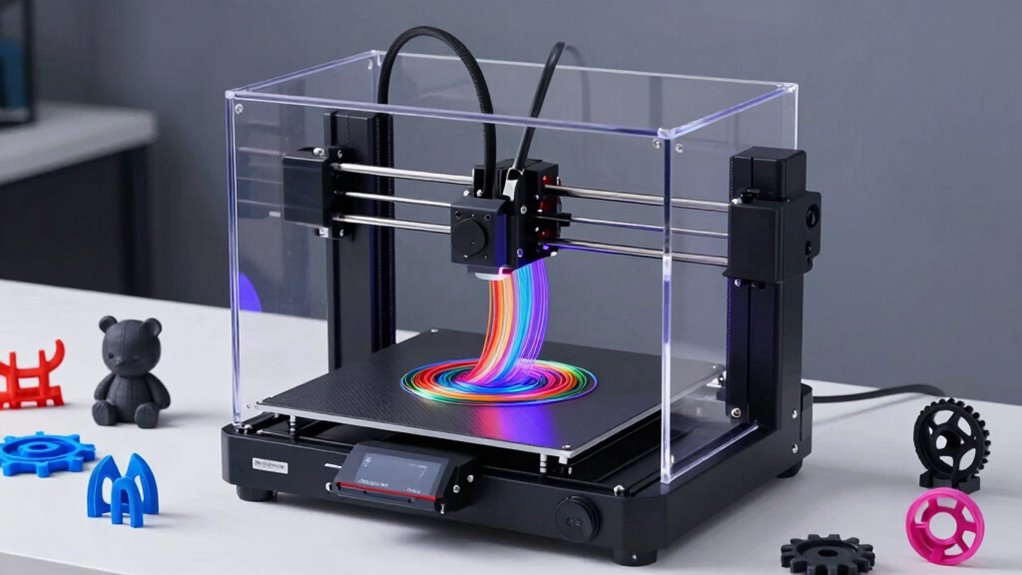

3D printers work by building objects layer by layer using digital designs. They deposit material precisely, creating complex shapes and internal structures that traditional methods can’t replicate. Different printing techniques like FDM and SLA suit various projects, with compatible materials such as filaments and resins. You can make everything from prototypes to detailed models. Keep exploring to discover how you can turn your ideas into real, tangible creations with 3D printing.
Key Takeaways
- 3D printers build objects layer by layer using additive manufacturing based on digital designs.
- They deposit materials like plastic filament or resin, bonding layers for structural strength.
- Different methods, such as FDM and SLA, suit various project needs and detail levels.
- Material choices include filaments like PLA or ABS and specialized resins, affecting strength and finish.
- 3D printing enables creating complex, customizable items for prototyping, art, healthcare, and industrial applications.

SUNLU PLA 3D Printer Filament PLA Filament 1.75mm, Neatly Wound 3D Printing Filament 1.75mm, Dimensional Accuracy +/- 0.02 mm, Fit Most FDM 3D Printers, 1kg Spool (2.2lbs), Black
①【SUNLU PLA 3D Printer Filament】PLA material is the perfect choice for 3D printing enthusiasts! SUNLU PLA filament is…
As an affiliate, we earn on qualifying purchases.
As an affiliate, we earn on qualifying purchases.
The Basics of 3D Printing Technology
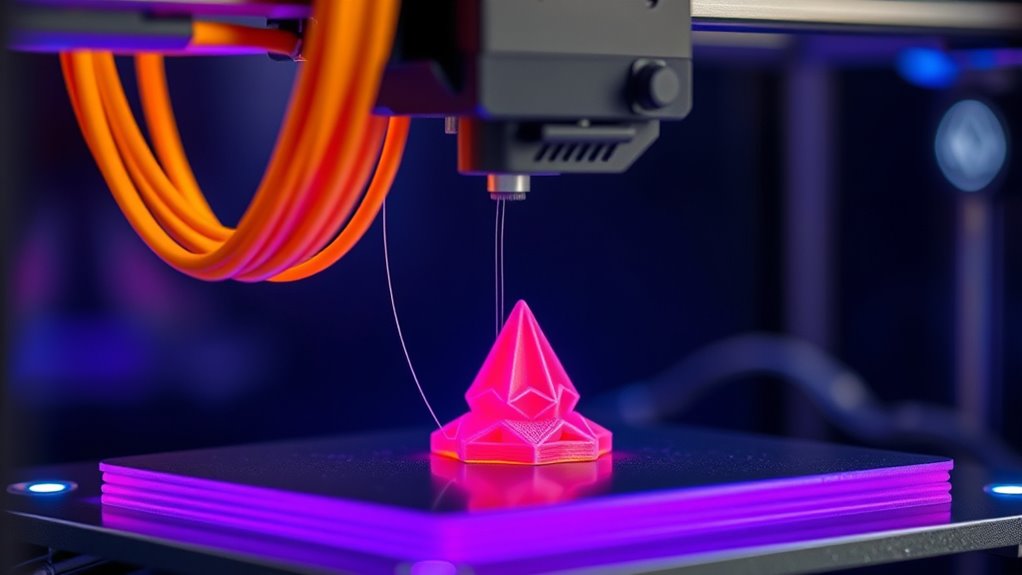
3D printing technology, also known as additive manufacturing, works by building objects layer by layer based on a digital design. The layer resolution determines how detailed each layer is, affecting the overall finish and precision of your print. Higher resolution means finer details, but it can slow down the process. Conversely, lowering the resolution speeds up printing but may reduce quality. Printing speed plays a vital role in how quickly your object is completed; faster speeds often mean a trade-off with detail and accuracy. By adjusting these settings, you can optimize your 3D printer’s performance for different projects. Understanding how layer resolution and printing speed interact helps you achieve the best balance between quality and efficiency in your 3D printing endeavors. European cloud solutions are increasingly supporting innovative manufacturing technologies.

SUNLU 3D Printer Resin, 1kg Fast Curing Standard 3D Resin for LCD DLP SLA Resin 3D Printers, 395-405nm UV Light Curing 3D Printing Liquid Photopolymer Resin, Low Shrinkage, High Precision, 1000g, Grey
①【Easy to Use】- SUNLU standard resin has strong fluidity and is compatible with different printers and printing speeds….
As an affiliate, we earn on qualifying purchases.
As an affiliate, we earn on qualifying purchases.
How a 3D Printer Builds Objects Layer by Layer
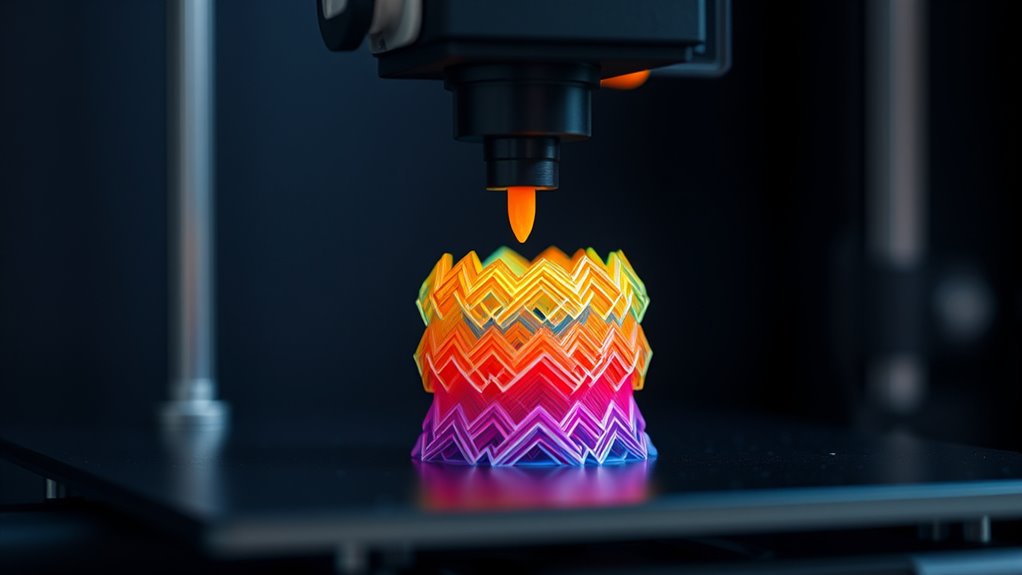
When a 3D printer creates an object, it builds it one layer at a time, following a digital design file. The printer deposits material precisely, ensuring each layer bonds well with the one below through strong layer adhesion. This adhesion is essential for structural integrity, preventing layers from separating. As the printer moves, it adjusts the print resolution, determining how detailed and smooth the final object appears. Higher resolution produces finer layers and more intricate details, while lower resolution speeds up printing but can result in rougher surfaces. The process continues, layer by layer, until the entire object is complete. Layer adhesion is crucial for the durability of 3D printed objects, ensuring they hold together under stress. Additionally, the choice of printing parameters can influence the overall print quality and strength of the finished product. This method allows for complex shapes and internal structures that would be impossible with traditional manufacturing, making 3D printing both versatile and innovative.
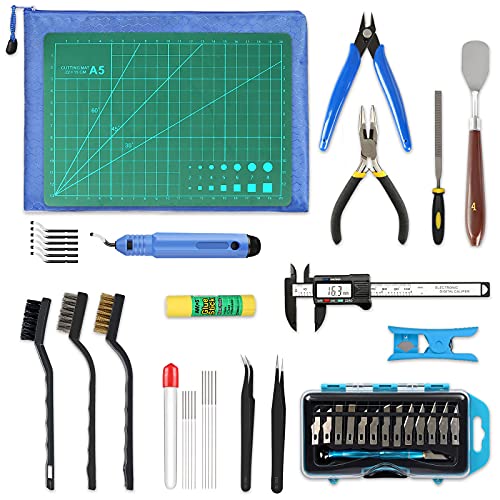
YEETIN 45 Pieces 3D Printer Tools Kit, 3D Printing Accessory Includes Deburring Tool, Digital Caliper, Art Knife Set, Tube Cutter, Storage Bag Suitable for 3D Print Removing, Cleaning, Finishing
PRINTING EXPERIENCE ENHANCED: This product contains all the essential tools a maker needs to successfully 3D print, as…
As an affiliate, we earn on qualifying purchases.
As an affiliate, we earn on qualifying purchases.
Common Types of 3D Printing Methods
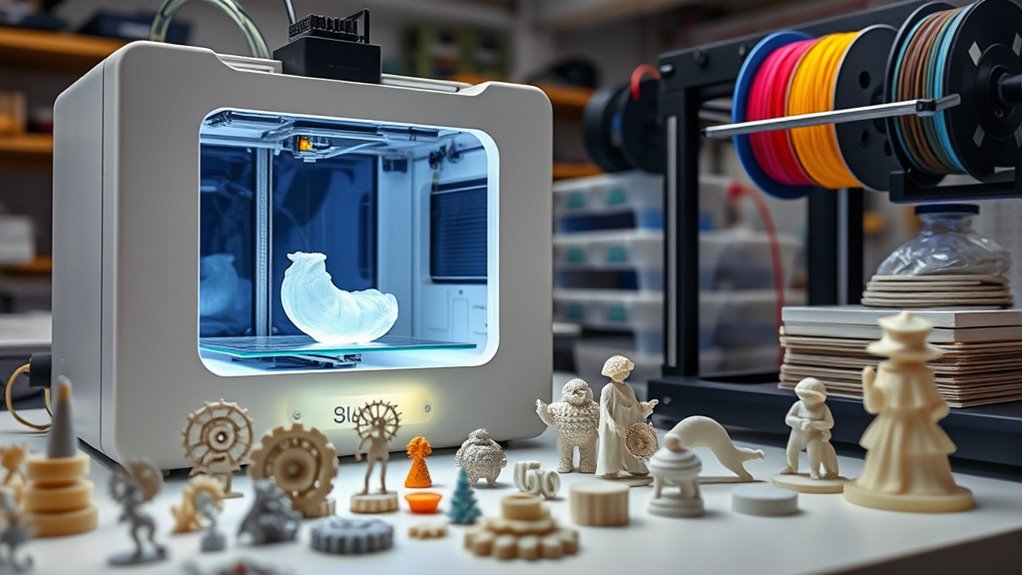
Ever wondered how different 3D printing methods produce such a variety of objects? Two common techniques are Fused Deposition Modeling (FDM) and Stereolithography (SLA). FDM works by melting and extruding thermoplastic filament layer by layer, building the object from the bottom up. It’s popular for its affordability and ease of use. SLA, on the other hand, uses a laser to cure liquid resin, solidifying it layer by layer with high precision. This method creates highly detailed and smooth finishes, making it ideal for intricate designs. Both FDM and SLA serve different needs: FDM offers versatility for prototypes and functional parts, while SLA excels in creating detailed models. Understanding these methods helps you choose the right type of 3D printing for your project.
SUNLU 3D Printer Resin, 1kg Fast Curing Standard 3D Resin for LCD DLP SLA Resin 3D Printers, 395-405nm UV Light Curing 3D Printing Liquid Photopolymer Resin, Low Shrinkage, High Precision, 1000g, Grey
①【Easy to Use】- SUNLU standard resin has strong fluidity and is compatible with different printers and printing speeds….
As an affiliate, we earn on qualifying purchases.
As an affiliate, we earn on qualifying purchases.
Materials Used in 3D Printing
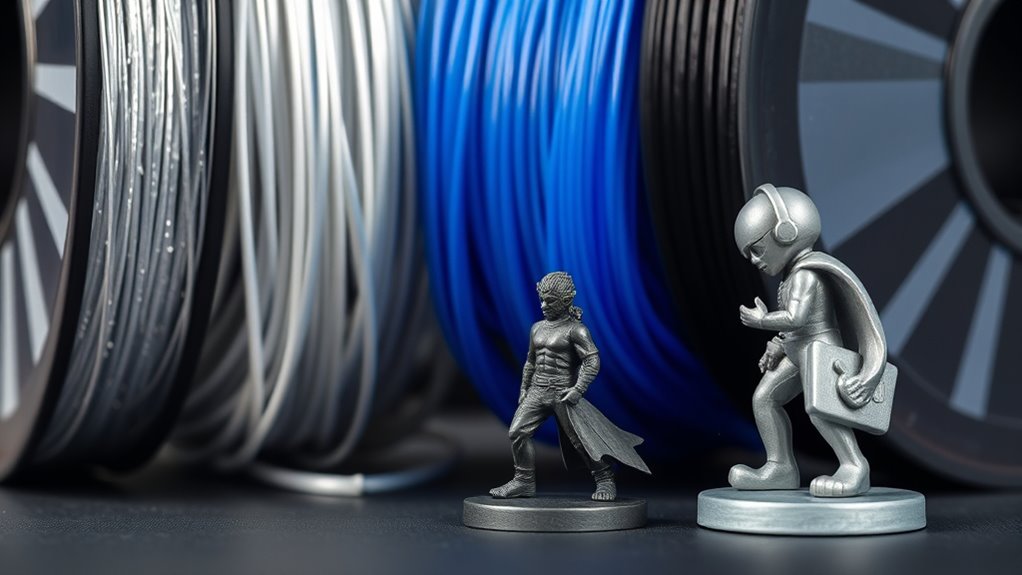
Materials are the foundation of any successful 3D printing project, determining the quality, strength, and detail of the final object. You’ll select from various filament types and resin varieties based on your needs. Filament types include PLA, ABS, PETG, and TPU, each offering different properties like flexibility or durability. Resin varieties range from standard resins to specialty options such as flexible, castable, or biocompatible resins. Your choice depends on the final use, desired finish, and printer compatibility. Consider these factors when choosing materials:
- Strength and flexibility
- Finish quality
- Compatibility with your printer
- Cost and availability. Understanding Material Selection can help optimize your material choices for specific applications, especially when considering the Strength and Flexibility required for functional parts. Additionally, understanding Free Floating concepts can help optimize your material selection for specific applications, especially when aiming to achieve particular Finish Quality or functional properties.
Furthermore, being aware of Vetted – Serat Nest options can assist you in selecting high-quality materials tailored to your project needs.
Designing for 3D Printing: From Digital Model to Physical Object
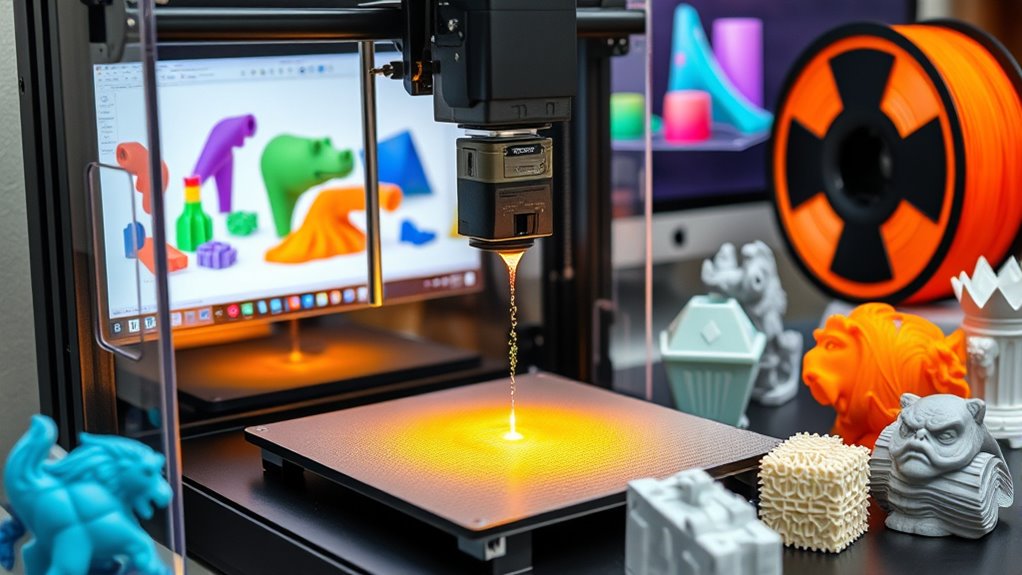
Transforming your digital design into a successful 3D print starts with understanding how to prepare your model properly. Begin by making certain your design is scaled correctly; complex shapes may need to be simplified or divided into parts for easier printing. Pay attention to wall thickness and support structures to prevent failures. If your printer supports color customization, consider incorporating different colors into your design for visual appeal. Keep in mind that some features may require specific settings or filament types to achieve the desired effect. Use slicing software to optimize your model, adjusting parameters like layer height and infill. Proper preparation ensures your digital model translates accurately into a high-quality physical object, minimizing errors and maximizing your design’s potential. Additionally, understanding the best 3D printing practices can significantly improve your success rate and the quality of your final product.
Applications of 3D Printing Across Industries
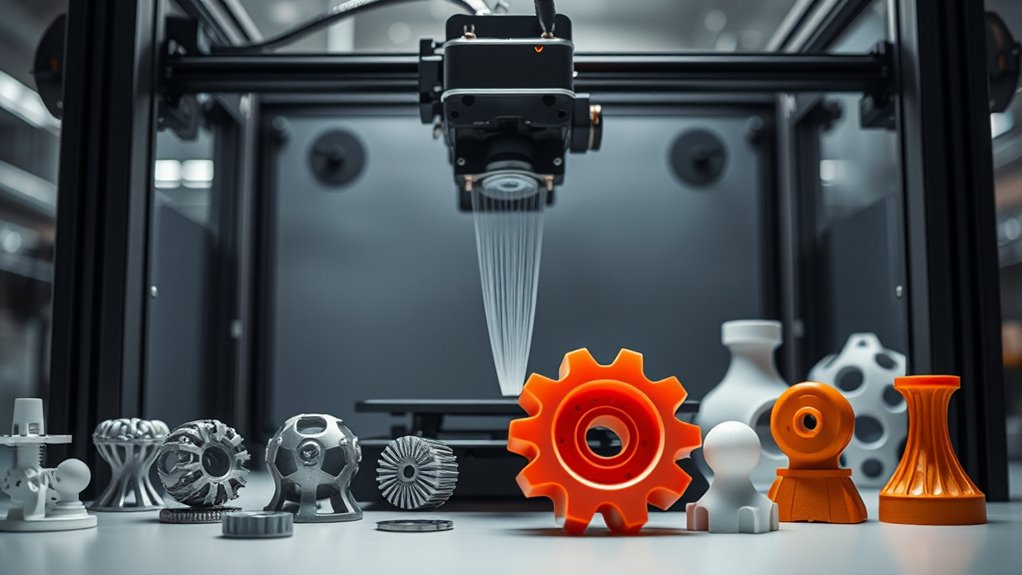
3D printing has moved beyond the domain of prototypes and hobbyist projects to become a pivotal tool across various industries. In healthcare, it enables medical breakthroughs like custom implants and prosthetics, improving patient outcomes. In manufacturing, it speeds up rapid prototyping and creates complex components that traditional methods can’t produce. Artists and designers use 3D printing for artistic expressions, creating intricate sculptures and personalized jewelry. Additionally, in aerospace, it produces lightweight, durable parts, reducing costs and weight. Here are some key applications:
- Medical breakthroughs with customized implants and prosthetics
- Rapid prototyping in manufacturing processes
- Artistic expressions through unique sculptures and designs
- Aerospace component manufacturing for lightweight parts
This versatility makes 3D printing a transformative technology across sectors, pushing innovations and expanding creative possibilities. The evolution of 3D printing technology continues to open new frontiers in various fields, including garage-based projects that enthusiasts can explore. Moreover, ongoing technological advancements are further enhancing the precision and scope of 3D printing capabilities.
Tips for Beginners: Getting Started With Your First Prints
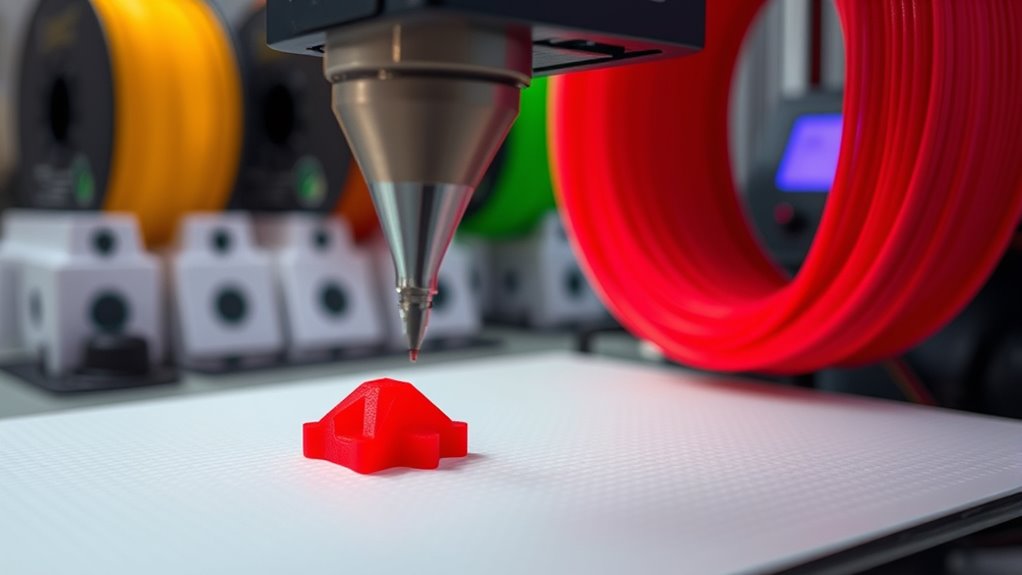
Getting started with your first 3D print can be exciting yet intimidating, but the key is to keep it simple. Focus on choosing the right filament, as it impacts print quality and ease of use. Start with PLA, which is beginner-friendly. Proper print bed calibration is vital; a well-leveled bed ensures your print sticks and finishes smoothly. Here’s a quick tip:
| Step | Action | Result |
|---|---|---|
| Select filament | Use PLA for easy printing | Better adhesion and fewer issues |
| Calibrate bed | Level the print bed properly | Prevents warping and failed prints |
| Check nozzle height | Ensure nozzle is close but not touching | Smooth first layer |
| Test print | Print a simple model first | Builds confidence and skills |
Stick to these basics, and you’ll be printing confidently in no time.
The Future of 3D Printing and Emerging Innovations
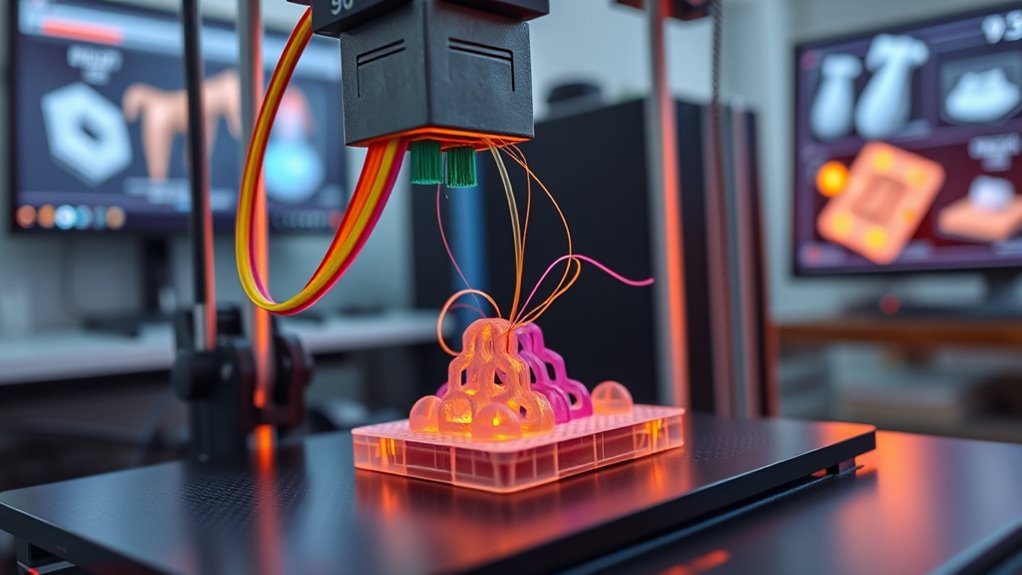
As technology advances, the future of 3D printing promises to revolutionize various industries with faster, more precise, and more versatile methods. Expect sustainable innovations to play a key role, reducing waste and improving eco-friendliness. Emerging innovations will likely enable on-demand manufacturing, lowering inventory costs and supply chain disruptions. You might see materials become more durable and adaptable, opening new possibilities for custom solutions. Additionally, 3D printing could disrupt traditional industries by enabling localized production and complex design creation. Here are some key trends to watch:
- Adoption of biodegradable and recycled materials
- Integration of AI for smarter, faster printing
- Expansion into bioprinting and healthcare
- Use of 3D printing for aerospace and automotive parts
Furthermore, advancements in nanotechnology could lead to the development of high-performance materials that enhance the capabilities of 3D printed objects.
Frequently Asked Questions
Can 3D Printers Print With Food or Edible Materials?
Yes, you can print with food or edible materials using food printing. You’ll use special edible filament designed for food printing, which is safe to eat. This process allows you to create intricate shapes and designs with items like chocolate, icing, or dough. Food printing is perfect for custom cakes, chocolates, and other edible art, making your culinary creations both fun and innovative.
How Accurate Are 3D Printed Objects Compared to Traditional Manufacturing?
You’ll find that 3D printed objects often have good dimensional accuracy, but they can vary based on printer type and settings. The surface finish might need extra post-processing for smoothness and detail. Compared to traditional manufacturing, 3D printing excels in rapid prototyping and complex designs, though it may not match the precision and surface quality of methods like CNC machining. Overall, it’s quite accurate, but some finishing work can enhance the results.
What Are the Environmental Impacts of 3D Printing?
Imagine a future where your 3D printer’s environmental impact is minimized. You might face recycling challenges with filament waste and concerns about material toxicity from certain plastics. These issues can lead to pollution if not managed properly. However, using biodegradable or recycled materials can reduce harm. Keep in mind, advancing eco-friendly options helps you enjoy 3D printing without compromising the planet’s health.
Are There Safety Concerns or Hazards Associated With 3D Printing?
You should be aware that safety concerns come with 3D printing, but following proper safety protocols helps prevent hazards. Always wear protective gear like gloves and goggles, ensure good ventilation to avoid fumes, and keep your workspace clear of flammable materials. By practicing hazard mitigation, you reduce risks from hot surfaces, fumes, or electrical issues, making your 3D printing experience safer and more enjoyable.
How Cost-Effective Is 3D Printing for Small-Scale Production?
3D printing can be cost-effective for small-scale production, especially when material costs are low and you’re creating complex or customized items. However, scalability challenges may arise as production volume increases, making traditional manufacturing more economical. You should weigh these factors carefully, considering initial investment, material expenses, and your production needs, to determine if 3D printing suits your project’s budget and growth plans.
Conclusion
Now that you understand how 3D printers work and what they can create, imagine turning your ideas into tangible realities—like sculpting dreams out of plastic. With each layer you print, you build a future full of endless possibilities. So, pick up your design tools and start experimenting; your imagination is the only limit. Embrace the future of innovation, where your creativity takes shape, layer by layer, in a world of infinite potential.