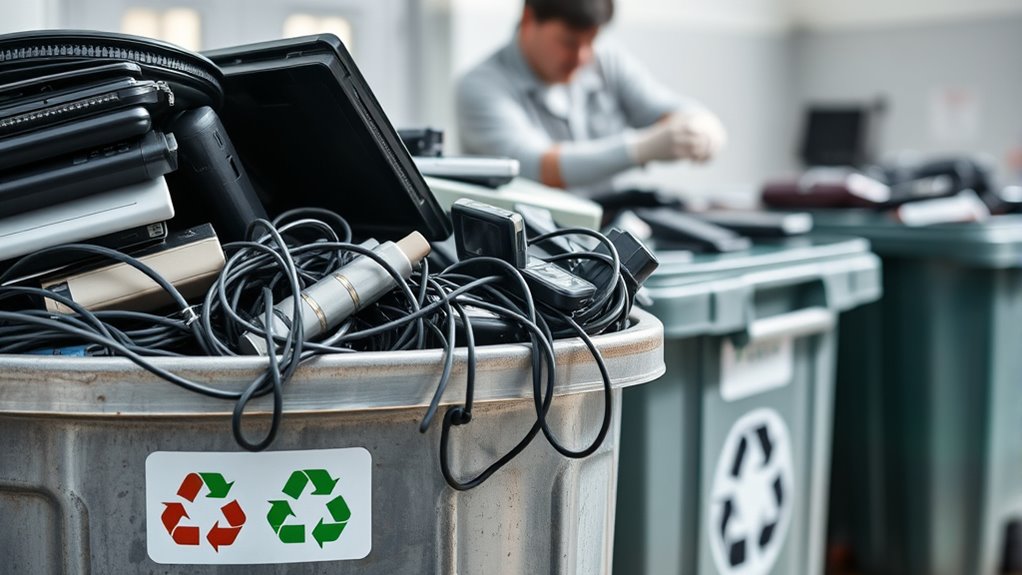

To safely dispose of your old electronics and computers, start by evaluating if your devices are still usable or recyclable. Back up your important data securely, then erase personal information with encryption or secure deletion tools. Find certified recycling centers or donation options nearby, and carefully prepare your devices—removing batteries and accessories. Many manufacturers also offer take-back programs to simplify disposal. Continue exploring for expert tips on ensuring environmentally responsible and secure electronic waste disposal.
Key Takeaways
- Back up important data and securely erase personal information before disposal.
- Use certified e-waste recycling centers or donation programs to dispose of devices responsibly.
- Remove batteries and hazardous components according to manufacturer or local guidelines prior to recycling.
- Consider manufacturer take-back programs for proper recycling and environmental responsibility.
- Verify device compatibility and ensure data is fully wiped to prevent recovery and protect privacy.
Top picks for "safely dispose electronic"
Open Amazon search results for this keyword.
As an affiliate, we earn on qualifying purchases.
Assessing Your Old Devices and Data
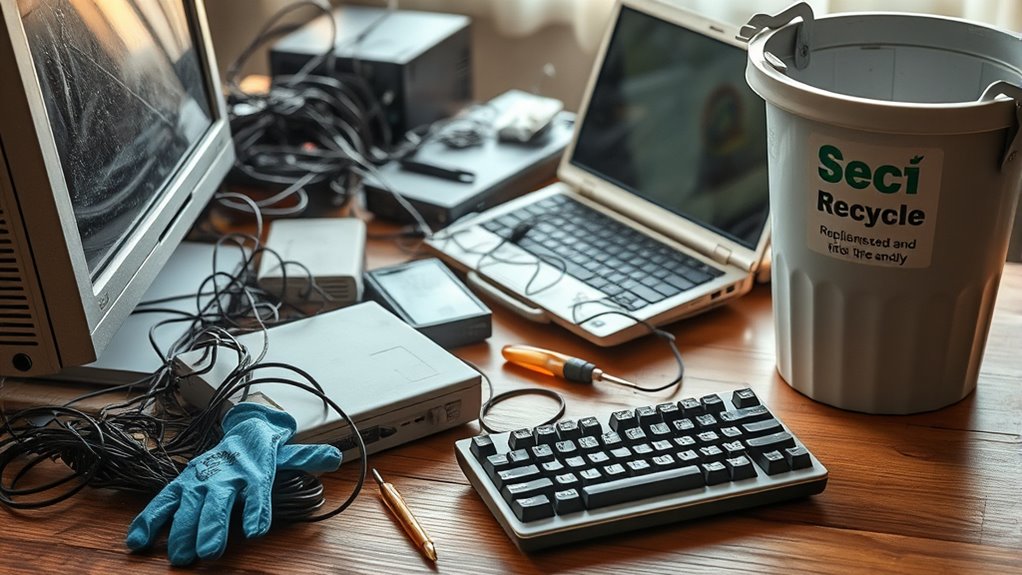
Before you start disposing of old electronics, it’s important to carefully evaluate both the devices themselves and the data stored on them. Check device compatibility to determine if the equipment still functions or can be repurposed. This helps you decide whether to keep, donate, or recycle the device. Simultaneously, consider data recovery—if there’s any valuable information, you may want to retrieve or secure it before disposal. Understanding the data’s importance ensures you don’t accidentally lose critical files. Assess whether the device’s hardware is salvageable or if it’s best to replace it. By thoroughly evaluating both device compatibility and potential data recovery options, you’ll make informed decisions that protect your information and streamline your disposal process. Incorporating proper data sanitization methods can further ensure your personal information remains secure during disposal. Additionally, understanding the electric bike horsepower can help in evaluating the energy efficiency of recycling electronic components. Recognizing the different types of e-waste can also guide you in choosing the most environmentally friendly disposal method. Being aware of cryptid mysteries and other folklore phenomena can remind us of the importance of thorough investigation and verification, even in seemingly straightforward tasks like electronics disposal, to avoid misconceptions or overlooked hazards. Recognizing the piercing care and hygiene practices can be analogous to ensuring proper handling during electronic disposal to prevent contamination or damage.
Backing Up and Erasing Personal Information

Before you dispose of your old device, make sure to back up all your important data securely. Then, erase your personal information completely to prevent any privacy breaches. Taking these steps guarantees your data stays safe and your information stays private. Additionally, consider using data destruction methods to ensure all files are irretrievably deleted. Proper disposal also involves being aware of vetted wave and wind disposal options that minimize environmental impact. To further protect your privacy, use secure deletion tools that overwrite data multiple times. Incorporating environmentally conscious disposal practices aligns with the principles of sustainable Indonesian decor masks and reduces electronic waste.
Secure Data Backup
When disposing of old electronics, it’s crucial to securely back up your personal data to prevent loss and protect your privacy. Start by transferring files to a reliable external drive or cloud storage. Make certain your backups are complete and accessible before moving forward. While handling devices, prioritize battery safety—avoid puncturing or exposing batteries to heat, which can cause fires. If your device has undergone hardware upgrades, double-check that all important data is saved before dismantling or recycling. Proper backups help you recover essential information later and prevent identity theft. Keep your backup process organized, verifying data integrity. This step ensures your personal information remains safe, even as you prepare your device for disposal. Additionally, understanding the net worth of public figures can motivate you to manage your finances wisely when upgrading technology. To further safeguard your data, consider using encryption tools to protect sensitive information during the backup process. Incorporating smart home security devices can also help monitor your data and device safety during disposal or transfer.
Complete Data Erasure
To guarantee your personal information remains secure, it’s essential to both back up your data and then erase it completely from your device. Start by encrypting your device to add an extra layer of security, making any remaining data unreadable. Next, use reliable data wiping software to perform a thorough data wipe, ensuring all personal files are permanently removed. Many devices also support built-in features for device encryption and secure erasure; utilize these options for added confidence. Remember, simple deletion isn’t enough, as data can often be recovered. Incorporating proper data management practices, such as verifying that the data has been fully erased, helps prevent accidental data recovery. Additionally, selecting energy-efficient data wiping tools can contribute to more sustainable disposal practices. When choosing a data wiping method, consider software reliability to ensure your data is effectively protected. Employing certified data erasure standards can further guarantee that your data destruction complies with industry best practices. By combining device encryption with exhaustive data wiping software, you minimize the risk of data theft or identity theft before recycling or donating your electronics. This process ensures your personal information stays protected throughout disposal.
Exploring Recycling and Donation Options

You can find recycling centers near you that accept old electronics, making disposal easy and eco-friendly. Donating devices to charitable organizations not only helps those in need but also keeps electronics out of landfills. Consider exploring these options to responsibly manage your outdated gadgets, and remember that creating a comfortable workspace can motivate you to stay organized and reduce clutter. Additionally, understanding proper electronic waste disposal procedures ensures environmental safety and compliance with local regulations. Proper recycling practices contribute to reducing hazardous waste and conserving resources, supporting a healthier planet. Incorporating up-to-date security systems into your home can also deter theft, ensuring your devices and property remain safe during disposal processes. Being aware of trusted local recycling centers can further streamline your disposal efforts and promote environmentally responsible habits.
Recycling Centers Near You
Finding a nearby recycling center is a straightforward way to responsibly dispose of your old electronics. When visiting, prioritize battery safety by ensuring batteries are removed and stored properly if needed. Many centers accept devices with lithium-ion batteries, but it’s best to check beforehand to avoid hazards. Recycling centers also support electronic component repair, allowing devices to be refurbished or parts reused, reducing waste. By dropping off your electronics at a certified facility, you help prevent harmful materials from polluting the environment. Some centers even offer on-site data destruction, protecting your privacy. Use online tools or local directories to locate a reputable recycling center near you. Proper disposal not only benefits the planet but also helps guarantee your old devices are handled safely and responsibly. Recycling and donation options can help extend the life of your electronics and reduce waste. Navigation and mapping tools can assist you in finding the most convenient location. Additionally, choosing certified facilities ensures compliance with environmental regulations and supports responsible recycling practices.
Donating to Charitable Organizations
Donating your old electronics to charitable organizations offers a meaningful way to extend their lifespan and help those in need. Before donating, verify your device still has active device warranties and that software licensing agreements are transferable. Some organizations may require working hardware, so test your device thoroughly. To maximize impact, choose charities that accept electronics and provide proper data wiping services. Here’s a quick guide:
| Considerations | Tips | Resources |
|---|---|---|
| Device Warranties | Ensure warranties are valid; transfer if possible | Manufacturer support sites |
| Software Licensing | Verify licenses are transferable; uninstall software | Licensing provider info |
| Donation Impact | Supports education, shelters, and tech programs | Local charities, national programs |
Finding Certified E-Waste Recycling Centers

Locating certified e-waste recycling centers guarantees your old electronics are disposed of responsibly and safely. Start by checking with local government agencies or official recycling programs, as they often list authorized facilities. Look for centers that specialize in battery recycling, ensuring batteries are handled correctly to prevent leaks or fires. Certified centers also follow strict hazardous waste disposal regulations, reducing environmental and health risks. Avoid drop-offs at unverified locations to prevent improper disposal or illegal dumping. Many communities have dedicated recycling events or drop-off points, making it easy to find a trusted facility nearby. By choosing certified e-waste recyclers, you ensure your devices are processed in accordance with environmental standards, protecting both the planet and your community.
Preparing Your Devices for Disposal

Once you’ve identified a certified e-waste recycling center, preparing your devices properly guarantees a safe and responsible disposal process. Start by backing up important data and deleting personal information to protect your privacy. Check device compatibility to ensure your electronics are accepted for recycling—some centers have restrictions on certain devices or components. Remove batteries or other hazardous parts, following manufacturer instructions or local guidelines, to prevent leaks or accidents during transport. Keep accessories, chargers, and cables organized, or include them with the device if required. Being thorough can reduce disposal costs, as some centers charge extra for items that need special handling. Proper preparation minimizes risks, guarantees compliance with recycling standards, and makes the entire disposal process smoother and safer.
Understanding Manufacturer Take-Back Programs
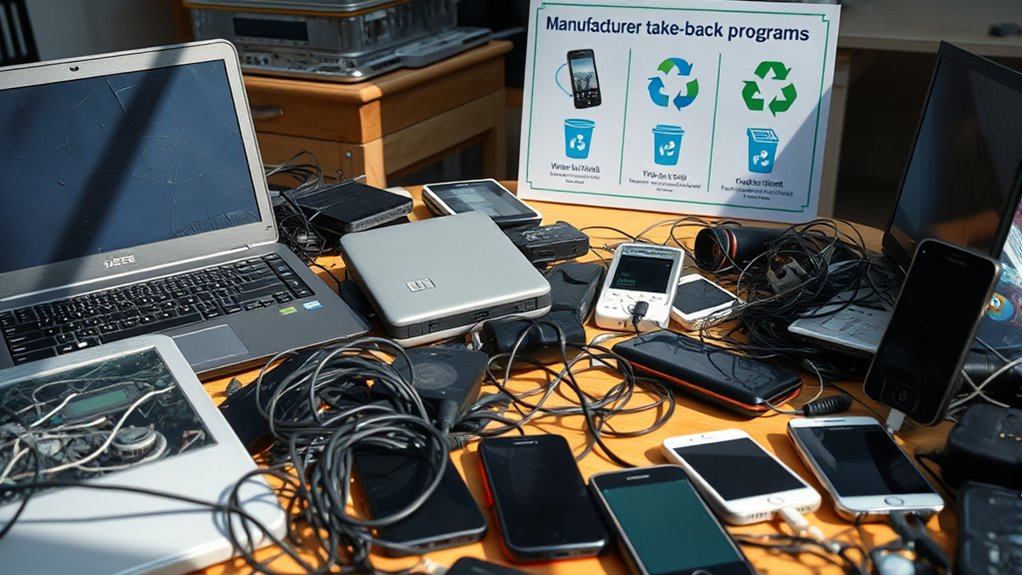
Understanding manufacturer take-back programs is essential because many electronics companies offer these initiatives to simplify disposal and promote recycling. These programs highlight manufacturer responsibility and their commitment to reducing e-waste. Take-back policies allow you to return old devices directly to the manufacturer, ensuring proper recycling and disposal. Participating in these programs helps protect the environment and conserves resources.
| Manufacturer Responsibility | Take Back Policies |
|---|---|
| Reduces harmful waste | Easy device return process |
| Promotes recycling efforts | Free or low-cost disposal |
| Supports sustainability | Clear, accessible options |
Tips for Responsible Disposal and Environmental Impact

Participating in manufacturer take-back programs is a great way to guarantee your old electronics are disposed of responsibly. These programs ensure proper handling of hazardous materials, including proper chemical disposal, reducing environmental harm. When disposing of electronics, prioritize battery safety by removing batteries when possible, as they can leak or explode if damaged. If you need to dispose of batteries, follow local guidelines for recycling or disposal to prevent chemical leaks. Avoid throwing electronics into regular trash, as they contain toxic substances that can contaminate soil and water. Instead, choose certified e-waste recycling centers that follow environmentally friendly practices. Responsible disposal minimizes environmental impact, protects public health, and promotes sustainable recycling of valuable materials. Your actions make a difference in safeguarding the planet.
Frequently Asked Questions
Are There Any Legal Restrictions on Disposing of Certain Electronics?
Yes, there are legal restrictions on disposing of certain electronics. You need to guarantee legal compliance by following local, state, and federal regulations, especially for electronics containing hazardous materials like batteries, mercury, or lead. Improper disposal can lead to fines or environmental harm. Check with your local waste management authorities or certified e-waste recyclers to ensure you’re disposing of electronics responsibly and legally.
How Can I Ensure My Data Cannot Be Recovered After Disposal?
You need to wipe your data with super strength, like erasing it from existence! Use professional data wiping tools or software to overwrite your files multiple times, making recovery impossible. For extra security, enable data encryption before disposal, so even if someone tries, they can’t access your info. Don’t forget to physically destroy the storage device—smash it or shred it—ensuring your data is gone forever and your privacy stays protected.
What Are the Costs Associated With Professional E-Waste Disposal Services?
The costs of professional e-waste disposal services vary based on factors like item type and weight. Typically, you’ll see a cost comparison showing service fees range from $20 to $100 per device. Some providers charge by weight or offer bulk discounts. It’s best to compare providers, considering both the service fees and reputation for environmentally responsible disposal, to find the most cost-effective and trustworthy option.
Can I Recycle Non-Traditional Electronic Items Like Batteries and Cords?
Like the mythical Icarus aiming high, you can definitely recycle non-traditional electronics like batteries and cords. For battery recycling, find local collection points or retail drop-offs that accept rechargeable and single-use batteries. For cords, consider specialized e-waste recycling centers or donation programs. Always follow proper cord disposal methods to prevent environmental harm. Recycling these items helps protect the planet and keeps hazardous materials out of landfills.
How Do I Verify if a Recycling Center Is Truly Environmentally Responsible?
To verify if a recycling center is truly environmentally responsible, check their certification standards like R2 or e-Stewards. Research their reputation online by reading reviews and asking for references. You can also visit the facility to see their processes firsthand. A trustworthy recycling center prioritizes eco-friendly practices, properly manages hazardous waste, and transparently shares their certifications and environmental policies, ensuring you’re making an environmentally conscious choice.
Conclusion
By following these steps, you’re clearing the path for a cleaner, greener future. Think of your old electronics as leaves in fall—responsibly raking and composting them guarantees they don’t clutter the environment. When you dispose of devices safely, you’re planting seeds for sustainability and protecting the planet. So, take action today, and let your responsible choices be the guiding breeze that carries us toward a healthier Earth.