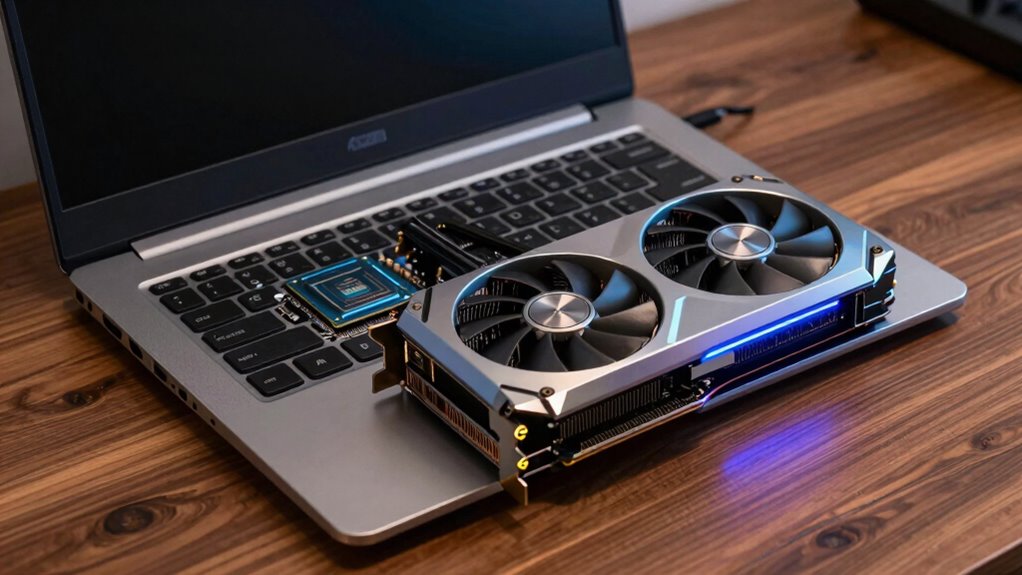

Some laptops have both integrated and dedicated GPUs to optimize performance, power efficiency, and versatility. The integrated graphics handle everyday tasks like browsing and streaming, helping extend battery life. When you need high graphics power for gaming or editing, the dedicated GPU kicks in. This dual system balances energy use and performance, ensuring your laptop can adapt to different needs. Keep exploring to discover how these setups can best support your computing habits.
Key Takeaways
- Laptops with two GPUs balance power efficiency during light tasks and high performance for demanding applications.
- Dual GPUs enable dynamic workload allocation, improving responsiveness and thermal management.
- They cater to users needing both portability and high-end graphics, such as gamers and content creators.
- Having two GPUs allows seamless switching, optimizing battery life and graphics performance based on activity.
- The design integrates both GPUs to enhance performance without compromising device aesthetics or portability.
Top picks for "integrat dedicat graphic"
Open Amazon search results for this keyword.
As an affiliate, we earn on qualifying purchases.
The Role of Integrated Graphics in Modern Laptops

Integrated graphics play a crucial role in modern laptops by providing sufficient visual performance for everyday tasks without adding extra cost or power consumption. They handle graphics rendering efficiently for activities like web browsing, streaming, and office work, ensuring smooth visuals. Because integrated graphics consume less power, they help improve overall power management, extending your device’s battery life. You won’t notice a significant drop in performance during typical use, making them ideal for casual users. These graphics work seamlessly with your system’s CPU, optimizing power efficiency during less demanding tasks. Additionally, energy efficiency is a key benefit, reducing the environmental impact of your device. Modern integrated graphics also support media playback capabilities, making them versatile for various multimedia applications. Understanding graphics performance can help users make informed decisions when choosing a laptop that balances performance and battery life, especially for everyday computing needs. Furthermore, advancements in integrated graphics technology have led to improved visual quality and compatibility with a wider range of applications, enhancing overall user experience. While they may not support high-end gaming or intensive graphic design, integrated graphics are perfectly suited for daily computing needs, offering a balanced combination of performance and energy efficiency.
The Advantages of Dedicated Graphics Cards
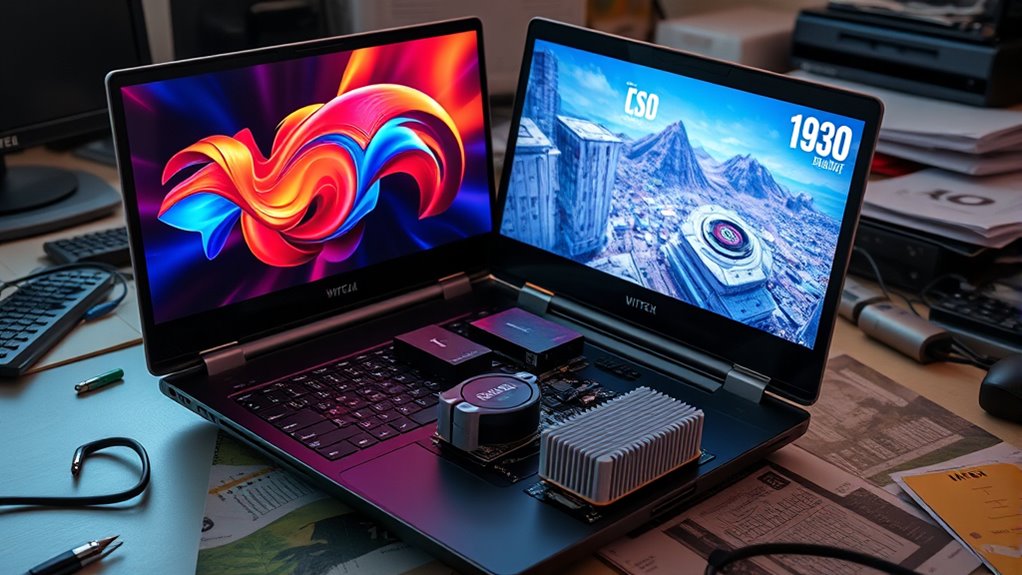
Dedicated graphics cards offer a significant boost in visual performance, especially for demanding tasks like gaming, 3D rendering, and video editing. They handle complex graphics more efficiently, providing smoother gameplay and faster rendering times. Here are three key advantages:
Dedicated graphics cards boost visual performance, ensuring smoother gameplay and faster rendering for demanding tasks.
- Improved thermal management, preventing overheating during intensive use.
- Better software compatibility, ensuring dedicated hardware works seamlessly with advanced applications.
- Enhanced graphics processing power, reducing lag and increasing frame rates.
- They incorporate advanced cooling solutions that help maintain optimal performance during prolonged use. Additionally, their thermal management systems are designed to dissipate heat more effectively, ensuring consistent performance under heavy loads. This dedicated hardware is often built with durability and longevity in mind, making it a reliable choice for intensive tasks. Furthermore, many dedicated GPUs feature dedicated memory which allows for faster data access and improved overall graphics quality. Leveraging dedicated GPU architectures can also lead to better energy efficiency and reduced power consumption during high-performance tasks.
With a dedicated GPU, you benefit from optimized cooling solutions that maintain performance under load, and you avoid the limitations of integrated graphics. This makes them ideal for creative professionals and gamers who demand high-quality visuals without compromise.
How Dual GPU Systems Optimize Performance

Dual GPU systems improve performance by dynamically allocating workloads, ensuring your tasks run smoothly without bottlenecks. They also offer power efficiency benefits, using resources more intelligently to save energy when full power isn’t needed. Additionally, these setups enhance gaming by delivering higher frame rates and better graphics quality. The use of Free Floating technology allows for more flexible and efficient graphics processing, further optimizing overall system performance. Incorporating dual GPU configurations can also extend the lifespan of your device by better managing thermal and power loads.
Dynamic Workload Allocation
When a system employs multiple GPUs, dynamic workload allocation allows tasks to be distributed effectively between them, maximizing overall performance. This process relies heavily on software optimization, which intelligently assigns workloads based on current demands. It also helps with thermal management by preventing overheating of individual GPUs, guaranteeing sustained performance. To achieve this, systems typically:
- Monitor real-time GPU usage to assign tasks to the most suitable GPU.
- Balance workloads to prevent thermal throttling and maintain system stability.
- Switch seamlessly between integrated and dedicated GPUs based on application needs.
- Recognize individual GPU capabilities and limitations to optimize workload distribution effectively. Additionally, GPU monitoring ensures that the system adapts quickly to changing demands, maintaining efficiency and stability. Proper hardware utilization is crucial to ensure that both GPUs are used optimally, enhancing overall system responsiveness. An understanding of system architecture helps in designing more efficient workload management strategies.
This approach ensures you get ideal graphics performance without sacrificing thermal efficiency. By intelligently managing workloads, dual GPU systems can deliver smooth gaming, rendering, and multitasking experiences while maintaining hardware longevity.
Power Efficiency Benefits
By intelligently distributing workloads between integrated and dedicated GPUs, systems can substantially reduce power consumption without sacrificing performance. This dynamic management boosts energy efficiency and extends battery life. When you’re performing basic tasks like browsing or watching videos, the integrated GPU handles the load, saving power. For demanding applications, the dedicated GPU kicks in, delivering high performance without wasting energy during lighter tasks. This balance optimizes power savings across different usage scenarios. Additionally, energy‑saving strategies play a crucial role in minimizing environmental impact while maintaining user productivity. Incorporating adaptive power management techniques further enhances efficiency by dynamically adjusting resource allocation based on real‑time needs. Implementing such strategies reduces overall energy usage, contributing to both cost savings and environmental sustainability, especially when combined with hardware optimization techniques that streamline component performance. Furthermore, adopting power-efficient hardware designs can significantly enhance the effectiveness of dual GPU systems.
Enhanced Gaming Capabilities
Enhanced gaming performance in systems with both integrated and dedicated GPUs allows for seamless switching between graphics processors, guaranteeing smooth gameplay even during demanding scenes. This dual GPU setup optimizes your gaming experience by dynamically balancing performance and power consumption. Key benefits include:
- Adaptive GPU Switching: Automatically shifts between GPUs for intensive scenes or lighter tasks, maintaining consistent frame rates. Efficient resource allocation helps maximize overall system performance.
- Improved Thermal Management: Effective GPU cooling prevents overheating, allowing sustained high performance without thermal throttling. Thermal regulation techniques are crucial for maintaining system stability during extended use.
- Enhanced Thermal Management: Dual GPUs work together with advanced cooling solutions to manage heat, reducing thermal stress and prolonging hardware lifespan. Proper cooling techniques are essential for maintaining system stability during extended use. Additionally, incorporating vetted wave and wind techniques can further improve cooling efficiency and system stability during extended gaming sessions.
- Field‑of‑view and imaging‑scale examples help illustrate how dual GPUs can be optimized for various tasks.
Power Consumption and Battery Life Considerations
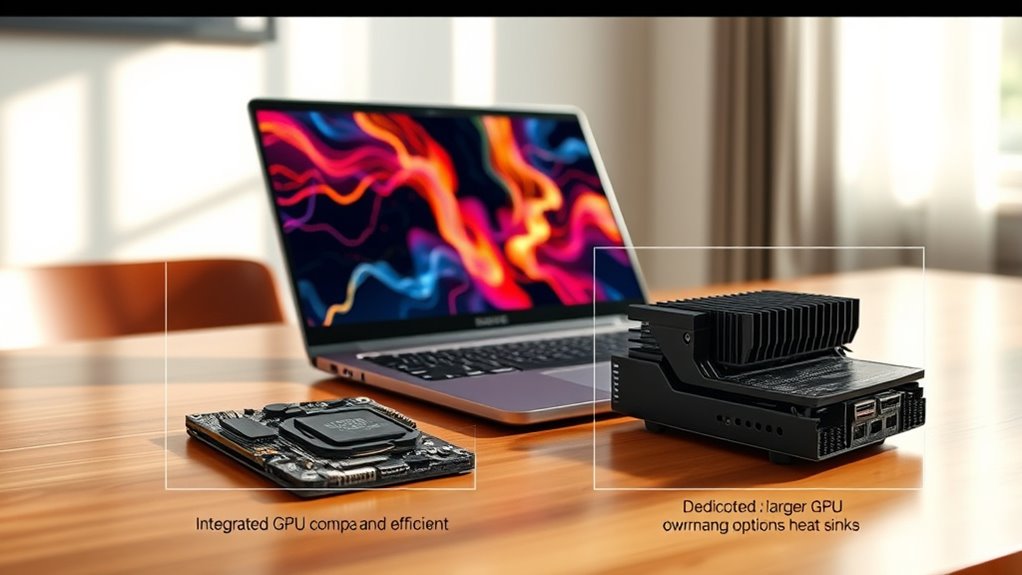
When choosing between integrated and dedicated graphics, you need to contemplate how each impacts your battery life. Dedicated GPUs tend to drain your battery faster, increasing your risk of running out of power during use. Finding the right balance between performance and efficiency helps you get the most out of your device without sacrificing battery longevity. Additionally, understanding hardware efficiency can guide you in selecting components that optimize both power consumption and performance.
Battery Drain Risks
Integrated graphics often consume less power than dedicated GPUs, but they can still substantially impact your device’s battery life during intensive tasks. When your GPU runs at high loads, it increases power draw, leading to faster battery drain. This can also cause thermal management issues, as increased heat may affect hardware compatibility and overall system stability. To minimize battery drain risks, consider these factors:
- Optimize GPU usage: Use integrated graphics for light tasks and switch to dedicated GPU only when necessary.
- Manage thermal output: Ensure proper cooling to prevent overheating that can lead to higher power consumption.
- Check hardware compatibility: Confirm your system supports efficient switching between GPUs to avoid unnecessary power drain.
Being mindful of these factors helps you extend battery life while maintaining system performance.
Power Efficiency Balance
Balancing power consumption with performance is vital for maximizing your device’s battery life without sacrificing functionality. Efficient thermal management helps prevent overheating, allowing your GPU to operate at its best without draining energy excessively. Software optimization also plays an important role; well-designed drivers and power settings enable your system to switch seamlessly between integrated and dedicated graphics based on your activity. When you use software that intelligently manages GPU workload, you reduce unnecessary power draw, extending battery life. By prioritizing thermal management and optimizing software, you can achieve a better power efficiency balance. This ensures your laptop remains responsive during intensive tasks while conserving energy during lighter use, giving you longer battery life without sacrificing the performance you need.
Use Cases for Laptops With Two GPUS
Laptops equipped with both integrated and dedicated GPUs are ideal for users who need versatile performance across different tasks. You’ll benefit from seamless switching between energy-efficient tasks and demanding applications. For example:
- Gaming and Graphic-Intensive Work: When gaming or rendering 3D models, the dedicated GPU handles the workload, requiring effective GPU cooling and thermal management to prevent overheating during extended use.
- Professional Content Creation: Video editing and 3D designing demand high graphics power, while lighter tasks can rely on integrated graphics to save battery life.
- General Productivity: Everyday tasks stay powered by the integrated GPU, ensuring longer battery life and less heat output. Dual GPUs adapt to your needs, maintaining *ideal* thermal management across applications.
The Technology Behind Switching Between GPUs
Switching seamlessly between integrated and dedicated GPUs relies on specialized technologies that detect your workload and optimize performance accordingly. This process uses driver optimization to manage power consumption and performance, ensuring smooth progression. When your system recognizes a demanding task, it switches to the dedicated GPU, which may require better GPU cooling to prevent overheating. Conversely, for simple tasks, it reverts to the integrated GPU to save energy.
| Workload Type | GPU Used | Key Focus | Additional Considerations |
|---|---|---|---|
| Light | Integrated | Power efficiency | Low GPU cooling needs |
| Heavy | Dedicated | Performance & GPU cooling | Better GPU cooling required |
Impact on Portability and Design
When choosing between integrated and dedicated graphics, your device’s slim profile and weight become important factors. Dedicated GPUs often require more space and cooling, which can affect the overall design and portability. Additionally, integrating dedicated graphics into sleek aesthetics presents challenges, impacting how stylish and compact your device can be.
Slim Profile Considerations
A slim profile demands careful consideration of both portability and design, as every millimeter counts. When designing a thin laptop, you must balance component placement with thermal management, since limited space can lead to overheating issues. Material durability also becomes critical, as thinner shells are more prone to damage and wear over time. To optimize your slim device, focus on:
- Efficient cooling solutions that fit within tight spaces
- Using lightweight, durable materials that withstand daily use
- Incorporating advanced thermal management to prevent overheating without bulk
These factors influence not just the laptop’s look but also its longevity and performance. Achieving a sleek profile requires innovation in design, ensuring your device remains portable, resilient, and stylish.
Weight Impact Factors
Weight plays a essential role in shaping both the portability and overall design of a device. When considering laptops with integrated or dedicated graphics, weight distribution becomes critical. A heavier GPU can shift the balance, making the device less comfortable to carry and affecting how you handle it on the go. Material durability also impacts weight; using lightweight yet sturdy materials can help offset additional GPU weight without sacrificing durability. If a laptop’s chassis isn’t strong enough, increased weight may lead to flexing or damage over time. Ultimately, a well-balanced design considers both the added weight of dedicated GPUs and the choice of durable materials to maintain portability while ensuring long-term resilience.
Aesthetic Integration Challenges
Integrating graphics into a laptop’s sleek design presents significant aesthetic challenges that directly impact portability. You need to guarantee seamless color coordination and material consistency, or the device risks looking bulky or mismatched. These challenges include:
- Incorporating cooling solutions without disrupting the visual flow.
- Maintaining a uniform surface finish despite different hardware components.
- Ensuring the GPU hardware blends seamlessly with the chassis, avoiding unsightly gaps or color clashes.
Balancing these factors requires careful design choices to preserve a clean, minimalist look while accommodating additional hardware. If not managed well, the added components can compromise the laptop’s aesthetic integrity, making it less portable and more cumbersome. Ultimately, achieving a harmonious appearance demands meticulous attention to detail in both color and material integration.
Cost Implications of Dual GPU Configurations
While dual GPU configurations can substantially boost performance, they also come with notable cost implications. The primary factor is the cost comparison between single and dual GPU setups, which considerably impacts your budget. Manufacturing expenses increase with the addition of a second GPU, raising the overall price of the laptop. You should consider whether the performance gains justify the higher costs involved. The table below highlights the emotional impact of these expenses:
| Cost Aspect | Impact | Your Experience |
|---|---|---|
| Higher Manufacturing Expenses | Increased initial investment | Financial strain |
| Additional Hardware Costs | More expensive components | Limited budget worries |
| Long-term Value | Performance vs. cost trade-off | Satisfaction or regret |
Future Trends in Multi-GPU Laptop Technology
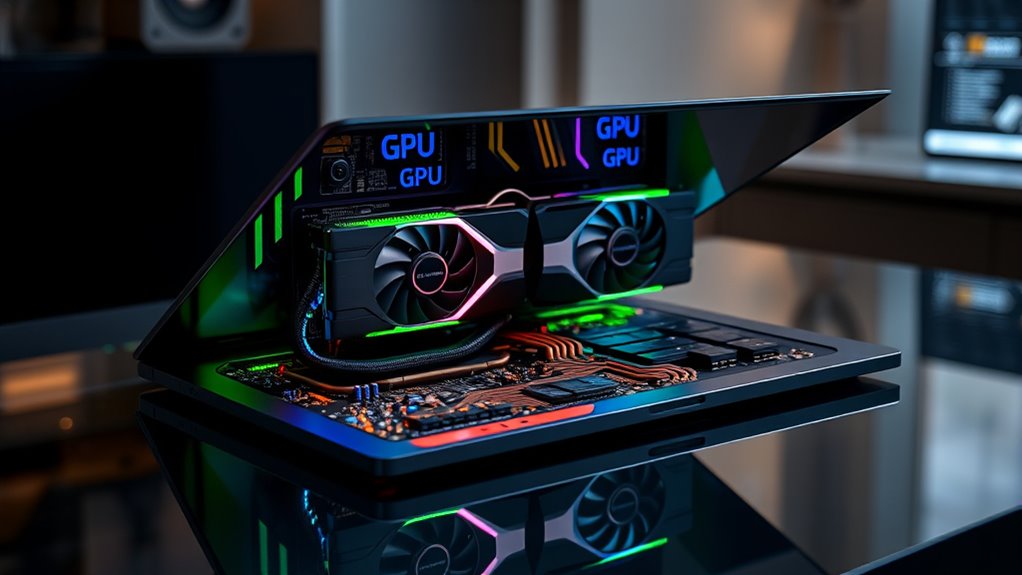
As technology advances, the future of multi-GPU laptop systems looks increasingly promising, with innovations poised to enhance performance and efficiency. You can expect seamless integration for high-demand tasks like cloud gaming and virtual reality. Manufacturers are focusing on smarter power management and adaptive GPU allocation, ensuring longer battery life without sacrificing power. Here are three key trends to watch:
- Hybrid GPU Architectures – combining integrated and dedicated GPUs for ideal balance.
- AI-Driven Optimization – dynamically allocating resources for VR and cloud gaming experiences.
- Advanced Cooling Solutions – keeping multi-GPU setups cool during intensive use.
These developments will make multi-GPU laptops more capable, energy-efficient, and better suited for immersive, cloud-based, and VR applications.
Choosing the Right Setup for Your Needs
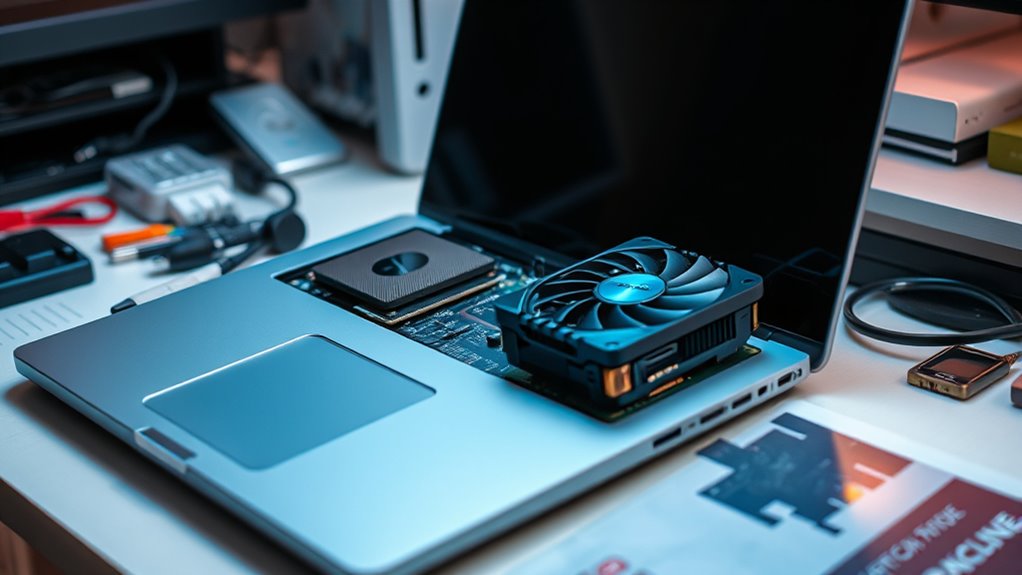
Choosing the right graphics setup depends on your specific needs and how you use your laptop. If you prioritize portability and extended battery life, integrated graphics may suffice, offering better thermal management and quieter operation. However, if you require high performance for gaming, content creation, or 3D rendering, a dedicated GPU is essential, despite increased heat and power consumption. Consider your level of user customization—dedicated GPUs often allow more control over performance settings, fan speeds, and thermal management options. Evaluate how much you’re willing to manage thermal issues and whether you need the flexibility to tweak performance parameters. By aligning these factors with your workload, you can select a graphics setup that ideally balances power, cooling, and customization for your specific needs.
Frequently Asked Questions
How Does Dual GPU Setup Affect Laptop Cooling Systems?
A dual GPU setup impacts your laptop’s cooling system by increasing thermal management demands. It generates more heat, so you need better airflow optimization to prevent overheating. You might notice the fans working harder or louder during high-performance tasks. To keep your laptop cool, make certain vents are unobstructed, and consider using a cooling pad. Proper airflow management helps maintain performance and extends your device’s lifespan.
Can a Laptop With Two GPUS Run Multiple Monitors More Effectively?
With two GPUs, you’ll find multi-monitor performance improves because the system can better distribute graphics workloads. This setup allows one GPU to handle demanding tasks while the other manages everyday display functions, reducing lag and enhancing responsiveness. You gain smoother visuals and more efficient multitasking, especially during intensive gaming or creative work. Overall, dual GPUs optimize your multi-monitor experience by balancing the load and providing more consistent performance.
Are There Specific Software That Benefits Most From Dual GPU Configurations?
You’ll find that software like 3D rendering programs, video editing, and gaming benefit most from dual GPU configurations. These applications leverage software optimization to enhance rendering performance, allowing smoother workflows and faster processing. When you use programs that support multi-GPU setups, you’ll notice significant improvements in speed and efficiency, especially during intensive tasks. Dual GPUs are especially useful for demanding creative work and high-end gaming experiences, providing a noticeable boost in performance.
How Does Having Two GPUS Influence Laptop Warranty and Maintenance?
Having two GPUs can complicate your laptop warranty and increase maintenance costs. Warranty complexity arises because repairs might involve either or both GPUs, and some manufacturers may charge extra for dual GPU systems. Maintenance could also be more demanding, as cooling and cleaning need extra attention to prevent overheating. However, if you understand these factors, you can better manage potential issues and keep your laptop running smoothly.
What Are the Compatibility Considerations for Adding a Second GPU?
When adding a second GPU, you need to check your power supply requirements and motherboard compatibility. Make certain your power supply can handle the extra power draw, and verify that your motherboard supports multiple GPUs through appropriate slots like PCIe x16. Also, confirm that your BIOS and drivers support dual GPUs to prevent conflicts. Compatibility is key; otherwise, your upgrade might not work or could damage your system.
Conclusion
Understanding the differences between integrated and dedicated graphics helps you choose the right laptop for your needs. Dual GPU systems offer powerful performance, but they also come with trade-offs like battery life and cost. Are you willing to compromise portability for top-tier graphics? Ultimately, selecting the best setup depends on your priorities. Make an informed choice and guarantee your laptop meets your gaming, creative, or everyday demands. Your perfect balance is within reach—are you ready to find it?