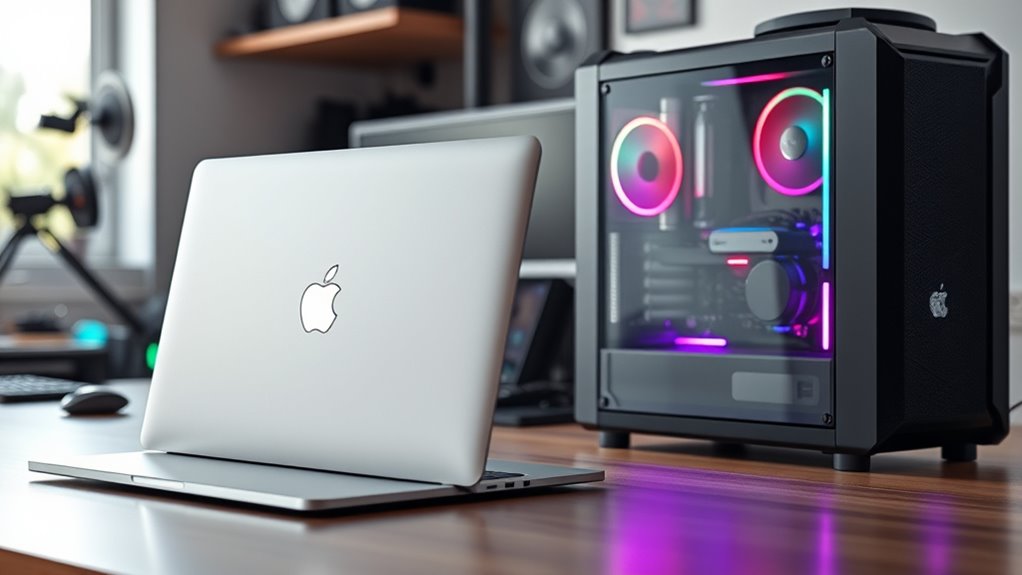

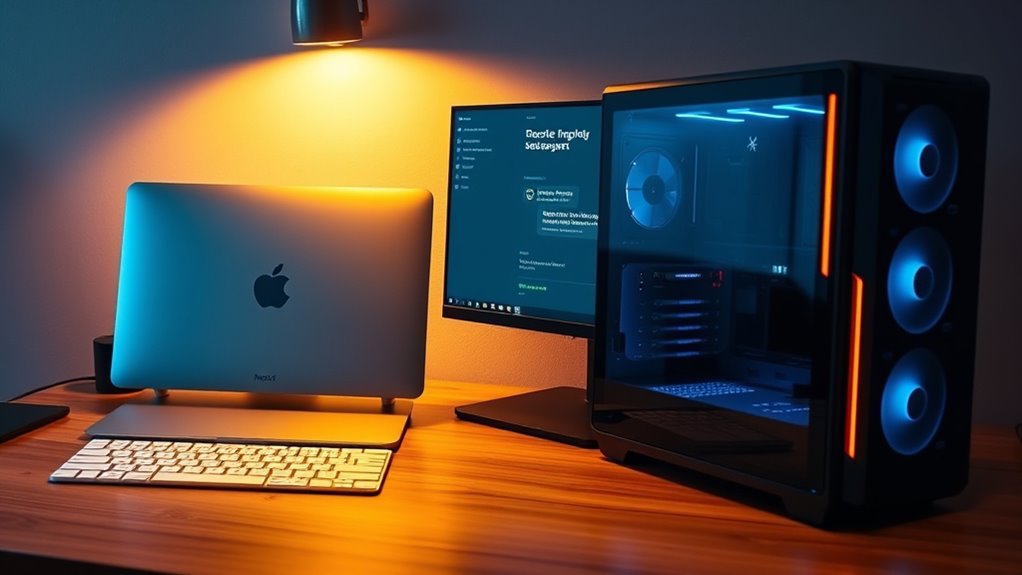
When choosing between a Mac and a PC, you should consider their operating systems, hardware options, and software ecosystems. Macs offer a sleek, user-friendly interface with strong security but limited customization, while PCs provide a wider range of hardware choices, compatibility, and budgets. Macs excel in creative workflows, whereas PCs are more versatile for gaming and enterprise apps. Exploring these differences further can help you find the best fit for your needs.
Key Takeaways
- Macs offer a seamless macOS experience with exclusive software like Final Cut Pro, while PCs support a wider range of third-party applications and gaming.
- Hardware customization is limited on Macs, whereas PCs allow extensive upgrades for tailored performance and future-proofing.
- Macs prioritize ecosystem integration with Apple devices, providing smooth synchronization; PCs support a broader variety of peripherals and cloud services.
- macOS emphasizes security and privacy with strict app controls; Windows on PCs provides more flexibility but requires vigilant security practices.
- Macs tend to be more expensive with reliable, in-store support, while PCs offer a wider price range and diverse support options.
Top picks for "differenc know before"
Open Amazon search results for this keyword.
As an affiliate, we earn on qualifying purchases.
Operating System and User Interface
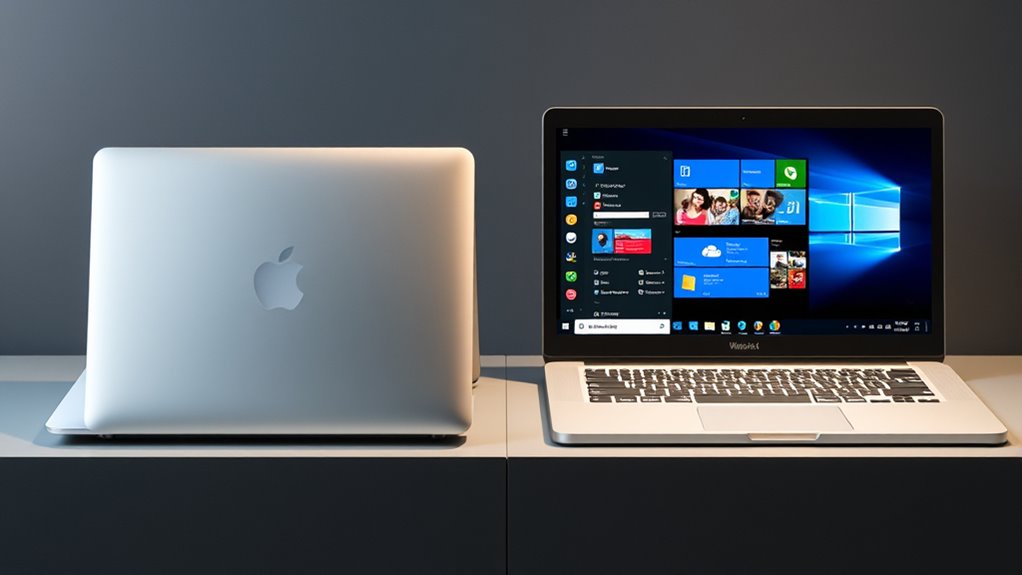
Have you ever wondered how the operating systems and user interfaces differ between Mac and PC? On a Mac, you’ll notice a sleek, intuitive interface with smooth touchpad gestures like pinch-to-zoom and three-finger swipes that make navigation effortless. macOS offers extensive font customization options, so you can personalize your workspace easily. PCs, typically running Windows, provide a more familiar layout with customizable menus and taskbars. The touchpad gestures are versatile but may require some adjustment, especially if you’re switching from Mac. Windows also allows font customization, but the process can be less streamlined. Overall, macOS emphasizes simplicity and elegance, while Windows offers more flexibility and familiarity for many users. Your preferred interface depends on how you like to interact with your device. Additionally, the color accuracy of the display can significantly impact your user experience, especially for tasks requiring precise visual detail. For professionals working with visual content, display quality becomes a crucial factor in choosing the right system. Understanding the software ecosystem available on each platform can also influence your decision, as it affects compatibility and productivity tools. Moreover, the operating system architecture influences how efficiently your device manages resources and runs applications, which is vital for optimal performance.
Hardware Options and Customization

When it comes to hardware options and customization, PCs generally offer greater flexibility than Macs. You can choose from a wide range of components, allowing you to tailor your system to your specific needs. With PCs, hardware variety is extensive, giving you options for different processors, graphics cards, memory, and storage solutions. This customization flexibility means you can upgrade individual parts easily, extend your system’s lifespan, and optimize performance for gaming, editing, or other demanding tasks. Macs, on the other hand, are more limited in this regard. Apple designs its hardware for a streamlined experience, which means fewer options for upgrades or modifications. If you value building or customizing your machine to fit your unique requirements, PCs provide a clear advantage in hardware options and flexibility.
Software Compatibility and Ecosystem
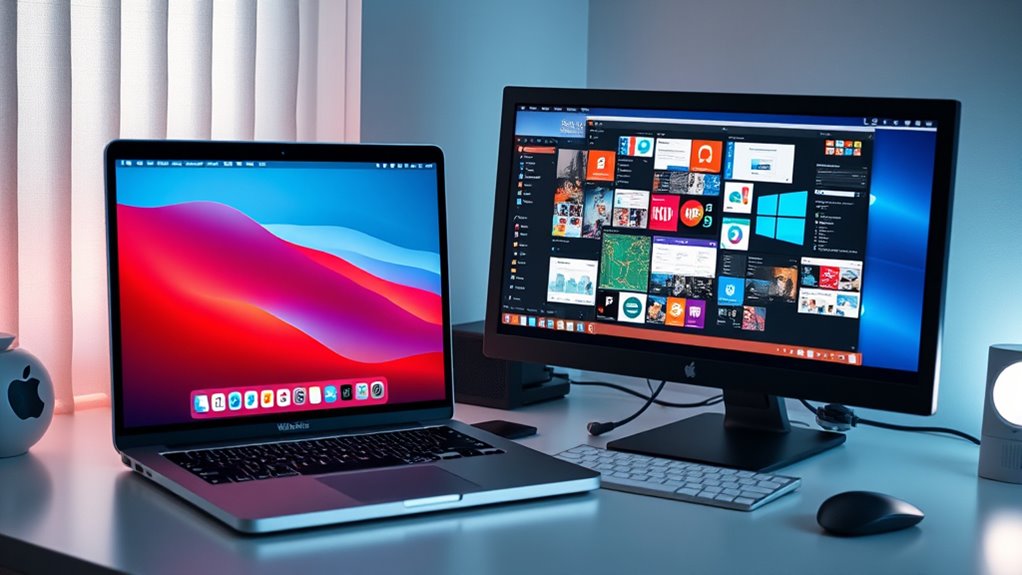
You’ll notice that software options differ between Mac and PC, affecting which programs you can easily run. Ecosystem integration also varies, influencing how smoothly devices and apps work together. Additionally, App Store restrictions on Macs can limit your choices compared to the more open ecosystem of Windows. For instance, software compatibility plays a crucial role in determining the overall user experience on each platform. Strong compatibility testing and understanding the respective ecosystems can help you make a more informed decision. Moreover, the level of ecosystem integration can significantly impact your daily workflow and device synchronization. Being aware of device interoperability is essential for a seamless experience across all your technology tools, especially considering the diverse range of software ecosystems available.
Software Availability Differences
Software availability is a key factor that influences whether you choose a Mac or a PC, as each platform supports different applications and ecosystems. On a Mac, you’ll find a strong ecosystem centered around Apple’s software, with exclusive products like Final Cut Pro and Logic Pro, which are popular among creative professionals. PCs, however, offer broader product availability, especially for specialized or enterprise software, making them ideal for business and engineering needs. Windows also supports a wider variety of third-party applications, giving you more options for gaming, productivity, and niche programs. While some software is cross-platform, certain titles and tools are exclusive to one ecosystem. Your choice depends on the software ecosystem you rely on and the specific applications you need for work or entertainment. Additionally, the software compatibility between platforms can influence your decision, as it determines how seamlessly your existing tools will work after switching. Considering software ecosystem differences can also help you assess potential transition challenges and long-term satisfaction, especially when evaluating application support and integration features. Understanding the software ecosystem’s scope and limitations can help ensure you select the platform that best matches your professional and personal needs, especially given the importance of affiliate disclosures in software recommendations.
Ecosystem Integration Variations
Ecosystem integration plays a crucial role in how smoothly your software works across your device, affecting overall user experience. With Apple’s tightly knit ecosystem, cloud synchronization is seamless, allowing effortless data sharing between Mac, iPhone, and iPad. Peripheral compatibility is also optimized, ensuring accessories work without hassle. In contrast, Windows PCs often offer broader hardware options but may require manual setup for peripheral devices and cloud services. To understand the differences better, consider these points:
- Cloud synchronization tends to be more unified and automatic on Mac devices within the Apple ecosystem.
- Peripheral compatibility varies, with Macs generally supporting fewer device types out-of-the-box but providing reliable performance.
- Ecosystem integration influences how easily you can share files, use accessories, and streamline workflows across your devices.
App Store Restrictions
Ever wonder how App Store restrictions shape your experience with Mac and PC? The app store restrictions and the app approval process considerably impact what software you can access and install. On Macs, the Mac App Store enforces strict guidelines, ensuring apps meet security and quality standards, but it also limits some software options. Windows PCs offer more flexibility, allowing you to install applications from outside official stores without restrictions, but this can increase security risks. The app approval process for Mac apps involves review stages that can delay or block certain programs, whereas PC users typically bypass this step altogether. These differences influence your software ecosystem, affecting ease of access, security, and the range of available applications on each platform. Additionally, software ecosystem can influence your understanding of these platform restrictions and your overall user experience. Recognizing how platform security policies control software access can help you make more informed decisions about your device choice. Being aware of security measures, including software restrictions, can also help you balance convenience with safety when choosing between Mac and PC.
Price Range and Budget Considerations
When comparing Mac and PC options, your budget plays a crucial role in determining which device makes the most sense for you. Macs generally come with higher upfront costs, but they often hold their value longer. PCs, on the other hand, offer a wider range of pricing options, making them accessible at various budget limits. To make an informed choice, consider these points:
- Mac pricing options typically start at a premium, suitable for those with flexible budgets.
- PCs provide more options across a broad spectrum, accommodating tighter budget limits.
- Additional costs, such as accessories and upgrades, can influence your overall investment.
- Understanding cost differences can help you better compare the long-term value and affordability of each option.
- Recognizing software compatibility and other factors related to your specific needs can also influence your decision if you require specialized hardware or software support.
- Awareness of hardware durability can be important, especially if you’re seeking a device with longevity and resistance to wear and tear.
- Considering brand reputation can assist in assessing overall reliability and customer support when choosing between Mac and PC options.
- Understanding your budget limits helps you select a device that aligns with your financial plan without sacrificing essential features.
Security and Privacy Features

When it comes to security and privacy, you’ll find that Macs have strong built-in protections and customizable privacy settings. PCs also offer robust malware and virus defenses, but you might need to manage additional security features manually. Additionally, modern smart home integration and privacy management options can help both systems protect your data more effectively. Ultimately, both systems prioritize keeping your data safe, so your choice depends on your specific needs and preferences.
Built-in Security Measures
Built-in security measures are a key factor that sets Mac and PC apart, as each platform incorporates features designed to protect your data and privacy. Macs leverage robust encryption protocols to secure your files and communications, making unauthorized access difficult. PCs often come with integrated security features like Windows Defender, which includes built-in antivirus software to detect and block threats. Additionally, both platforms implement automatic security updates to patch vulnerabilities. Here are some key elements:
- Encryption protocols to keep your data safe
- Antivirus software built into the operating system
- Automatic security updates for ongoing protection
These features reduce the need for third-party tools and ensure your system remains resilient against cyber threats.
Privacy Settings Customization
Privacy settings customization allows you to control how much personal information your device shares and how securely your data is handled. On both Mac and PC, you can adjust privacy controls to limit access to your location, camera, microphone, and contacts. You’ll want to review user permissions regularly to guarantee apps only access what’s necessary. Macs offer straightforward privacy controls through System Preferences, letting you manage app-specific permissions easily. PCs, especially Windows 10 and 11, provide similar options via Settings, giving you granular control over data sharing. Customizing these privacy settings helps protect your information from unnecessary exposure and keeps you in charge of your digital footprint. Regularly reviewing and adjusting user permissions is key to maintaining your privacy on either platform.
Malware and Virus Defense
Both Mac and PC have robust malware and virus defense features that help protect your device from threats. They rely on different strategies to guarantee your security, including built-in tools and third-party antivirus solutions. When it comes to malware removal, both systems offer effective options, but your approach may vary.
You should consider these key points:
- Mac’s integrated security features, like Gatekeeper, restrict unauthorized apps and reduce malware risks.
- PCs often depend on third-party antivirus solutions for thorough malware removal and real-time protection.
- Regular updates and scans are essential on both systems to maintain ideal protection against evolving threats.
Performance and Hardware Integration
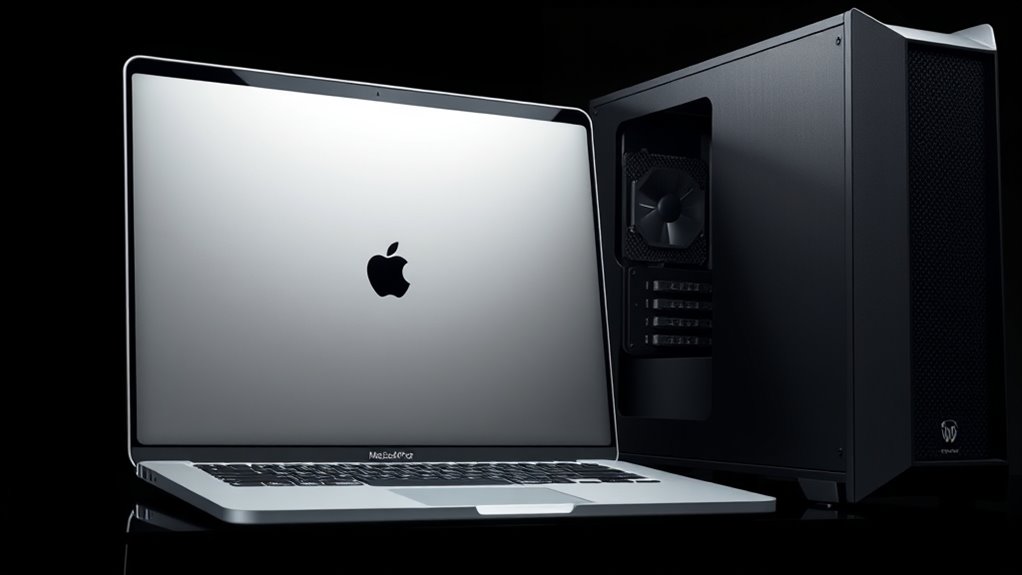
When it comes to performance and hardware integration, Macs and PCs take fundamentally different approaches. Macs prioritize seamless hardware-software harmony, resulting in reliable performance and optimized gaming experience, but they often lack options for hardware upgradeability. You won’t easily swap out components like RAM or GPUs, which can limit customization and future upgrades. PCs, on the other hand, offer greater flexibility; you can customize and upgrade hardware to boost gaming performance or extend your system’s lifespan. This makes PCs more adaptable to evolving needs and tech advancements. If gaming performance is a priority for you, a PC’s ability to upgrade components can provide a significant advantage. Mac hardware is designed for stability and simplicity, but it doesn’t cater to those wanting to push their system further through upgrades.
Customer Support and Warranty Services
Customer support and warranty services are vital factors to contemplate when choosing between Macs and PCs. Your experience with troubleshooting, repairs, and ongoing assistance can substantially impact your satisfaction. Apple offers extensive customer support through AppleCare, including in-store Genius Bar services and remote assistance, ensuring quick resolutions. In contrast, PC manufacturers like Dell and HP provide varied warranty options, often with on-site repairs and extended coverage.
Customer support quality varies; Apple offers quick, in-store help while PCs provide customizable warranty options.
Consider these key points:
- Apple’s customer support is highly rated for ease of access and quality.
- Warranty services for PCs often include customizable plans for broader coverage.
- Quick, reliable support minimizes downtime, essential for productivity.
Ultimately, your choice depends on which support system aligns best with your needs and expectations.
Frequently Asked Questions
Can I Upgrade Hardware Components on Mac and PC Easily?
You can upgrade hardware components on most PCs easily because they’re designed with upgradeability and hardware customization in mind. You can swap out parts like RAM, storage, and graphics cards without much hassle. However, on Macs, upgradeability is limited—many models have sealed units, making hardware customization difficult or impossible. So, if you plan to upgrade often, a PC offers more flexibility, while Macs are less accommodating.
Which Platform Offers Better Gaming Experiences—Mac or PC?
You’ll find that PCs generally offer better gaming performance because they have more powerful hardware options and better hardware customization. With a PC, you can upgrade graphics cards, RAM, and storage easily, which boosts gaming capabilities. Macs aren’t designed for gaming, so they lack the hardware flexibility and performance needed for high-end games. If gaming is your priority, a PC provides a more tailored and immersive experience.
Are There Any Differences in Energy Consumption Between Mac and PC?
Think of energy consumption like a car’s fuel efficiency—you want to go farther with less. Macs generally excel in energy efficiency, consuming less power during everyday tasks, thanks to optimized hardware and software. PCs, especially gaming or high-performance models, tend to have higher power consumption, using more energy under load. So, if saving energy matters to you, a Mac could be the more efficient choice.
How Compatible Are Mac and PC With Peripheral Devices?
You’ll find that peripheral compatibility varies between Macs and PCs. Macs generally support popular devices like printers, external drives, and keyboards well, but some specialized peripherals may need extra drivers or adapters. PCs often offer broader device integration options thanks to wider compatibility with different hardware and ports. To guarantee smooth operation, check each peripheral’s compatibility before purchasing, and consider adapters if needed for seamless connectivity across both systems.
Which System Has a Longer Lifespan With Proper Maintenance?
You’ll find that Macs generally have a longer lifespan with proper maintenance due to their superior hardware durability. They tend to age gracefully and often require fewer repairs over time. While maintenance costs can be higher initially, the overall longevity can offset these expenses. PCs may need more frequent repairs, but their hardware durability varies widely. Ultimately, your care and use determine which system lasts longer.
Conclusion
Ultimately, choosing between Mac and PC depends on your priorities and workflow. Do you value seamless integration, customization, or affordability? Consider what matters most to you—are you willing to invest in a premium experience or seek flexible options? By understanding the key differences, you can make an informed decision that best fits your needs. Whichever you pick, remember that the right device can truly elevate your digital life—so why not choose the one that suits you best?