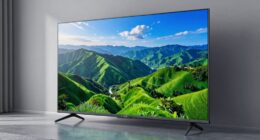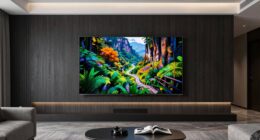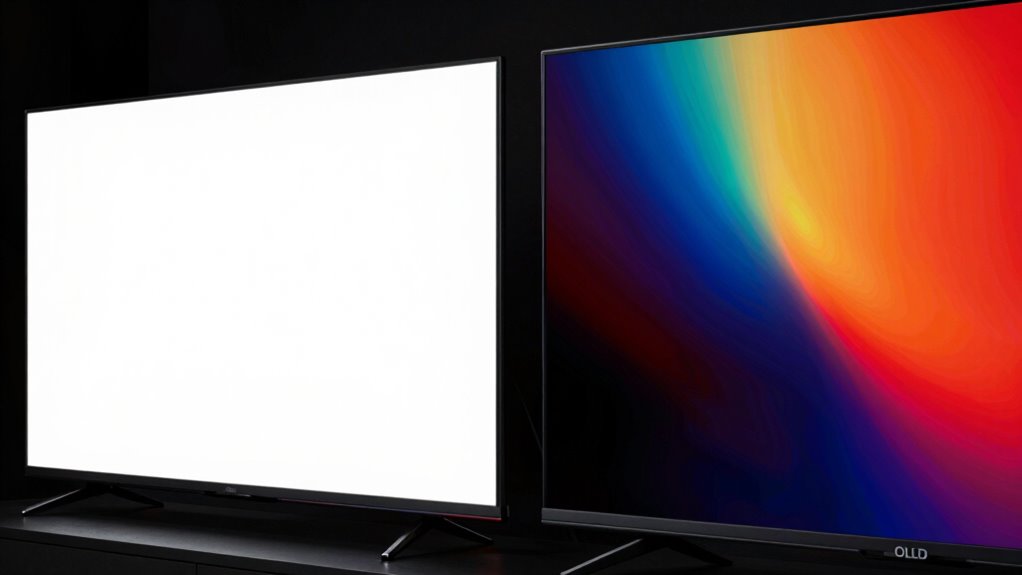
If you’re choosing between Mini-LED and OLED, consider what matters most to you. OLED offers perfect blacks, vibrant colors, and excellent contrast, ideal for immersive viewing. Mini-LED provides brighter images, better durability, and less risk of burn-in, making it great for bright rooms and long-term use. Your decision depends on whether you prioritize picture quality or brightness and longevity. Keep exploring to discover how each tech fits your viewing habits and budget.
Key Takeaways
- OLED offers superior contrast and deeper blacks, ideal for immersive viewing and picture quality.
- Mini-LED provides higher brightness and better performance in bright rooms, making it suitable for daylight viewing.
- OLED screens are more prone to burn-in, so they may not be best for static images or prolonged use.
- Mini-LED displays tend to be more durable and have a longer lifespan, with less risk of image retention.
- Cost varies: OLEDs are generally more affordable, but Mini-LEDs with quantum dots offer comparable brightness and color accuracy.
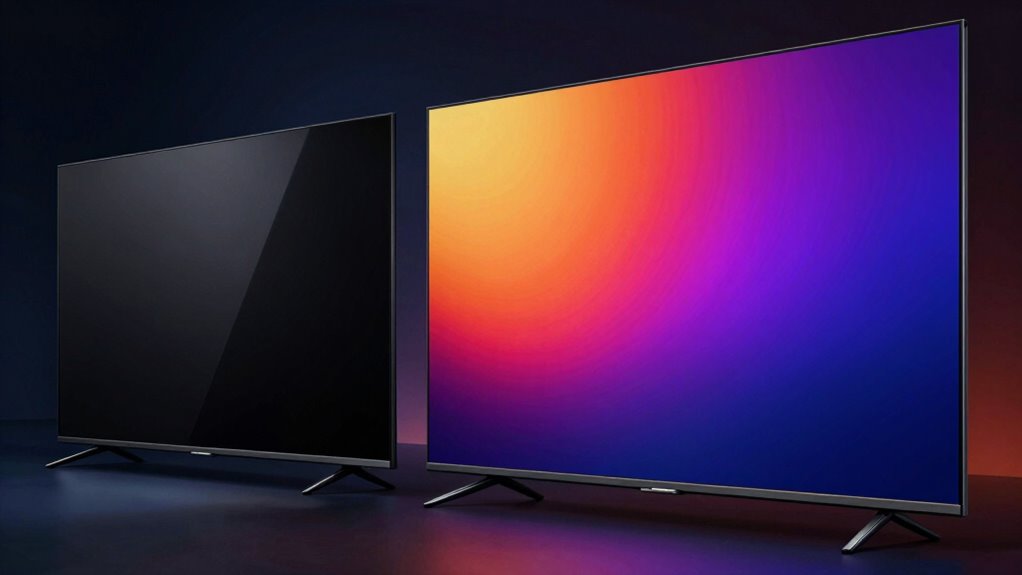
When choosing between Mini-LED and OLED displays, understanding their key differences can help you make an informed decision. Both technologies have unique strengths and weaknesses, so knowing what to prioritize in your viewing experience is essential. Mini-LED screens utilize thousands of smaller LED backlights to improve contrast and brightness, offering better control over local dimming zones. This setup enhances picture quality, especially in scenes with high contrast, making dark areas darker without washing out the bright parts. On the other hand, OLED screens feature organic light-emitting diodes that produce their own light. This allows for true blacks and excellent contrast since each pixel can turn on or off independently. As a result, OLED displays often deliver more vibrant colors and deeper blacks, creating a more immersive visual experience.
Another aspect to evaluate is the incorporation of quantum dot technology, which is commonly found in high-end Mini-LED panels. Quantum dots help boost color accuracy and brightness, making images appear more vivid and lifelike. While OLEDs excel in contrast and black levels, Mini-LEDs with quantum dots can rival them in color richness and brightness, especially in bright rooms or daylight conditions. However, when it comes to screen durability, OLEDs generally face more challenges. The organic materials used in OLED displays can degrade over time, leading to issues like burn-in or image retention if static images are displayed for extended periods. The durability of LED backlights is a significant advantage for users seeking longevity in their display technology. Additionally, the manufacturing complexity of Mini-LED panels can influence their overall cost and availability, making OLEDs a more accessible option for some consumers. The durability of LED backlights is a significant advantage for users seeking longevity in their display technology. Moreover, ongoing advancements in manufacturing processes continue to improve the lifespan and reliability of Mini-LED displays. Furthermore, technological innovations are driving improvements in cost efficiency, making these displays more affordable over time. Overall, the cost difference between these technologies can be substantial, impacting affordability for the average buyer. Ultimately, if you prioritize picture quality with vibrant colors and perfect blacks, OLED might be your best choice. But if you want a brighter display with better longevity and less concern about burn-in, Mini-LED with quantum dot technology could be a smarter investment.

LG 42-Inch Class OLED evo AI Super Upscaling 4K C5 Series Smart TV w/Dolby Atmos & Vision, HDR10, Filmmaker Mode, Wow Orchestra, Alexa Built-in (OLED42C5PUA, 2025)
Alpha 9 AI Processor Gen8. This processor is the brains behind a truly unforgettable TV experience. You'll get…
As an affiliate, we earn on qualifying purchases.
As an affiliate, we earn on qualifying purchases.
Frequently Asked Questions
Which Display Type Is More Energy-Efficient?
Mini-LED displays are generally more energy-efficient than OLEDs, especially in well-lit rooms with ambient lighting. They use backlighting that adjusts dynamically, reducing power consumption during darker scenes. OLEDs, while offering superior color accuracy and true blacks, tend to consume more energy because each pixel emits its own light. If you want better energy efficiency with good color accuracy, Mini-LED might be the better choice for your viewing environment.
How Do Mini-Led and OLED Compare in Durability?
While both display types offer impressive longevity, you’ll find Mini-LED screens tend to have a longer backlight lifespan, making them more resilient over time. OLEDs, however, are more susceptible to screen burn-in, which can leave subtle impressions if static images linger. Overall, Mini-LEDs provide a more durable experience for everyday use, while OLEDs offer stunning visuals but require gentle handling to preserve their brilliance.
Can Both Displays Be Used Outdoors Effectively?
Both Mini-LED and OLED displays can be used outdoors, but their sunlight readability varies. OLED screens usually have vibrant colors, but they struggle with glare and may become less visible in direct sunlight. Mini-LED displays often offer better brightness and glare reduction, making them more effective outdoors. If you want clear visibility outside, look for a model with high brightness levels and anti-reflective coatings for ideal sunlight readability.
Are There Significant Price Differences Between Mini-Led and OLED?
Think of the price gap between Mini-LED and OLED as a mountain and a hill—Mini-LEDs generally cost more due to advanced tech, while OLEDs are more budget-friendly. Pricing variations depend on brand and features, making OLEDs more accessible for most buyers. Market availability also influences prices; OLEDs are widely available, but Mini-LEDs might sit on limited shelves, nudging up their price.
Which Display Type Is Better for Gaming Performance?
For gaming, OLED displays generally offer better performance thanks to faster response times and superior color accuracy, which reduces motion blur and enhances visual clarity. Mini-LEDs can also deliver good gaming experiences, but their response time isn’t quite as quick, and color accuracy might not match OLEDs. If you prioritize smooth gameplay and vibrant visuals, OLEDs are usually the better choice, especially for fast-paced, visually demanding games.

TCL 55 Inch Class QM6K Series | Mini LED QLED 4K HDR | 55QM6K, 2025 Model | 120HZ-144HZ High Brightness Smart Google TV Dolby Atmos Onkyo Audio | Voice Remote Alexa Gaming Streaming Television
TCL QM6K QD-MINI LED TV SERIES – AFFORDABLE PREMIUM PERFORMANCE FOR SPORTS, GAMING & STREAMING. Experience superior contrast,…
As an affiliate, we earn on qualifying purchases.
As an affiliate, we earn on qualifying purchases.
Conclusion
So, as you stand at the crossroads of choice, remember that Mini-LED and OLED are like two stars shining in the night sky—each with its own glow. One offers brightness that cuts through the darkness, while the other provides depths as deep as the ocean. Choose based on what your eyes crave and your heart desires. Whichever path you take, let your new screen be the window to endless worlds, lighting up your everyday adventures.

Amazon Fire TV 50" Omni QLED Series 4K UHD smart TV, Dolby Vision IQ, Fire TV Ambient Experience, local dimming, hands-free with Alexa
Stunning 4K Quantum Dot Display (QLED) – Makes movies, shows, and live sports pop in brighter, richer, and…
As an affiliate, we earn on qualifying purchases.
As an affiliate, we earn on qualifying purchases.

Samsung 27” Odyssey OLED G5 (G50SF) QHD & QD-OLED Gaming Monitor, 180Hz Refresh Rate, 0.03ms (GtG) Response Time, NVIDIA G-Sync Compatible, AMD FreeSync™, LS27FG500SNXZA
Samsung’s 27” Odyssey OLED G5 QHD Gaming Monitor delivers hyper-real visuals and lightning-fast action.
As an affiliate, we earn on qualifying purchases.
As an affiliate, we earn on qualifying purchases.